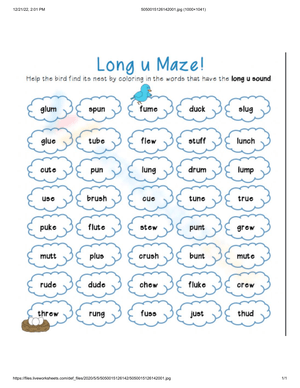
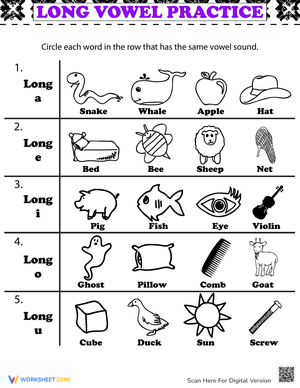
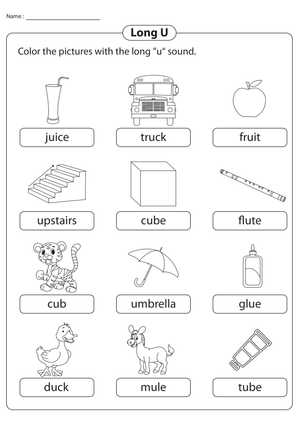
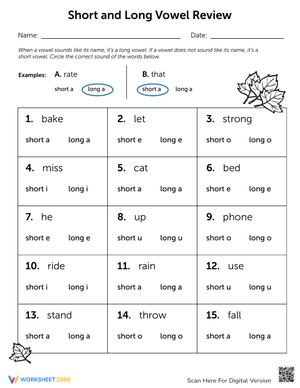
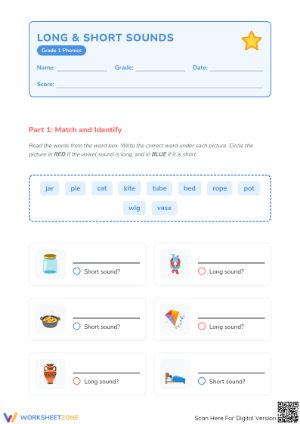
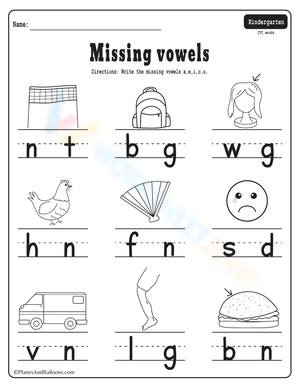
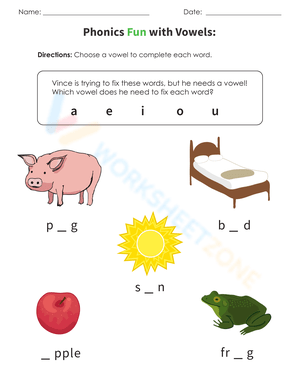
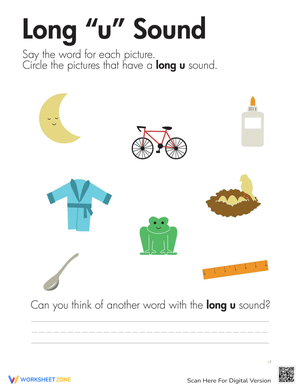
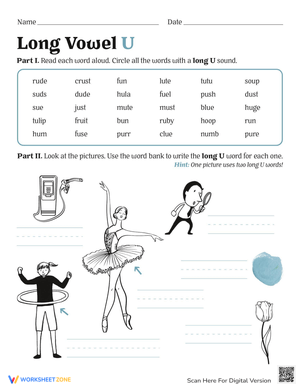
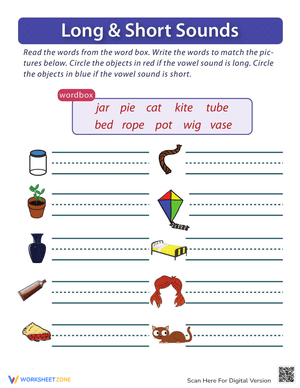
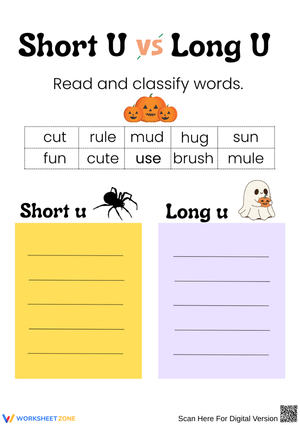
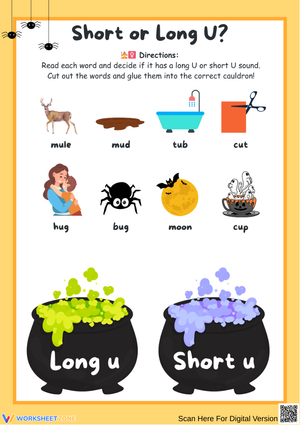
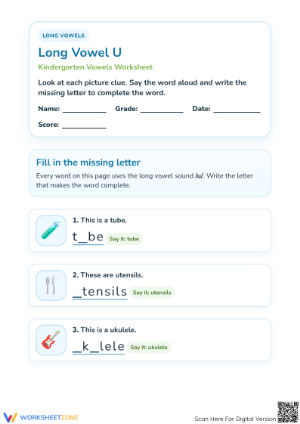
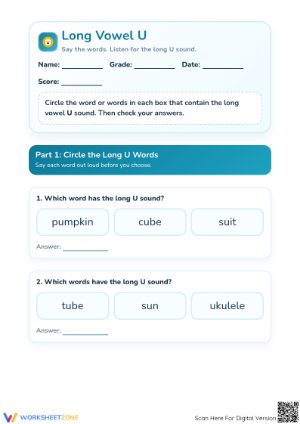
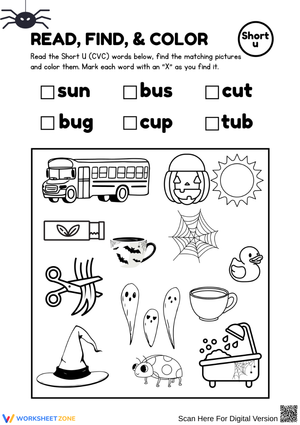
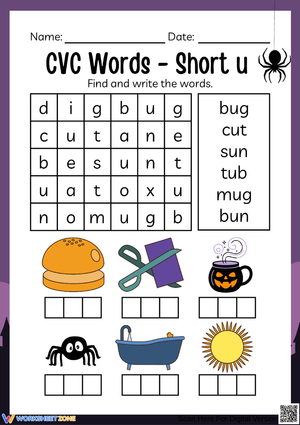
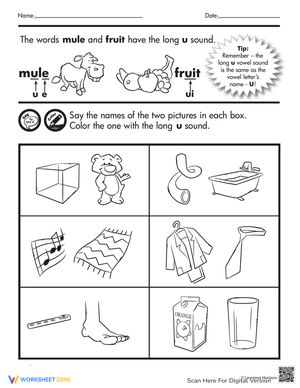
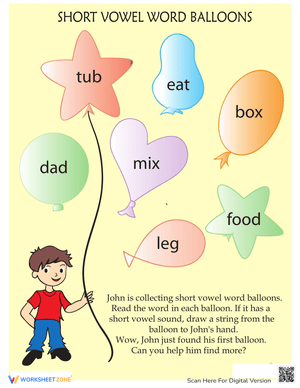
Long u and short u printable worksheets for 1st grade work best when the phonics target stays narrow and the task stays visual — conditions that matter most when students are still building their sense of vowel identity. This set gives teachers picture sorts, read-and-mark tasks, fill-in-the-vowel items, and word sorts built around the contrast between the /ŭ/ sound in bug and the /yoo/ sound in cube. Each worksheet isolates that contrast so first graders can concentrate their attention instead of dividing it across unrelated spelling demands.
What These Worksheets Ask Students to Do
Short u appears first in the set, anchored in the CVC words most first graders already recognize — sun, cup, mud, cut. Students say each word aloud, isolate the middle vowel sound, and mark or sort it. Once short u is established, each worksheet introduces the u_e pattern through minimal pairs that make the contrast concrete: cub next to cube, tub next to tube. Most first graders have encountered the silent-e rule through long a work, but applying it to long u requires its own deliberate practice — the transfer does not happen automatically.
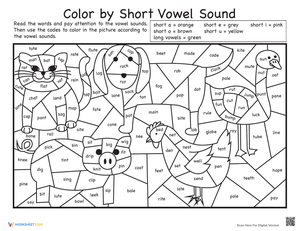
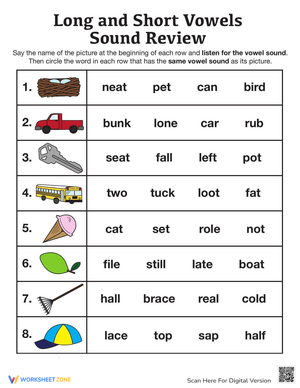
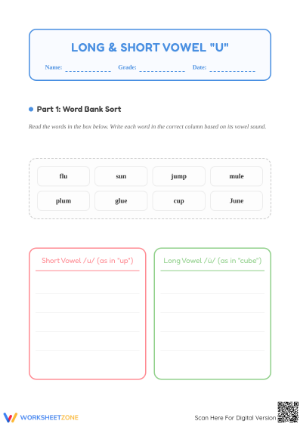
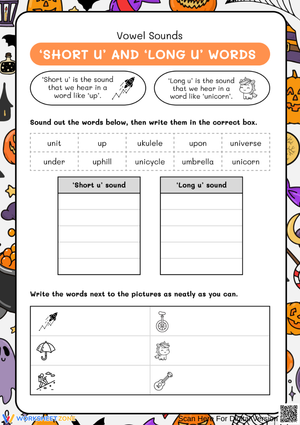
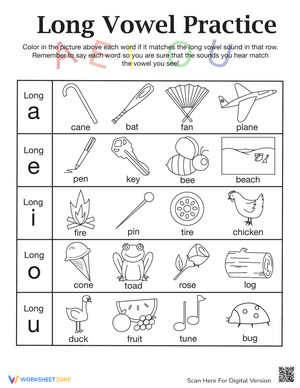
- Picture sorts: Students name an image, identify the vowel sound, and place it in the short u or long u column.
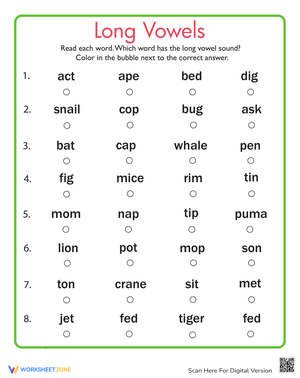
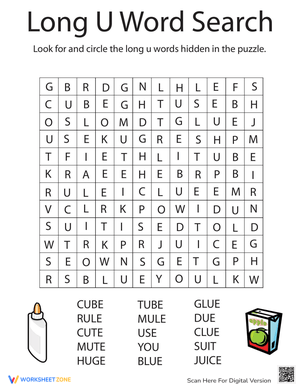
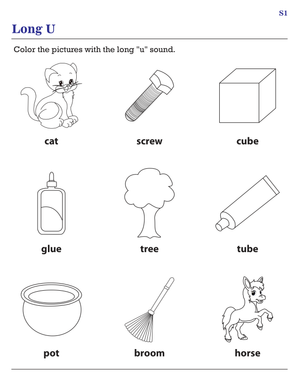
- Read-and-mark tasks: Students circle, underline, or color words containing the target vowel sound.
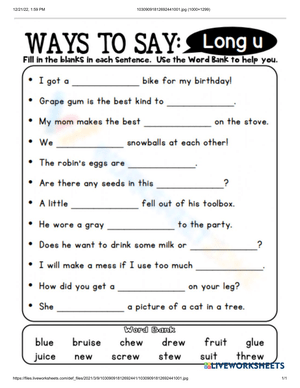
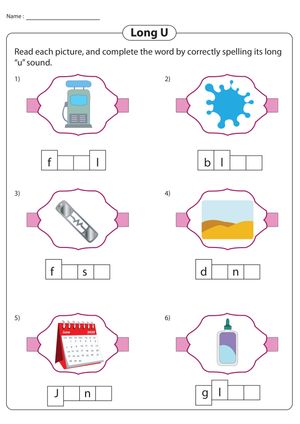
- Fill-in tasks: Students write a missing vowel or vowel pattern to complete a printed word.
- Word-writing tasks: Students supply a word that matches a picture, moving the work from recognition into production.
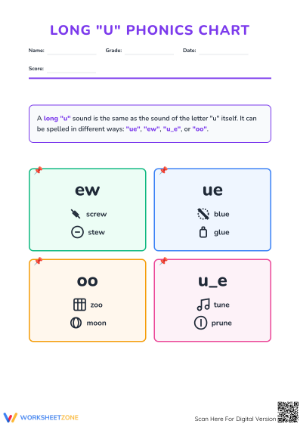
Later worksheets in the set bring in the ue pattern through words like blue, glue, and clue. Students underline the vowel pattern, sort the words alongside short u examples, and — in the production tasks — write the word rather than simply mark it.
Vowel Errors That Surface in Student Work
The most persistent error at this stage is not confusing bug and cube — it's rejecting blue and glue as long u words because they do not sound like the letter's name the way cube does. Students taught that long vowels "say their name" will sort glue into the short u column without hesitation. That is not carelessness; it is a reasonable inference from an incomplete rule. Worksheets that group ue and u_e words in the same long u column give students the side-by-side comparison they need before the misconception sets in.
The sorting errors described above appear in oral work, but long u and short u printable worksheets for 1st grade reveal a second issue that oral tasks miss entirely: students who sort pictures correctly but misread the printed words. A student circles the picture of a cube under long u without hesitation, then reads the printed word cube as /kŭb/. Auditory sorting and printed-word decoding are separate skills, and a well-structured worksheet tests both in sequence. That gap — correct picture, wrong word reading — points to a decoding problem rather than a phonemic awareness gap, and that distinction changes the instructional next step.
Building These Worksheets Into Your Weekly Phonics Routine
A reliable entry point is a two-minute oral check at the start of the phonics block: say five words aloud and ask students to hold up one finger for short u and two for long u. After that signal check, display a sample word under the document camera and think aloud through the vowel pattern. Students move to the worksheet as guided practice rather than a cold task — a sequence that cuts down on the first graders who raise their hand after forty seconds because they do not know where to start.
Long u and short u printable worksheets for 1st grade translate well into literacy center rotations. Picture sorts and color-code tasks run independently without teacher proximity; fill-in and word-writing tasks work better at the small-group table where you can hear students say the word before they write it. By the end of the week, a completed sort worksheet functions as a quick formative check — scan which column students misrouted words into and you have a grouping decision ready for Monday's phonics warm-up.
Standard Alignment
These worksheets address CCSS.ELA-LITERACY.RF.1.3a, which asks first graders to know the spelling-sound correspondences for common vowel patterns and to read one-syllable words using those patterns. That standard sits at the center of first-grade phonics instruction because students are transitioning from basic CVC decoding into words that carry more complex vowel information. Short u CVC words fulfill the early portion of RF.1.3a; the u_e and ue patterns address the vowel-team and silent-e extensions the standard also covers. State frameworks built on structured literacy sequences — including those aligned to CKLA — place this contrast in the second half of first grade, after long a and long i have been introduced and the silent-e concept is no longer new to students.
Matching Each Worksheet to the Right Student Level
Long u and short u printable worksheets for 1st grade divide naturally into two difficulty bands: picture-heavy worksheets where students identify the vowel sound by ear, and text-forward worksheets where students read printed words and apply spelling-pattern knowledge. For students still consolidating phonemic awareness, the picture-heavy worksheets carry the full lesson without adding a reading demand that would pull attention away from the vowel target. For students who are ready for more, the production tasks — writing a missing vowel, generating a rhyming long u word from a picture prompt — push the work from recognition into encoding.
In a mixed-ability classroom, running both bands simultaneously keeps the phonics target consistent while adjusting the reading load. A student still working through blends may need short u practice that stays in CVC territory — bug, sun, cup — rather than moving to plug or stunk, where the surrounding consonants can mask the vowel sound entirely. That decision requires deliberate worksheet selection before the center rotation starts, not a separate lesson plan.
Frequently Asked Questions
When in the year should I introduce the long u and short u contrast?
Most first-grade phonics sequences place short u in the first semester alongside the other short vowels, then introduce long u patterns — beginning with u_e — in the second semester. By that point, students have encountered the silent-e rule through long a and long i words, so u_e reinforces a known structure rather than introducing a new one. The ue pattern follows once u_e is solid, typically within the same instructional unit.
How many long u spelling patterns should I cover in Grade 1?
u_e and ue are the two patterns most appropriate for first-grade phonics work. Spellings like ew and the open-syllable long u found in words like music or pupil fit better in later grades or in enrichment work for high-readiness students. Keeping the word set to one or two patterns means students sort and read with accuracy rather than managing five different spellings at once.
Can I use these worksheets with students outside of Grade 1?
The picture-heavy short u worksheets work well for kindergarteners who are ahead of grade-level phonics benchmarks and need more CVC practice with a new vowel. For second graders, the long u word-writing and production worksheets serve as a targeted review before multi-syllable vowel work begins. Matching the worksheet type to a student's current decoding level matters more than the grade label on the worksheet.












 Interactive Worksheet Maker
 Quiz Maker
 Word Search Maker
 Crossword Puzzle Maker
 Word Scramble Generator
 Sentence Scramble Generator
 Handwriting Worksheet Generator
 Name Tracing Generator
 Fill In The Blank Generator