


























Views
Downloads

Printable Blends vs. Digraphs Worksheet | Grade 1 ELA
Paste this activity's link or code into your existing LMS (Google Classroom, Canvas, Teams, Schoology, Moodle, etc.).
Students can open and work on the activity right away, with no student login required.
You'll still be able to track student progress and results from your teacher account.
This Grade 1 phonics worksheet helps students confidently distinguish between consonant blends and digraphs. By completing these targeted exercises, early readers will strengthen their decoding skills and improve reading fluency. The clear layout ensures learners can independently practice identifying how different letter combinations produce distinct sounds in everyday words.
At a Glance
- Grade: 1 · Subject: ELA
- Standard:
CCSS.ELA-LITERACY.RF.1.3.A— Know spelling-sound correspondences for common consonant digraphs- Skill Focus: Consonant Blends vs. Digraphs
- Format: 3 pages · 24 problems · Answer key included · PDF
- Best For: Independent practice and sub plans
- Time: 15–20 minutes
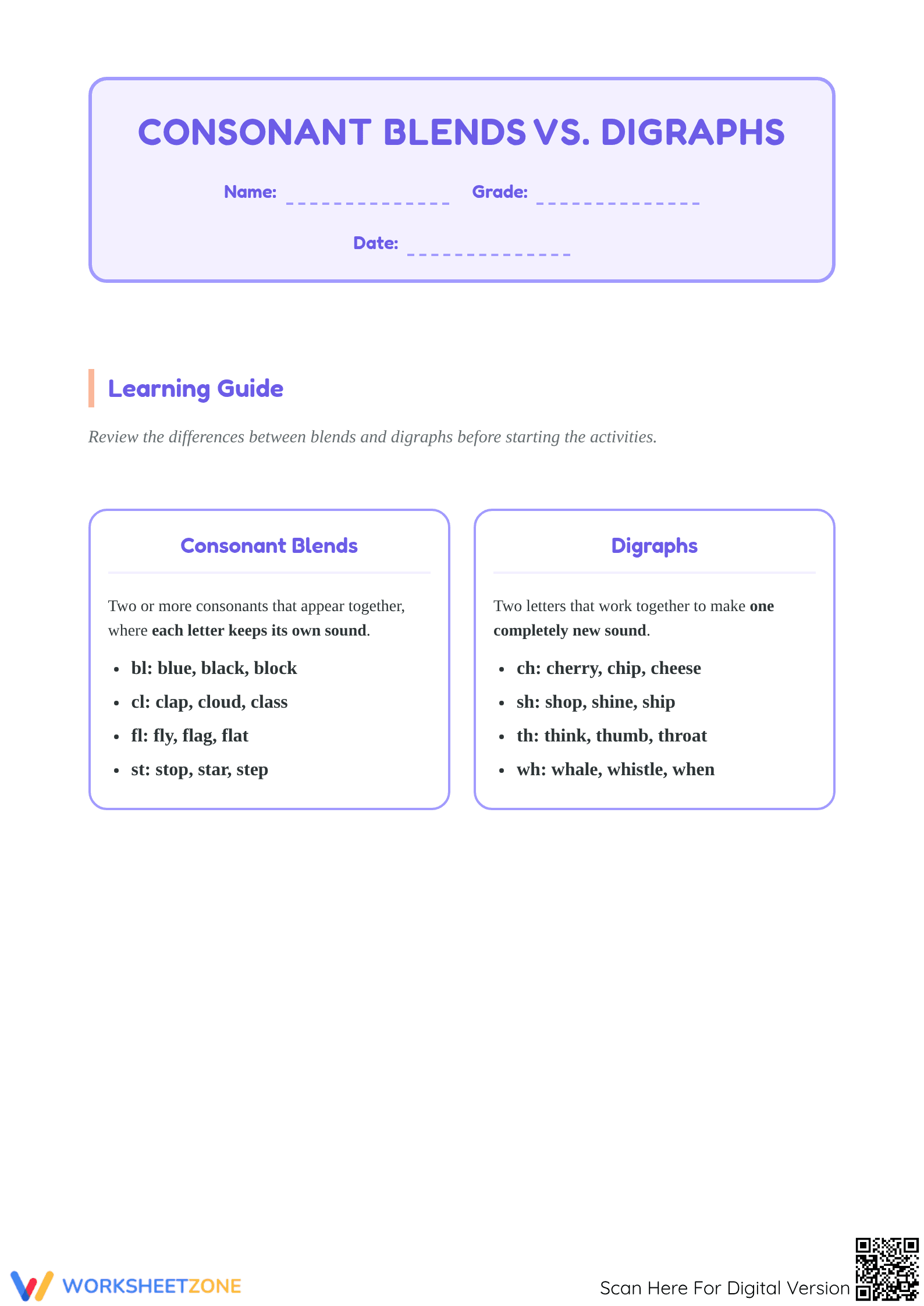
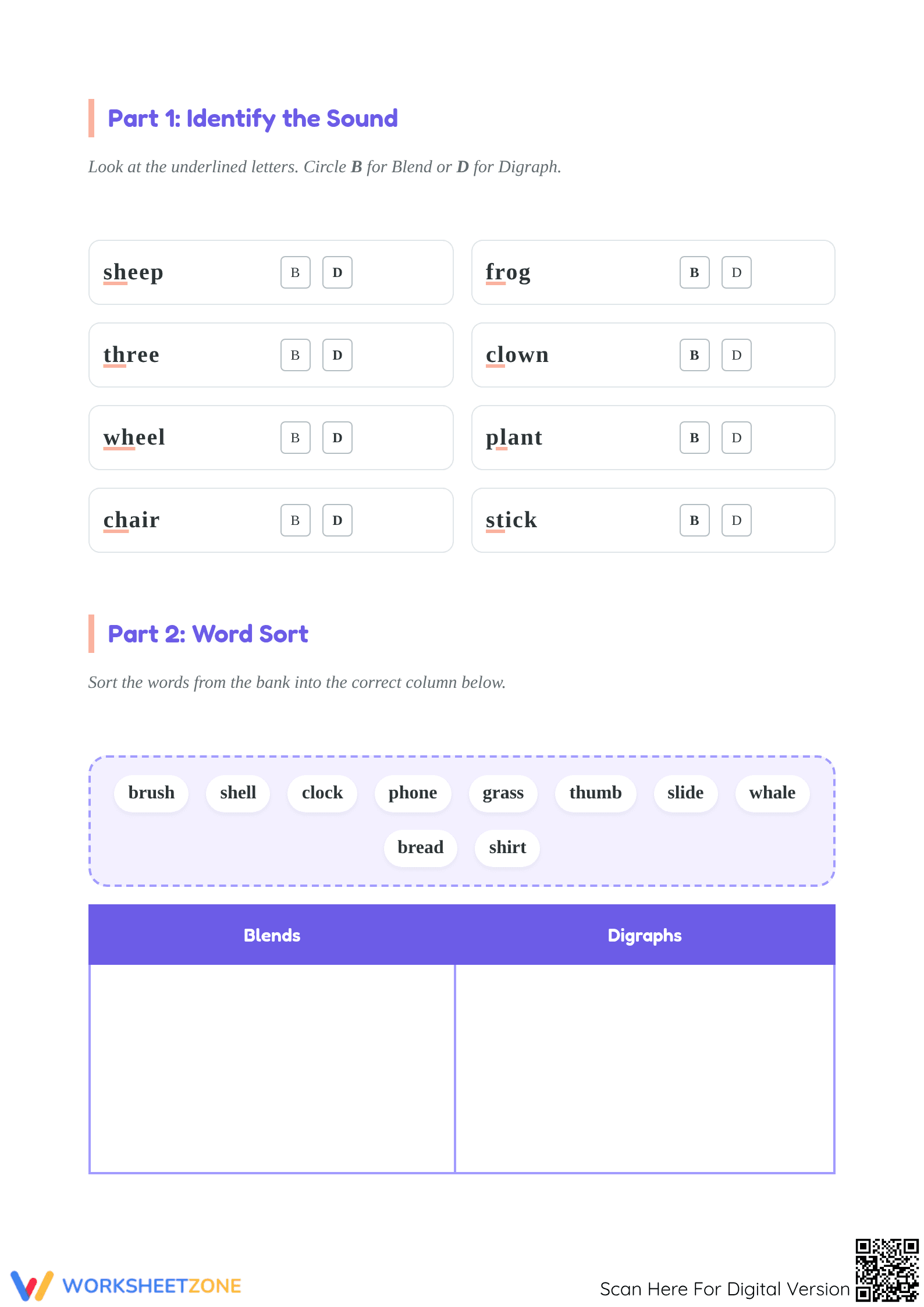
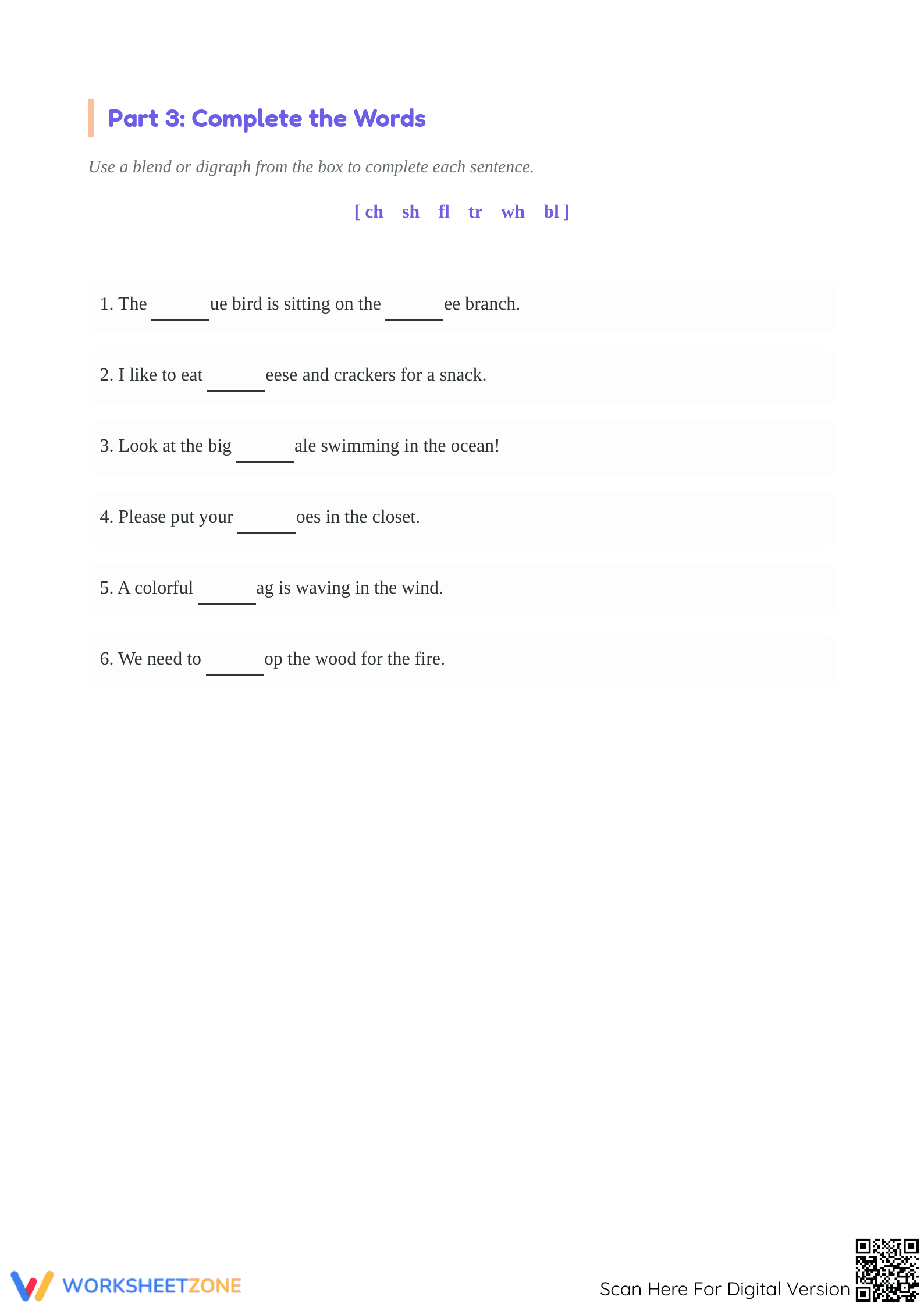
This comprehensive packet includes a helpful introductory learning guide that defines and provides examples of both blends and digraphs. Following the guide, students will tackle three distinct task types: identifying the sound type in isolated words, sorting words from a word bank into correct categories, and completing sentences using the appropriate letter combinations. A complete, full-page answer key is provided for every activity to make grading effortless.
This resource is designed for a completely zero-prep workflow. Print (1 minute): Print the three-page student packet and answer keys. Distribute (1 minute): Hand out the packets; the built-in learning guide means students can begin immediately without extensive teacher setup. Review (3 minutes): Use the provided answer keys to quickly check student work. Total teacher prep time is under two minutes, making this an ideal, self-explanatory resource for emergency sub plans.
This worksheet is directly aligned to CCSS.ELA-LITERACY.RF.1.3.A, requiring students to know the spelling-sound correspondences for common consonant digraphs. It also supports foundational blending skills by having students recognize that blends retain their individual sounds while digraphs create a single new sound. Both standard codes can be copied directly into lesson plans, IEP goals, or district curriculum mapping tools.
Use this resource as an independent practice activity immediately following direct instruction on phonics rules. The built-in learning guide makes it highly effective for literacy centers, where students can reference the rules before completing the word sorts and sentence frames. As a formative assessment tip, observe students during the sentence completion task to see if they rely on context clues or phonetic decoding to choose the correct missing letters. Expected completion time is 15 to 20 minutes.
This packet is primarily designed for first-grade students mastering early phonics, but it serves as an excellent review for second graders needing foundational reinforcement. The explicit learning guide provides built-in differentiation for students who require visual reminders of the rules. Pair this worksheet with a decodable reading passage so students can immediately apply their knowledge of blends and digraphs in a connected text.
Mastering the distinction between individual phonemes in blends and unique sounds in digraphs is a critical milestone in early literacy. This resource aligns with CCSS.ELA-LITERACY.RF.1.3.A, ensuring students know spelling-sound correspondences for common consonant digraphs. According to Fisher & Frey (2014), providing students with clear reference guides during independent practice significantly reduces cognitive overload and increases task persistence. By including a built-in learning guide alongside targeted sorting tasks, this worksheet allows early readers to systematically process phonetic patterns without requiring constant teacher intervention. The structured progression from isolated word identification to sentence-level application ensures that students build automaticity in their decoding skills. This evidence-based approach to phonics instruction directly supports reading fluency, giving young learners the exact tools they need to decode unfamiliar words with confidence.


