


























Views
Downloads

Essential Grade 1 Consonant Blends Practice Worksheet
Paste this activity's link or code into your existing LMS (Google Classroom, Canvas, Teams, Schoology, Moodle, etc.).
Students can open and work on the activity right away, with no student login required.
You'll still be able to track student progress and results from your teacher account.
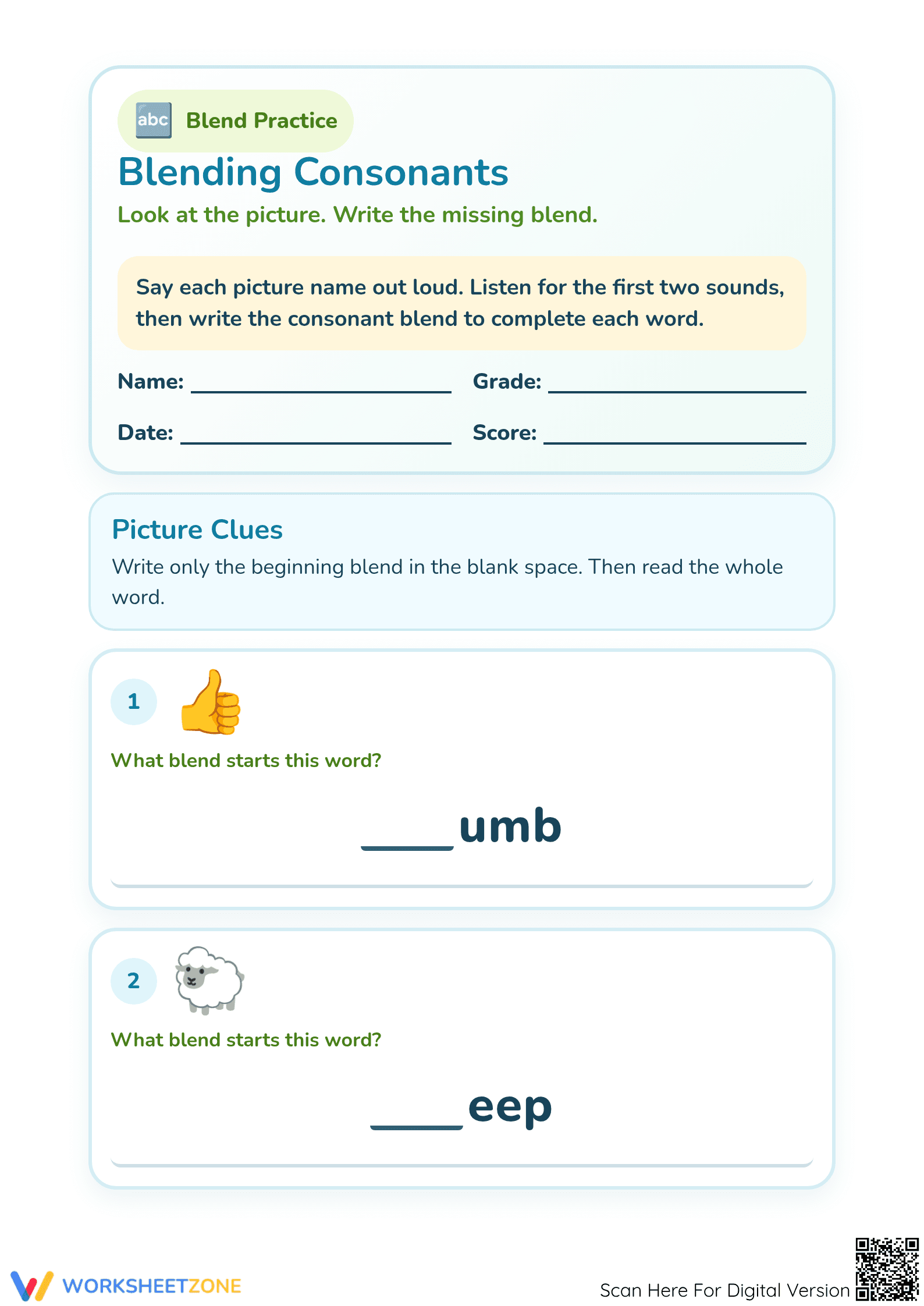
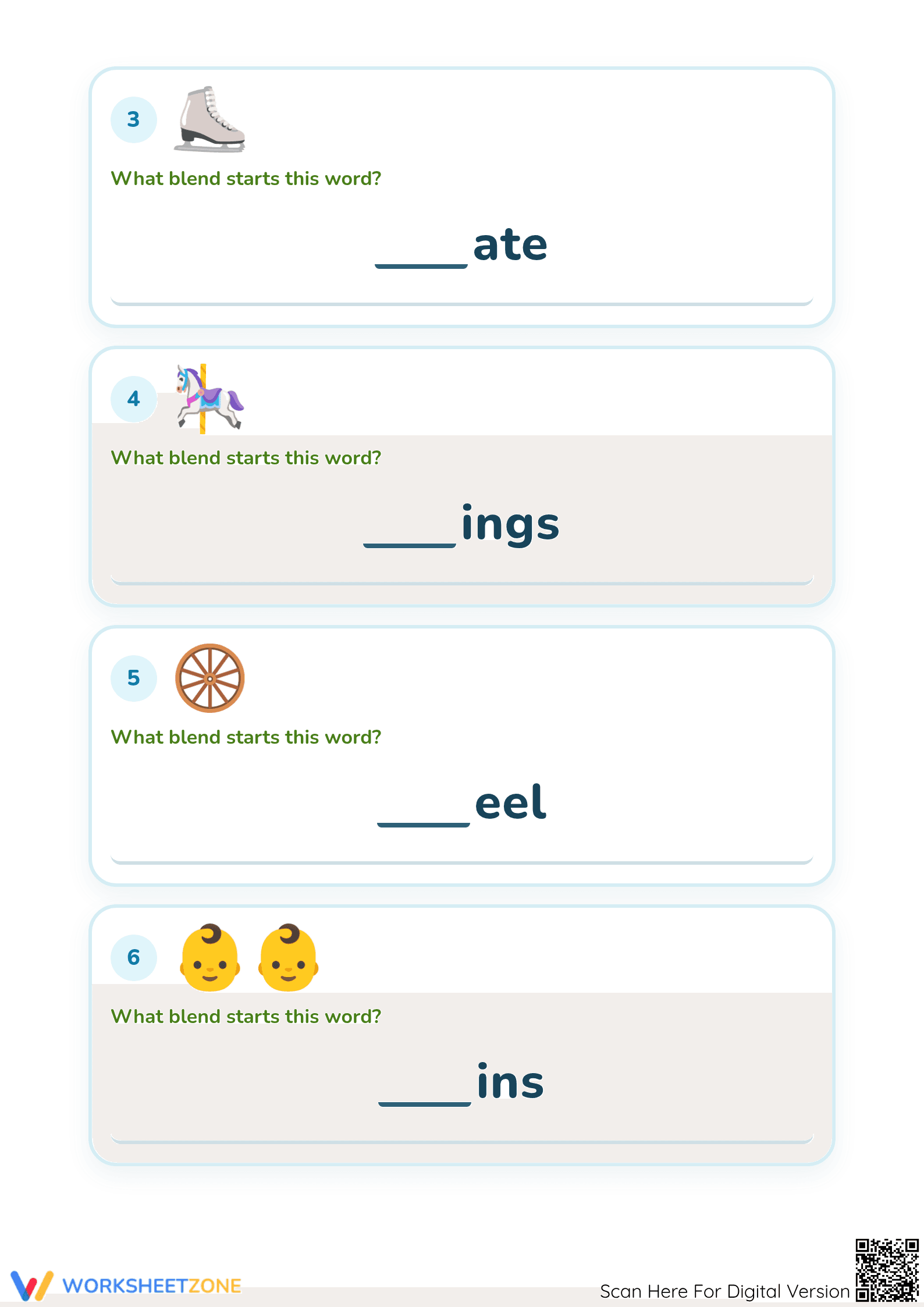
This beginning consonant blends worksheet empowers Grade 1 students to master phonemic awareness through visual cues and writing practice. By identifying and writing the initial sounds of six common objects, learners bridge the gap between spoken phonemes and written graphemes. This structured approach ensures immediate success in early literacy development.
At a Glance
- Grade: 1 · Subject: ELA
- Standard:
CCSS.ELA-LITERACY.RF.1.2.B— Orally produce single-syllable words by blending sounds including consonant blends- Skill Focus: Initial Consonant Blends & Digraphs
- Format: 2 pages · 6 problems · Answer key included · PDF
- Best For: Independent morning work or phonics centers
- Time: 10–15 minutes
The resource consists of a two-page PDF featuring six distinct picture clues. Each task provides a high-quality illustration paired with a word-ending fragment. Students must say the word, isolate the initial blend or digraph, and write it in the provided blank. A clear scoring section and a full answer key are included for teacher or self-grading.
Zero-Prep Workflow
This worksheet is designed for a seamless, under-two-minute setup. First, print the two pages directly from the PDF—no resizing or formatting adjustments are necessary. Second, distribute the copies to students; the intuitive layout requires minimal verbal instruction. Finally, use the included answer key for rapid review, allowing you to transition into your next instructional block without delay.
Standards Alignment
This practice aligns with `CCSS.ELA-LITERACY.RF.1.2.B`: "Orally produce single-syllable words by blending sounds (phonemes), including consonant blends." It specifically targets the transition from auditory recognition to written encoding. This standard code can be copied directly into lesson plans, IEP goals, or district curriculum mapping tools to demonstrate rigorous alignment with foundational literacy requirements.
How to Use It
Deploy this as a "Do Now" activity during your phonics block to assess prior knowledge of blends. As students work, circulate to observe their pronunciation; if a student struggles to identify the initial sounds, provide immediate feedback on tongue placement. This serves as an excellent formative assessment to determine which specific blends require additional small-group instruction later in the week.
Who It's For
While optimized for Grade 1 learners, this worksheet is ideal for Kindergarten students ready for advanced phonics and Preschoolers in high-scaffold environments. It is a valuable resource for English Language Learners (ELL) who benefit from the visual-to-word association. Pair this with a digital blend-sorting game or a physical anchor chart for a comprehensive multi-sensory phonics lesson.
Phonemic awareness relies on the systematic mapping of sounds to symbols, a process validated by the RAND AIRS 2024 report on early childhood literacy. This worksheet addresses `CCSS.ELA-LITERACY.RF.1.2.B` by requiring students to isolate and write initial consonant blends such as "sk" and "tw." By utilizing high-frequency vocabulary and visual scaffolding, the resource reduces cognitive load, allowing students to focus on phonemic segmentation. Research from Fisher & Frey (2014) emphasizes the importance of guided practice in the "gradual release of responsibility" model, where students move from listening to writing. Providing six targeted tasks allows for sufficient repetition to build neural pathways for decoding. This standards-aligned tool is essential for evidence-based classrooms seeking to improve reading scores by strengthening the building blocks of pronunciation and spelling accuracy in the early primary grades.


