


























Views
Downloads

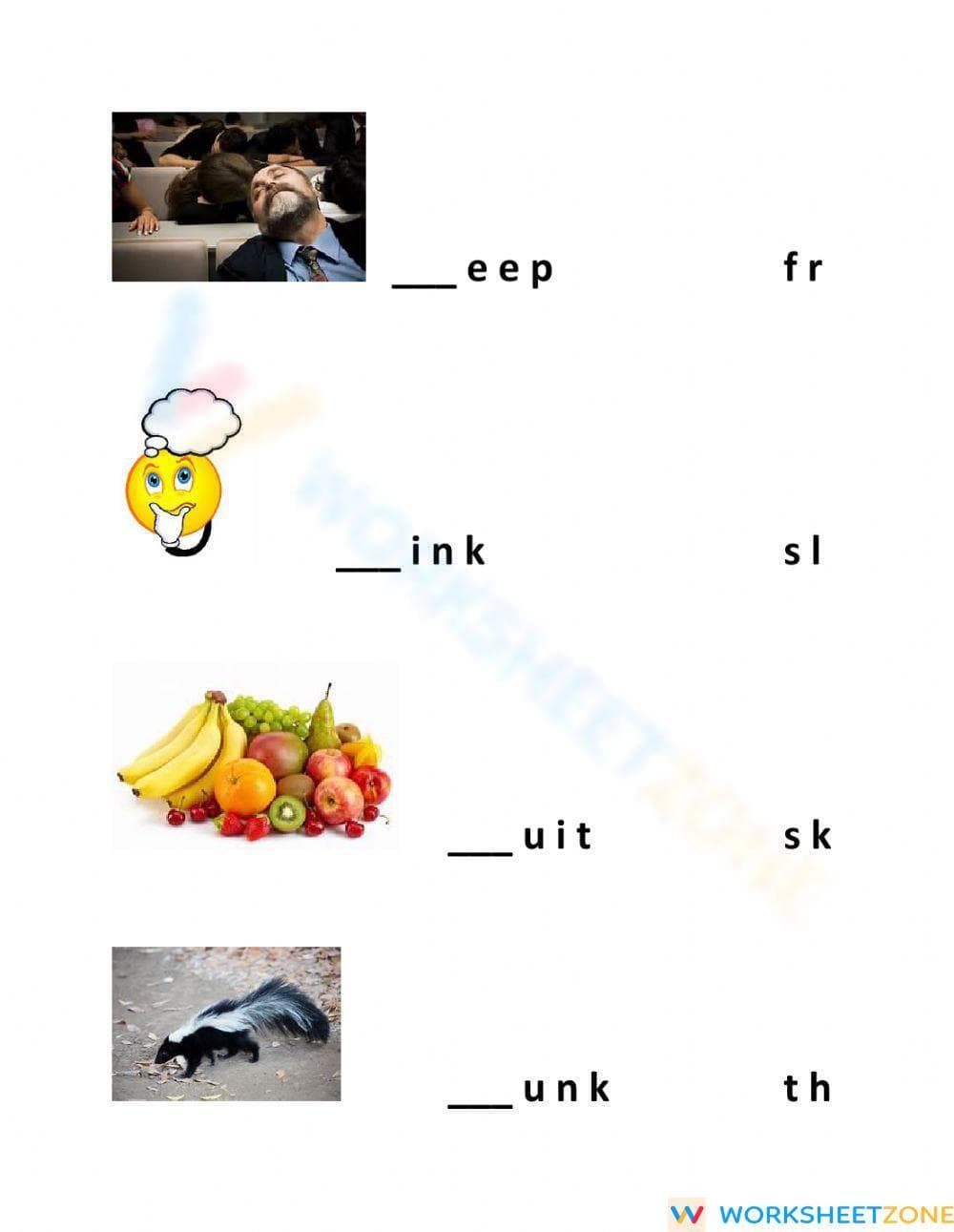


Printable Consonant Blends Worksheet | Essential Grade 1 ELA
Paste this activity's link or code into your existing LMS (Google Classroom, Canvas, Teams, Schoology, Moodle, etc.).
Students can open and work on the activity right away, with no student login required.
You'll still be able to track student progress and results from your teacher account.
Master the fundamental building blocks of reading with this comprehensive consonant blends worksheet. Designed for early learners, this activity focuses on identifying and applying consonant blends like 'wh', 'pr', and 'fr' in context. Students improve their phonetic awareness and spelling accuracy through visual associations, ensuring a solid foundation for literacy success.
At a Glance
- Grade: 1 · Subject: English Language Arts
- Standard:
CCSS.ELA-LITERACY.RF.1.3.B— Decode regularly spelled one-syllable words by applying knowledge of consonant blends- Skill Focus: Initial Consonant Blends
- Format: 3 pages · 12 problems · Answer key included · PDF
- Best For: Independent practice and phonics centers
- Time: 15–20 minutes
What's Inside
This resource features three pages of targeted phonics practice, containing twelve high-quality visual prompts. Each page presents four distinct images paired with incomplete words, requiring students to select the correct consonant blend from a provided bank. The worksheet includes an answer key for quick grading and provides worked examples to support independent student progress in a structured format.
Zero-Prep Workflow
Streamline your lesson planning with this ready-to-use phonics resource.
- Print (30 seconds): Simply download the PDF and print copies for your entire class or specific reading groups.
- Distribute (1 minute): Hand out the pages; no cutting, sorting, or additional materials are required beyond a pencil.
- Review (1 minute): Use the included answer key to quickly verify student work or facilitate a peer-review session.
Standards Alignment
This resource is primary aligned with CCSS.ELA-LITERACY.RF.1.3.B, which requires students to decode regularly spelled one-syllable words. By focusing on initial blends, it also supports RF.1.2.B regarding orally producing single-syllable words by blending sounds. Both standard codes can be copied directly into lesson plans, IEP goals, or district curriculum mapping tools.
How to Use It
- Literacy Centers: Assign this worksheet as a station during rotation time. Students can work independently to match blends to pictures, allowing you to observe their phonetic processing during small-group instruction.
- Morning Work: Use a single page as a quick "bell-ringer" to reinforce previous lessons. This provides a focused, low-stakes formative assessment to gauge student retention of phonics rules.
Who It's For
This worksheet is ideal for first-grade students or second graders needing additional phonics support. It serves as an excellent resource for English Language Learners who benefit from visual cues paired with text. Pair this with a consonant blend anchor chart or a short passage to create a complete, multi-sensory phonics lesson.
According to the RAND AIRS 2024 report on literacy foundations, consistent and systematic phonics instruction is a critical predictor of long-term reading fluency and comprehension. This worksheet applies these evidence-based principles by requiring students to actively participate in the decoding process using the CCSS.ELA-LITERACY.RF.1.3.B standard. By engaging with initial consonant blends in a structured, visual format, learners move beyond rote memorization toward authentic application of phonetic rules. Research from Fisher & Frey (2014) highlights the importance of scaffolds like image-to-text pairing in reducing cognitive load during the early stages of literacy acquisition. This resource provides that essential support, allowing students to focus on the auditory and orthographic relationships of blends. Using these twelve targeted tasks, educators can effectively bridge the gap between phonemic awareness and independent reading, ensuring students develop the necessary skills to decode complex words with confidence and accuracy.


