


























Views
Downloads
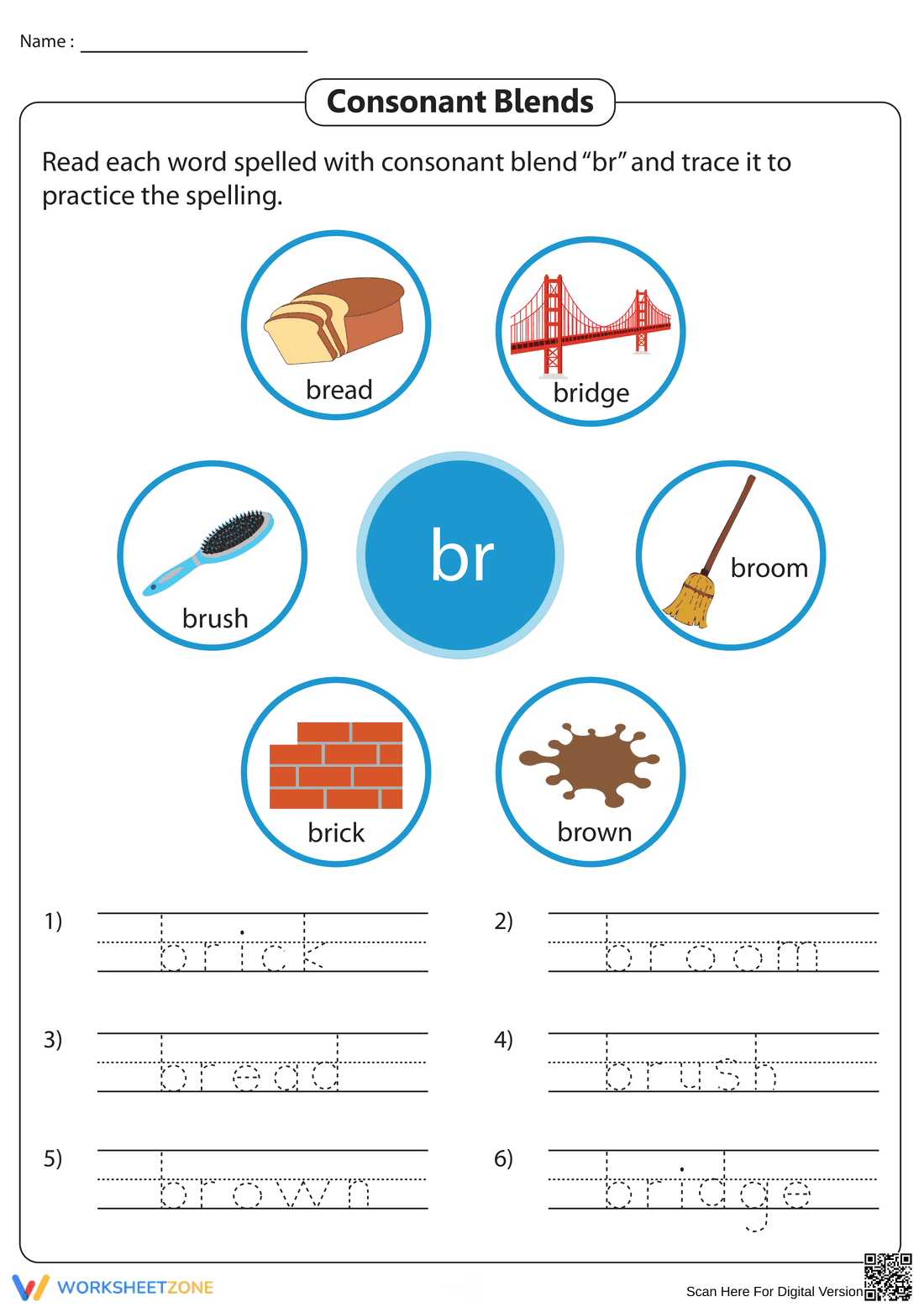

Essential Br Blend Tracing Worksheet | Grade 1 Phonics
Paste this activity's link or code into your existing LMS (Google Classroom, Canvas, Teams, Schoology, Moodle, etc.).
Students can open and work on the activity right away, with no student login required.
You'll still be able to track student progress and results from your teacher account.
This essential Grade 1 phonics worksheet focuses on mastering the "br" consonant blend through structured reading and tracing exercises. By combining visual cues with tactile tracing, students bridge the gap between recognizing phonemes and applying them in written spelling. This resource ensures learners develop the muscular memory and phonological awareness necessary for fluent early reading and writing success.
At a Glance
At a Glance
- Grade: 1 · Subject: English Language Arts
- Standard:
CCSS.ELA-LITERACY.RF.1.3.A— Know and apply grade-level phonics and word analysis skills in decoding words- Skill Focus: Consonant Blend "br" Tracing
- Format: 1 page · 6 problems · Answer key included · PDF
- Best For: Early literacy centers and morning work
- Time: 10–15 minutes
What's Inside
This one-page PDF features six high-frequency words beginning with the "br" blend: brick, broom, bread, brush, brown, and bridge. Clear illustrations provide semantic context, helping students connect phonics to real-world objects. The worksheet includes primary-lined tracing paths for practicing correct letter formation and spacing while reinforcing the initial consonant blend.
Zero-Prep Workflow
This resource is designed for a three-step zero-prep workflow. First, print the single-page PDF in under 30 seconds. Next, distribute the sheets; the instructions are self-explanatory, requiring no teacher introduction. Finally, review completed work in under a minute to provide feedback. Total teacher prep time is under 2 minutes, making this ideal for emergency sub plans.
Standards Alignment
This resource aligns to CCSS.ELA-LITERACY.RF.1.3.A, requiring students to apply phonics skills in decoding words. It also supports sound blending and initial phoneme identification. Both standard codes can be copied directly into lesson plans, IEP goals, or district curriculum mapping tools to ensure instructional compliance across the foundational literacy block.
How to Use It
Use this as independent practice after a direct instruction lesson. Teachers can observe students as they work to identify letter reversals or spacing issues during the formative assessment phase. For a quick exit ticket, have students use one traced word in a verbal sentence before moving to the next classroom activity.
Who It's For
Designed for first-grade students exploring complex phonemes, it is also an effective remedial tool for second graders. Visual supports make it accessible for English Language Learners (ELLs) and students with IEPs who benefit from multisensory phonics. This worksheet pairs well with an initial blend anchor chart or shared reading passage.
Early literacy research emphasizes the importance of orthographic mapping, where students connect the sounds of a word to its written form. This Grade 1 "br" blend tracing worksheet facilitates this connection by requiring students to actively decode and then physically produce the blend in six distinct contexts, ranging from "bread" to "bridge." According to the RAND AIRS 2024 report on foundational literacy, structured practice with consonant blends is a critical precursor to reading fluency, as it allows students to process phonemic clusters as single units rather than isolated sounds. By combining visual imagery with tactile tracing, this resource aligns with evidence-based practices for phonics instruction. This specific worksheet ensures that students move beyond simple recognition to active production, a transition that is essential for long-term spelling accuracy. The clear standard alignment to CCSS.ELA-LITERACY.RF.1.3.A provides educators with a validated tool for classroom implementation.


