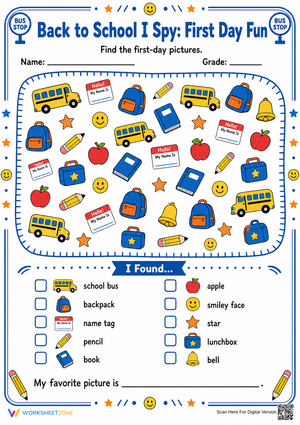
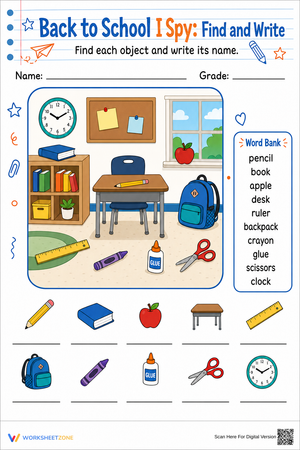
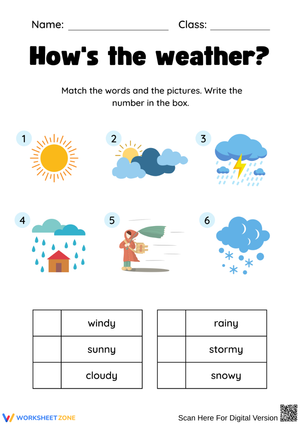
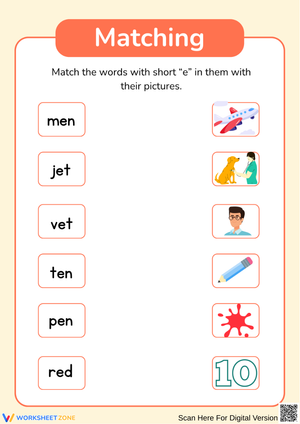
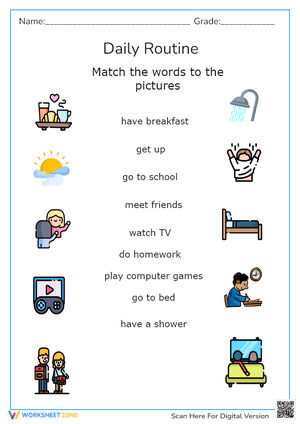
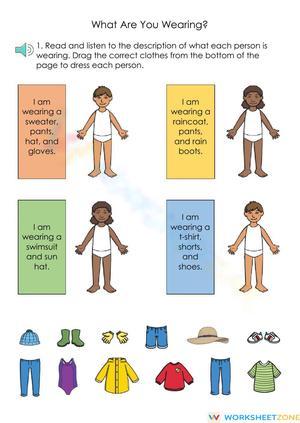
These language and vocabulary printable worksheets for 1st grade cover the full range of word-level skills that six- and seven-year-olds need before independent reading becomes truly fluent: context clues, sight word automaticity, word sorting by category, synonym and antonym identification, and semantic shading across intensity scales. Teachers get a set of standalone, ready-to-print worksheets that drop cleanly into morning work routines, literacy centers, or a focused ten-minute vocabulary block without any additional prep.
The Specific Skills Targeted Across the Set
Each worksheet addresses one clearly defined skill rather than bundling several tasks onto the same page — a deliberate choice at this grade level, where working memory is still developing and cognitive load compounds quickly. The skills covered include:
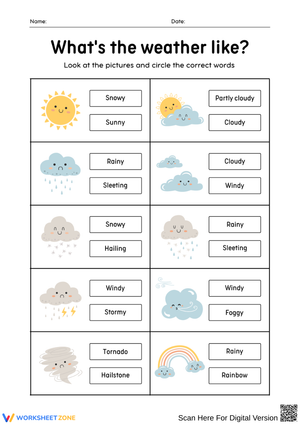
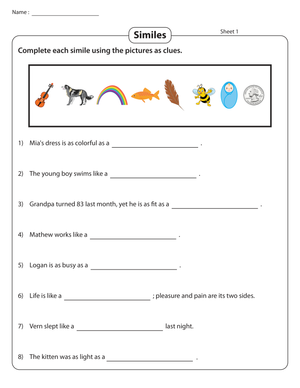
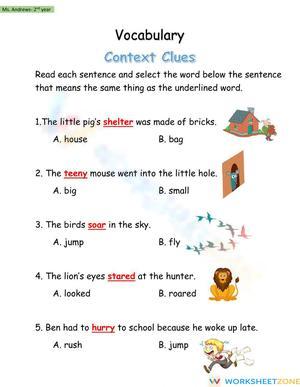
- Context clues: Students read a short sentence, examine a paired illustration, and circle or write the word that completes the meaning. Later worksheets in the set remove the image entirely, requiring students to rely on surrounding text alone.
- High-frequency sight words: Drawn from the Fry list, these tasks move well past trace-and-copy. Students locate the target word embedded in a short passage, underline each instance, and then write an original sentence using it.
- Word categorization: Students sort six to eight words into two labeled groups — separating "dolphin," "shark," and "whale" from "eagle," "sparrow," and "owl," for example — and then name the rule they applied.
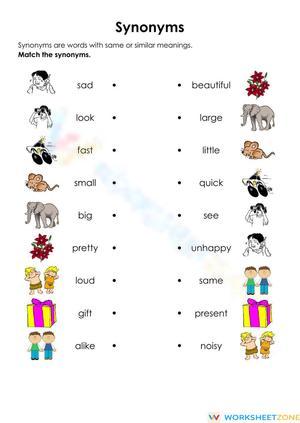
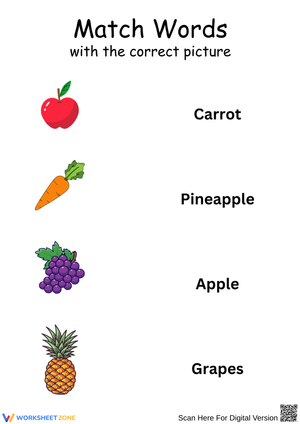
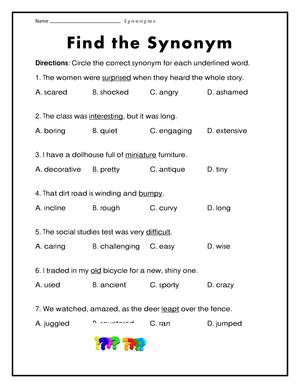
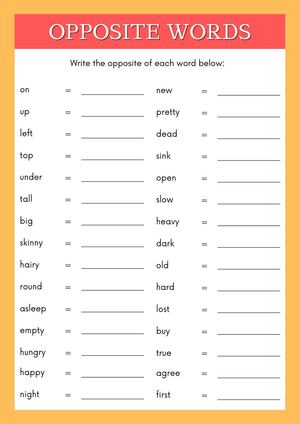
- Synonyms and antonyms: Students match word pairs and sort them by relationship, working with familiar high-frequency words alongside grade-level vocabulary pulled from shared reading texts.
- Semantic gradients: Students place words like "warm," "hot," and "scorching" on a labeled intensity line, moving from left to right. This is the most cognitively demanding task in the set and the one that generates the richest discussion.
Common Student Errors Worth Anticipating Before You Assign These
The most predictable mistake in context-clue tasks is picture reliance. A student glances at an illustration of a child carrying an umbrella and immediately writes "rain," ignoring the sentence entirely. These worksheets are built to surface that shortcut: the image and the sentence sometimes support different plausible words, so students who skip the text will land on the wrong answer. A cluster of picture-only responses in your stack tells you that direct instruction on reading surrounding words — not just decoding the target — is overdue.
Synonym and antonym tasks produce a different and very consistent error. First graders who correctly identify "big" and "small" as opposites will then mark "big" and "large" as opposites too, because the pairing looks structurally familiar. Watch the matching columns: a student who connects "large" and "tiny" is reasoning about meaning, but one who pairs "large" and "enormous" as antonyms is applying the visual pattern of the task rather than the semantic relationship. A two-minute share-out where students read their pairs aloud — before you collect anything — catches this faster than grading the worksheet after the fact.
On semantic gradient tasks, students frequently cluster all three words at one end of the intensity line rather than spacing them. They know "freezing" is cold but aren't confident it belongs further left than "cold" itself. That hesitation is productive: it's exactly the discussion you want to prompt before students mark their answers independently.
Standard Alignment
The worksheets address CCSS ELA standards L.1.4, L.1.5, and L.1.6. L.1.4 governs determining word meaning from context, which the context-clue tasks target directly at two levels — with image support and without. L.1.5 covers word relationships and nuances in meaning, which the synonym/antonym pairing, categorization work, and intensity-line activities address. L.1.5b specifically calls out distinguishing shades of meaning among verbs describing the same general action — "walk," "march," "strut" — and the semantic gradient format handles that demand precisely. L.1.6 requires students to use acquired vocabulary in speaking and writing; every worksheet in the set closes with a sentence-writing prompt that directly satisfies that standard. In instructional terms, these are the language and vocabulary printable worksheets for 1st grade that position students to meet the L.1.5b expectation before the same standard recurs with greater complexity in second grade.
Fitting These Worksheets Into Your Instructional Week
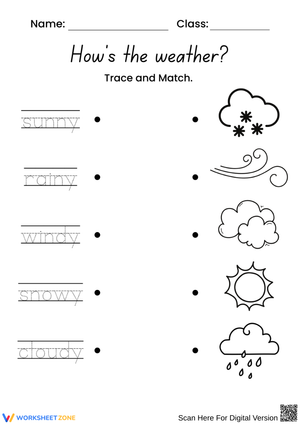
Categorization and synonym worksheets work well as morning warm-ups — the kind of independent task a student can begin the moment they sit down without waiting for directions. Context-clue worksheets, particularly the image-free versions, land better after a direct lesson or a read-aloud, when the vocabulary is still active. Semantic gradient tasks generate the richest conversation when used as a whole-group close to a unit: project the worksheet, ask students to justify placement before anyone marks an answer, and let disagreement do the instructional work.
Literacy centers are where language and vocabulary printable worksheets for 1st grade get the most sustained use. Laminate the word-sort and matching worksheets and students can reuse them with dry-erase markers across multiple rotations. Pairing two students on the semantic gradient task — one placing words, one challenging the placement — produces the kind of metalinguistic conversation that solo worksheet work simply doesn't generate. That partner structure also gives you something to observe: a student who can defend why "chilly" belongs between "cool" and "cold" has internalized the concept in a way the written answer alone wouldn't confirm.
Adjusting the Worksheets for Different Learners
For students still building sight word recognition, the context-clue worksheets with picture support serve as the entry point. Remove the image only when a student is consistently accurate with it — not on a fixed schedule tied to the calendar. For students reading above grade level, the semantic gradient tasks extend naturally: add a fourth or fifth word to the intensity line and ask students to write a sentence using the most extreme term in a context that makes the intensity clear.
English Language Learners benefit most from the categorization worksheets, which depend less on reading fluency and more on conceptual knowledge. A student who hasn't yet mapped the English word "blizzard" still knows whether a card belongs in a weather group or an animal group. That success is real vocabulary acquisition — it builds both the concept and the word label simultaneously. One honest limitation to flag: the open-response sentence-writing prompts at the close of several worksheets frustrate students whose writing stamina hasn't yet caught up with their oral vocabulary. For those students, a spoken response to a partner achieves the same formative assessment goal without the added barrier of transcription.
Frequently Asked Questions
Which CCSS ELA standards do these worksheets target?
The set addresses L.1.4 (using context to determine word meaning), L.1.5 (understanding word relationships, categorization, and shades of meaning), and L.1.6 (using acquired vocabulary in speaking and writing). Each worksheet focuses on one standard so that assessment is clean and students aren't splitting attention across multiple skills on a single task.
Can these worksheets be used in kindergarten or 2nd grade?
The categorization and sight word worksheets work as review for second graders who need foundational reinforcement at the start of the year. For kindergarten, most worksheets assume basic sentence-reading ability, so they're most appropriate toward the end of the year with students reading at or above the late-kindergarten benchmark. Assigning them earlier in kindergarten produces frustration rather than practice.
Are these worksheets suitable for independent literacy center use?
Most of the set is designed for independent or partner work and runs without teacher supervision once students understand the task format. The exception is the semantic gradient worksheet — students benefit from a brief whole-group introduction the first time they see the intensity-line format. After that initial walkthrough, they handle it independently in subsequent rotations without support.
In what sequence should I assign these worksheets?
Start with categorization. Most first graders succeed at sorting tasks before they can reliably deploy context clues, so beginning there builds early confidence and establishes the habit of thinking about word relationships. Follow with context-clue worksheets that include picture support, then move to those that remove the image. Use the language and vocabulary printable worksheets for 1st grade in this order and the progression in student performance will also show you clearly who needs more time before moving on.












 Interactive Worksheet Maker
 Quiz Maker
 Word Search Maker
 Crossword Puzzle Maker
 Word Scramble Generator
 Sentence Scramble Generator
 Handwriting Worksheet Generator
 Name Tracing Generator
 Fill In The Blank Generator