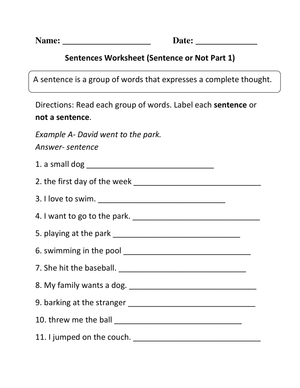
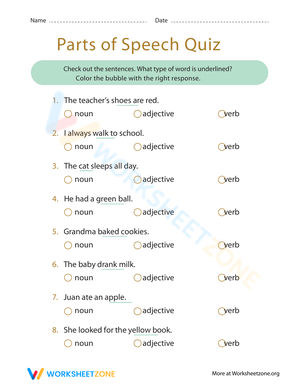
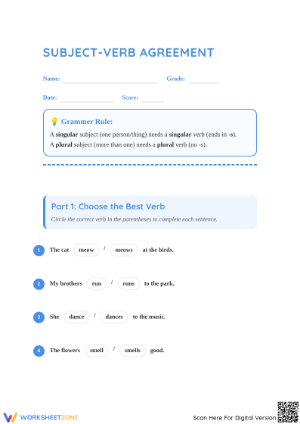
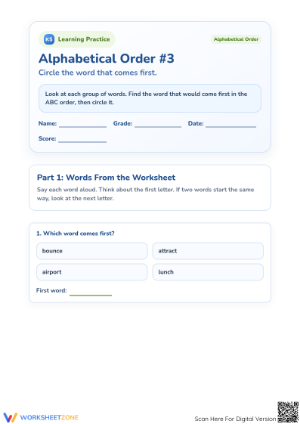
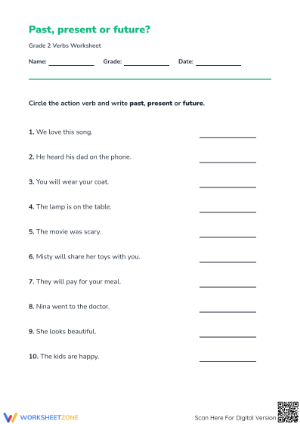
These grammar and mechanics printable worksheets for 1st grade give teachers a ready set of focused, standalone exercises covering every major language convention students are expected to control by the end of first grade — period placement, capitalization rules, noun identification, subject-verb agreement, and more. Each worksheet stands on its own, ready to drop into morning work, a writing workshop warm-up, or a small-group rotation without extra prep or materials.
The Specific Skills Each Worksheet Targets
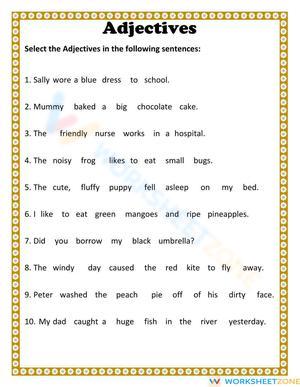
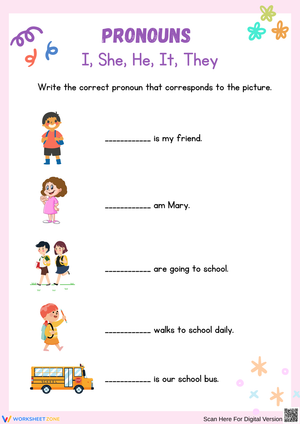
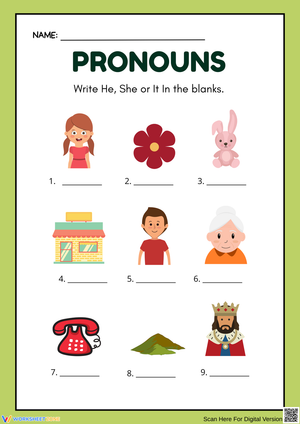
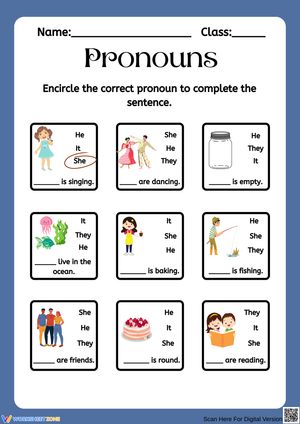
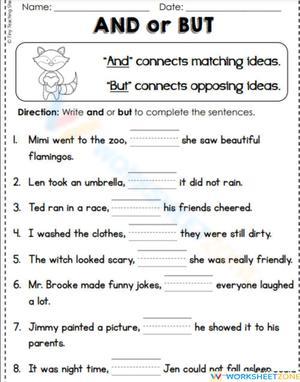
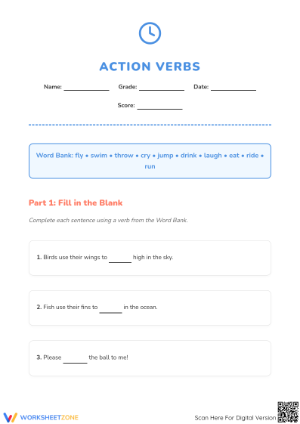
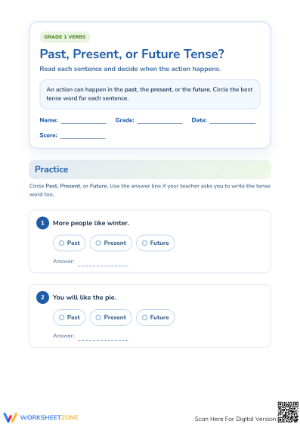
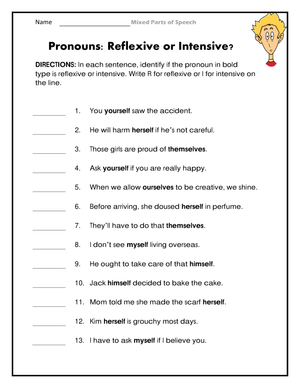
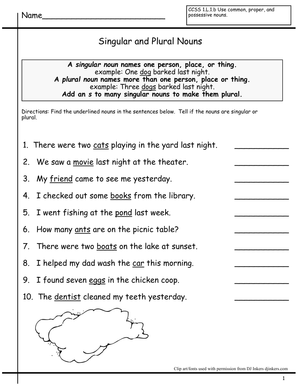
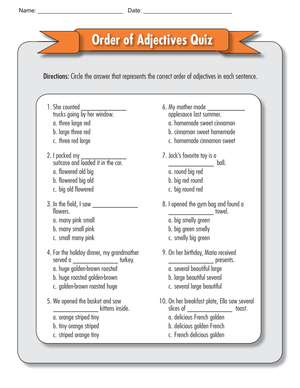
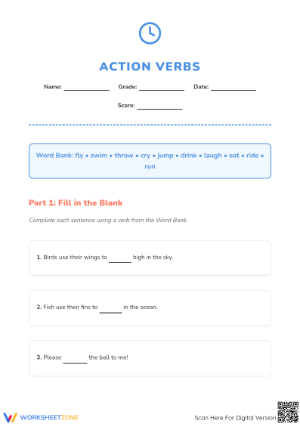
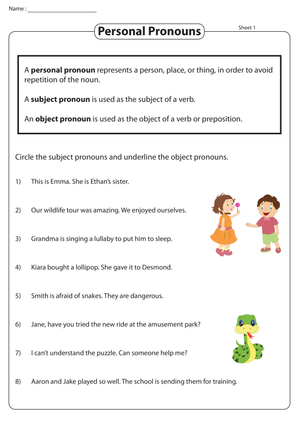
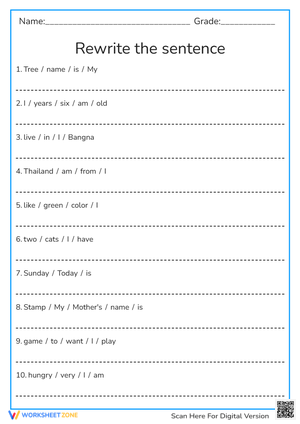
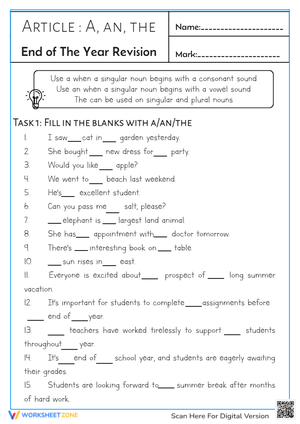
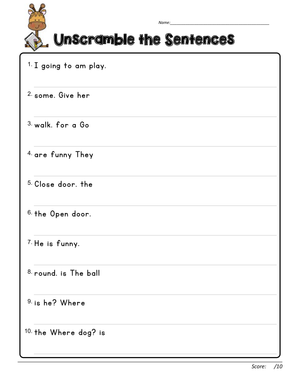
The set divides cleanly into grammar skills and mechanics conventions. On the grammar side, students work with common and proper nouns — sorting by category, identifying whether a word names a specific person or place, and correcting capitalization errors. Verb practice moves from simple identification into agreement: students mark whether a verb matches a singular or plural subject, then rewrite sentences to fix mismatches. Personal, possessive, and indefinite pronouns each get dedicated exercises, as do adjectives and basic conjunctions. The progression within each skill area moves from recognition to production, so students aren't just circling answers but also generating their own corrected sentences.
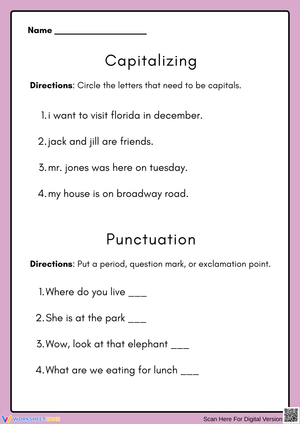
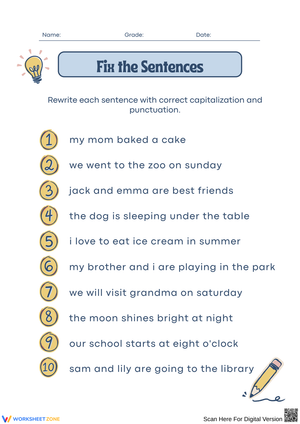
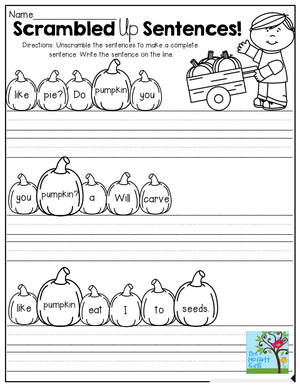
Mechanics exercises focus on the conventions students encounter every day in their own writing. Capitalization work rotates through four rules: sentence openings, the pronoun I, proper names (people, months, days of the week), and geographic names. End-punctuation activities ask students to read a sentence, identify whether it states, asks, or exclaims, and supply the correct mark — an exercise that connects oral phrasing to written convention in a way that rule-recitation alone does not. Comma practice is introduced in the context of dates and lists, not as an isolated convention.
Student Errors These Worksheets Help You Catch and Correct
The most consistent mechanics error in first grade isn't forgetting periods — it's failing to capitalize the pronoun I. Students who correctly write their own name with a capital letter will still write "i went to the store" because they haven't internalized that I operates under its own separate rule, not the sentence-starter rule. Exercises that isolate the pronoun capitalization rule from other capitalization tasks address this directly, rather than lumping all capital-letter work together.
With nouns, the pattern worth watching is over-capitalization. Once students learn that proper names get capitals, many begin capitalizing any noun that feels significant — "My Dog ran fast" or "We went to the Store." What they've actually learned isn't the rule but a rough approximation: important words get capitals. Sorting activities that ask students to identify which capitalization rule applies — and to explain why a common noun stays lowercase — are more corrective here than error-marking exercises alone.
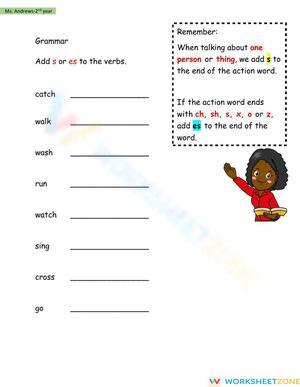
Subject-verb agreement produces a specific reversal error worth anticipating. Many students correctly write "The cat runs" and "The cats run," but when they encounter a plural subject first — "The dogs ___" — they write "dogs barks," applying the singular pattern without registering that the subject already carries the plural marker. Worksheets that isolate plural subjects and require the uninflected verb form catch this before the pattern calcifies in their independent writing.
Standard Alignment
The grammar exercises correspond to CCSS.ELA-LITERACY.L.1.1, which covers printing upper- and lowercase letters, using common and proper nouns, matching singular and plural nouns with correct verb forms, using personal and possessive pronouns, using adjectives and conjunctions, and producing and expanding complete simple and compound sentences. In classroom terms, L.1.1 is not a single-lesson target — it is the spine of first-grade language instruction, returned to across the entire year. The mechanics exercises align to CCSS.ELA-LITERACY.L.1.2, which addresses capitalization of dates, names, and sentence openers; correct end punctuation for statements, questions, and exclamations; and comma use in dates and series. Both standards are treated in this set as continuous practice targets rather than one-and-done checkpoints, which reflects how these skills actually develop — through repeated exposure across weeks, not mastery after a single unit.
Fitting These Worksheets Into the Flow of Your Teaching Week
Morning work is the most reliable slot. First graders arrive at staggered times, and a grammar worksheet waiting on desks channels that transition energy into something focused — students settle faster when they have a clear, self-contained task. A punctuation exercise or noun-sorting activity takes six to eight minutes, which is exactly the window between the first arrival and the start of morning meeting. Using grammar and mechanics printable worksheets for 1st grade this way also builds the habit of treating conventions as something writers think about every day, not only during writing block.
Small-group rotations are another strong fit. While a teacher-led group works on reading fluency or phonics, an independent group can complete an agreement or capitalization worksheet without needing adult support — the directions are brief and the task is self-contained. These exercises also work as formative exit tickets. Handing one out during the final five minutes of a grammar mini-lesson tells you immediately which students absorbed the day's focus and which ones need another pass before moving on. That five-minute check is more informative than a verbal thumbs-up assessment, because it shows you exactly where each student's understanding breaks down.
Adjusting the Work for Different Learners in the Same Classroom
For students who are still developing fluency with written language, the most useful adjustment is reducing the response demand. Instead of asking a student to rewrite a corrected sentence, have them focus solely on identification — can they find the error and mark it? That shift preserves the conceptual work without turning the activity into a handwriting or fluency obstacle. Sentence-level tasks (circle the correct form, mark the capitalization error) stay accessible without requiring the same output as full rewriting exercises.
Students who need more challenge benefit from extension moves built onto the existing worksheet. After completing an exercise, they write an original sentence using the target convention, or they locate a second error the worksheet did not ask about. A student who correctly marks all the end-punctuation errors in an exercise can then find three sentences in a classroom read-aloud text and explain why each mark is correct. That transfer task — applying the rule in authentic text rather than controlled practice — separates recognition from genuine internalization.
For students receiving support services, the grammar and mechanics printable worksheets for 1st grade work well as consistent, low-stakes practice that an interventionist or paraeducator can use without significant preparation. The predictable format of each worksheet means students with processing or attention challenges aren't spending cognitive energy decoding directions — they can direct their attention to the language content itself.
Frequently Asked Questions
My students complete these worksheets correctly but still skip periods and capitals in their own writing. Is that normal?
Yes, and it's one of the more frustrating realities of grammar instruction at this age. Controlled practice and independent application are genuinely different skills. A student can identify a missing period in an isolated sentence and still omit periods in a personal narrative because their attention is fully consumed by generating ideas. The bridge is a transfer step: after completing a worksheet, have students pull out a piece of their own writing and run the same check on it. That move is what begins shifting a rule from recognition to production.
How do these worksheets fit into a writing workshop model?
They work best as pre-work or post-work, not as the core of writing instruction. Use a capitalization worksheet before a mini-lesson on proper nouns to surface prior knowledge, or follow a lesson on end marks with a punctuation exercise that gives students immediate, focused repetition. The worksheets provide isolated conventions practice; writing workshop provides the authentic context to apply those conventions. The two approaches support each other — neither replaces the other.
How often should first graders practice grammar and mechanics?
Daily short practice outperforms weekly longer sessions at this age. Spaced retrieval — returning to the same skill across many days in small doses — is particularly effective for first graders because the rules are new enough to need reinforcement before they consolidate. One worksheet per day, six to eight minutes, produces more durable learning than a thirty-minute session once a week. The set of grammar and mechanics printable worksheets for 1st grade is built with this in mind: exercises are short enough to complete in a single sitting and varied enough across the set that students aren't simply learning to navigate a familiar format.
Can I use these worksheets as assessment tools?
They function well as formative assessment. A quick read-through of a completed worksheet tells you within two minutes which specific rules a student controls and which ones remain unstable. For summative purposes, worksheet performance works as one data point alongside others. A student who scores well on worksheets but still produces error-filled drafts is showing you that the rules are understood in isolation but not yet transferred to independent composition — which is itself useful diagnostic information.












 Interactive Worksheet Maker
 Quiz Maker
 Word Search Maker
 Crossword Puzzle Maker
 Word Scramble Generator
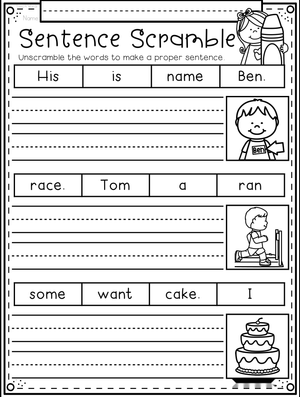
 Sentence Scramble Generator
 Handwriting Worksheet Generator
 Name Tracing Generator
 Fill In The Blank Generator