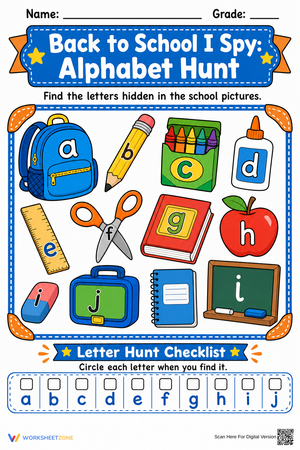
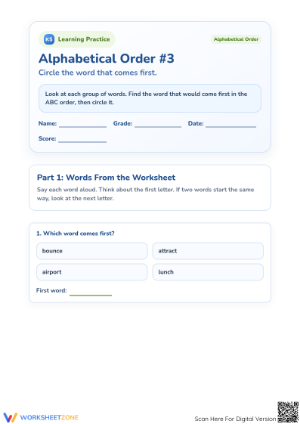
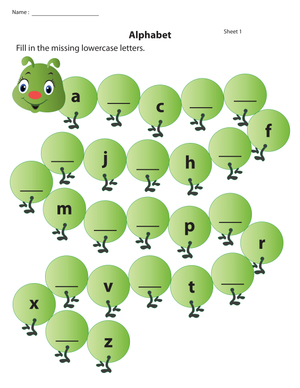
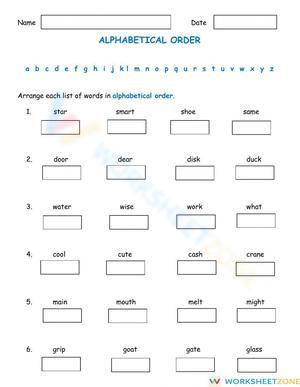
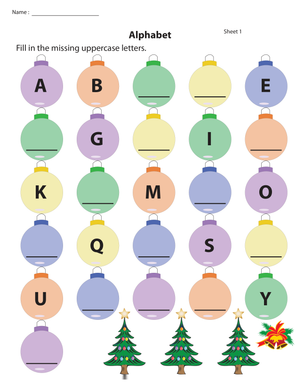
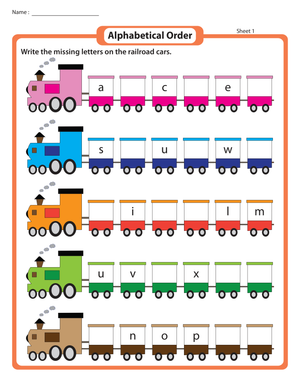
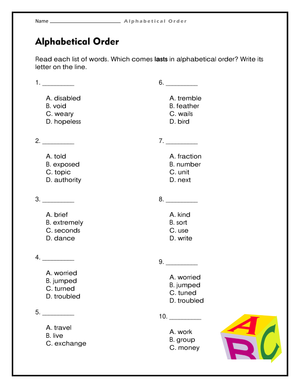
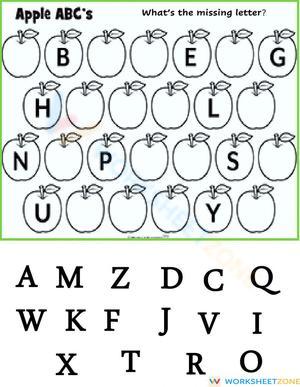
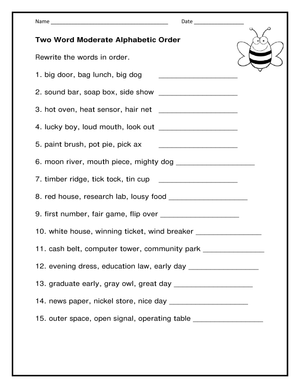
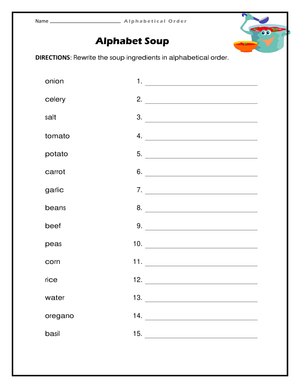
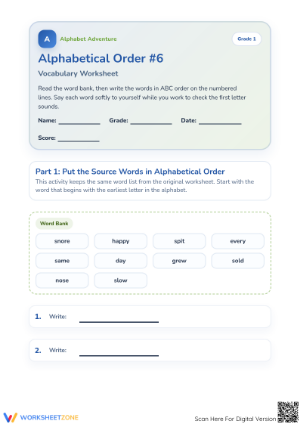
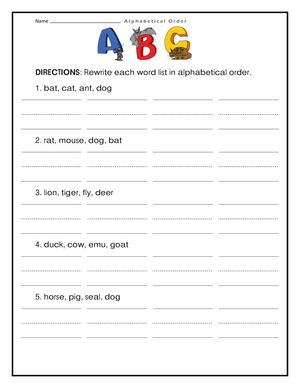
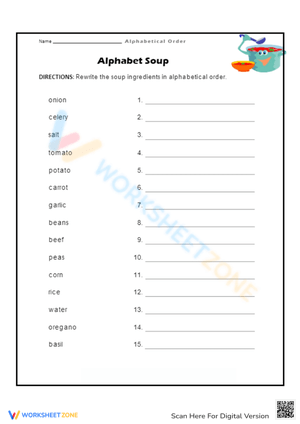
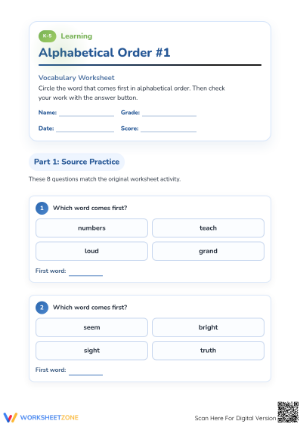
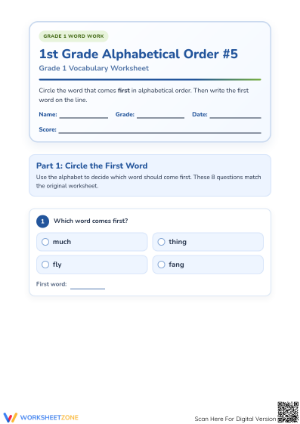
These alphabetical order printable worksheets for 1st grade give teachers a ready-to-use sequencing practice set that meets six- and seven-year-olds at exactly the right instructional moment — after letter recognition is solid but before dictionary navigation feels urgent. Each worksheet focuses on first-letter ordering, the developmentally appropriate target for Grade 1, with select worksheets introducing same-first-letter pairs for students who move through the core skill quickly.
The Specific Skills These Worksheets Target
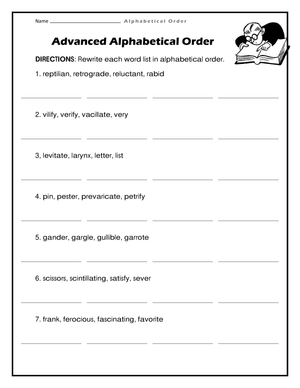
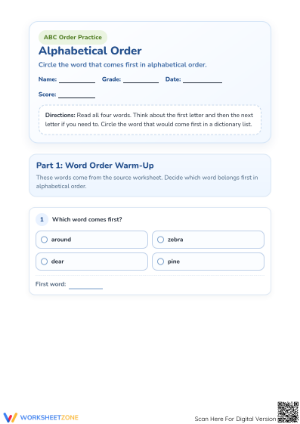
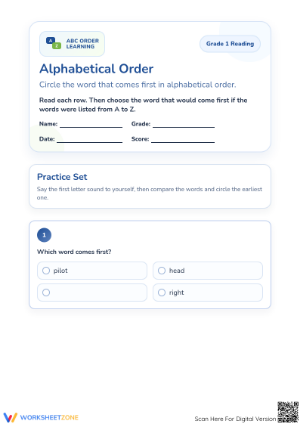
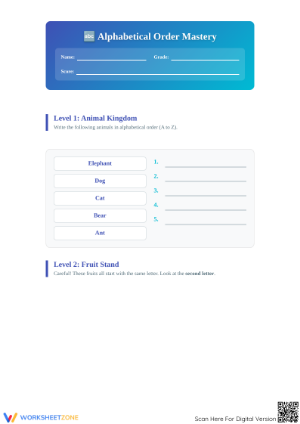
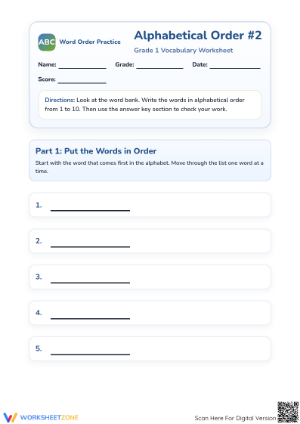
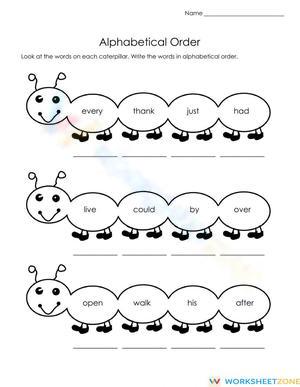
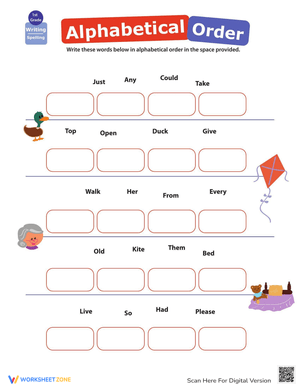
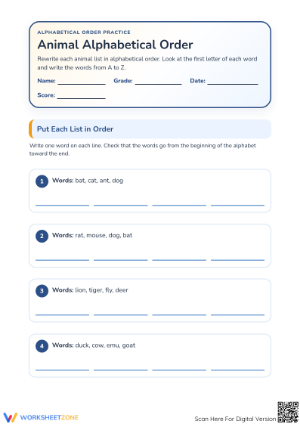
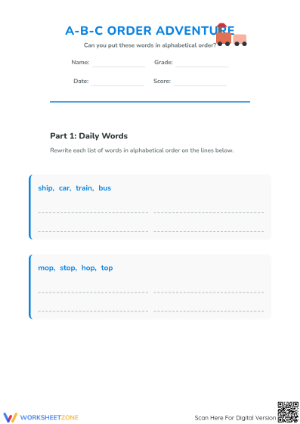
The set moves students through a deliberate progression rather than repeating the same task format on every worksheet. Early worksheets ask students to sort three-word lists where starting letters sit far apart in the alphabet — "cat," "moon," "sun" before "bear," "bug," "bat." Later worksheets increase list length to five words and reduce the distance between starting letters. A subset of worksheets uses cut-and-paste sequencing, where students physically arrange word strips before gluing them down — a format that benefits students who need to manipulate words before committing to writing.
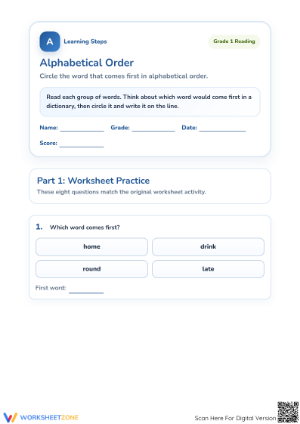
- Identifying which of two words comes first in alphabetical order
- Sorting three- and five-word lists by first letter
- Writing words in correct sequence rather than circling or marking
- Cut-and-paste ordering tasks for hands-on practice
- Using an embedded alphabet reference strip to self-check positioning
Mistakes Students Make That These Worksheets Surface Early
The most consistent error in first-grade alphabetizing is the gap between sequential knowledge and positional knowledge. A student can sing the alphabet from A to Z without hesitation and still pause on "does G or J come first?" — because the alphabet lives in their head as a song chain, not as a numbered map. Watch for students who mouth the song quietly, starting from A every time they need to compare two letters. That behavior is developmentally expected in September; it becomes a pattern worth flagging if it persists through February without improvement.
A second predictable error surfaces the moment two words share a first letter. Students who sort confidently when starting letters are distinct will default to word length when the first letter matches — placing "ant" before "apple" because it is shorter, not because n precedes p. These worksheets surface that misconception before it carries into 2nd-grade dictionary work, where the same confusion derails entry-finding entirely.
Smart Ways to Work These Worksheets Into Your Week
These worksheets fit cleanly into literacy centers, morning work bins, and the ten minutes of independent practice that follow a phonics lesson. A particularly effective placement is immediately after a shared reading where students noticed words beginning with the same letter — the connection between that observation and what the worksheet asks them to do is apparent enough that very little transition instruction is needed. Alphabetical order practice also pairs naturally with content vocabulary: pulling five words from a current science or social studies unit and asking students to sequence them ties the mechanics to material they already care about.
The alphabetical order printable worksheets for 1st grade in this set include an alphabet reference strip along the top of each worksheet. This is not a shortcut — it is a deliberate instructional decision. When students can offload the recall burden to a visual reference, cognitive load drops enough that they can concentrate on the comparison task itself. A student who still freezes even with the strip visible is telling you something important about whether alphabet sequencing is truly automatic yet.
Standard Alignment
The formal Common Core standard for alphabetizing — CCSS.ELA-LITERACY.L.2.2e, which asks students to use first-letter alphabetical order to locate entries in a reference book — is assigned to 2nd grade. These worksheets earn their place in Grade 1 because that standard is only achievable if students arrive at 2nd grade with first-letter positioning already automatic. A student uncertain whether F precedes K will not navigate a dictionary successfully regardless of decoding ability. Placing this practice in Grade 1, while phonics and letter knowledge are still actively being built, puts the skill in the right instructional window — reinforcing the A-Z sequence while it is fresh enough to internalize as structure rather than rote performance.
Adjusting the Worksheets for a Range of Learners
For students who are still uncertain of the full alphabet sequence, pair the worksheet with a laminated personal alphabet strip kept at their desk. This removes letter recall from working memory entirely and isolates the comparison task: which of these two letters comes first? It functions as a genuine support structure — once positional knowledge becomes automatic, students stop reaching for the strip without being told to.
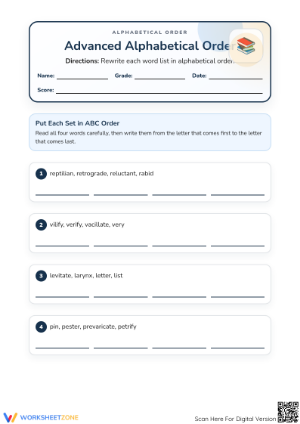
For students who master first-letter ordering quickly, cover the initial letter of each word with a small sticky note after the first sort is complete. Now they must examine the second letter to break ties — exactly the skill the 2nd-grade standard will demand. That adjustment requires no additional materials and takes about thirty seconds to set up per worksheet. The alphabetical order printable worksheets for 1st grade in this set work across that full range without any structural changes to the core task.
Frequently Asked Questions
How do you introduce alphabetical order without overwhelming students who are still shaky on letter sequence?
Start with the students' own first names. Write four or five names on the board, choose ones that begin with clearly different letters, and ask the class which name belongs first. The personal connection makes the abstract logic concrete, and because the names are already familiar, students are not simultaneously decoding and sequencing. Once the class has sorted names together two or three times as a group, the transition to the worksheet's word lists feels like the same job with new words rather than a completely different task.
Should 1st graders be alphabetizing by the second letter?
Not as a class-wide expectation. Most Grade 1 students are still building automatic recall of letter position, and introducing second-letter work before first-letter ordering is solid tends to produce surface compliance rather than real understanding — students guess rather than reason. Reserve second-letter practice for students who are clearly beyond the first-letter work, and treat it as a differentiation move rather than a pacing accelerator for the whole class.
Can these worksheets double as assessment tools rather than just practice?
Yes, and it is worth doing intentionally. An unassisted sort — no reference strip, no partner — on one of the mid-set worksheets gives a clear snapshot of whether a student's first-letter knowledge is automatic or still effortful. That distinction matters for grouping decisions and for identifying students who may need more systematic letter-sequence review before 2nd-grade reference work begins. The alphabetical order printable worksheets for 1st grade in this set work as informal formative checks or structured practice depending on how you frame the task and what support you allow during the attempt.












 Interactive Worksheet Maker
 Quiz Maker
 Word Search Maker
 Crossword Puzzle Maker
 Word Scramble Generator
 Sentence Scramble Generator
 Handwriting Worksheet Generator
 Name Tracing Generator
 Fill In The Blank Generator