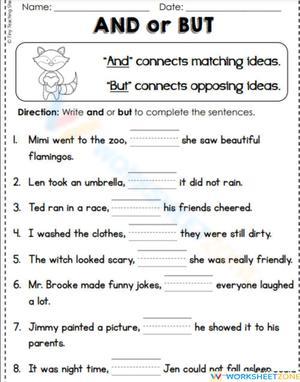
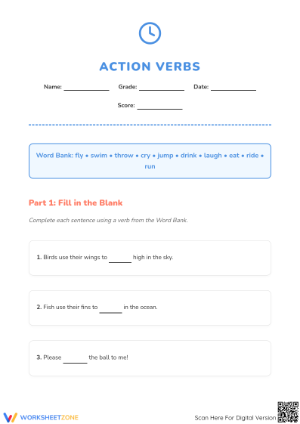
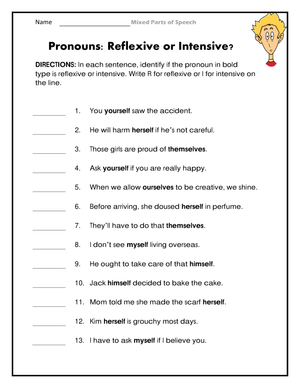
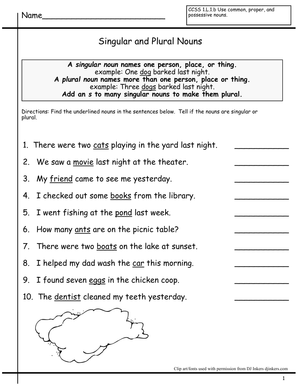
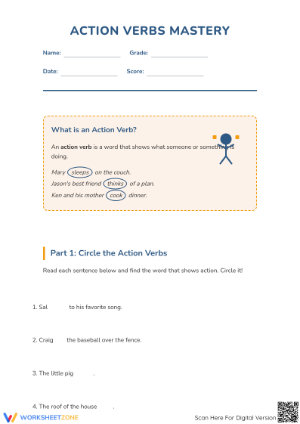
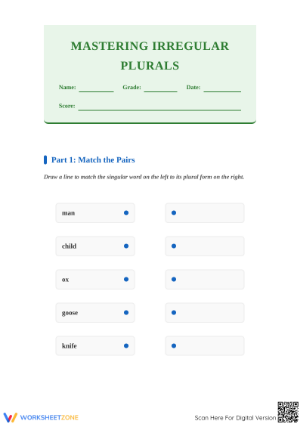
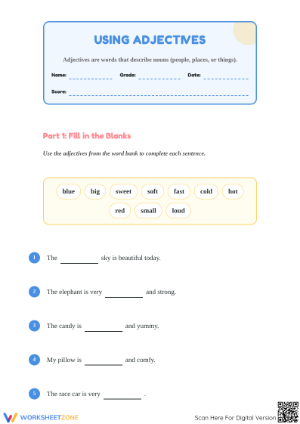
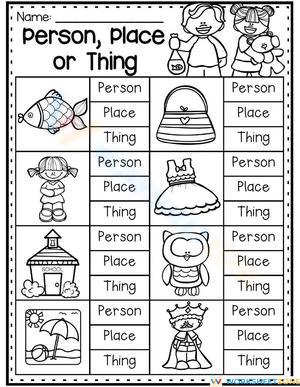
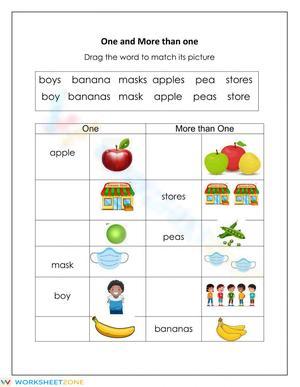
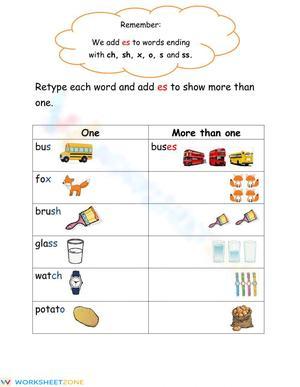
Parts of speech printable worksheets for 1st grade give teachers a set of standalone practice activities covering nouns, verbs, adjectives, and basic function words — enough range to support a full grammar unit from introduction through review. Each worksheet targets a specific skill through a format built for six- and seven-year-olds: word sorts, color-coding tasks, sentence-level identification, and fill-in-the-blank exercises with word banks. Together they form a ready stack of resources that drop cleanly into morning work, guided practice, or literacy centers without any prep beyond printing.
Skills Each Worksheet Builds
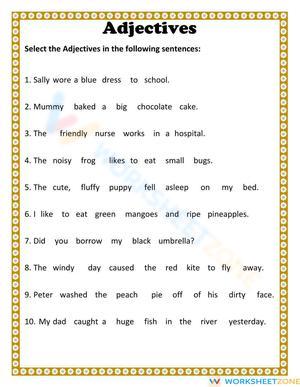
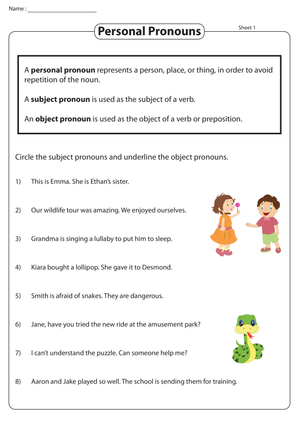
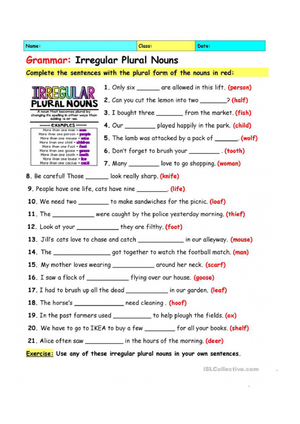
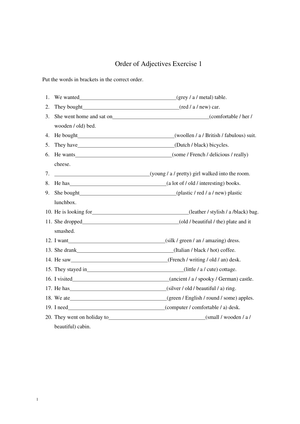
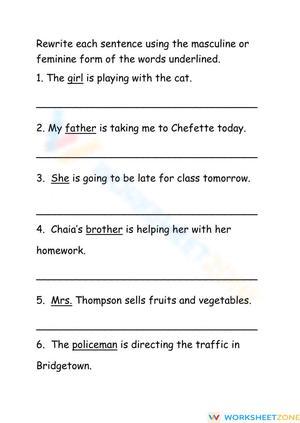
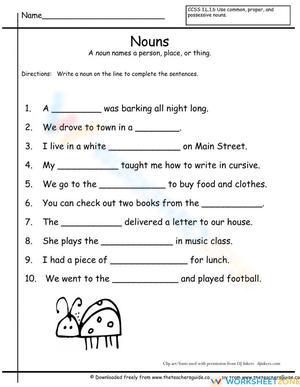
The set addresses every major parts-of-speech category taught in first grade. Noun worksheets distinguish common nouns from proper nouns — dog versus Rosa, park versus Oak Street — and introduce possessive forms through sentence-rewrite tasks. Verb worksheets move students from present-tense action words into past and future constructions: jump / jumped / will jump, using short sentence frames that keep tense relationships visible without overwhelming early readers. Adjective worksheets focus on descriptive words that modify nouns inside short phrases, asking students to mark which word tells what kind or how many rather than treating adjectives as vocabulary items stripped of context.
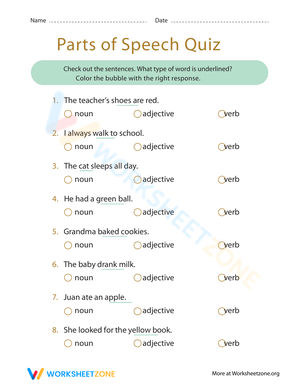
Several worksheets bring all three categories together, asking students to underline the noun, circle the verb, and draw a box around the adjective within the same simple sentence. That simultaneous identification gives teachers a formative snapshot of where each student stands across all three categories from a single completed page.
Student Error Patterns Worth Catching Early
The most consistent first-grade grammar mistake could be called noun-phrase collapse: a student who correctly identifies ball as a noun will circle red ball when asked to find the noun in a sentence, fusing the adjective and the noun into a single unit. The reliable fix is deliberate comparison — show the sentence with the adjective removed (The ball bounced) and ask whether it still names a thing. When the answer is yes, the noun boundary becomes visible in a way that a definition alone never produces.
Verb-adjective confusion surfaces on sentence-level worksheets just as predictably. In a sentence like The rabbit is small, students frequently circle is small as the verb because the predicate reads as one semantic chunk. This is developmentally normal at age six and worth addressing explicitly during guided practice rather than simply marking wrong and moving on. A separate, persistent pattern: students who correctly capitalize Monday on a calendar exercise will still write monday and mrs. chen in their own compositions because the recognition skill arrives before the production habit does. Sentence-level identification worksheets document the receptive side of that gap; what shows up in student writing reveals the other half.
How to Work These Worksheets Into Your Weekly Routine
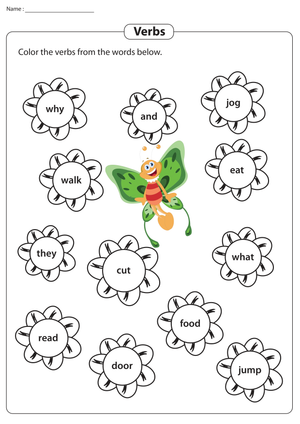
The sorting and coloring worksheets fit naturally into the 10 minutes after morning meeting when students need a focused, low-stakes task before the first lesson begins. A color-by-part-of-speech worksheet placed on desks during that window lets the class settle in, and the finished page gives the teacher a fast visual read on who absorbed yesterday's instruction before the group moves on.
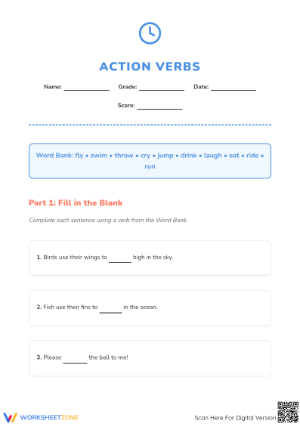
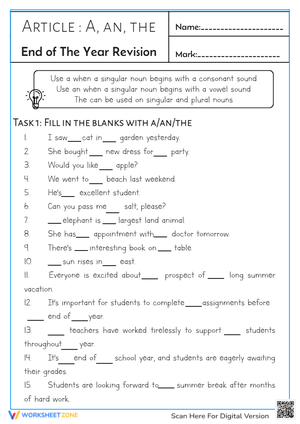
For guided practice, distribute a worksheet immediately after a mini-lesson and complete the first two items together before releasing students to work independently. This gradual-release structure keeps cognitive load manageable — students are not left staring at a blank page after a single explanation, and the shared items become a reference point they can check during independent work. The fill-in-the-blank format works especially well in this setting: working through the first answer as a class models the decision-making process out loud, and the word bank keeps the remaining items accessible without reducing the grammar challenge.
Pairing a worksheet with a picture-book read-aloud is among the strongest uses of the set. After finishing a story, hand students a noun-verb-adjective recording sheet and ask them to pull one example of each from the text. The grammar task becomes purposeful rather than abstract, and students who freeze on decontextualized exercises find their footing when they can point back to a sentence they just heard read aloud.
Standard Alignment
These worksheets map directly to CCSS.ELA-LITERACY.L.1.1, the Grade 1 language standard governing grammar and usage. The subsections cover the specific targets: L.1.1.b (common, proper, and possessive nouns), L.1.1.c (singular and plural nouns with matching verbs), L.1.1.d (personal, possessive, and indefinite pronouns), L.1.1.e (verbs expressing past, present, and future), and L.1.1.f (frequently occurring adjectives). Parts of speech printable worksheets for 1st grade address these subsections directly, which means a completed sort or sentence-identification page serves as dateable, artifact-level evidence of a student working toward a specific standard code — useful in both standards-based grading systems and traditional progress reports where teachers need to show documented formative progress.
Adjusting the Worksheets for a Range of Learners
For students still building decoding fluency, print the sorting worksheets with a small picture beside each word card. That image removes the decoding barrier so the grammar categorization remains the focus of the task. Trimming a 12-card sort to 6 cards is enough to make the activity successful for a student who needs it — the student still categorizes nouns, verbs, and adjectives; there are simply fewer decisions held in working memory at once.
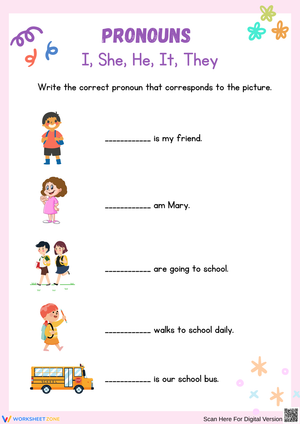
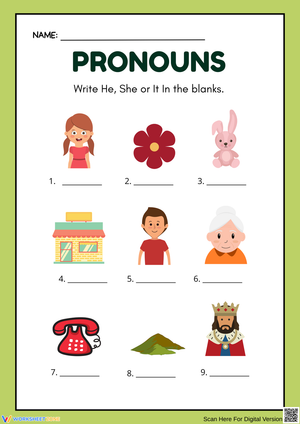
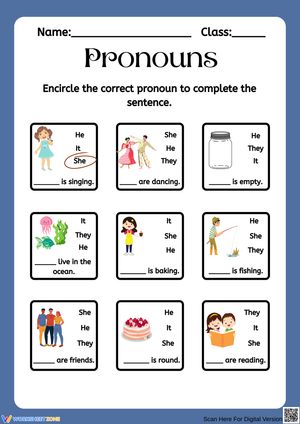
Students who already have the basic noun-verb-adjective distinction in place can work with worksheets that add pronouns and prepositions, converting a three-column sort into a five-column sort. Removing the word bank from any fill-in-the-blank worksheet and asking students to supply their own answers raises the demand sharply without requiring a different worksheet entirely. Parts of speech printable worksheets for 1st grade span enough formats and categories that the same L.1.1 standard can be practiced at meaningfully different challenge levels within the same lesson block, which makes differentiated small-group instruction more manageable without requiring separate planning tracks.
Frequently Asked Questions
Which parts of speech should students know by the end of first grade?
By the end of Grade 1, students are expected to identify and use common, proper, possessive, singular, and plural nouns; verbs in past, present, and future tense; frequently occurring adjectives; personal, possessive, and indefinite pronouns; and basic conjunctions and prepositions. These expectations come directly from CCSS.ELA-LITERACY.L.1.1 and represent the grammatical foundation students carry into second-grade sentence-structure work.
In what order should noun, verb, and adjective worksheets be introduced?
Nouns first, then verbs, then adjectives is the sequence most first-grade teachers use — and for good reason. Students arrive with an intuitive sense of naming words from kindergarten, so noun worksheets activate prior knowledge before pushing it deeper. Verbs follow because action words are concrete and performable; students can act out jump or sit to confirm their answer before writing it. Adjectives come last because the category requires a working understanding of what nouns and verbs are before students can reason about what adjectives are not. Parts of speech printable worksheets for 1st grade work best when distributed in this sequence rather than grabbed at random — the conceptual progression matters for students who are building the categories for the first time.
Do word banks on the worksheets make the tasks too easy?
Word banks reduce spelling and recall demands that directly compete with grammar thinking at this age. A six-year-old who cannot spell frightened will skip or abandon a fill-in-the-blank sentence rather than risk the attempt — the word bank redirects that energy toward categorization and sentence sense, which is the target skill. The grammar challenge remains intact: students still decide whether a word fits a noun slot or an adjective slot. For students who need more challenge, removing the word bank is a single adjustment that raises the demand without printing anything new.
How many grammar worksheets per week is realistic for first grade?
Two to three per week integrates comfortably into most first-grade schedules without crowding out writing instruction or read-aloud time — the very contexts where students apply what these worksheets practice. One worksheet as morning work and one during guided practice after a mini-lesson delivers the four-to-six spaced exposures that research on new grammar concepts suggests are needed before the skill transfers to student writing. More than three per week tends to reduce the quality of student attention rather than increase retention.












 Interactive Worksheet Maker
 Quiz Maker
 Word Search Maker
 Crossword Puzzle Maker
 Word Scramble Generator
 Sentence Scramble Generator
 Handwriting Worksheet Generator
 Name Tracing Generator
 Fill In The Blank Generator