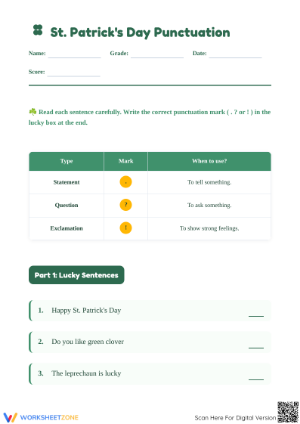
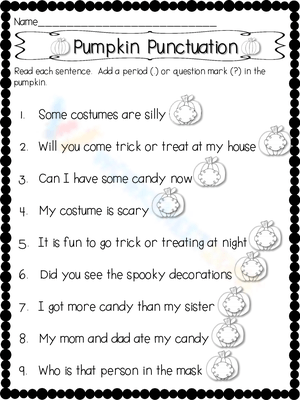
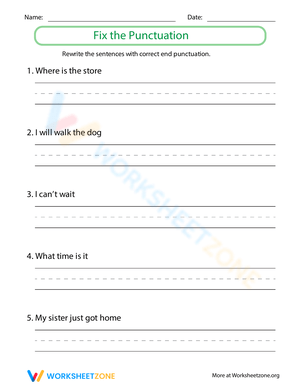
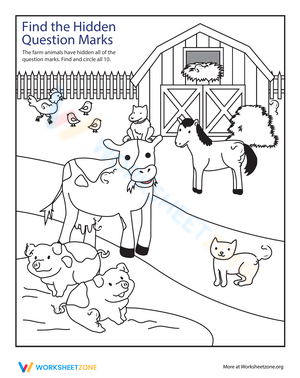
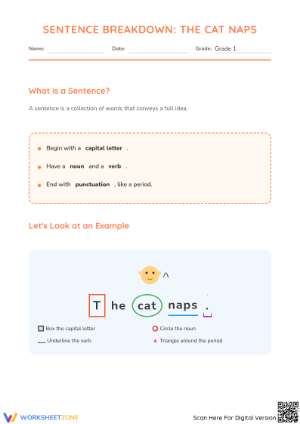
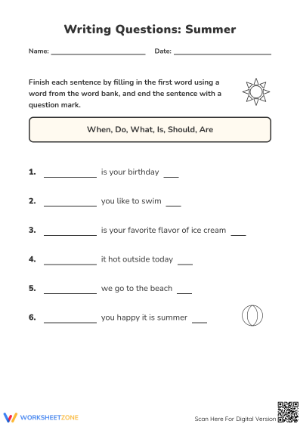
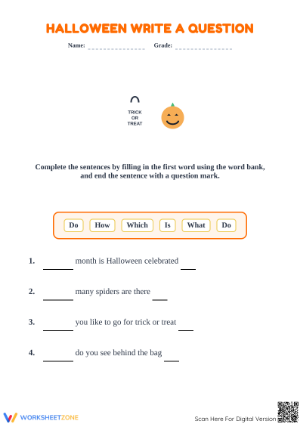
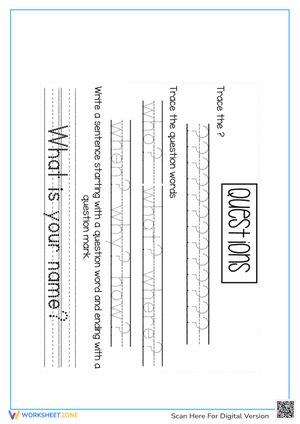
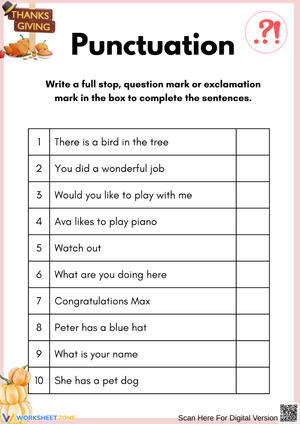
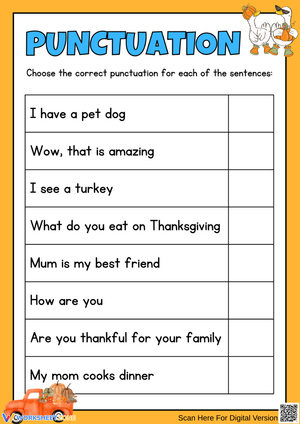
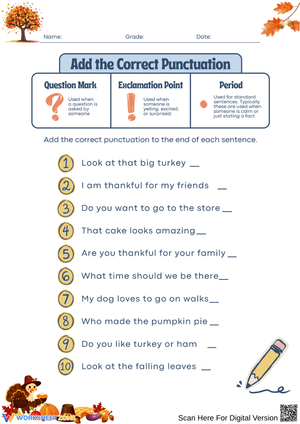
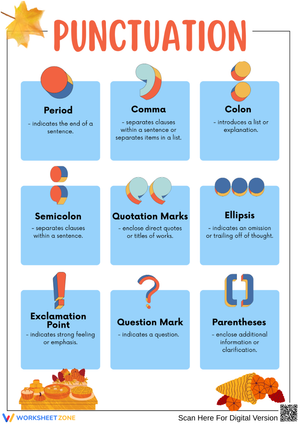
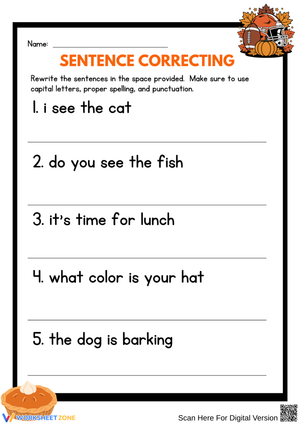
These 1st grade punctuation printable worksheets put five discrete punctuation skills in front of students — period at the end of a statement, question mark, exclamation point, comma in a date, and comma in a short series — in a format teachers can drop into any slot in the literacy block without additional prep. Each worksheet stays on one skill so the feedback loop is tight and students are reasoning rather than guessing. That focus is not incidental; when first graders encounter too many new rules on the same page, they default to pattern-matching instead of thinking about what the sentence actually means.
The Specific Skills Targeted in Each Worksheet
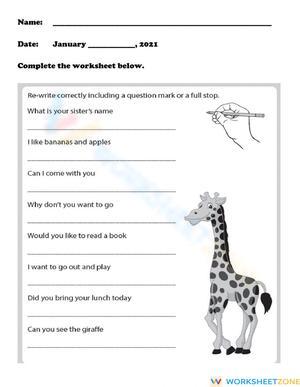
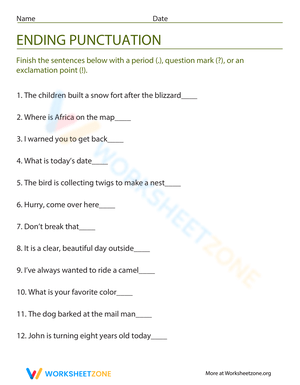
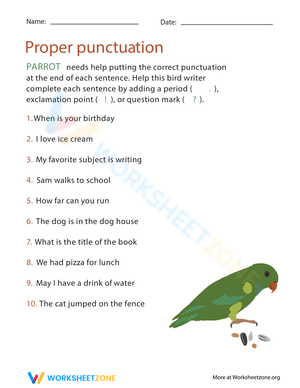
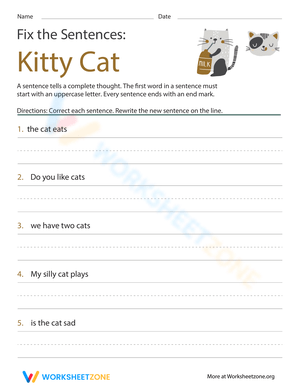
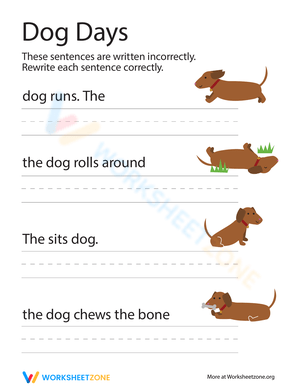
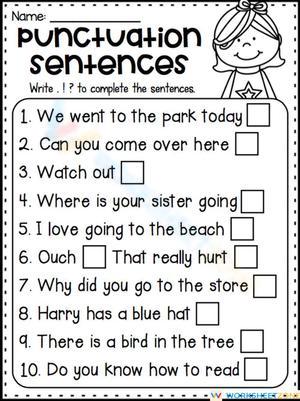
The set moves from the most concrete skill to the more abstract. End marks come first because they connect directly to something students already do orally — they know a question sounds different from a statement. Each worksheet asks students to read a sentence, decide what kind of sentence it is, and write the correct end mark. A later group of worksheets moves to comma use: students practice placing the comma in a date format and separating items in a three- or four-word series. Because both comma rules are addressed separately before any combined practice, students build one anchor at a time.
- Placing periods at the end of statements — including sentences that end with a short word like it or me, which first graders often skip the mark on
- Distinguishing question marks from periods, including questions that open with a verb rather than a question word
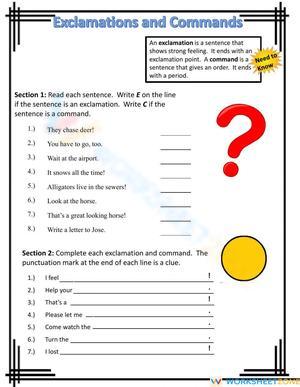
- Using exclamation points selectively for sentences that express strong feeling, not just sentences the student finds interesting
- Writing a date with the comma correctly placed between the day number and the year
- Separating three or four items in a series, including the item directly before and
Why Keeping Each Worksheet to One Rule Pays Off at This Grade
First graders are managing the cognitive load of letter formation, spelling, and sentence sense simultaneously. Asking a student who is just learning what a question is to also remember comma placement taxes working memory in a way that produces errors unrelated to either skill. By keeping each worksheet focused on one rule, students get clean data about what they actually understand — and so do teachers. A page of comma-in-dates work shows immediately which students need another pass, without the confusion of whether the error is about punctuation or sentence type.
The oral-to-written transition happening in Grade 1 makes punctuation marks especially teachable at this developmental moment. Students already know, from speech, that their voice drops at the end of a statement and rises at the end of a question. Worksheets that ask students to say the sentence aloud before writing the end mark use that prior knowledge as a bridge into the written system. This is a more reliable entry point than explaining the abstract rule first and hoping students connect it to their experience later.
Mistakes Students Make That These Worksheets Help You Catch
The most consistent error in first-grade punctuation work is misplacing the end mark. Students who understand the rule will sometimes write the period after the second-to-last word — particularly in sentences that end with a short, unstressed word. They are looking for a natural stopping point rather than reading to the actual end. Having students circle the last word before adding the mark corrects this quickly and transfers to independent writing within a week or two.
Exclamation point overuse is a separate but equally predictable pattern. First graders find the mark exciting and tend to apply it to any sentence they feel enthusiastic about, regardless of whether the sentence itself expresses strong emotion. The worksheets that ask students to sort sentences — does this need a period or an exclamation point? — slow that habit down, because students have to justify the choice rather than just reach for the mark they like.
For comma work, the date is the more teachable of the two rules, but students frequently write the comma before the month name rather than after the day number, producing something like May, 31 2026 instead of May 31, 2026. Posting the correct date format on the classroom word wall next to the relevant worksheet reduces that error quickly — students can self-check before they move on.
Smart Ways to Work These Worksheets Into Your Week
These 1st grade punctuation printable worksheets fit naturally into the first ten minutes of the morning literacy block — short enough to complete before the main lesson, substantive enough to generate a quick discussion. Project the worksheet, complete the first two items as a class with students explaining their thinking aloud, then release them to finish independently. That three-step sequence gives you a formative read before the lesson even begins. The students who are uncertain show up immediately because they follow the class rather than committing to an answer on their own.
In small groups, use the worksheets differently. Rather than projecting, have each student mark a worksheet individually and then read each sentence aloud with the inflection that matches the end mark they chose. That auditory check catches errors that written answers can hide — a student who circles the question mark but reads the sentence with a flat, declarative voice is giving you important information about whether the concept has actually landed.
Differentiating These Worksheets for a Mixed-Ability Class
For students who are still working on reading the sentences independently, pairing the 1st grade punctuation printable worksheets with a teacher-led pullout removes the decoding barrier without removing the punctuation challenge. Read the sentence aloud and ask the student which mark it needs — that isolates the punctuation decision cleanly. Conflating a punctuation error with a reading error produces inaccurate data about both skills.
Students who move through the end-mark worksheets quickly are ready for extension before the rest of the class advances. Give them a short unpunctuated paragraph — three or four sentences — and ask them to add every missing mark, then explain in one spoken sentence why each mark belongs where it does. That explanation step is harder than the marking step and pushes toward the metalinguistic awareness that shows up in strong writers by second grade. It also makes the extension feel like a different kind of task rather than just more of the same.
Standard Alignment
These worksheets address CCSS ELA-Literacy.L.1.2.b, which requires students to use end punctuation for sentences, and CCSS ELA-Literacy.L.1.2.c, which addresses comma use in dates and to separate single words in a series. In classroom terms, L.1.2.b typically receives explicit instruction in the first quarter of Grade 1 alongside sentence writing, while L.1.2.c is introduced mid-year after students have a stable command of end marks. The worksheets in this set follow that natural sequence, so assigning them in order maps cleanly onto most pacing guides without any reorganization.
Frequently Asked Questions
What order should I introduce these punctuation marks?
Periods first — they are the most common mark and connect directly to the concept of a complete sentence, which students are building at the same time. Once students place periods consistently, introduce question marks starting with sentences that open with a recognizable question word. Exclamation points typically follow, and commas work best after end marks are solid. Rushing commas before end marks are automatic adds confusion without instructional payoff.
How do I handle students who can't read the sentences on the worksheet independently?
Read the sentence aloud to the student and ask them to tell you whether it sounds like a statement, a question, or an exclamation. The punctuation decision becomes clear once the decoding load is removed. This separates the two skills cleanly and gives you accurate information about punctuation understanding rather than a combined reading-and-punctuation error signal.
Can these worksheets serve as a quick formative assessment rather than just practice?
Yes. Any worksheet covering a single skill makes a clean formative snapshot. Assign it without prior discussion, score it in a few minutes, and you have a clear picture of where each student stands before you plan the next lesson. A set of 1st grade punctuation printable worksheets used this way across the year also creates a visible record of growth — useful during parent conferences and when making intervention referrals.
Do these worksheets address the comma before "and" in a series?
No. CCSS L.1.2.c requires commas to separate single words in a series, and at Grade 1 the appropriate focus is on placing commas between items. Whether the final comma before and is required or optional is a style question that belongs in upper elementary, not in first grade. Introducing that question here adds confusion without moving students closer to the standard.












 Interactive Worksheet Maker
 Quiz Maker
 Word Search Maker
 Crossword Puzzle Maker
 Word Scramble Generator
 Sentence Scramble Generator
 Handwriting Worksheet Generator
 Name Tracing Generator
 Fill In The Blank Generator