


























Views
Downloads
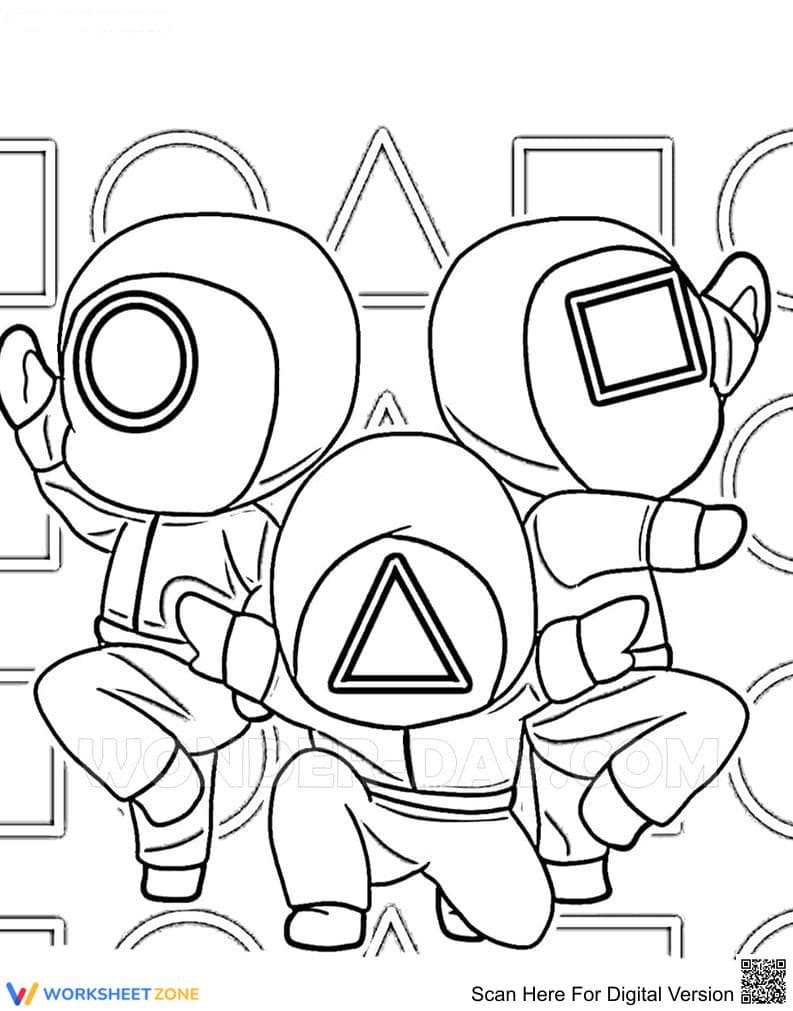

Squid Game Coloring Page | Essential Grade K-5 Printable
Paste this activity's link or code into your existing LMS (Google Classroom, Canvas, Teams, Schoology, Moodle, etc.).
Students can open and work on the activity right away, with no student login required.
You'll still be able to track student progress and results from your teacher account.
This printable Squid Game coloring page provides elementary students with a creative outlet to develop essential fine motor control and visual spatial awareness. By engaging with popular culture chibi characters, learners practice precision and color selection in a high-interest format. It serves as an excellent bridge between artistic expression and foundational writing readiness.
At a Glance
- Grade: K-5 · Subject: English / Art
- Standard:
CCSS.ELA-LITERACY.SL.K.5— Add drawings or visual displays to descriptions to provide detail- Skill Focus: Fine motor control and creative expression
- Format: 1 page · 1 task · Answer key N/A · PDF
- Best For: Early finisher activity or brain break
- Time: 15–20 minutes
Inside this resource, you will find a single-page PDF featuring three iconic characters from the popular series, rendered in a child-friendly chibi style. The bold outlines are specifically designed to help younger students stay within the lines, while the geometric shapes on the masks (circle, triangle, square) reinforce basic shape recognition and visual discrimination.
The zero-prep workflow for this worksheet is designed for maximum efficiency. First, print the single-page PDF (30 seconds). Second, distribute the sheets along with crayons or colored pencils to your students (1 minute). Third, allow students to work independently while you transition between lessons or manage small groups. Total teacher setup time is under 2 minutes, making it an ideal sub-plan addition.
This activity aligns with `CCSS.ELA-LITERACY.SL.K.5`, which encourages students to use visual displays to enhance their communication. While primarily an art activity, the development of the small muscles in the hand is a direct prerequisite for writing conventions. Both standard codes can be copied directly into lesson plans, IEP goals, or district curriculum mapping tools.
Use this worksheet as a "hook" to engage students before a creative writing prompt about character design. Alternatively, it works perfectly as a formative assessment for fine motor grip and pressure control. Observe how students handle their coloring tools to identify those who may need additional occupational therapy support or pencil grips during the 20-minute session.
This resource is ideal for Kindergarten through 5th-grade students who enjoy modern media. It is particularly effective for English Language Learners (ELLs) as a low-stress way to participate in classroom culture. Pair this with a character description chart or a basic shapes anchor chart to extend the learning beyond the coloring page.
Research from Fisher & Frey (2014) emphasizes the importance of visual literacy and the gradual release of responsibility through engaging, low-stakes tasks. Coloring activities play a critical role in developing the hand-eye coordination necessary for fluent handwriting. According to the RAND AIRS 2024 report on student engagement, incorporating high-interest pop culture elements can increase task persistence by up to 40% in primary settings. This worksheet leverages the chibi aesthetic to maintain focus while students refine their motor skills. By providing a structured yet creative environment, educators can support the CCSS.ELA-LITERACY.SL.K.5 standard effectively. This resource ensures that even brain breaks contribute to the broader goal of visual communication and manual dexterity, making it a valuable addition to any K-5 classroom toolkit or sub-plan folder.


