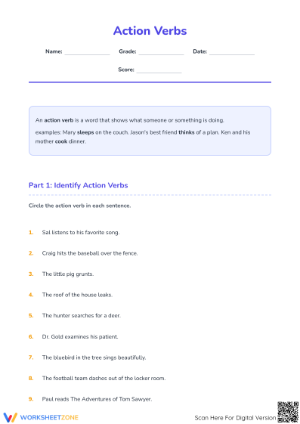
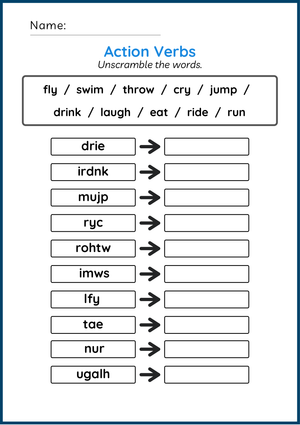
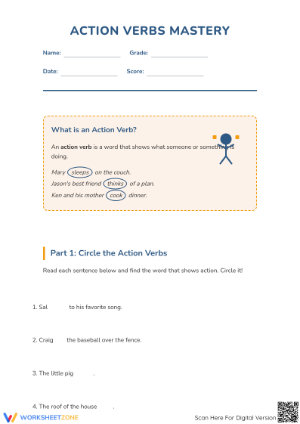
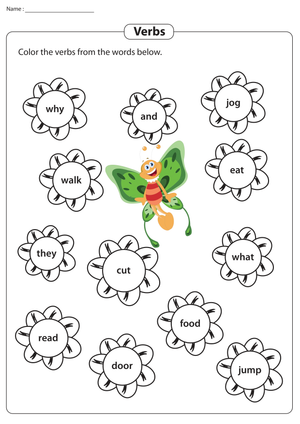
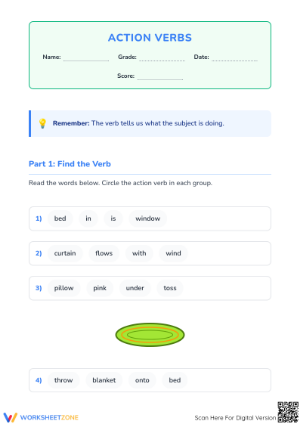
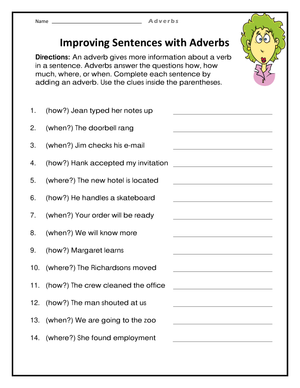
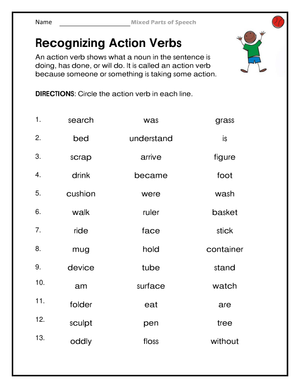
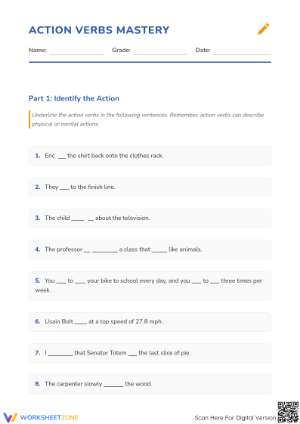
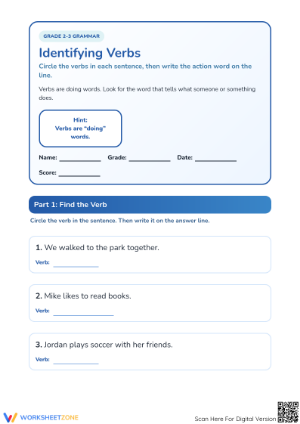
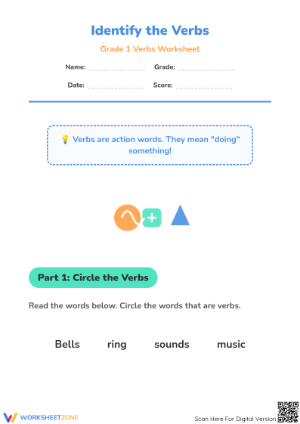
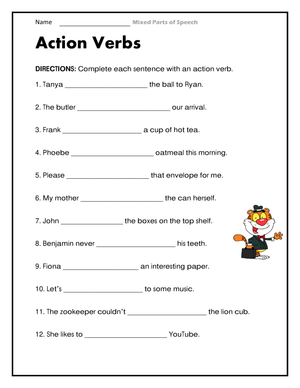
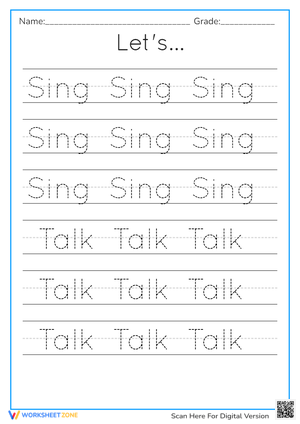
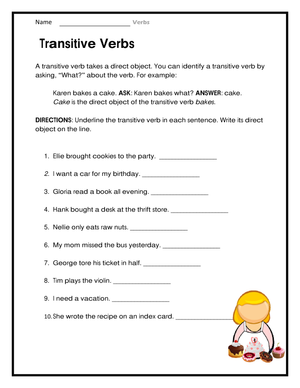
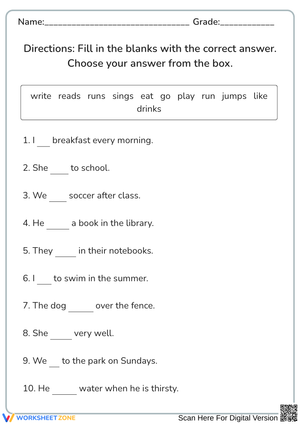
Action verbs are one of the first parts of speech students meet in early elementary grammar instruction, usually introduced right alongside nouns before teachers move on to adjectives and adverbs. For a Grade 1 or Grade 2 classroom, that early sequencing matters. Students need a solid handle on what a verb does before they can tackle the more nuanced tense and agreement work that comes later in the year. Action verbs worksheets give teachers a low-prep way to build that foundation, whether during whole-group instruction, a guided reading rotation, or a quick intervention pull-out session.
This kind of worksheet also works well as a bridge between grammar study and independent writing. Once a student can reliably spot the verb in a sentence, that skill transfers directly into their own sentence construction, self-editing, and later paragraph writing. Teachers who build in consistent verb practice early in the year often see fewer verb-agreement errors show up in student writing samples by the spring.
Sequencing Instruction: From Simple Identification to Tense Conversion
A useful way to plan action verb instruction across K-2 is to think of it in three stages. In kindergarten and early Grade 1, the goal is simple identification: can a student point to the verb in a short sentence and explain that it shows an action? By mid-Grade 1, instruction shifts toward using verbs to convey a sense of past, present, and future tense, so a sentence like Yesterday I walked home becomes Today I walk home and Tomorrow I will walk home. This progression lines up with CCSS.ELA-LITERACY.L.1.1.E, which specifically requires Grade 1 students to demonstrate command of verbs across all three tenses within connected sentences, not just in isolated word lists.
By Grade 2, students take on a harder task: irregular past tense verbs. CCSS.ELA-LITERACY.L.2.1.D calls for students to form and use the past tense of frequently occurring irregular verbs such as sat, hid, and told, none of which follow the predictable add an ed pattern. Worksheets that isolate irregular verbs from regular ones let teachers spend targeted time on this trickier subset instead of assuming students will absorb it through general exposure.
Verb Agreement: Pairing Singular and Plural Subjects Correctly
Verb tense is not the only grammar demand tied to action verbs in early grades. CCSS.ELA-LITERACY.L.1.1.C requires Grade 1 students to use singular and plural nouns with matching verbs in basic sentences, for example He hops compared with We hop. This is a subtle distinction for six- and seven-year-olds, since the verb form actually loses the s when the subject becomes plural, which runs counter to how plural nouns typically gain an s. Worksheets that pair a picture or short subject phrase with two verb choices, one singular-matching and one plural-matching, give students low-stakes repetition with this pattern before it shows up in their independent writing.
Supporting Multilingual Learners with Concrete Verb Practice
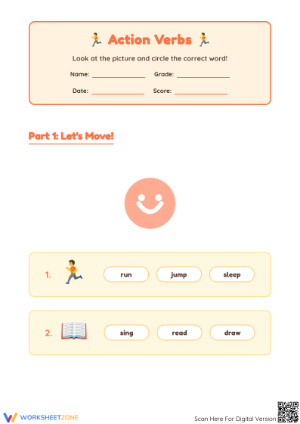
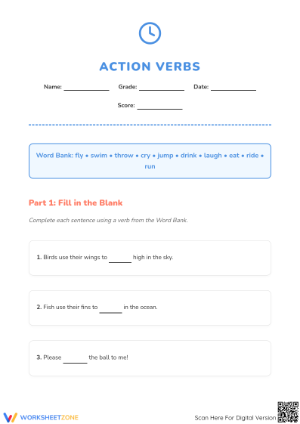
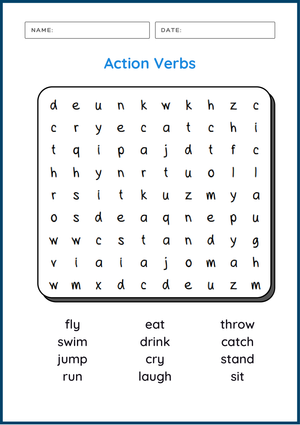
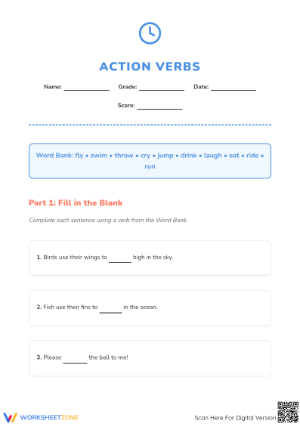
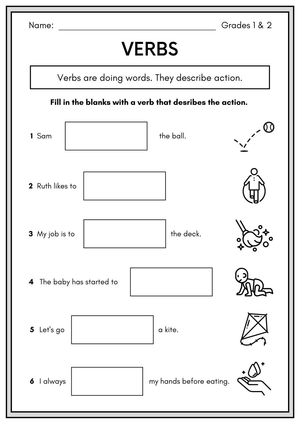
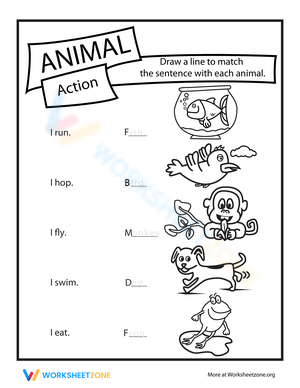
Multilingual learners often benefit from action verb instruction that leans on concrete, high-frequency verbs with strong visual support, run, eat, jump, sleep, rather than abstract or low-frequency verbs. Worksheets that pair each verb with a simple image let students connect the word to a physical action they can picture or act out, which reduces the language load while still targeting the same grammar standard as the rest of the class. Sentence frames with a fixed subject and object, where only the verb changes, also reduce the number of variables a multilingual learner has to manage at once, letting them focus their attention on the verb itself.
Classroom Implementation
To build action verb worksheets into a weekly routine, consider a short cycle: introduce the target verb skill on Monday with a whole-group worksheet and discussion, follow with a Tuesday small-group session for students who need more support, use Wednesday for a sentence-building or writing extension, and close the week with a Thursday or Friday formative check. This cadence keeps grammar instruction to roughly 10-15 minutes a day rather than requiring a dedicated block, which makes it realistic to sustain across a full unit on verbs.
When documenting instruction for lesson plans or coaching walkthroughs, action verb worksheets that target tense conversion can be tied directly to CCSS.ELA-LITERACY.L.1.1.E for Grade 1 or CCSS.ELA-LITERACY.L.2.1.D for Grade 2 irregular verbs, giving a clear standards citation alongside the practice material rather than a vague grammar label.
Frequently Asked Questions
1. How should teachers use action verb worksheets in a K-2 classroom?
Use them for short, focused practice, 10-15 minutes during whole-group instruction, small-group intervention, or as a quick formative check, and pair them with a brief writing extension so students apply the verb skill in their own sentences rather than only identifying it on the page.
2. What grade levels are action verb worksheets appropriate for?
They fit naturally across kindergarten through Grade 2. Kindergarten and early Grade 1 focus on simple verb identification, mid-to-late Grade 1 shifts toward past, present, and future tense, and Grade 2 adds irregular past tense verbs and subject-verb agreement in more complex sentences.
3. How do action verb worksheets align with Common Core language standards?
Worksheets focused on tense conversion support CCSS.ELA-LITERACY.L.1.1.E, which asks Grade 1 students to use verbs to convey past, present, and future tense. Worksheets on singular and plural subject-verb matching support CCSS.ELA-LITERACY.L.1.1.C, and worksheets isolating irregular past tense forms support CCSS.ELA-LITERACY.L.2.1.D for Grade 2.
4. What is the difference between action verbs and other types of verbs in early grammar instruction?
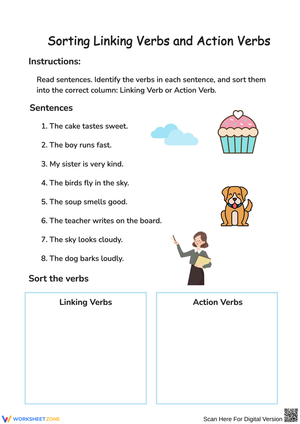
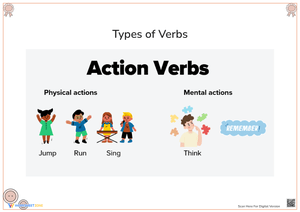
Action verbs show a physical or mental action a subject performs, like run, jump, or think, and are typically the first verb category K-2 students learn to identify, since they are easy to demonstrate and act out. Other verb types, like linking or helping verbs, are usually introduced later once students have a firm grasp of action verbs.
5. How can teachers use action verb worksheets to support struggling readers or English language learners?
Choose worksheets with concrete, high-frequency verbs paired with simple images, use sentence frames that keep the subject and object fixed so only the verb changes, and add a kinesthetic step, having students act out each verb, to reinforce meaning before asking them to complete written tense-conversion tasks.












 Interactive Worksheet Maker
 Quiz Maker
 Word Search Maker
 Crossword Puzzle Maker
 Word Scramble Generator
 Sentence Scramble Generator
 Handwriting Worksheet Generator
 Name Tracing Generator
 Fill In The Blank Generator