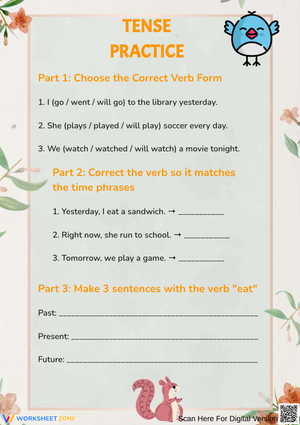
Future Tense Verbs: A Foundation for Narrative Writing
While past and present tenses often receive the bulk of early instructional time, future tense verbs are equally vital for students to express predictions, plans, and hypothetical scenarios. When teachers utilize future tense verbs worksheets resources, they provide a structured environment where students can experiment with the linguistic tools necessary to describe events that have not yet occurred. This conceptual shift from the 'now' and 'then' to the 'to be' requires focused practice and clear scaffolding to ensure that learners grasp the nuanced ways we talk about the future in English.
Future tense verbs worksheets materials are particularly effective because they offer a tangible way for students to see the relationship between time and language. By working through exercises that involve timelines and sentence completion, students begin to internalize the patterns of conjugation that define future actions. For teachers, these worksheets serve as a bridge between direct instruction and independent application. They allow for the repetition needed to move grammar rules from short-term memory into long-term mastery. As students become more comfortable with future tense forms, their writing expands from simple observations to complex narratives that encompass goals and logical sequences of upcoming events.
The Mechanics of Future Tense: Will, Shall, and Going To
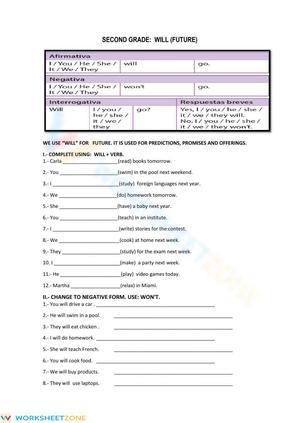
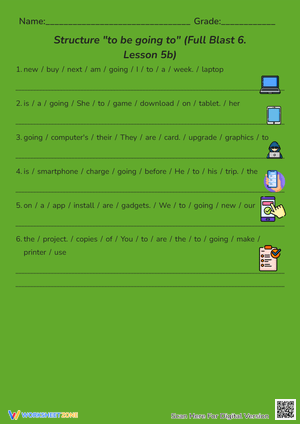
The most common way to form the future tense in English is by using the word 'will' followed by the base form of the main verb. For example, 'I will jump' or 'The sun will rise.' This structure is straightforward and often the first point of entry for young learners. However, as students progress, they must also learn the 'going to' construction, which is frequently used for planned actions or things that are about to happen based on current evidence.
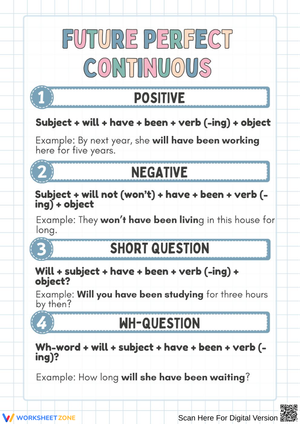
The Future Tense Verbs Grammar Guide from Grammarly notes that there are 4 distinct ways to express the future in English, ranging from simple actions to complex durations. Mastering these forms allows students to accurately describe planned events and predictions, which is a key milestone in reaching advanced literacy standards and ensuring professional-level writing clarity in later academic years.
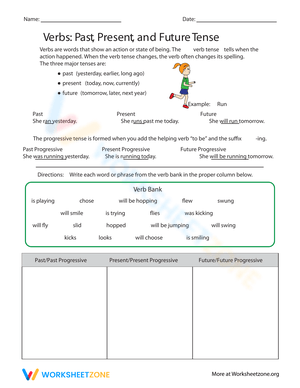
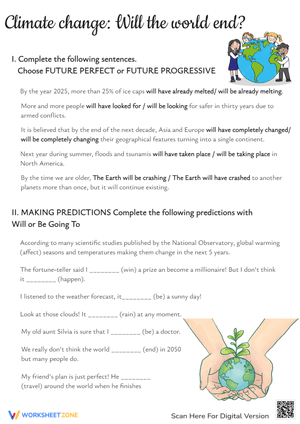
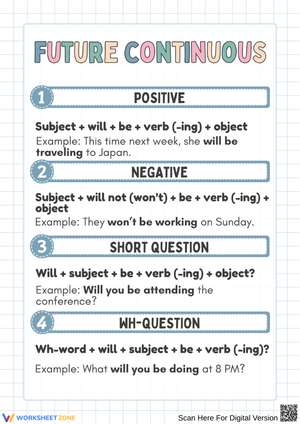
Beyond the simple future, teachers may introduce the future continuous tense, which describes actions that will be ongoing at a specific point in the future. While this might seem advanced for early elementary, introducing it through worksheets can help high-ability learners or those ready for enrichment. By using future tense verbs worksheets files that include varied sentence structures, teachers can introduce these concepts without overwhelming the class. The goal is to build a repertoire of verb forms that students can draw upon to make their writing more descriptive and accurate in its temporal placement.
Scaffolding Success: From Recognition to Application
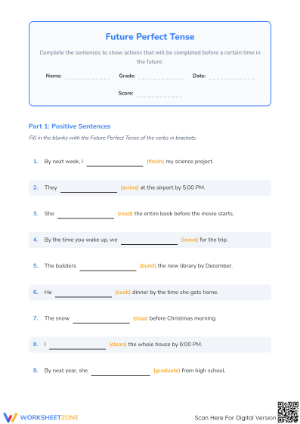
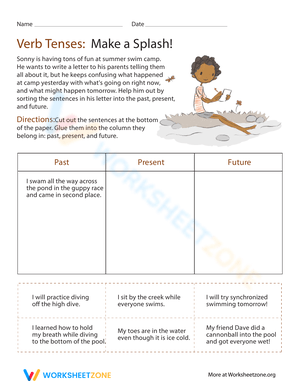
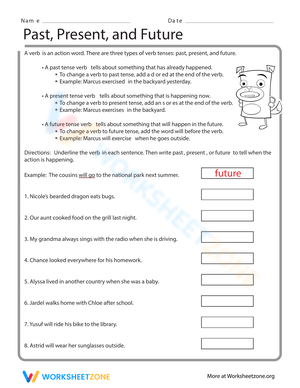
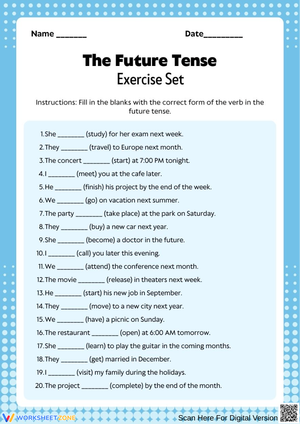
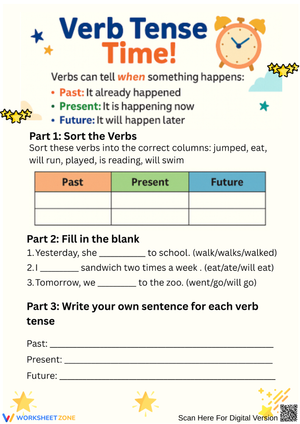
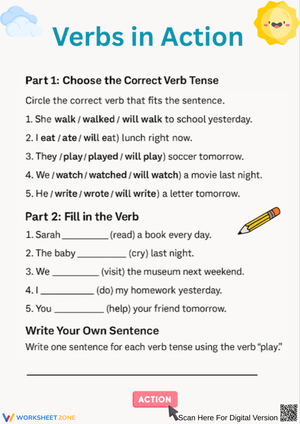
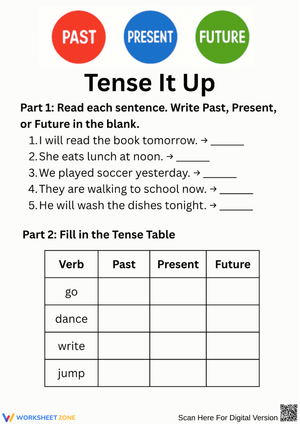
Initially, students should be presented with worksheets that ask them to identify future tense verbs within a paragraph. This stage is about training the eye to spot indicators like 'will' or 'going to.' Once students can reliably identify these forms, they can move on to fill-in-the-blank exercises where they supply the correct verb form for a given context.
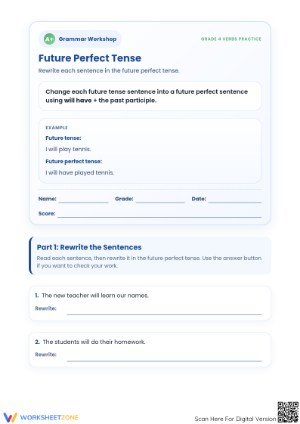
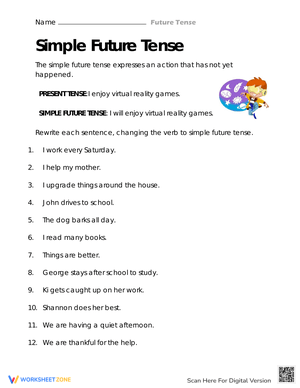
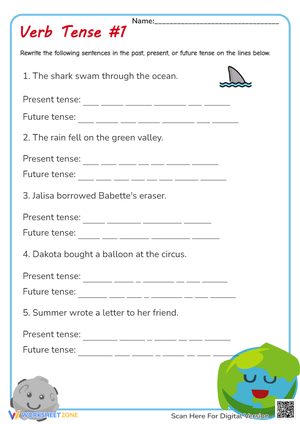
As learners gain confidence, the difficulty should increase. Transitioning to sentence transformation exercises—where students change a present tense sentence into the future tense—reinforces the rules of conjugation. For instance, changing 'She runs to the park' to 'She will run to the park' helps students see exactly which parts of the sentence change. This active manipulation of language is where true learning occurs, as it requires students to apply rules in a new and dynamic way.
Teacher Tips for Dynamic Verb Lessons
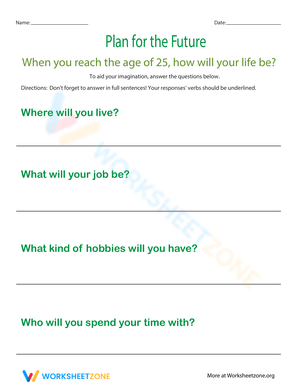
To keep grammar lessons engaging, supplement worksheet practice with interactive activities. One effective strategy is using a 'Future Timeline' in the classroom. Students can draw or write about events they expect to happen in the next hour or day. This visual representation helps solidify the concept of the future as a destination on a path of time. Linking abstract rules to their concrete reality makes the learning more relevant for young children.
Another tip is to incorporate games. A simple 'Fortune Teller' game, where students make predictions about their classmates, can turn a dry grammar lesson into a fun experience. You might have students use the 'will' form to make these predictions, reinforcing the rule in a social context. Combining these games with future tense verbs worksheets practice ensures that students get both the structured drill and the creative play they need to succeed.
Differentiating Instruction with Future Tense Verbs worksheets Tools
For English Language Learners (ELLs), you might provide worksheets that include more visual aids, such as pictures that correspond to the actions in the sentences. These visual cues help bridge the gap between the concept and the word, allowing students to focus on the grammar without being tripped up by unfamiliar vocabulary.
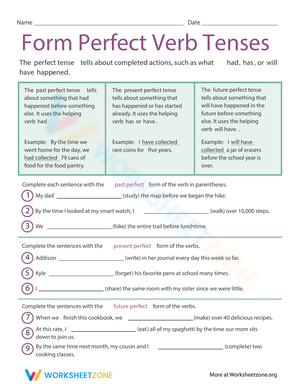
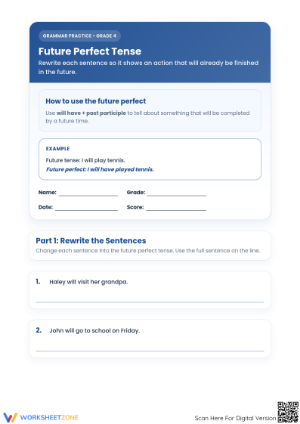
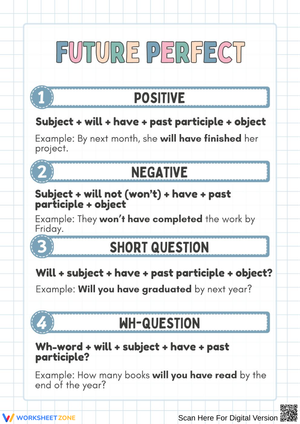
For students who struggle with fine motor skills or writing stamina, consider using worksheets with larger fonts and more space between lines. You might also allow these students to complete the exercises orally with a partner before writing down their answers. Conversely, for students who have already mastered the basics, you can provide enrichment worksheets that challenge them to use the future perfect tense. This ensures that everyone is working at their 'just right' level, preventing boredom for advanced learners and frustration for those who need more support.
Common Pitfalls in Learning Future Verb Forms
One of the most common challenges students face when learning the future tense is over-regularizing the rules. Just as they might say 'goed' instead of 'went' in the past tense, they might try to apply future tense rules in ways that sound awkward or incorrect. For instance, students sometimes forget to include the auxiliary verb 'will' or 'am/is/are' before the 'going to' phrase, resulting in sentences like 'I going to play.' Identifying these patterns of error early on is key to correcting them before they become ingrained habits.
While most elementary curricula focus on 'will' for future actions, teaching students the modal 'shall'—though less common in American English—provides an excellent opportunity to discuss formal register and the evolution of language, preparing them for more complex literary texts they will encounter in middle school. This exposure helps students understand that language isn't just a set of rigid rules, but a living system that changes based on context and audience, a realization that can significantly enhance their rhetorical awareness as they grow into more sophisticated writers.
Classroom Implementation: From Worksheets to Fluency
Integrating future tense verbs worksheets into your weekly schedule doesn't have to be a daunting task. A simple approach is to introduce a new verb tense on Monday, use Tuesday and Wednesday for guided worksheet practice, and then use Thursday and Friday for more creative and independent application. This structured progression gives students the time they need to absorb the new information and practice it in a variety of ways. By the end of the week, most students should feel comfortable using the future tense in both their spoken and written work.
Assessments should also be a part of your implementation plan. A quick exit ticket at the end of a lesson can give you a wealth of information about who 'gets it' and who might need a little more help. You could ask students to write one sentence about what they will eat for dinner, which is a quick and easy way to check for understanding. Use the data from these exit tickets to inform your small group instruction the next day, ensuring that no student falls through the cracks as you move through your grammar curriculum.
Frequently Asked Questions
1. How do you explain the future tense to elementary students?
The best way to explain the future tense is to relate it to things that haven't happened yet. Use a timeline to show that the future is everything that comes after 'now.' Introduce 'will' as the magic word that moves an action into the future, and provide plenty of examples from their daily lives, like 'We will go to recess later' or 'You will learn to read bigger books.'
2. What is the difference between 'will' and 'going to' for kids?
While the rules can be complex, a simple way to explain the difference is that we often use 'will' for quick decisions or general predictions, and 'going to' for things we have already planned. For example, 'I think it will rain' (prediction) vs. 'I am going to have a party' (plan). Using future tense verbs worksheets that contrast these two forms can help students see the patterns in context.
3. When should teachers start teaching future tense verbs?
Future tense is typically introduced in 1st or 2nd grade, after students have a basic grasp of present and past tenses. At this age, the focus is on the simple future using 'will.' As students move into 3rd and 4th grade, you can introduce more complex forms like 'going to' and eventually the future continuous tense, always using age-appropriate future tense verbs worksheets to support their learning.












 Interactive Worksheet Maker
 Quiz Maker
 Word Search Maker
 Crossword Puzzle Maker
 Word Scramble Generator
 Sentence Scramble Generator
 Handwriting Worksheet Generator
 Name Tracing Generator
 Fill In The Blank Generator