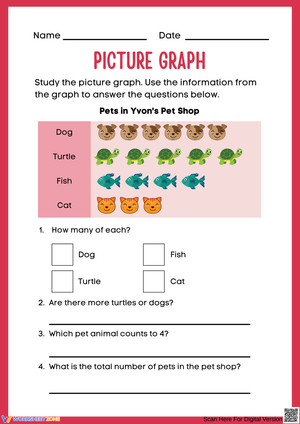
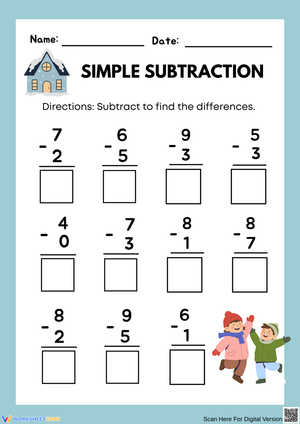
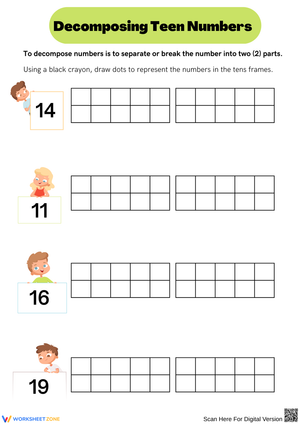
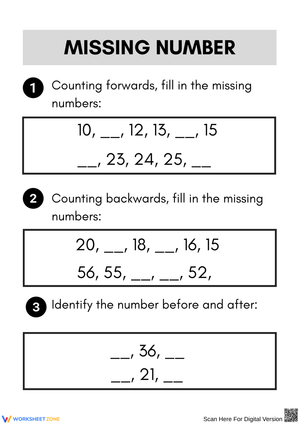
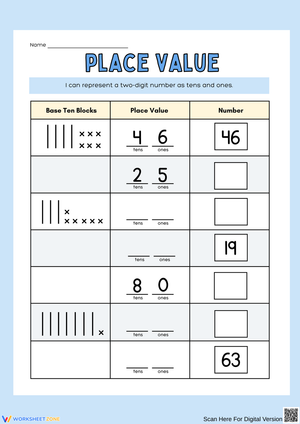
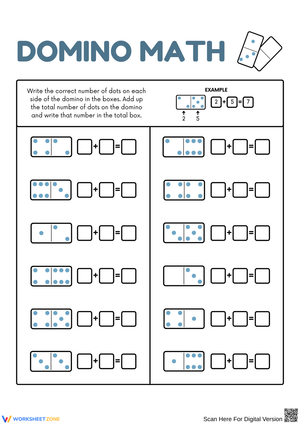
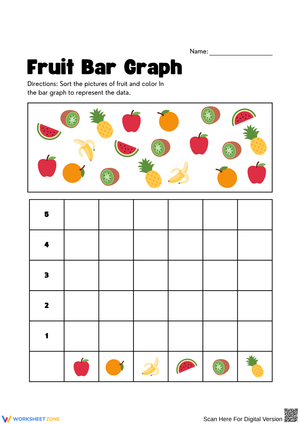
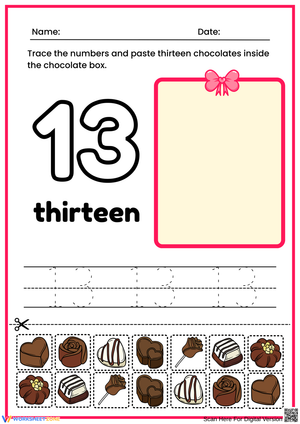
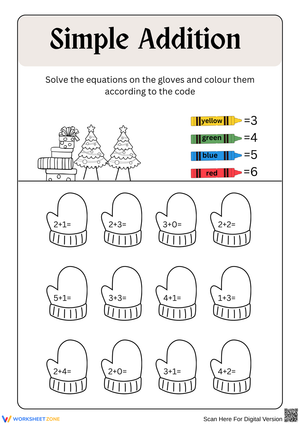
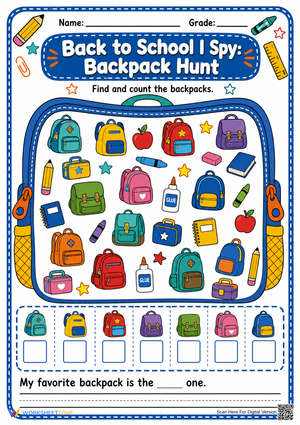
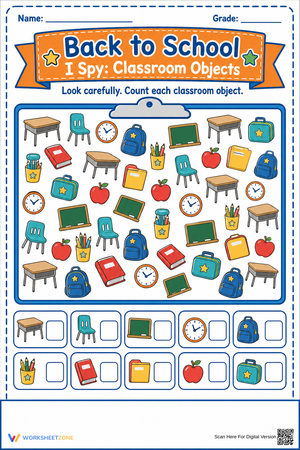
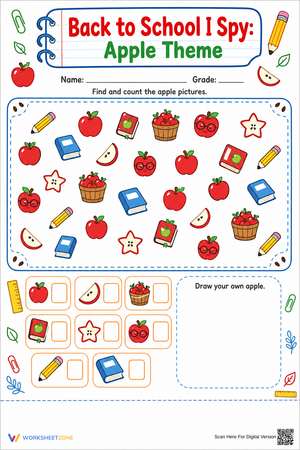
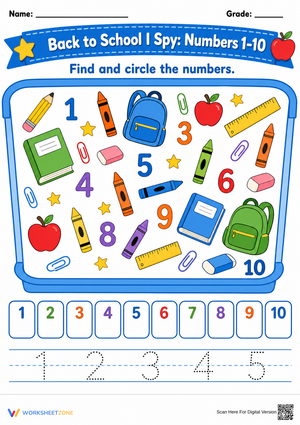
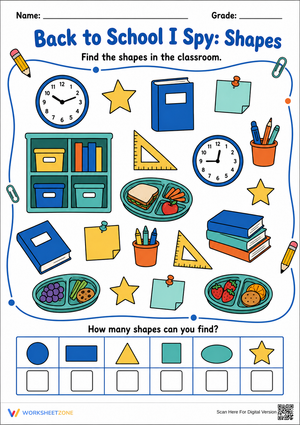
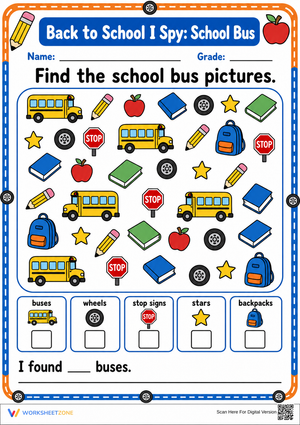
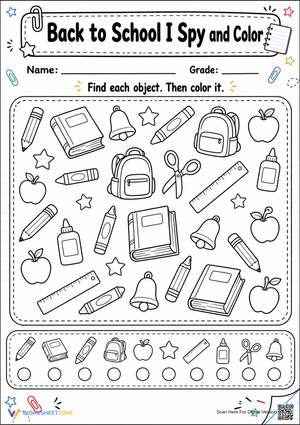
These kindergarten math pdf worksheets cover counting, number writing, visual addition and subtraction, shape identification, and early measurement — the exact skills a kindergartner needs to enter first grade with a working number sense rather than a fragile counting routine. The resources are deliberately visual and low-text, which matters at this age: a five-year-old who cannot yet read independently can still navigate an activity when the prompt is a picture and the answer space is a circle or a number box. Teachers get a printable set that drops into morning work, small-group centers, or take-home folders without building anything from scratch.
Skills These Worksheets Build
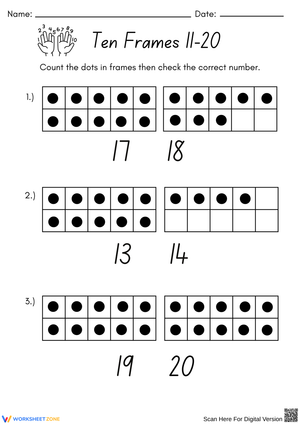
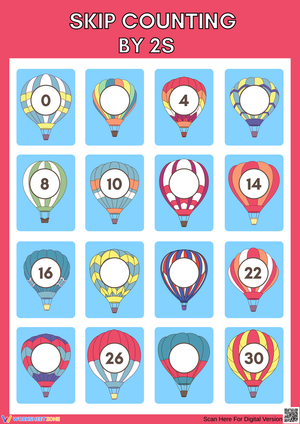
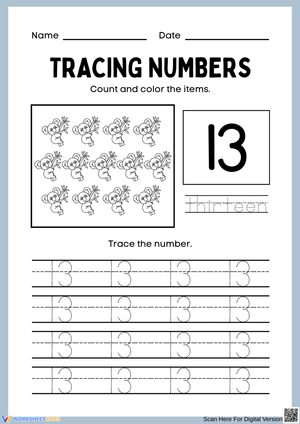
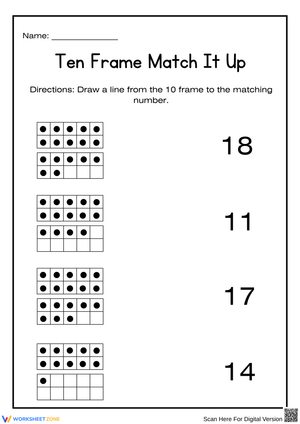
Counting and number writing form the backbone of the set. Students count object groups, trace and write numerals, match quantities to symbols, and fill in missing numbers on number lines and hundred charts. Ten-frame activities appear frequently because that structure lays the groundwork for understanding place value — a student who can instantly see that 8 is 2 less than 10 on a frame is building genuine number sense, not just memorizing a sequence.
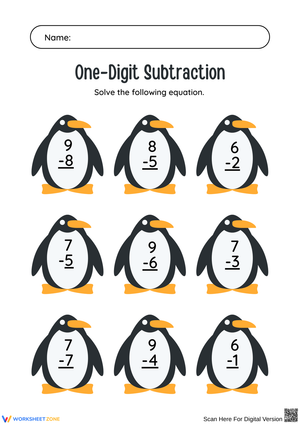
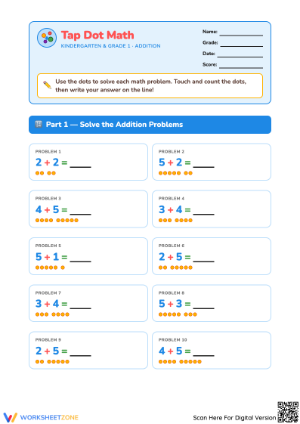
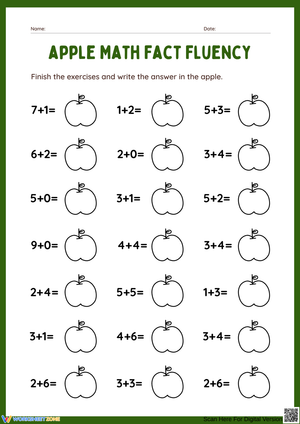
Visual addition and subtraction are introduced through picture-based problems. Each worksheet shows concrete groups of objects — five frogs on a log, two more hopping over — and asks students to count, draw, or cross out to find totals or differences. At this stage the goal is understanding what the operations mean, not fluency. Students who reach the end of kindergarten still counting every object from one are right on developmental track; these activities support that process rather than rushing past it.
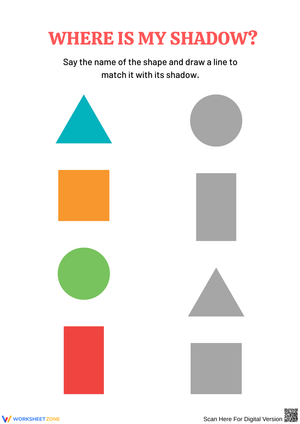
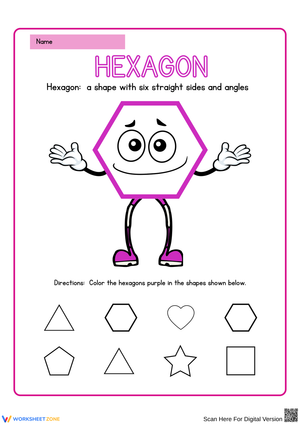
Geometry and measurement round out the set. Students sort and identify two-dimensional shapes (circles, triangles, rectangles, hexagons) and three-dimensional forms (cubes, cones, cylinders). Comparison tasks — longer, shorter, heavier, lighter, more, fewer — build the analytical vocabulary that reappears in first-grade math talk and science observation tasks.
Mistakes Students Make That These Worksheets Help You Catch
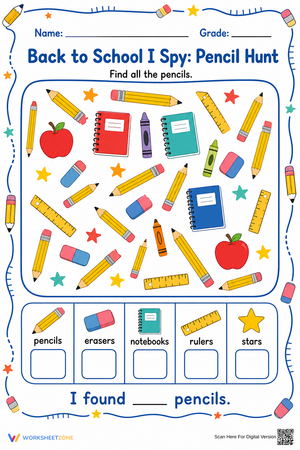
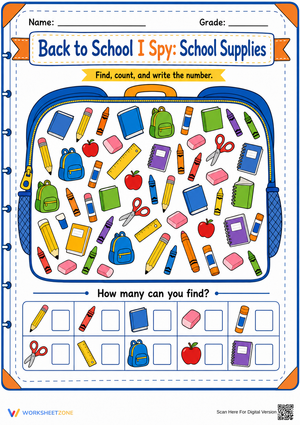
One-to-one correspondence breaks down in predictable ways. When each worksheet presents a scattered arrangement of objects rather than a neat row, students who can count a straight line of five dots will recount or skip when the same five dots are spread across the page. The instructional move is not to simplify every arrangement — that prevents students from developing the tracking strategies they need. Watch for students who touch objects in an unpredictable order or say the count sequence faster than they move their fingers.
Numeral reversal is nearly universal at this age. Students write 2, 3, 5, and 7 backwards regularly, and most of that reflects normal motor development rather than a conceptual problem. The more significant error is confusing the numeral with its quantity — writing "6" when asked how many objects are in a group, then writing a different number when asked to write the numeral 6 in isolation. That gap tells you the symbol and the count haven't connected yet, which is the real thing to address.
In addition and subtraction tasks, the most consistent error is counting all from one rather than counting on. A student shown four birds and two more will start back at one instead of starting from four. Because these worksheets ask students to draw, cross out, or circle, you can see exactly what strategy they used — the paper preserves the evidence in a way that a verbal answer does not.
Standard Alignment
The set addresses the CCSS Kindergarten Counting and Cardinality domain (K.CC), specifically K.CC.A.1 (count to 100 by ones and tens), K.CC.B.4 (understand the relationship between numbers and quantities), and K.CC.C.6 (identify whether the number of objects in one group is greater than, less than, or equal to another). Operations work aligns with K.OA.A.1 and K.OA.A.2, covering addition and subtraction within 10 through pictures and written equations. Geometry standards K.G.A.1 through K.G.B.4 are addressed through shape identification, sorting, and spatial reasoning tasks. Taken together, these kindergarten math pdf worksheets map across every major CCSS Kindergarten Mathematics domain, so there are no coverage gaps if you are using the set to track standards mastery over the course of the year.
How to Build These Worksheets Into Your Lesson Plans
Slide a printed worksheet into a clear plastic dry-erase sleeve during small-group rotations. Students trace numbers or mark answers with a whiteboard marker, then wipe it clean for the next group. One printed copy handles five or six rotations, which adds up to real paper savings across a full school year — and the novelty of using markers keeps the activity engaging past the first week.
For morning work, choose activities that revisit concepts already taught, not new material. The goal for those first eight to ten minutes of the day is a calm, independent entry — not instruction. A number-tracing or shape-sorting worksheet gives students something purposeful to do while attendance is taken and latecomers settle in. The same principle applies to sub folders: pull activities from completed units so the substitute does not need to explain anything and students can work without support.
Thematic versions of the same skills — counting pumpkins in fall, sorting snowflakes by size in winter, adding spring flowers — sustain engagement across the year better than cycling through the same format month after month. The math content stays consistent; the context refreshes interest without requiring any reteaching of how to use the activity.
Differentiating the Set for Mixed-Ability Classrooms
Students still working on counting within 5 need the same resource with a narrower focus. Cover the second half of an object-counting row with a sticky note so they work with groups of two to five rather than eight to ten. That one-minute modification uses the same printed worksheet without requiring a separate file or a different print run.
For students who have moved past grade-level expectations, the addition and subtraction activities become a different kind of task. Ask them to write a number sentence to match the picture problem, or to draw their own picture showing a different way to make the same total. They move from completing the worksheet to extending it — that keeps them genuinely challenged without requiring a separate resource entirely.
These kindergarten math pdf worksheets also serve as efficient mid-year and end-of-year checkpoints. A counting or ten-frame activity given without cues tells you quickly which students have internalized the concept and which still need additional targeted work before the next unit begins.
Frequently Asked Questions
Can I use these without a projector or whiteboard to model from first?
Yes. The visual format is self-evident once students have had initial instruction on the concept — even just a brief whole-group introduction the day before is enough. For counting and shape activities especially, most students can navigate each worksheet independently from that point without needing to see it modeled again.
How do I handle students who finish early?
Keep a small stack of previously completed worksheets available as review work, or write a standing extension prompt on the board — "If you finish, write your own number sentence on the back." Early finishers in kindergarten generally do better with a concrete follow-up task than an open-ended thinking prompt, so having a second worksheet ready tends to be more reliable in practice.
Are these activities appropriate for pre-K or early first grade?
The counting and shape activities work well for developmentally advanced pre-K students. The addition and subtraction worksheets align more closely with kindergarten expectations and function as review for most first graders by mid-year, though they remain useful for any first-grade student who needs additional targeted work on counting on and number sense within 10.
How much variety is there across the full set?
The set spans all five CCSS Kindergarten domains with multiple activities per concept, giving teachers options for initial practice, review, and quick reassessment without repeating the same format. These kindergarten math pdf worksheets include enough range that you can cover each skill more than once across the year without students working through an identical-looking activity twice in a row.













 Interactive Worksheet Maker
 Quiz Maker
 Word Search Maker
 Crossword Puzzle Maker
 Word Scramble Generator
 Sentence Scramble Generator
 Handwriting Worksheet Generator
 Name Tracing Generator
 Fill In The Blank Generator