


























Views
Downloads



Grade 7-9 New Year Reflection — Printable No-Prep Worksheet
Paste this activity's link or code into your existing LMS (Google Classroom, Canvas, Teams, Schoology, Moodle, etc.).
Students can open and work on the activity right away, with no student login required.
You'll still be able to track student progress and results from your teacher account.
This reflective writing worksheet empowers Grade 7-9 students to transition into the New Year with intention. By guiding learners through a structured three-step process of reflection, closure, and goal setting, the activity fosters social-emotional growth and narrative writing skills. Students produce meaningful personal text that bridges past experiences with future aspirations.
At a Glance
- Grade: 7-9 · Subject: English Language Arts
- Standard:
CCSS.ELA-LITERACY.W.7.10— Write routinely for shorter time frames for reflection and specific tasks- Skill Focus: Reflective Writing & Goal Setting
- Format: 3 pages · 8 tasks · Open-ended response · PDF
- Best For: New Year's Eve or January return
- Time: 25–40 minutes
What's Inside
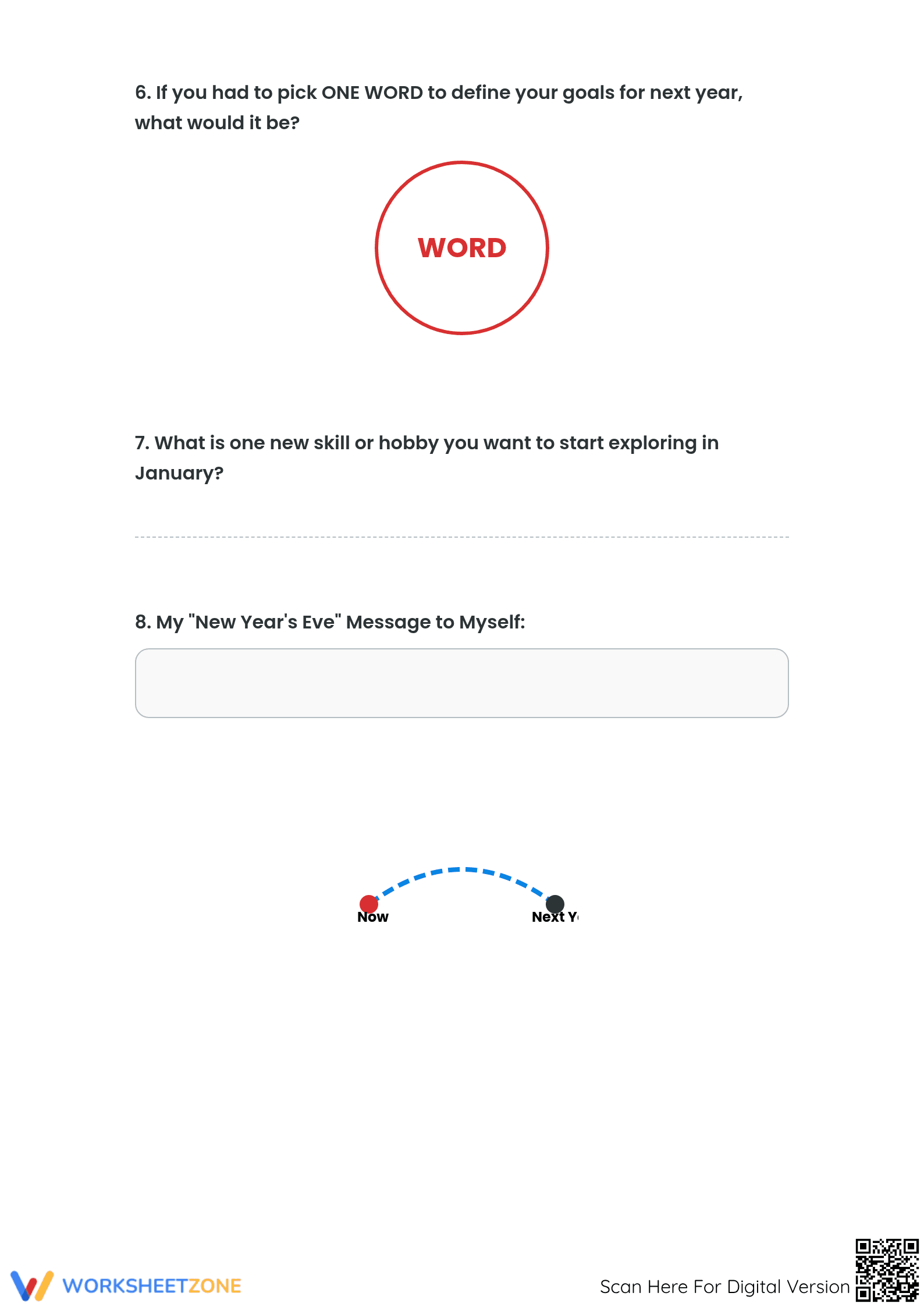
This comprehensive 3-page packet features eight thoughtfully sequenced prompts. The layout is divided into three logical phases: Reflecting on the Journey, Closing the Chapter, and Looking Forward. It includes space for long-form narrative responses, bulleted gratitude lists, and a creative "one word" visualization task. The clean, modern design ensures students stay focused on their internal processing without visual clutter.
Zero-Prep Workflow
Teachers can implement this activity in three simple steps. First, print the three-page packet for each student, which takes approximately one minute for a standard class set. Second, distribute the worksheets at the start of the period with a brief explanation of the "Step 1, 2, 3" flow. Third, review student responses or facilitate a voluntary pair-share discussion. Total teacher preparation time is under two minutes, making this an ideal "first day back" resource.
Standards Alignment
The primary standard for this activity is CCSS.ELA-LITERACY.W.7.10, which requires students to write routinely over shorter time frames for a range of tasks and purposes, including reflection. By engaging with these specific prompts, students practice articulating complex personal experiences and future intentions. This standard code can be copied directly into lesson plans, IEP goals, or district curriculum mapping tools.
How to Use It
Assign this worksheet as a quiet, independent activity immediately following winter break to help students refocus their energy. It serves as an excellent formative assessment for writing voice and self-awareness. Alternatively, use it as a mid-year check-in for advisory or homeroom periods. Teachers should observe which "Steps" students spend the most time on to gauge the social-emotional needs of the cohort.
Who It's For
This resource is designed for middle and early high school students in Grades 7, 8, and 9. It is particularly effective for learners who benefit from structured journaling or those needing a scaffolded approach to goal setting. It pairs naturally with a New Year's themed mentor text or a short passage about the psychology of habits and growth mindsets.
This worksheet leverages the pedagogical value of routine reflection to improve student engagement and writing fluency. According to the RAND AIRS 2024 report on social-emotional learning, providing students with structured opportunities to reflect on past challenges and future goals significantly enhances their sense of agency and school belonging. By aligning with CCSS.ELA-LITERACY.W.7.10, the activity ensures that personal expression is grounded in rigorous ELA standards. Students who practice such reflective writing tasks show improved ability to synthesize personal narrative with structured intentions. This evidence-based approach to journaling supports long-term literacy goals by encouraging regular, purposeful writing in a low-stakes environment. Integrating SEL into the English curriculum through these eight tasks provides a holistic educational experience that meets academic and developmental needs for the Grade 7-9 bracket.


