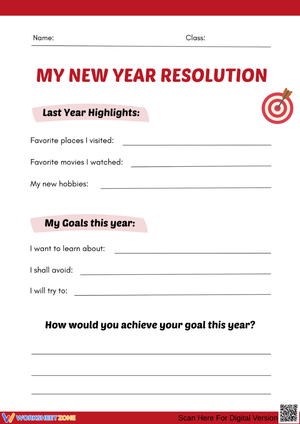
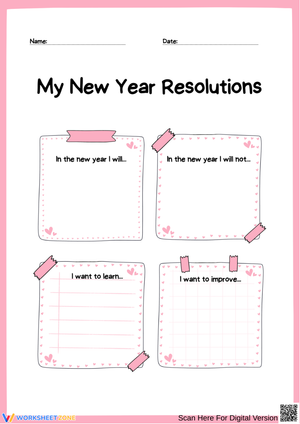
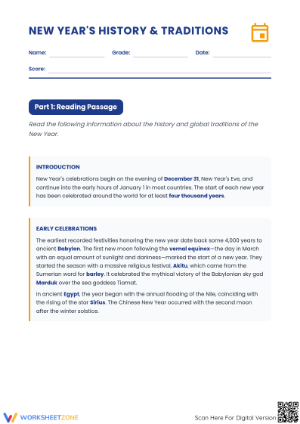
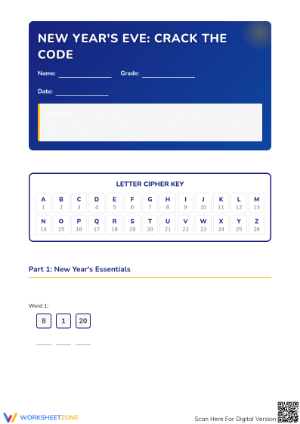
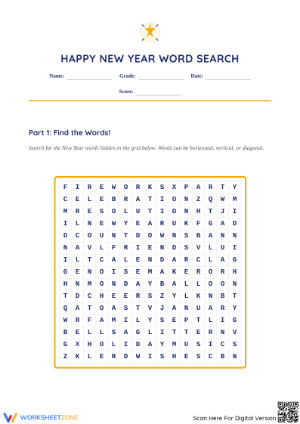
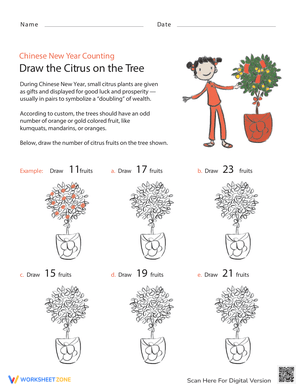
These lunar new year worksheets give teachers a printable set that connects several academic skill areas — informational reading, vocabulary, short writing, and calendar-based reasoning — to a celebration observed across many countries and communities. Each worksheet is self-contained and fits into existing routines without a full thematic unit around it. The set works best when paired with a few minutes of teacher-led framing before students begin.
What Each Worksheet Asks Students to Do
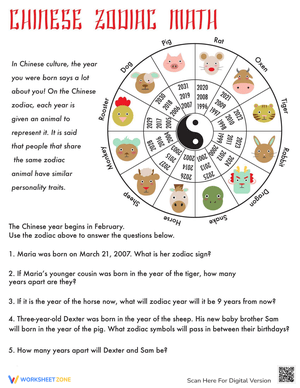
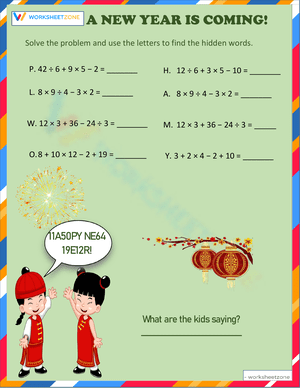
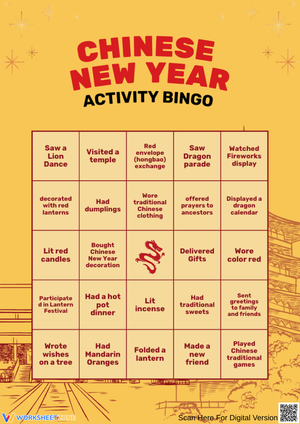
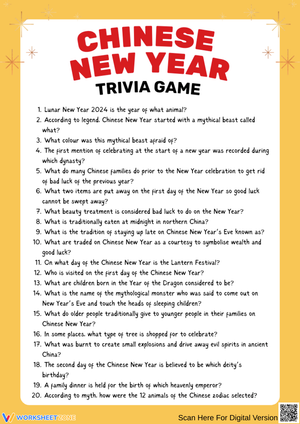
The tasks cover a range of literacy and content-area work. Vocabulary worksheets ask students to define and apply terms like zodiac, lantern, red envelope, and lunar calendar — words that carry both academic and cultural weight. Informational reading worksheets pair short passages with text-dependent questions, so students read for evidence rather than rely on background assumptions. Calendar worksheets draw directly from the holiday's connection to the lunar cycle: students sequence dates, identify patterns, and reason through why the celebration falls on a different Gregorian date each year — genuine calendar math, not seasonal decoration.
Writing tasks range from describing a single symbol to comparing how two communities mark important annual events. Art-linked worksheets — zodiac animal designs, lantern labels, color-symbolism pages — carry more instructional weight when they include a discussion prompt rather than only a drawing task. A question like "What might this symbol represent, and where does it appear across different communities?" turns an art extension into content-rich analytical work.
Why This Topic Belongs in Cross-Curricular Planning
Lunar New Year sits at a productive intersection of literacy, social studies, math, and art goals. Reading comprehension, vocabulary instruction, calendar reasoning, and cultural awareness all connect naturally to this topic — which is meaningfully relevant to students in diverse US classrooms without requiring any content to be manufactured. When teachers select lunar new year worksheets, they get built-in opportunities for these skill areas to reinforce each other rather than compete for time in a crowded school week.
The calendar connection is worth developing explicitly with students. Because the holiday is anchored to the lunar cycle rather than the Gregorian calendar, it falls on a different date each year — which opens real discussion about how calendars are structured, how different communities track time, and what "new year" means across cultural contexts. That kind of reasoning belongs naturally to the topic and does not need to be forced in from elsewhere.
Placing These Worksheets in Your Lesson Sequence
When teachers use lunar new year worksheets as the anchor for a short teaching sequence rather than a one-off handout, students retain more and produce more accurate written responses. The routine that holds up best in practice: spend three to five minutes establishing shared vocabulary at the start, writing two or three key terms on the board and naming that the holiday is observed in many countries with distinct customs. Then assign the worksheet — as partner work, a center task, or independent morning work — and close with a brief share-out asking students what they noticed and what detail surprised them. That structure keeps each worksheet functioning as a genuine learning activity and surfaces misconceptions before they settle into hardened assumptions.
The set fits naturally in the ten to fourteen days surrounding the holiday, during literacy or social studies blocks. These worksheets also work as low-prep sub plan materials because the tasks are clear enough to complete independently, as long as the sub notes include the vocabulary preview. Pairing any worksheet with a short read-aloud or a two-minute video clip from a reputable source gives students the visual context that a printed page alone cannot supply.
Common Errors That Surface in Student Work
The most consistent error — across grade levels and classroom demographics — is conflating Lunar New Year with Chinese New Year and then treating Chinese customs as universal facts. Students who have heard "Chinese New Year" used loosely will write sentences like "Everyone lights red lanterns" or "In this holiday, all families eat dumplings," without registering that Vietnam, Korea, and diaspora communities throughout the United States mark the same lunar calendar event with distinct foods, greetings, and decorations. A worksheet that includes an explicit variation question — not just a coloring page with lanterns — surfaces this error before it becomes a hardened assumption. The prompt "What is one detail that might look different in another community?" added to any task does exactly that.
A second pattern: when students encounter the zodiac animals, they treat the cycle as a personal horoscope rather than a cultural and calendrical system. They spend the task period figuring out "their animal" and miss the broader point that the twelve-year cycle marks time and carries different significance across communities. Worksheets that ask students to explain what the zodiac system does — how it organizes years, how communities reference it — rather than only matching birth years to animals redirect that energy toward the actual content.
Tailoring Each Worksheet to Different Learners
Differentiating lunar new year worksheets across ability levels is largely a matter of choosing which task type to assign rather than rewriting the underlying content. For students working below grade-level expectations, picture-supported vocabulary matching and sentence-frame writing prompts keep the cultural content accessible without simplifying the concepts themselves. Grade-level students handle the informational reading and evidence-based writing tasks without additional teacher-guided support. For students ready for greater challenge, the compare-and-contrast format carries the most depth: ask them to research one specific regional tradition — Vietnamese Tết, Korean Seollal, or a local diaspora community's celebration — and write a short comparison against the worksheet's content, noting both shared themes and distinct customs.
ELL students benefit from worksheets that include a labeled visual vocabulary bank alongside the reading text. Holiday vocabulary is often genuinely unfamiliar even to students whose families observe Lunar New Year, because the academic English terms for familiar concepts may not match the words used at home. A brief check-in before the task — "Have you heard any of these words before, in any language?" — surfaces prior knowledge that the worksheet can build from rather than overwrite.
Frequently Asked Questions
What grade levels do these worksheets work for?
The set adapts across a wide grade range. Simpler worksheets — matching, labeling, tracing vocabulary — work well in K–2. Reading comprehension, short writing, and calendar-reasoning tasks carry enough structure for grades 3–5. The compare-and-contrast and evidence-based writing worksheets support middle school instruction when paired with a longer informational source text.
Should I use "Chinese New Year" or "Lunar New Year" in instruction?
Use Lunar New Year when teaching the broader holiday season. Chinese New Year is accurate in the narrower context of celebrations observed specifically in Chinese communities. Because US classrooms frequently include students from Vietnamese, Korean, Filipino, and other communities that observe the same lunar calendar event with distinct traditions, Lunar New Year is the more precise framing for general classroom instruction — and using it consistently models the same distinction students are asked to notice on the page.
How do these worksheets avoid oversimplifying a living cultural tradition?
Each worksheet uses the term Lunar New Year consistently, includes brief factual context rather than images alone, and builds in at least one question asking students to acknowledge variation across communities. That prompt — identifying one detail that might differ elsewhere — shifts the task from recognizing a single set of customs to thinking comparatively about how traditions relate. A short class discussion after the worksheet reinforces the same point in three minutes or less.
What topics show up across the set?
Zodiac animals, lanterns, red envelopes, family reunion customs, traditional greetings, and the lunar calendar cycle all appear across the worksheets. The strongest tasks pair one of those themes with a literacy goal — defining terms, answering text-dependent questions, or writing an evidence-based response — so the activity builds academic skills and cultural knowledge at the same time.












 Interactive Worksheet Maker
 Quiz Maker
 Word Search Maker
 Crossword Puzzle Maker
 Word Scramble Generator
 Sentence Scramble Generator
 Handwriting Worksheet Generator
 Name Tracing Generator
 Fill In The Blank Generator