What density worksheets teach
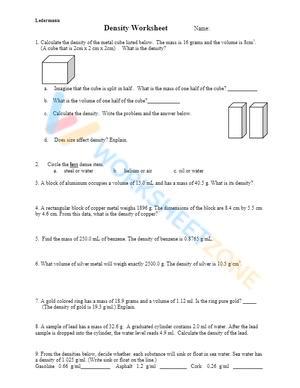
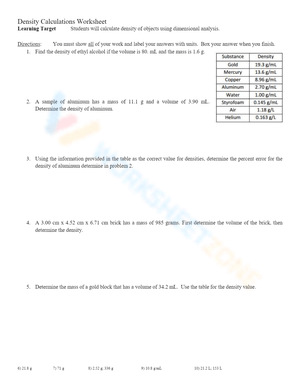
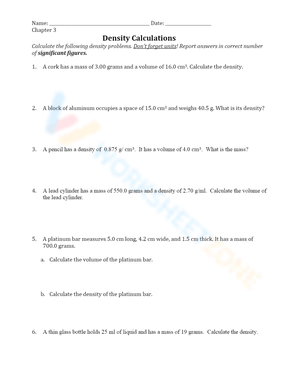
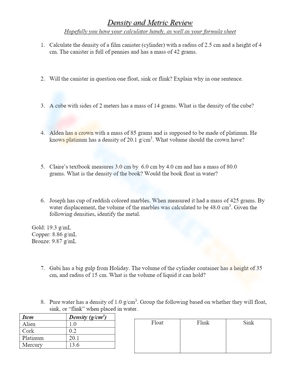
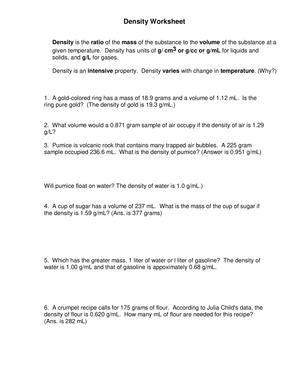
Density worksheets give science students repeated, structured practice with one relationship: mass divided by volume. For teachers planning a physical science unit in grades 5-8, that repetition matters. Students who can recite D = m/V still stumble when a problem asks them to find volume from a known density and mass, or to compare two samples with different sizes. A good worksheet set moves learners from plugging numbers into the formula toward reasoning about what the numbers mean.
These practice sheets also fit naturally around lab work. Before a hands-on activity, a short computation page primes students on units like g/mL and g/cm3. After the lab, a worksheet lets them apply their own measured data. Used this way, density worksheets stop being busywork and become the connective tissue between a lesson objective and a lab bench.
The mass, volume, and density relationship
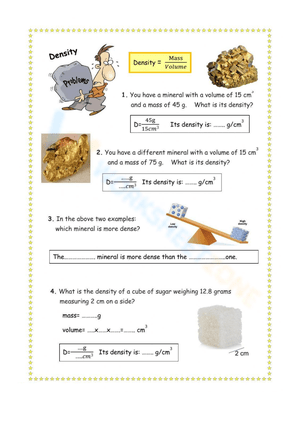
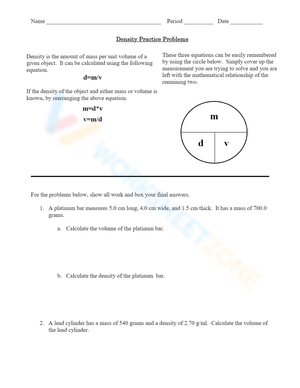
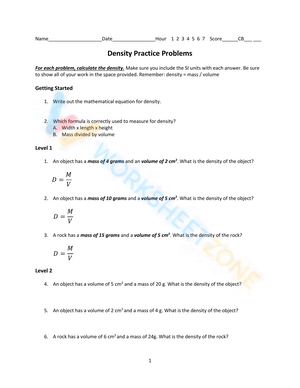
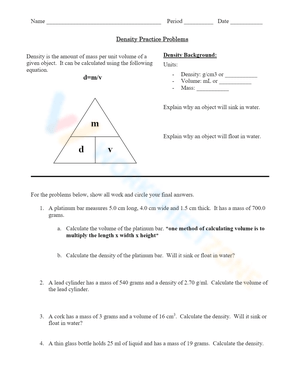
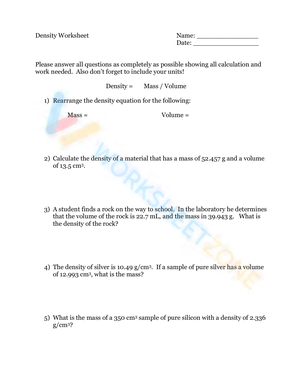
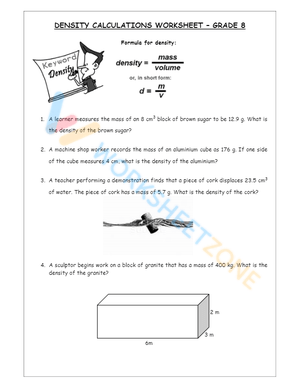
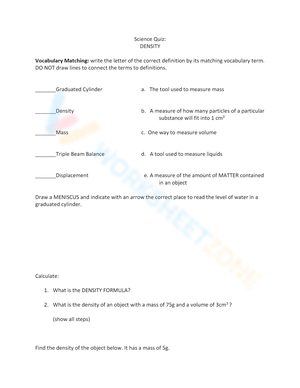
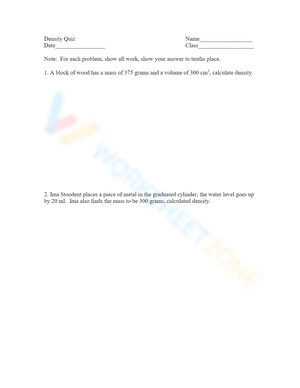
The core skill on any density worksheet is the calculation itself. Density equals mass divided by volume, usually written as D = m/V and expressed in g/mL for liquids or g/cm3 for solids. Worksheets that rotate which variable is unknown force students to rearrange the formula instead of memorizing one direction.
Here is the pattern experienced teachers notice: students who miss density problems rarely miss the arithmetic. They miss the setup. A learner will confidently divide two numbers but choose the wrong two because they treat mass, volume, and density as three names for the same idea, size. Worksheets that ask students to label units at every step, and to predict whether an answer should be larger or smaller than one, surface that confusion far earlier than a single end-of-lab quiz would.
Confronting the 'heavy sinks, light floats' misconception
Ask a class why a ship floats but a small steel bolt sinks, and the popular answer is that the bolt is heavier. It is not. The misconception that heavy objects always sink and light objects always float is one of the most stubborn ideas in physical science, and worksheets alone will not erase it. What worksheets can do is give students the numeric evidence to argue against their own intuition.
According to NGSS performance expectation MS-PS1-7, students in grades 6-8 must measure the mass and volume of both regular and irregular objects, then calculate density and use it as evidence to identify samples of matter. That single standard frames why repeated density practice matters: the goal is evidence-based reasoning, not a memorized fact.
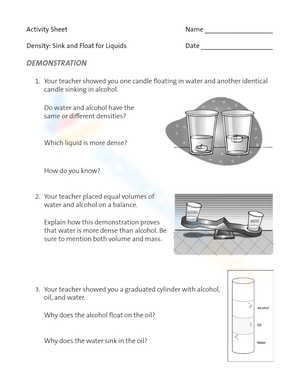
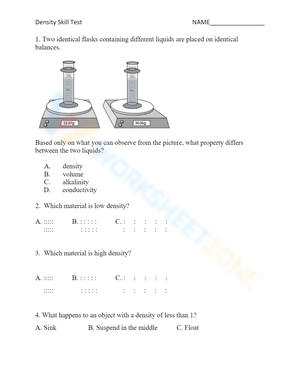
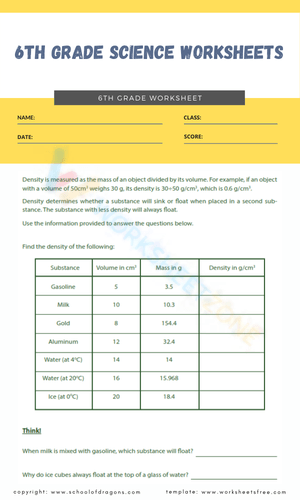
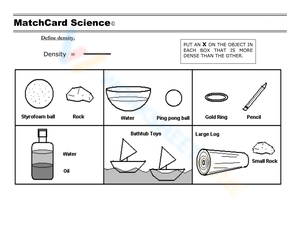
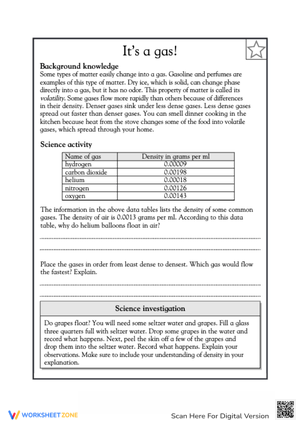
Pair the computation with a sink-or-float prediction column. When students calculate that an object with a density below 1 g/mL floats in water and one above it sinks, the ship-versus-bolt puzzle resolves on paper before it ever reaches the tank.
Regular objects versus irregular objects
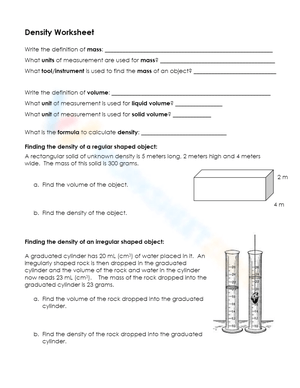
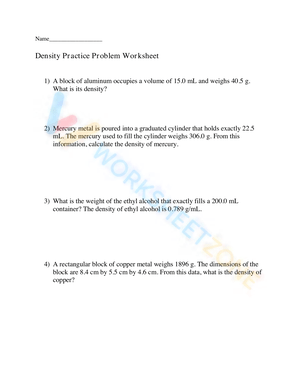
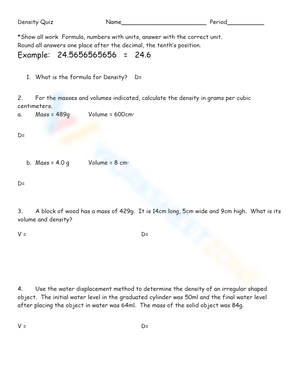
Density worksheets split cleanly into two measurement paths, and strong instruction uses both. For regular-shaped objects like cubes and cylinders, students find volume with a formula, length times width times height, then divide mass by that result. These problems reinforce geometry and keep the math tidy.
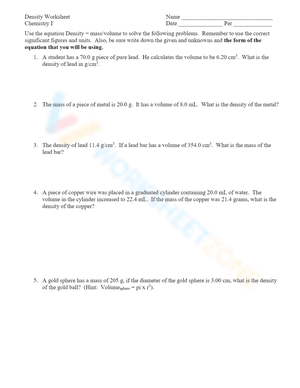
Irregular objects demand water displacement. Students drop a rock into a graduated cylinder, read the change in water level, and use that difference as the volume. Worksheets that present displacement data, initial and final water readings, teach students to subtract before they divide. Offering both problem types in one packet lets you differentiate: formula-based sheets for students who need cleaner numbers, displacement sheets for those ready to model real lab measurement.
Using these worksheets in real classes
Move from concrete to abstract deliberately. Start a density lesson with real objects in students' hands, an aluminum block, a marble, a cork, before any formula appears on the board. Let students rank the objects by how heavy they feel, then by size, and watch the rankings disagree. That disagreement is the entry point to density.
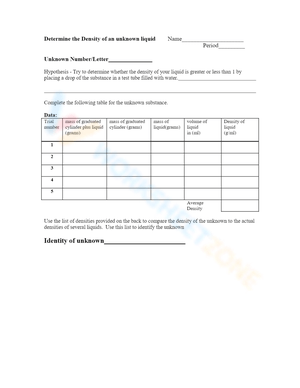
Then bring in the worksheet. Have students record measured mass and volume for two or three of those same objects, calculate density, and compare results across groups. Small measurement differences become a talking point about lab precision rather than a mistake. Close the loop with a mixed practice page that alternates regular and irregular objects, and reserve the questions below for a warm-up or exit ticket. Keep each worksheet short enough to check the same day, so misconceptions do not harden overnight.
Frequently Asked Questions
1. What grade level typically covers density and mass/volume calculations?
Density calculations sit mainly in grades 5-8 physical science, with the formal mass and volume measurement expectation landing in the 6-8 band under NGSS MS-PS1-7. Fifth grade often introduces the ideas qualitatively before students take on the full D = m/V calculation.
2. How do density worksheets help correct the misconception that heavy objects always sink?
They replace intuition with numbers. When students calculate that sinking and floating depend on density relative to water, roughly 1 g/mL, not on weight alone, the large-ship-versus-small-bolt contradiction resolves on the page.
3. What formula do students use to calculate density on these worksheets?
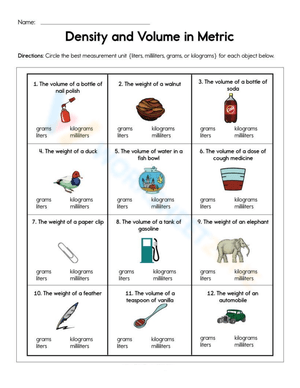
Density equals mass divided by volume, written as D = m/V. Answers appear in g/mL for liquids and g/cm3 for solids. Worksheets that rotate the unknown variable push students to rearrange the formula rather than memorize one direction.
4. How can teachers pair density worksheets with hands-on labs?
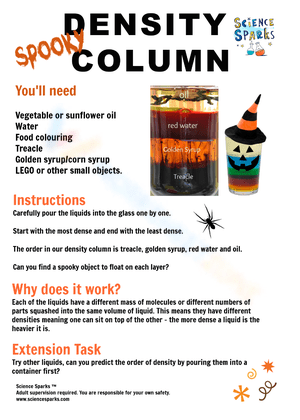
Use a worksheet as a primer before a displacement or density-column lab, then have students plug their own measured mass and volume into a matching sheet afterward. That concrete-to-abstract sequence turns the calculation into a record of real evidence.
5. Are density worksheets aligned to NGSS MS-PS1-7?
They can be. MS-PS1-7 asks students to measure mass and volume of regular and irregular objects, calculate density, and use it as evidence to identify matter. Worksheets that include both object types and unit labeling map directly to that standard.












 Interactive Worksheet Maker
 Quiz Maker
 Word Search Maker
 Crossword Puzzle Maker
 Word Scramble Generator
 Sentence Scramble Generator
 Handwriting Worksheet Generator
 Name Tracing Generator
 Fill In The Blank Generator