When an Animal Word Search Printable Earns Its Place
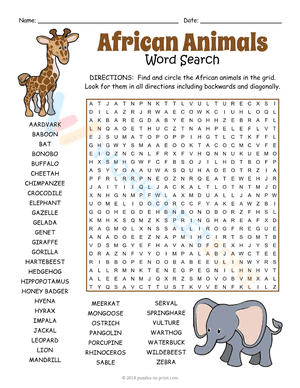
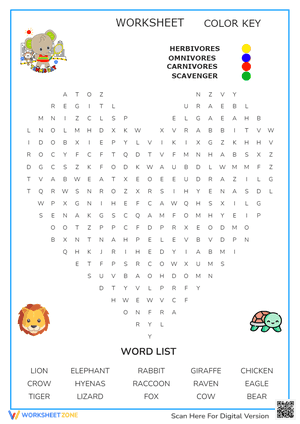
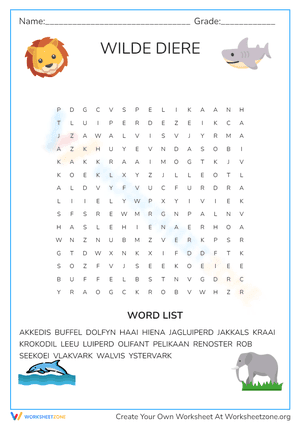
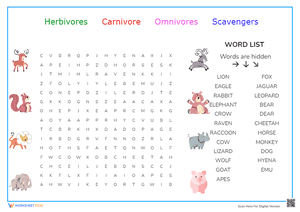
Most teachers reach for an animal word search printable when they need a calm, no-prep activity that still does instructional work. It fills the parts of a school day that are hard to plan well: the ten minutes after a quiz, an indoor recess, a sub day, or the stretch when half the class finishes an assignment early. The difference between busywork and useful practice comes down to one choice, and that choice is the word list.
Animal themes give you a ready bank of high-interest words that reach into science and ELA at the same time. Words like habitat, mammal, reptile, and predator appear in your units and in the books students pick during independent reading, so a single worksheet can reinforce content vocabulary and general spelling in one sitting.
Matching the Word List to Your Grade Band
The same animal theme works across elementary grades if you adjust the word bank. For K-2, keep the list short, eight to ten familiar animals such as cat, frog, bird, and fish, and hide words left to right only so early readers aren't overwhelmed by diagonal scanning. Pair each word with a small picture cue if your learners are still building letter-sound connections.
For grades 3-5, raise the challenge with classification and habitat vocabulary, amphibian, nocturnal, herbivore, camouflage, and turn on diagonal and backward placement. Upper-elementary students can handle a longer list of 15 to 20 words, and the added directions keep fast finishers engaged instead of racing to the bottom of the page.
Whatever the grade, resist the urge to make the grid enormous. A 12-by-12 letter field with a focused list produces more repetitions of the target words than a sprawling 20-by-20 grid padded with random letters, and it keeps the activity inside the short window you actually have.
Tying the Puzzle to a Science Unit
An animal word search does its best work as a bookend to instruction rather than a stand-alone. Use it as a warm-up on the first day of a habitats or life-cycle unit to surface what students already know: circle a term, then ask two or three volunteers to say what it means. At the end of the unit, the same format becomes a low-stakes review of the terms you expect on an assessment.
Here's the move most teachers miss: hand out the puzzle with three or four 'decoy' words that are close misspellings of real animal terms, mamal, reptil, amphibean, and tell students those words are not in the grid. To confirm, they have to hold the correct spelling in mind while scanning, which turns a passive hunt into an active spelling check and gives you a quick read on which students still confuse letter patterns.
You can layer the same idea onto a classification lesson. Group the word list by category, mammals in one column, birds in another, reptiles in a third, and ask students to label each found word with its group. The scanning stays quick, but now every circle carries a decision, and you can spot at a glance who still lumps a whale in with the fish.
Classroom Implementation
Keep the routine tight so the activity stays worth its minutes. A few structures that hold up across grade levels:
- Set a visible timer for 6-8 minutes so the puzzle doesn't expand to fill whatever time is left.
- Ask students to write each found word on the lines below the grid, not just circle it, so spelling gets a second rep.
- For early finishers, add a 'back of the page' task: pick three animals and sort them by habitat or diet.
- On sub days, print a short answer key so any adult can confirm completion without knowing the content.
- Laminate one copy per table for whisper-partner solving during indoor recess, and skip the grading entirely.
Because the format is forgiving, it's also a safe entry point for students who freeze on blank-page tasks. Finding a known word gives a quick win before the harder writing extension begins.
Differentiating for Struggling Readers and English Learners
The word list is your main lever for support. Pre-teach the vocabulary before students see the grid: show each animal, say the word, and have students repeat and trace it. When the word already lives in memory, the search reinforces the spelling instead of testing a term they've never met.
For English learners, add a first-language label or a small picture beside each target word, and let partners solve together so the language load is shared. For students with attention or visual-processing needs, enlarge the grid, reduce it to eight words, and highlight the first letter of each answer as a starting anchor. These small edits keep the same worksheet usable across a mixed-readiness class.
Keep one un-differentiated 'challenge' version on hand too. Students who breeze through the standard grid can take a version with more words, added directions, and a blank clue list to fill in themselves, so support and extension come from the same theme on the same day.
Extending the Puzzle Into a Full Literacy Task
To move from ten-minute filler to a graded activity, bolt a short writing task onto the back. After solving, students choose two animals from the list and write one factual sentence about each, or build a three-fact card on a single animal using a class text or their science notebook. Now the puzzle is a vocabulary primer for writing, and you have something to assess.
For a quick formative check, collect the completed grids and scan only the written words underneath. Consistent misspellings across the class tell you which terms need another pass; a single student's errors flag who to pull for a two-minute reteach. Because the task felt like a game, you get that data without the anxiety a spelling test can trigger.
You can also flip the roles and have upper-elementary students build a word search for a younger buddy class, choosing the words, drawing the grid, and writing clues. Designing the puzzle demands the exact spelling recall you want, and it turns review into a task students are genuinely motivated to get right.
Frequently Asked Questions
1. What grade levels are animal word search printables best suited for?
They work best in K-5. For K-2, use short lists of eight to ten common animals with left-to-right placement; for grades 3-5, add classification vocabulary, longer lists, and diagonal or backward words to keep the challenge appropriate.
2. How can I use an animal word search to support a science unit instead of just filling time?
Pull the word list straight from your habitats, life-cycle, or classification unit, use it as a warm-up to surface prior knowledge, and revisit it as end-of-unit review of the exact terms you expect on the assessment.
3. Are word searches effective for vocabulary or spelling retention?
They help when the words are targeted. Research in Pioneer: Journal of Language and Literature found elementary students built vocabulary more effectively with word search puzzles than with lecture alone, largely because locating each word requires recognizing its exact letter sequence.
4. How can I adapt an animal word search for struggling readers or English learners?
Pre-teach the vocabulary, shorten the list, add picture or first-language cues, enlarge the grid, and let students solve with a partner. Front-loading the words means the puzzle reinforces spelling rather than testing an unfamiliar term.
5. What's a good way to extend an animal word search into a full lesson?
Add a writing task: students pick two animals and write a fact sentence for each, or design their own puzzle for a buddy class. Both push exact spelling recall and give you work you can actually assess.















 Interactive Worksheet Maker
 Quiz Maker
 Word Search Maker
 Crossword Puzzle Maker
 Word Scramble Generator
 Sentence Scramble Generator
 Handwriting Worksheet Generator
 Name Tracing Generator
 Fill In The Blank Generator