


























Views
Downloads

Grade 2 Summer Wildlife — Printable No-Prep Worksheet
Paste this activity's link or code into your existing LMS (Google Classroom, Canvas, Teams, Schoology, Moodle, etc.).
Students can open and work on the activity right away, with no student login required.
You'll still be able to track student progress and results from your teacher account.
This summer wildlife word search worksheet provides early elementary students with engaging vocabulary and spelling practice. By visually scanning for thematic words like "butterfly" and "mosquito," learners reinforce letter recognition and word formation. This print-and-go resource builds essential literacy skills while keeping students focused and entertained.
At a Glance
- Grade: 2 · Subject: ELA
- Standard:
CCSS.ELA-LITERACY.L.2.6— Use acquired words and phrases- Skill Focus: Vocabulary and Spelling
- Format: 2 pages · 18 problems · Answer key included · PDF
- Best For: Independent practice and sub plans
- Time: 15–20 minutes
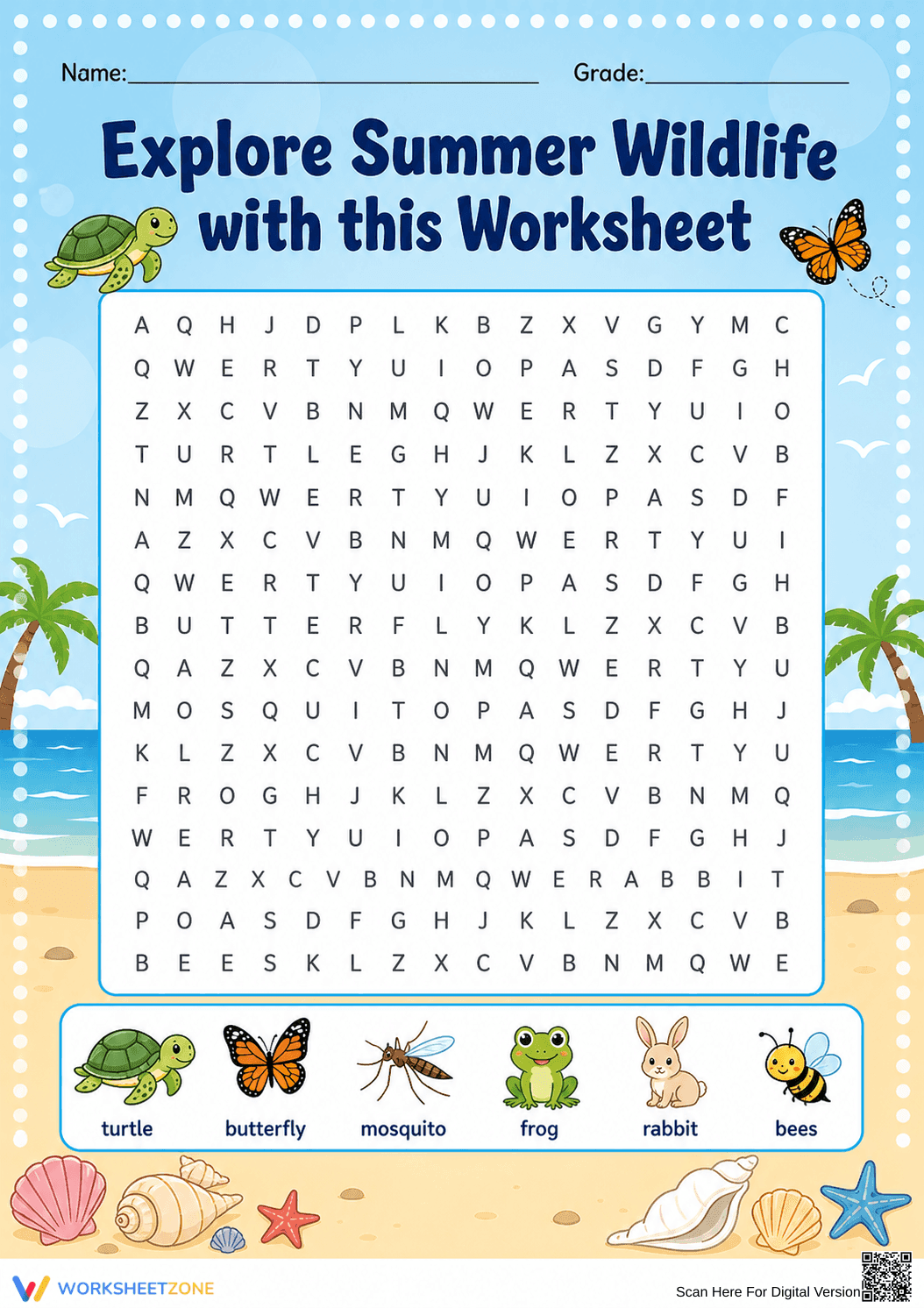
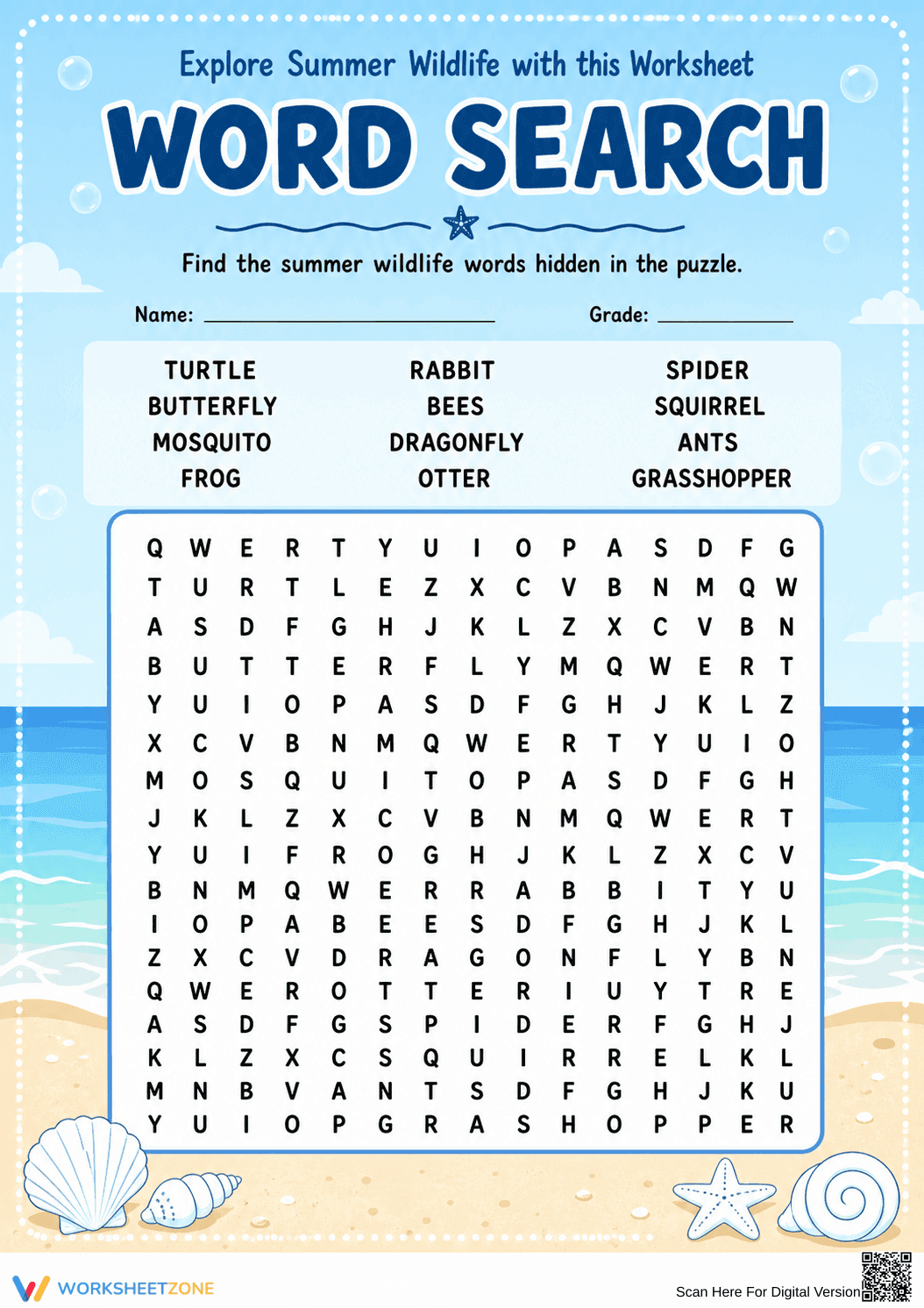
This resource includes two distinct word search puzzles centered around a summer wildlife theme. The first page features a beginner-friendly grid with six picture-supported vocabulary words, perfect for scaffolding early readers. The second page offers a slightly more advanced challenge with twelve text-only words to locate. Both pages feature an engaging beach-themed design. A complete answer key is provided for quick grading or self-checking.
This zero-prep worksheet requires under two minutes of teacher setup:
- Print (1 minute): Simply download the PDF and print the desired puzzle page along with the answer key.
- Distribute (1 minute): Hand out the worksheets to students with no additional materials needed besides a pencil or highlighter.
- Review (Fast): Use the included answer key to quickly verify completed puzzles or project it on the board for self-correction.
With self-explanatory instructions, this activity is perfect for emergency sub plans or morning work.
This activity aligns with CCSS.ELA-LITERACY.L.2.6, requiring students to "use words and phrases acquired through conversations, reading and being read to, and responding to texts." By actively searching for and identifying these thematic vocabulary words, students reinforce their spelling patterns and word recognition skills. Both standard codes can be copied directly into lesson plans, IEP goals, or district curriculum mapping tools.
This word search is highly versatile in the classroom. Use it as quiet morning work to help students transition smoothly into the school day. Alternatively, assign it as an early finisher task during literacy centers to keep fast-working students engaged without disrupting others. As a formative assessment tip, observe how students scan the grid; those who look for the first two letters of a word sequentially are demonstrating strong phonetic awareness and spelling retention. Expect students to complete each puzzle in 15 to 20 minutes.
This worksheet is primarily designed for first through third-grade students developing their spelling and visual scanning abilities. The inclusion of a picture-supported version makes it easily accessible for English Language Learners (ELLs) or students needing extra visual scaffolding. It pairs perfectly with a broader science unit on animal habitats or a read-aloud session featuring summer nature books.
Integrating thematic vocabulary activities supports foundational literacy development in early classrooms. Aligned with CCSS.ELA-LITERACY.L.2.6, this resource helps students use acquired words and phrases effectively in context. According to Fisher & Frey (2014), providing students with repeated, low-stakes exposure to targeted vocabulary significantly improves both word recognition and long-term retention. Word searches require active visual scanning and pattern recognition, which reinforces the orthographic mapping process essential for fluent reading and accurate spelling. By combining engaging thematic content with structured letter-sequence analysis, educators can foster stronger spelling habits and phonetic awareness. This printable resource offers a practical, research-backed method to build vocabulary confidence without adding to teacher preparation time, ensuring that students receive meaningful, independent literacy practice in a highly accessible format.


