


























Views
Downloads

Printable Dangerous Animals Word Search | Grades 3-5
Paste this activity's link or code into your existing LMS (Google Classroom, Canvas, Teams, Schoology, Moodle, etc.).
Students can open and work on the activity right away, with no student login required.
You'll still be able to track student progress and results from your teacher account.
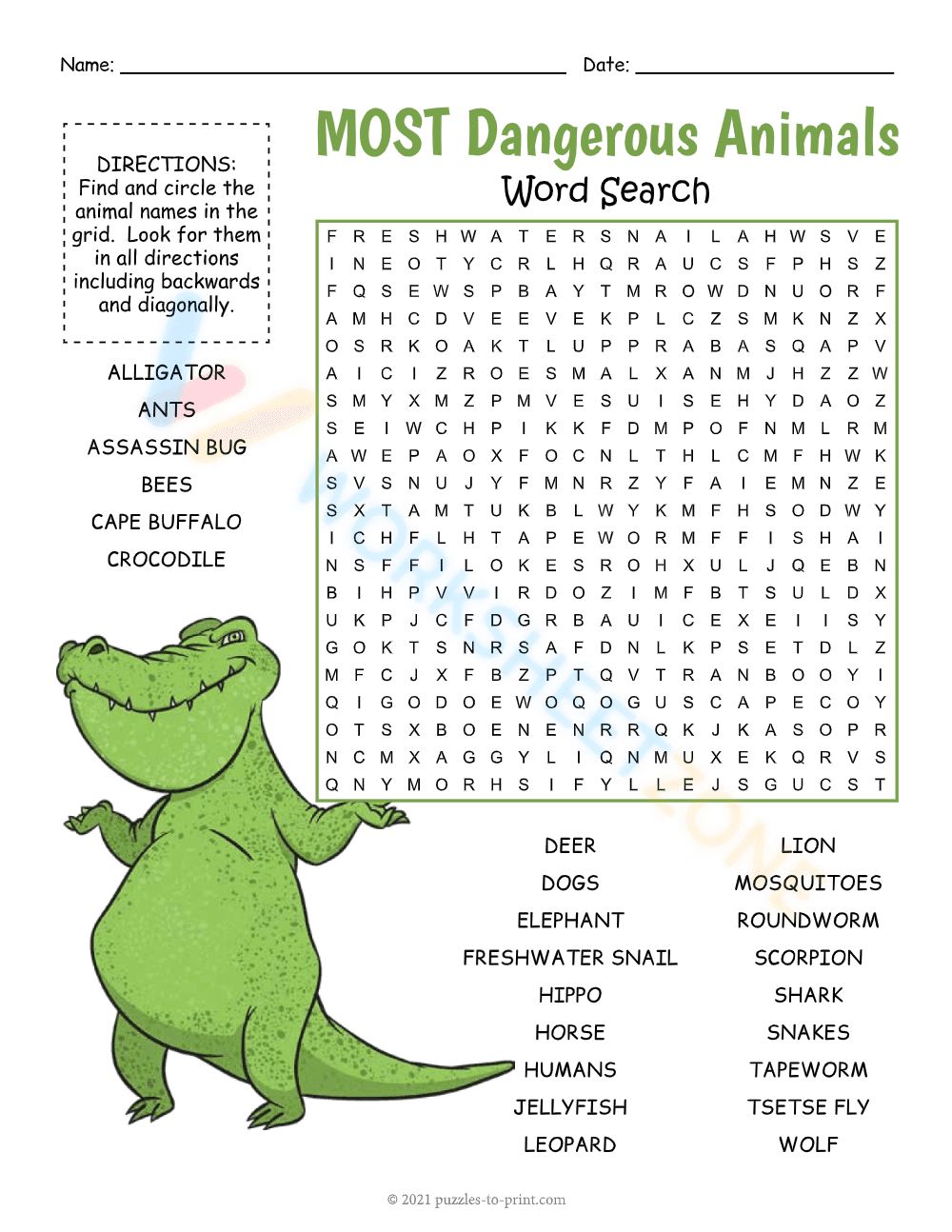
This engaging word search worksheet helps students build essential vocabulary and spelling skills by identifying twenty-six of the world's most dangerous animals. Students scan the grid in all directions to locate key terms, reinforcing word recognition and pattern matching. It provides an interactive way to connect science concepts with language arts instruction.
At a Glance
- Grade: Grades 3–5 · Subject: English Language Arts
- Standard:
CCSS.ELA-LITERACY.L.4.6— Acquire and use grade-appropriate general academic and domain-specific words- Skill Focus: Vocabulary acquisition and spelling
- Format: 2 pages · 26 problems · Answer key included · PDF
- Best For: Early finishers and morning work
- Time: 15–20 minutes
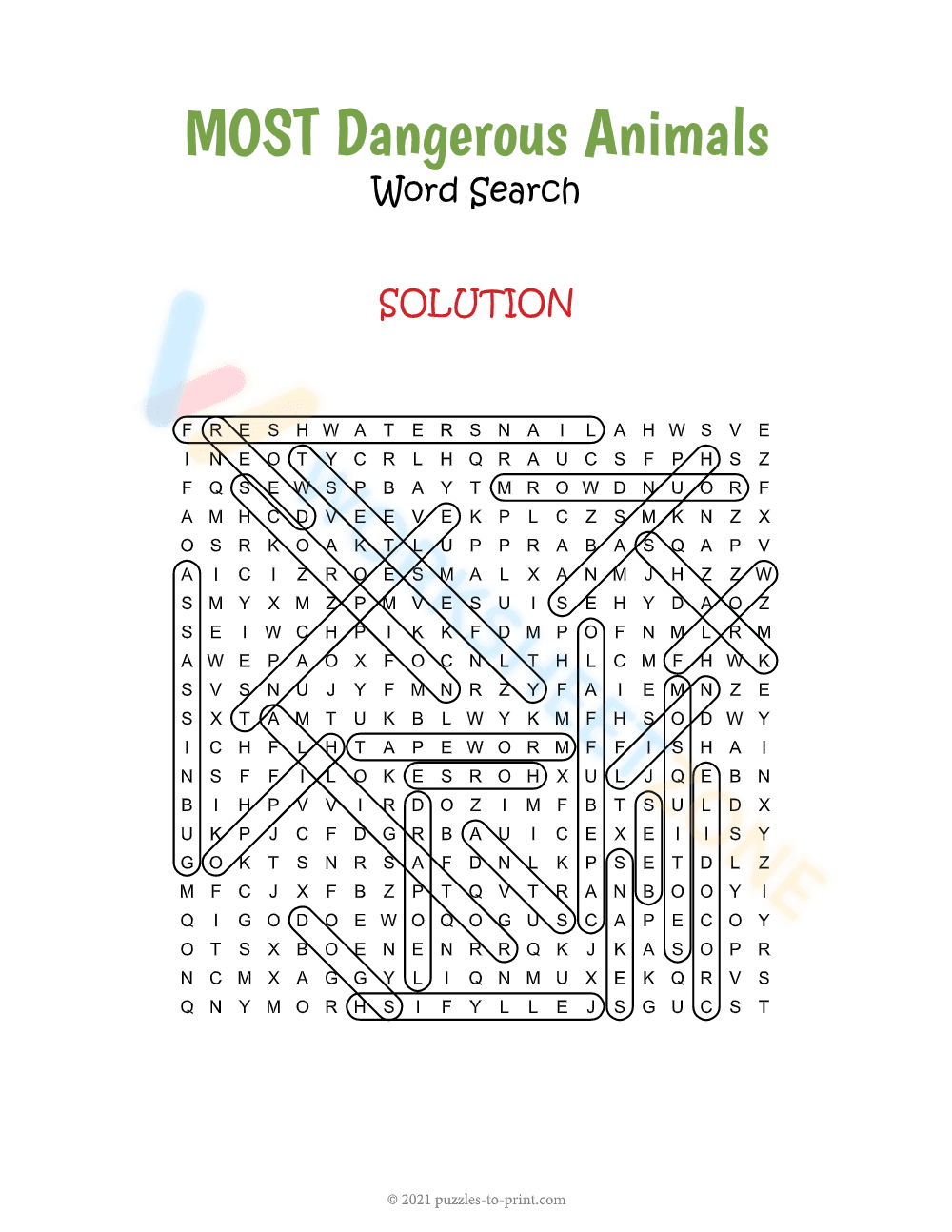
This resource contains a single-page word search puzzle featuring twenty-six distinct animal names, ranging from common predators like the crocodile to lesser-known vectors like the tsetse fly. The layout includes clear directions, a clean grid, and a list of target words. A complete solution page is included for quick grading.
This zero-prep resource integrates into your classroom routine. First, print the worksheet (1 minute). Second, distribute the sheets to students for independent work (1 minute). Third, review the completed puzzles using the provided solution key (1 minute). With under two minutes of total teacher preparation, this activity is ideal for emergency sub plans or transition periods.
Standards Alignment
This activity aligns with the primary standard `CCSS.ELA-LITERACY.L.4.6`, which requires students to acquire and use accurately grade-appropriate general academic and domain-specific words and phrases. It also supports spelling development under `CCSS.ELA-LITERACY.L.4.2.E`. Both standard codes can be copied directly into lesson plans, IEP goals, or district curriculum mapping tools.
How to Use It
Use this worksheet as a warm-up activity before a science lesson on ecosystems or animal adaptations. Alternatively, assign it as a quiet, post-assessment task to keep students engaged. During the activity, observe how students track letters to assess visual scanning skills. Most students will complete the word search within fifteen to twenty minutes.
Who It's For
This worksheet is designed for elementary students in grades three through five, including English language learners who benefit from visual word recognition practice. For differentiation, pair this puzzle with an informational passage about animal habitats or an anchor chart defining the terms. It serves as an excellent tool for inclusive classrooms.
According to a ScienceDirect TpT Analysis, word search puzzles and similar gamified vocabulary activities significantly enhance orthographic mapping and word recognition in intermediate elementary students. By engaging with the twenty-six terms in this puzzle, students reinforce their spelling memory and visual processing speed. The activity directly supports the acquisition of domain-specific vocabulary as outlined in the standard `CCSS.ELA-LITERACY.L.4.6`. Research indicates that integrating thematic word puzzles into ELA blocks helps bridge the gap between rote memorization and contextual vocabulary retention. This worksheet provides a structured, low-stakes environment for students to interact with complex animal names, promoting spelling accuracy and cognitive engagement. Educators can confidently utilize this resource to support vocabulary development, knowing it aligns with evidence-based practices for word study and literacy acquisition in the upper elementary grades.


