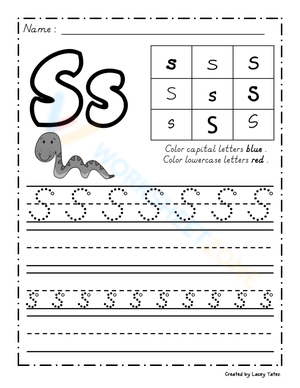
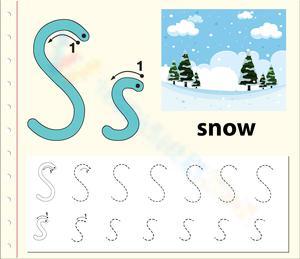
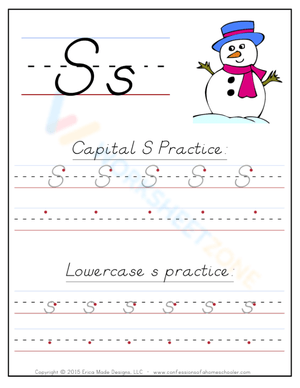
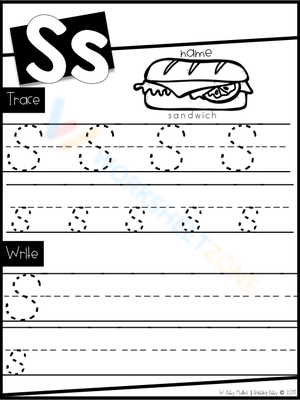
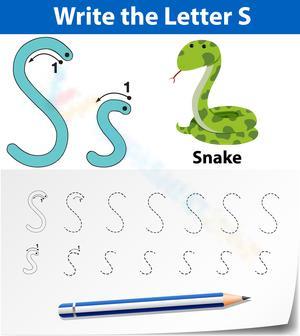
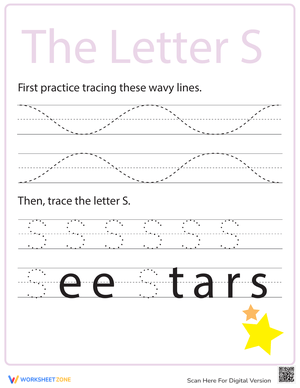
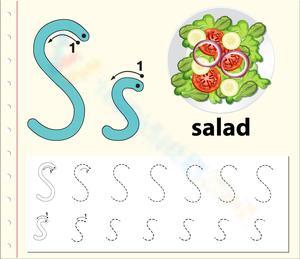
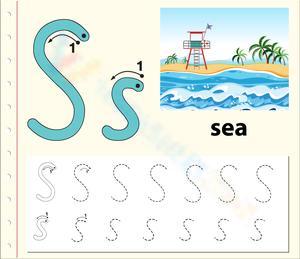
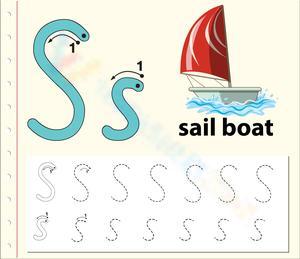
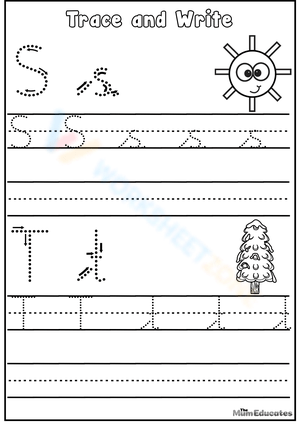
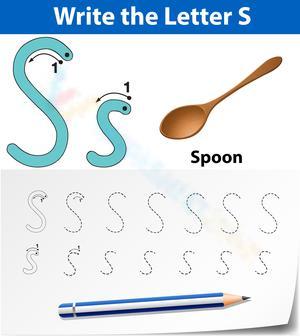
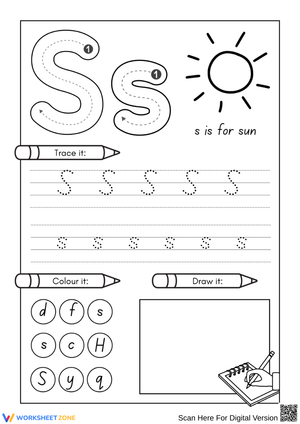
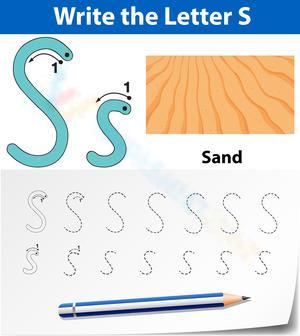
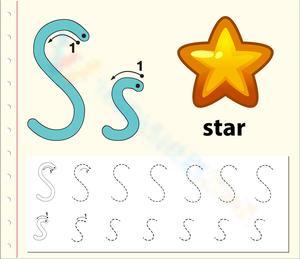
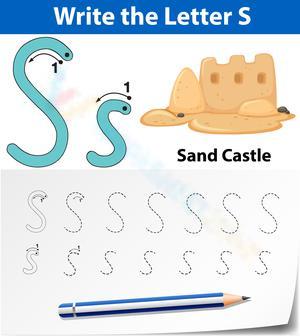
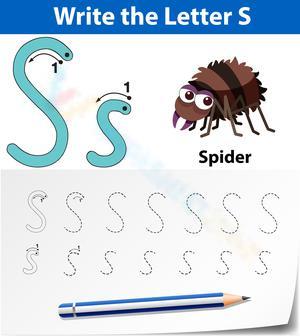
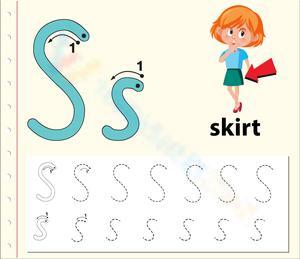
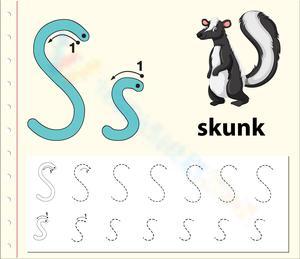
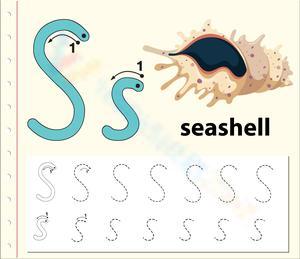
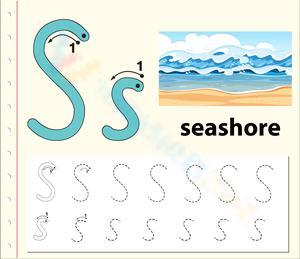
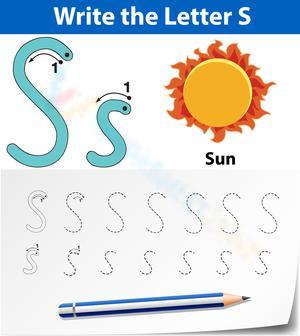
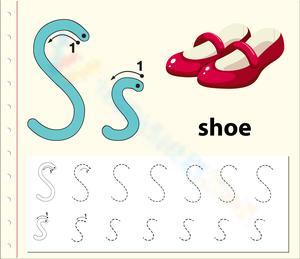
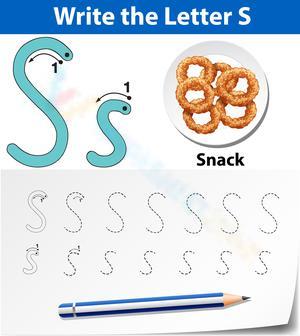
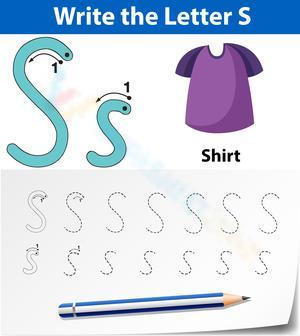
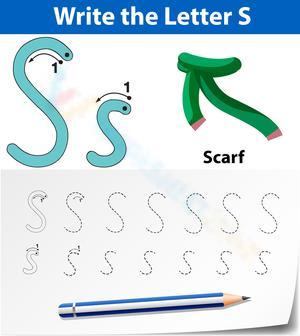
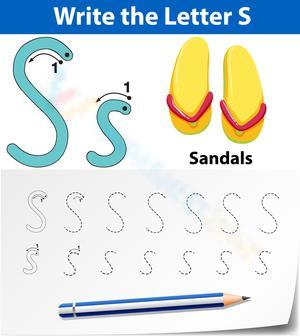
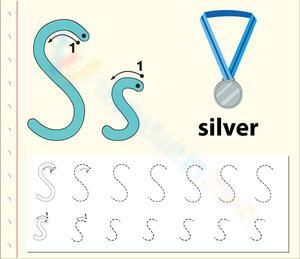
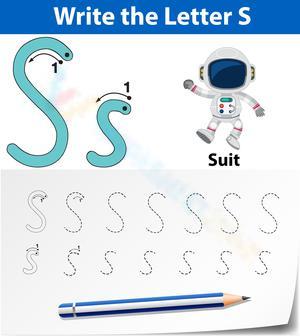
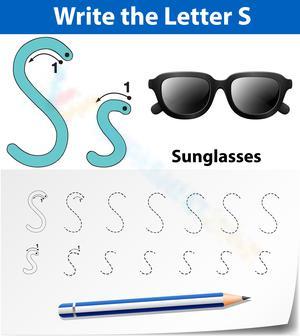
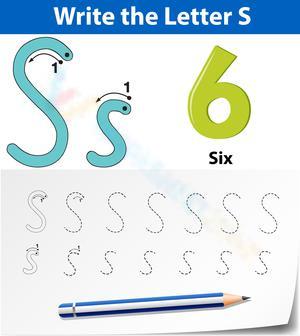
Letter S worksheets for preschool target a critical developmental window when young children are building the foundational motor pathways that support all future writing. At this stage, every deliberate stroke a child makes across a page contributes to the neural connections that will eventually govern pencil control, letter formation, and reading fluency. These pages are structured to meet children exactly where they are developmentally, guiding them from simple recognition tasks toward confident independent tracing. The progression mirrors the natural cognitive and physical growth happening in a preschooler's brain and hands.
When a child engages with a tracing activity, they are practicing far more than a single character. The curve of the letter S demands that young hands shift direction smoothly, which strengthens bilateral coordination and spatial awareness at the same time. Teachers who integrate letter S worksheets for preschool into their classroom routines often observe improved pencil grip and increased stamina during writing tasks. The structured repetition that these pages provide is not a drill - it is scaffolded practice that builds genuine competence through guided exposure.
Fine motor development does not happen in isolation. It connects directly to a child's readiness for reading comprehension, mathematical notation, and even self-regulation skills. Our collection at Worksheetzone is sequenced to follow a logical developmental arc, beginning with large-scale tracing models and moving toward smaller, independent practice formats. Pairing these worksheets with fine motor skills activities for preschoolers gives educators and parents a comprehensive toolkit for building early academic readiness in a holistic and developmentally appropriate way.
Parents working at home with their preschoolers will find these pages particularly valuable for reinforcing what children are encountering at school. A short ten-to-fifteen minute session with letter S worksheets for preschool can solidify the connection between a symbol on the page and its name, sound, and shape in a child's mind. Consistency during this window of growth matters enormously because the brain is at peak plasticity for absorbing new language-based information. Each completed page represents a tangible step toward literacy confidence that will support learners well beyond the preschool years.
Worksheetzone also offers a broader range of letter recognition worksheets that complement the handwriting practice found in this collection. When children work across both tracing and recognition formats, they build a more complete and durable understanding of letter forms and their roles within words. Every resource here is designed with developmental intentionality, ensuring that what your student practices today directly supports the academic milestones ahead. Exploring letter S worksheets for preschool is a meaningful investment in the earliest and most important phase of a child's educational journey.
Frequently Asked Questions
Question 1: What developmental skills do letter S worksheets for preschool support?
These worksheets build fine motor control, pencil grip strength, and hand-eye coordination as children trace the curved form of the letter S. They also reinforce visual memory for letter shapes and contribute to spatial awareness, both of which are directly connected to reading readiness and early writing stamina in preschool classrooms and home learning settings.
Question 2: At what age should children begin using letter tracing worksheets?
Most children are developmentally ready for structured letter tracing between ages three and five, when their fine motor control has progressed enough to hold a pencil with basic grip. Starting with larger tracing models and gradually reducing size as the child gains confidence ensures a positive and appropriately scaffolded experience that avoids frustration and builds genuine skill over time.
Question 3: How can teachers use these pages effectively in a classroom setting?
Teachers can incorporate letter S worksheets for preschool into station rotations, morning arrival activities, or as a calming transition task between lessons. Pairing them with multisensory approaches - such as tracing in sand first - strengthens the learning experience. These pages also work well as structured independent practice while small groups receive direct instruction from the teacher during literacy block time.
Question 4: How do these worksheets connect to broader literacy development?
Handwriting practice and phonemic awareness are closely linked in early literacy research. When children practice the form of the letter S, they reinforce connections between the visual symbol and its corresponding sound, which strengthens decoding skills. This dual reinforcement makes letter S worksheets for preschool a valuable bridge between handwriting instruction and phonics development at the foundational preschool stage.