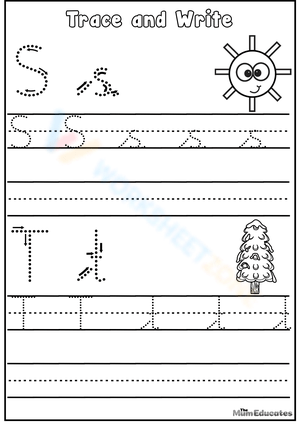
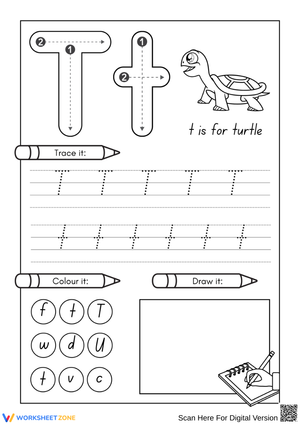
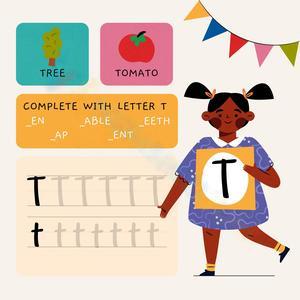
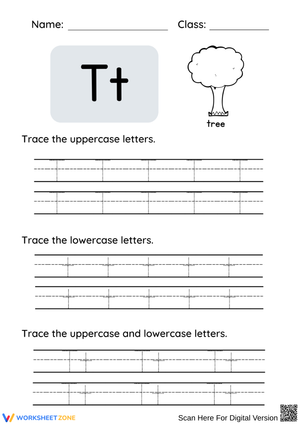
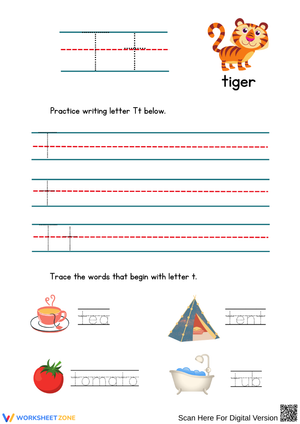
Learning to recognize and form individual letters is one of the most significant cognitive milestones a preschool child will reach, and letter T worksheets for preschool are designed to support that journey with clarity and purpose. At this stage, young learners are not simply memorizing shapes. They are building the neural pathways that connect visual recognition with motor output, a foundational process that sets the tone for all future reading and writing development. Each page in this collection provides the structure a young mind needs to make that connection repeatedly and confidently.
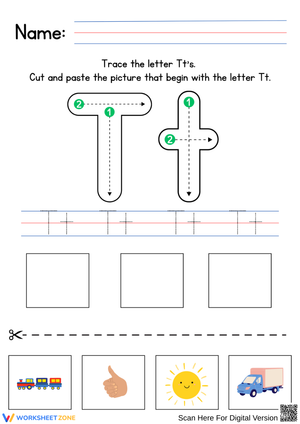
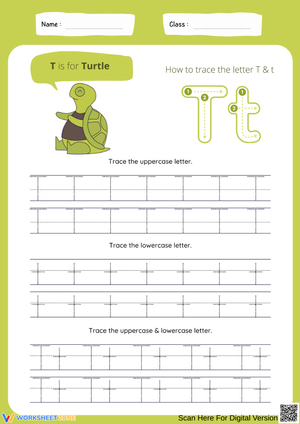
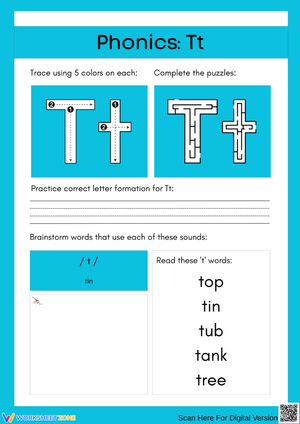
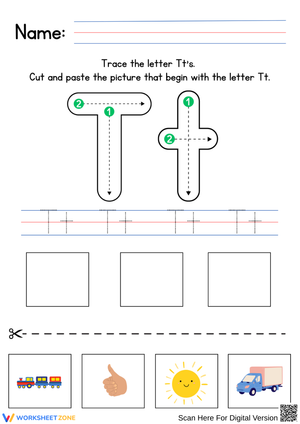
The progression embedded in these letter T worksheets for preschool follows a natural developmental sequence, moving from guided tracing to independent formation. This scaffolded approach honors the way children actually learn, starting with observation and imitation before gradually releasing responsibility to the student. Teachers using these pages in a preschool classroom setting will notice how the clear directional arrows and spacious practice lines reduce confusion and allow children to focus entirely on the physical act of letter formation without cognitive overload.
Fine motor development is one of the most critical but often overlooked components of early literacy readiness. When young learners trace and write on these fine motor skills and pencil control worksheets, they are strengthening the small muscles in their hands and fingers that will later support extended writing tasks. This physical preparation matters enormously, as children who struggle with pencil grip and hand stability often face unnecessary challenges during formal schooling, even when their comprehension is strong. For a broader introduction to early literacy, our guide on alphabet activities for preschoolers offers practical strategies that pair naturally with individual letter practice.
Parents supporting learning at home will find these letter T worksheets for preschool easy to incorporate into a short daily routine. Even ten to fifteen minutes of focused practice during a calm part of the day can produce consistent and measurable progress over time. The clean, uncluttered layout of each page makes it simple for children to stay on task without needing constant redirection. Worksheetzone designs these resources with both classroom teachers and home educators in mind, ensuring the materials hold up equally well across both environments and learning contexts.
Whether your child is just beginning to explore written language or reinforcing skills introduced in the classroom, these letter T worksheets for preschool provide the right kind of structured repetition that builds true confidence. Each completed page is a small but meaningful step forward in a child's literacy journey, and that momentum has a lasting impact well beyond the preschool years.
Frequently Asked Questions
Question 1: At what age should children start using letter T worksheets for preschool?
Most children are developmentally ready to begin letter recognition and tracing activities between the ages of three and five. Letter T worksheets for preschool are designed to accommodate this range, offering guided tracing for beginners and independent writing tasks for children who are ready to move forward. The key indicator is not age alone but whether the child can hold a pencil with reasonable grip and follow simple visual directions during a seated activity.
Question 2: How do these worksheets support early reading skills alongside handwriting practice?
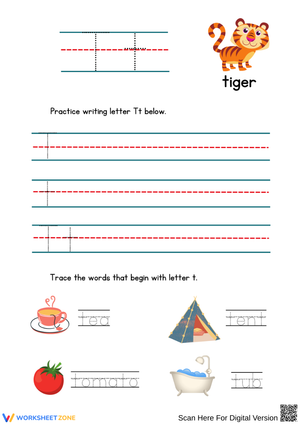
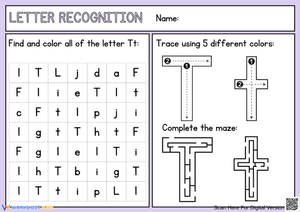
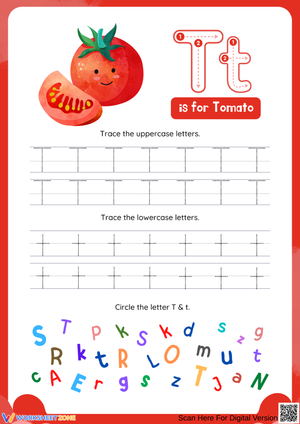
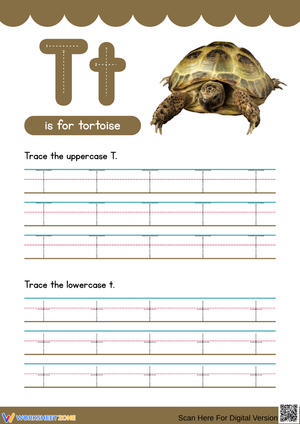
Handwriting and reading develop in close connection during the preschool years. When children practice forming the letter T on paper, they reinforce their ability to recognize it in printed text. Letter T worksheets for preschool typically include picture prompts and vocabulary words that begin with T, giving learners both a visual and a language association. This dual reinforcement helps children move more naturally toward phonemic awareness and early decoding skills.
Question 3: Can parents use these letter T worksheets for preschool without formal teaching experience?
Yes, the design of these worksheets makes them accessible for parents with no formal teaching background. Each page includes clear visual guidance so children can understand the task independently or with minimal direction. Parents simply need to provide the page, a pencil, and a quiet space for practice. Brief sessions of ten to fifteen minutes are enough to build consistency, and the straightforward layout removes the need for any additional preparation or explanation from an adult.
Question 4: How often should preschoolers practice with letter T worksheets to see improvement?
Regular short practice sessions are more effective than occasional lengthy ones for preschool-age learners. Three to five sessions per week, each lasting around ten to fifteen minutes, tends to produce steady and visible progress. Letter T worksheets for preschool work best when incorporated into a predictable routine, such as morning table time or a quiet activity period at the end of the day. Consistency helps children build muscle memory and letter recognition at a pace that feels manageable and rewarding.