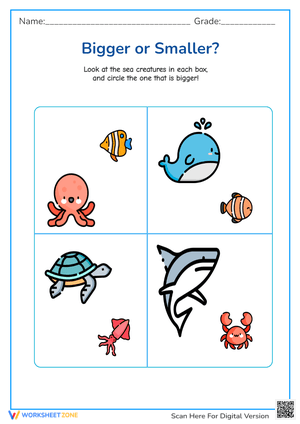
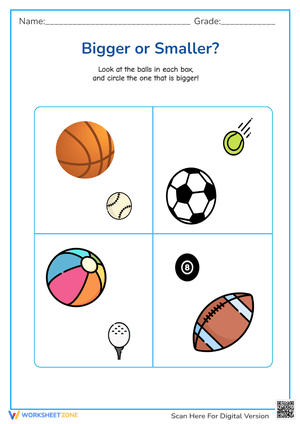
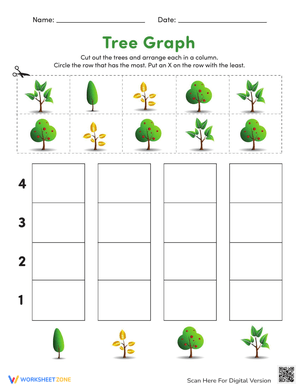
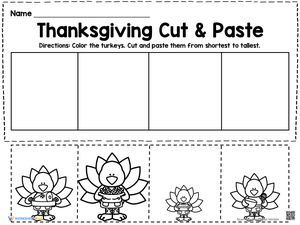
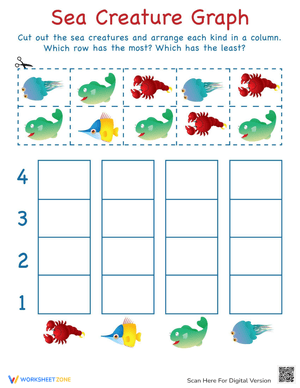
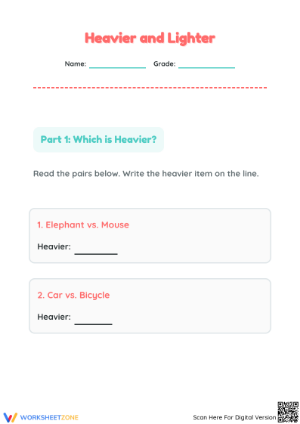
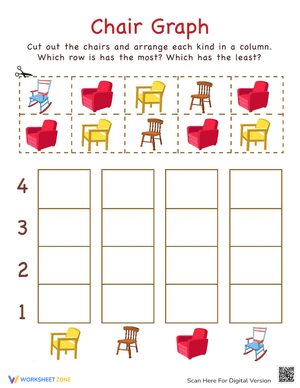
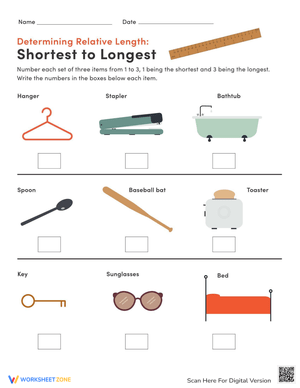
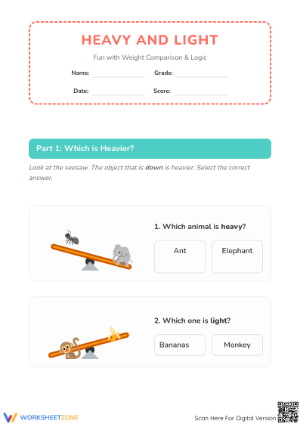
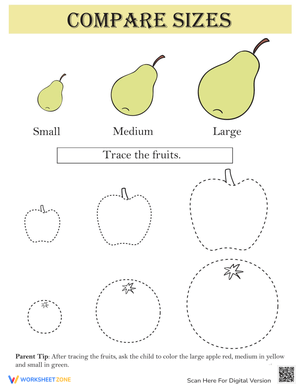
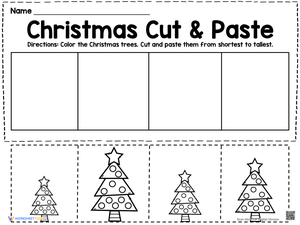
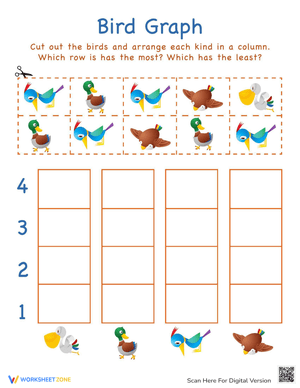
These kindergarten comparing measurement worksheets give teachers a concrete entry point into K.MD — the measurement strand where students describe and compare measurable attributes before any ruler or number line enters the picture. The set covers length, height, weight, and capacity through picture-based tasks: students circle, color, underline, or mark rather than count or calculate. What comes back on these activities is a fast, readable snapshot of who has the concept and who is still conflating size with mass.
The Specific Skills Each Worksheet Targets
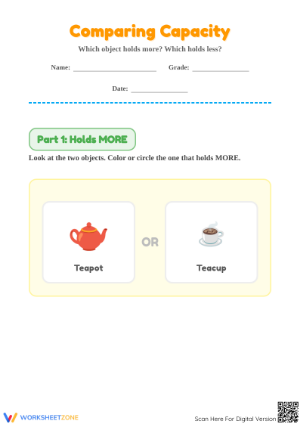
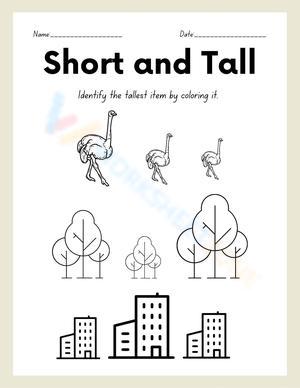
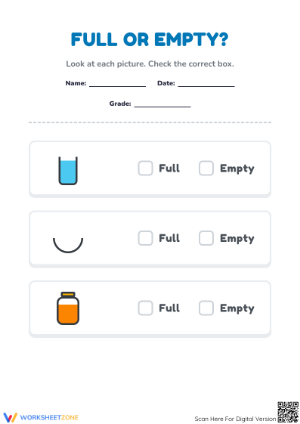
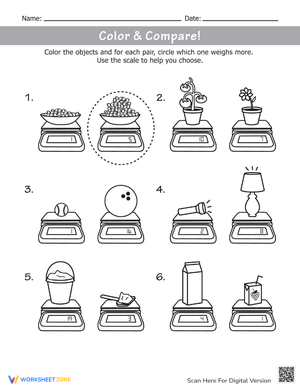
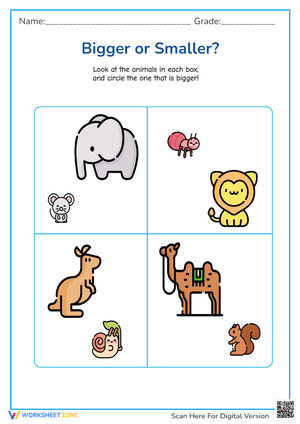
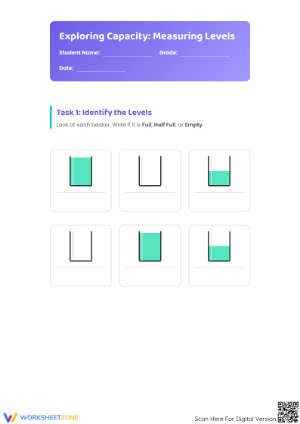
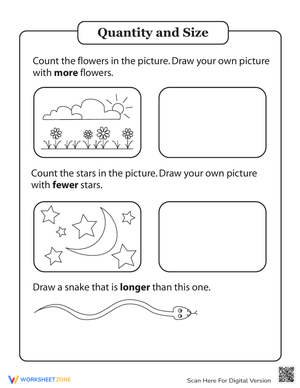
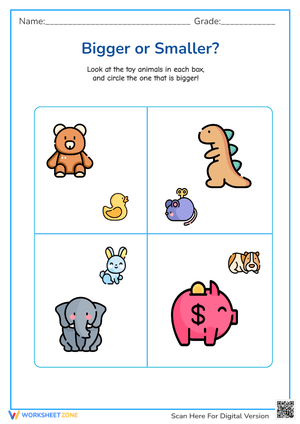
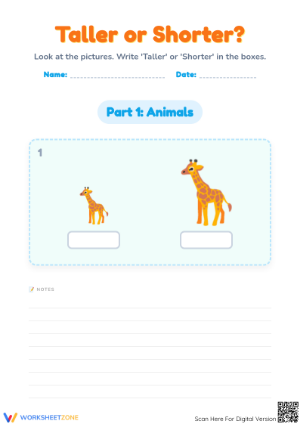
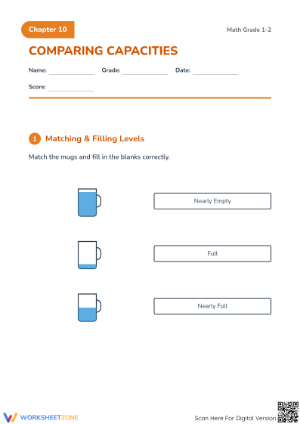
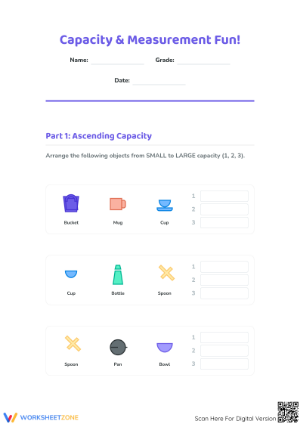
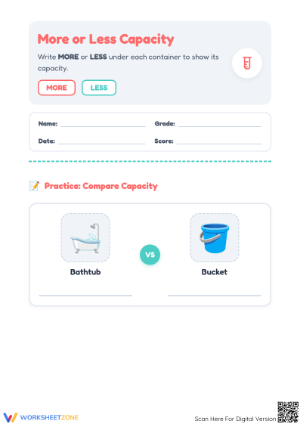
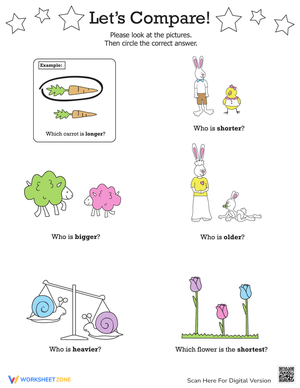
Length and height comparisons form the largest portion of the set. Students look at pairs of objects drawn to scale — pencils, buildings, trees, animals — and mark the longer or taller one. A separate group of worksheets focuses on weight using balance scale illustrations. Because weight is invisible without a tool, the balance scale is the most honest representation at this age, and students learn to read it: the lower pan holds the heavier object. Capacity worksheets present container pairs — a bathtub and a cup, a bucket and a thimble — and ask students to identify which holds more or less. A smaller subset mixes all three attributes on a single review worksheet, which functions better as a unit check than as initial practice.
The vocabulary demands matter as much as the visual tasks. Students work with paired terms: longer/shorter, taller/shorter, heavier/lighter, holds more/holds less. Each worksheet keeps the target vocabulary visible in the directions so that the language of measurement comparison gets repeated exposure every time students work with the resource.
Smart Ways to Work These Worksheets Into Your Week
The most reliable use pattern is concrete-first, then paper. Before students touch a worksheet, they need to have done the physical version: standing back-to-back, holding objects, pouring water between containers. The worksheets land better on day two or three of a lesson sequence, after students have a sensory memory to draw on when they look at a 2D illustration. For math centers, slip each worksheet into a dry-erase sleeve — students mark answers with expo markers, check against a posted answer key, and wipe clean. The weight worksheets benefit from having a classroom balance scale at the same station so students can test their answers before committing to them.
Monday warm-ups and the ten minutes after morning meeting are natural slots for length and height worksheets — they require no materials beyond a pencil and take most students five to eight minutes. Save the mixed-attribute review worksheets for Friday, when they double as formative assessment data you can scan before planning Monday's reteach groups. A kindergarten comparing measurement worksheets also holds up as a take-home review after the whole-group lesson, since the picture-based format does not depend on teacher explanation to make sense.
Common Student Errors Teachers Should Anticipate and Address
The most reliable error in this set appears on weight worksheets: students mark the larger object as heavier regardless of what the balance scale shows. Present a worksheet with a large balloon and a small baseball on a scale — baseball side down — and a significant number of five-year-olds will circle the balloon. Size and weight are genuinely different concepts, and students at this age have not had enough experience with density to override the visual cue. Bringing in a large foam block and a small rock — letting students hold both before working the worksheet — gives them the sensory reference the printed image cannot supply on its own.
A subtler error appears when students identify the rising pan as the heavier side because it sits higher on the page. The reminder "the pan that goes down is the heavier one" needs explicit instruction before independent work. Writing it on the board and having students trace a down-arrow while saying "heavier" aloud before beginning reduces this reversal considerably.
On capacity worksheets, students frequently mark the taller container as holding more, even when the wider, shorter container clearly has greater volume. This is the classic conservation-of-volume error, and worksheet practice alone does not resolve it. A quick fill-and-pour at the water table before introducing the capacity worksheets makes these tasks far more productive.
Standard Alignment
These worksheets address K.MD.A.1 (describe measurable attributes of objects, such as length or weight) and K.MD.A.2 (directly compare two objects with a measurable attribute in common and describe which object has more or less of that attribute). In classroom terms, K.MD.A.1 is the vocabulary and attribute-identification work that comes first — students need to name what they are comparing before they can compare it. K.MD.A.2 is the comparison itself: which is longer, heavier, or holds more. The worksheets keep those two skills in sequence, with attribute-identification tasks appearing earlier in the set and direct-comparison tasks carrying the bulk of the practice.
Differentiating These Worksheets Across Ability Levels
For students who are still building the underlying concepts, pair each worksheet with a physical object match. If a worksheet shows a stapler and a pencil on a balance scale, put both on the table. Students compare what they can hold before transferring the observation to paper. This closes the gap between 2D representation and physical reality that trips up concrete thinkers — and it gives a useful diagnostic, because a student who holds both objects and still marks incorrectly needs different support than a student who simply misreads the illustration.
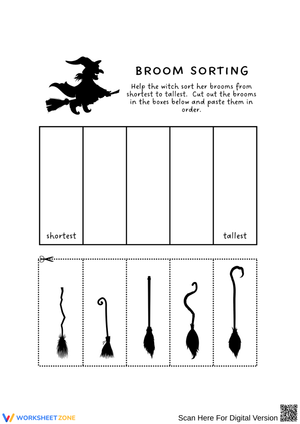
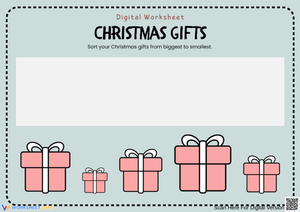
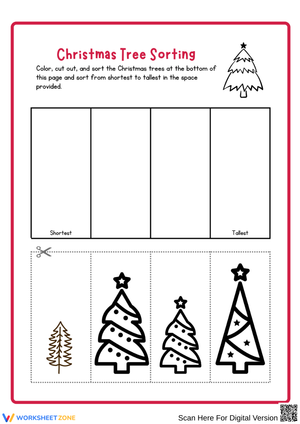
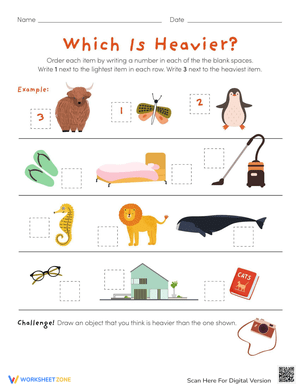
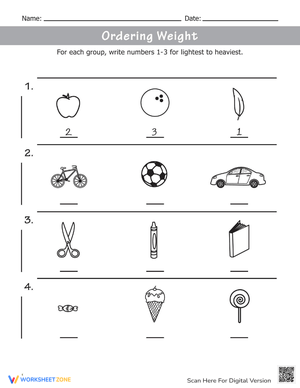
For students who move through the material quickly, push beyond binary comparison. Ask them to find a third object that falls between the two shown — heavier than the pencil but lighter than the stapler — and explain their reasoning aloud. Ordering tasks, where students rank three or four drawn objects from shortest to longest, extend the skill without requiring materials beyond what is already in the classroom. A small number of worksheets in the set include three-object comparisons for exactly this purpose.
Frequently Asked Questions
Do students need to know how to read to use these worksheets?
No. The tasks rely on pictures and simple directional cues. Teachers read the directions aloud once during introduction, and students work from the visuals after that. For English language learners, the picture-based format keeps the core math task accessible even when vocabulary is still developing — a student who does not yet know the word "shorter" can still mark the correct picture when the visual comparison is clear.
How many attributes does each worksheet address at once?
Most worksheets in the set focus on a single attribute — length, weight, or capacity — to keep the cognitive load manageable for five-year-olds. Mixed-attribute worksheets appear toward the end of the set and function better as informal review or assessment than as first-exposure practice.
Can these worksheets serve as informal assessments?
A kindergarten comparing measurement worksheets works well as a formative check, particularly the mixed-attribute versions. The circling and coloring format produces clean, readable student work that shows quickly which students have solid attribute recognition and which are still defaulting to size as a stand-in for all measurement. Pair any written check with a brief oral question — "why did you circle that one?" — because a correct answer can hide shaky reasoning.
Where do these worksheets fit in a kindergarten math sequence?
Measurement and data typically follow number sense work in most kindergarten pacing guides, placing the unit mid- to late-year. By then, students have the fine motor control to circle and mark accurately and enough language base to work with paired vocabulary. A kindergarten comparing measurement worksheets is most productive after at least two whole-group lessons built around physical comparison — not as the first exposure to the concept.













 Interactive Worksheet Maker
 Quiz Maker
 Word Search Maker
 Crossword Puzzle Maker
 Word Scramble Generator
 Sentence Scramble Generator
 Handwriting Worksheet Generator
 Name Tracing Generator
 Fill In The Blank Generator