


























Views
Downloads
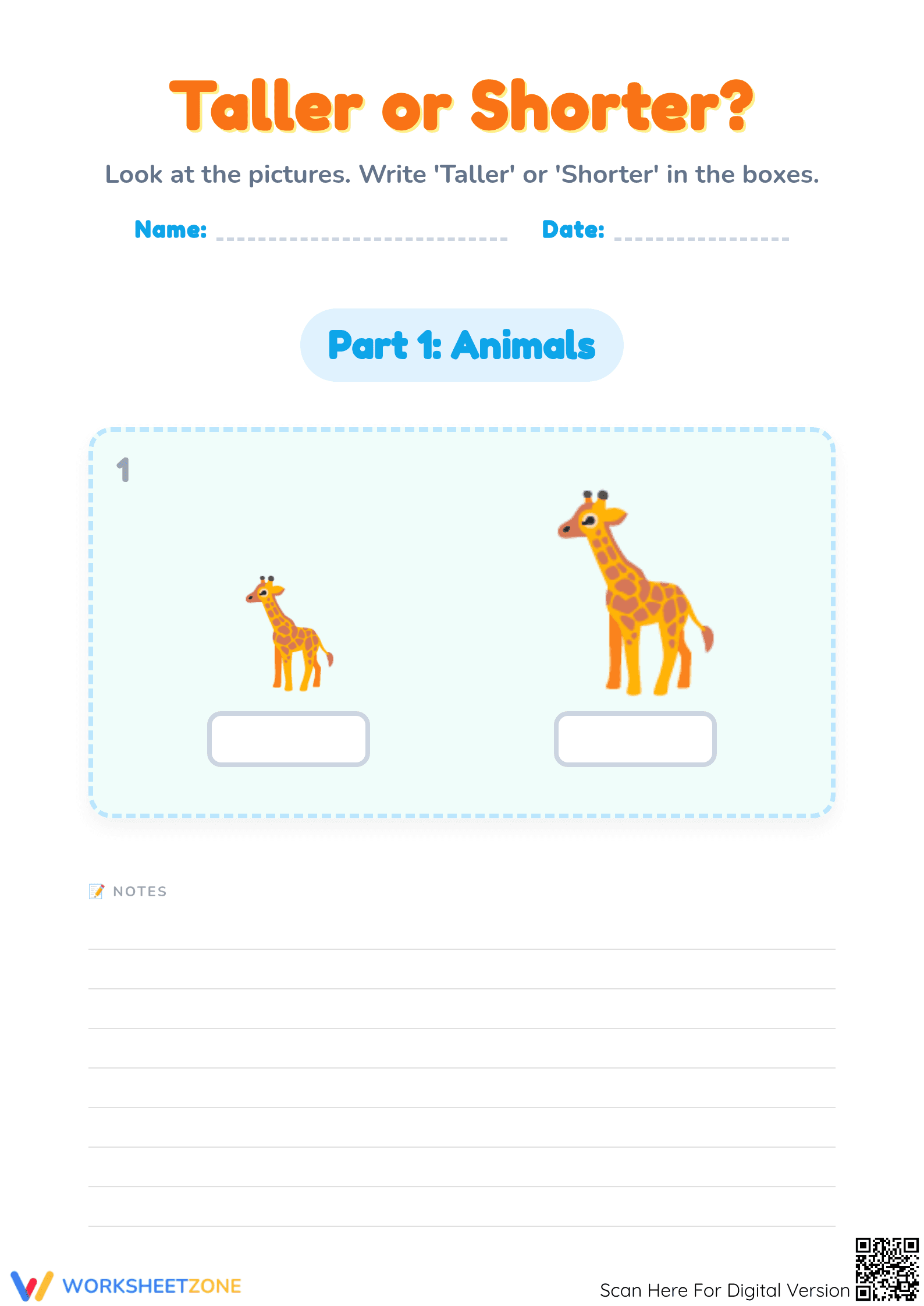
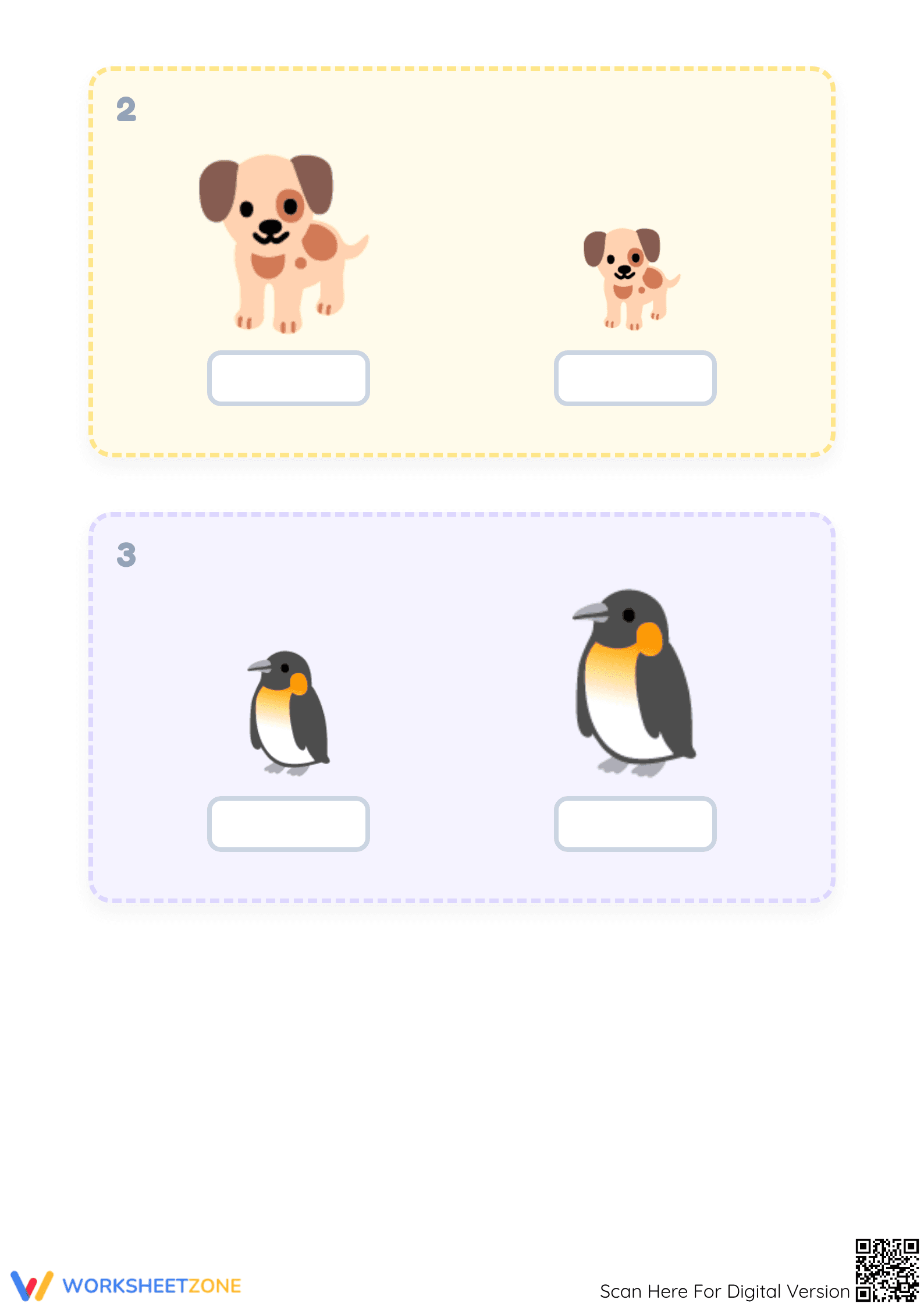
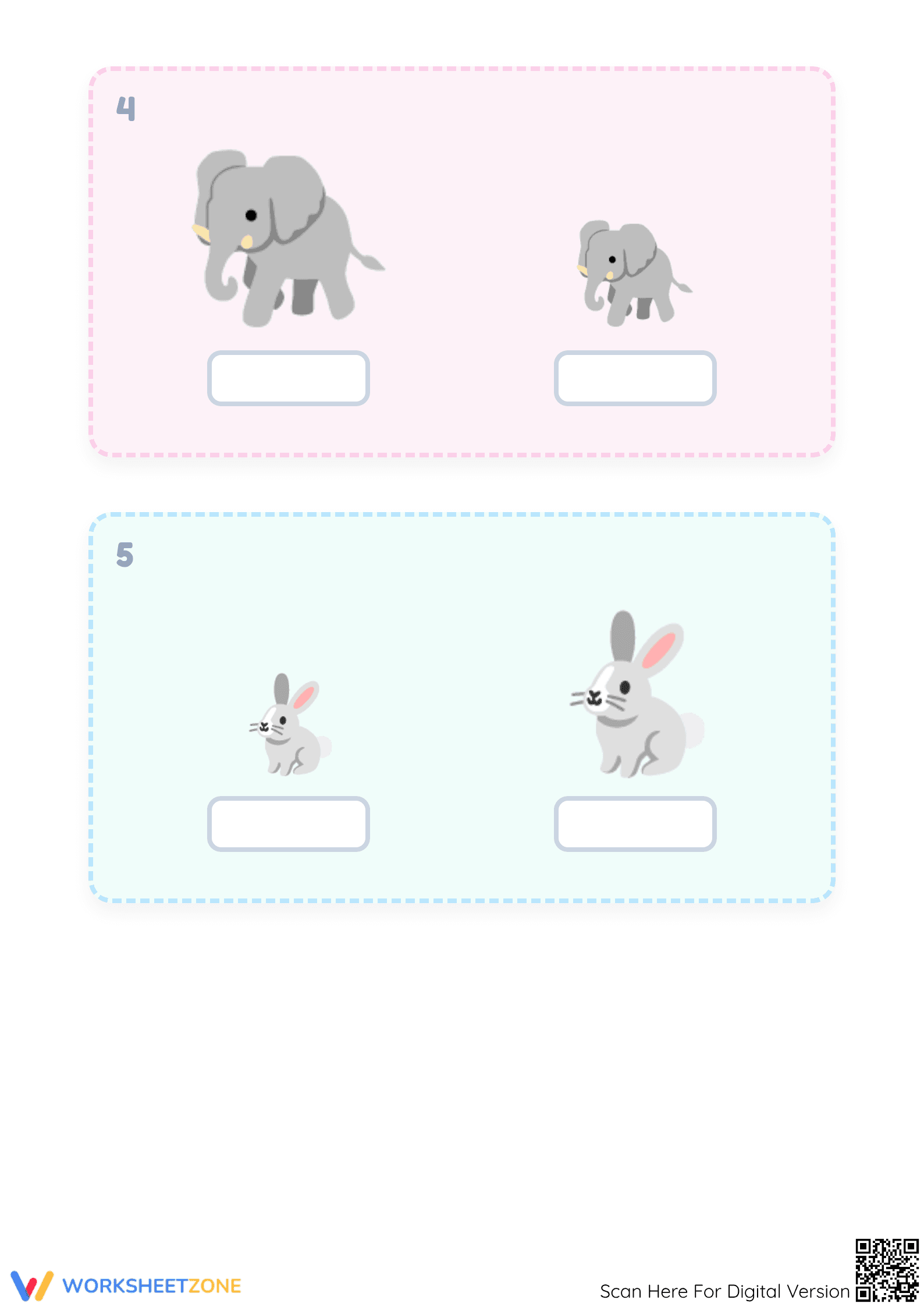
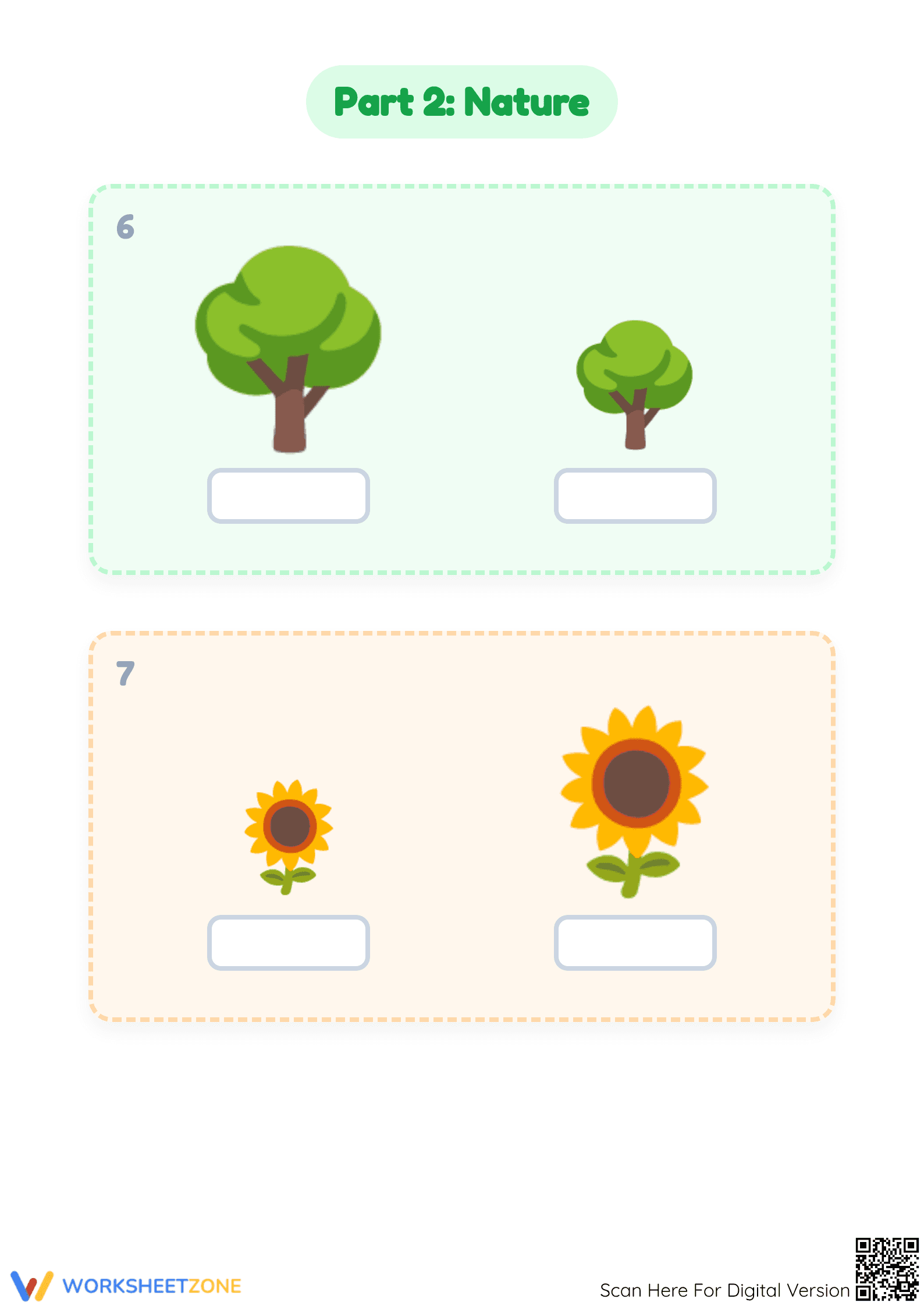

Printable Taller and Shorter Worksheet | Kindergarten Math
Paste this activity's link or code into your existing LMS (Google Classroom, Canvas, Teams, Schoology, Moodle, etc.).
Students can open and work on the activity right away, with no student login required.
You'll still be able to track student progress and results from your teacher account.
This foundational math worksheet helps early learners master height comparison through clear, visual practice. Students identify which object is taller or shorter across 9 engaging sets of animals and nature items. This foundational activity builds critical observation skills and essential academic vocabulary while supporting early measurement standards in the Kindergarten classroom.
At a Glance
- Grade: Kindergarten · Subject: Math
- Standard:
CCSS.MATH.CONTENT.K.MD.A.2— Directly compare two objects with a measurable attribute in common- Skill Focus: Comparing heights (taller vs. shorter)
- Format: 5 pages · 18 tasks · Answer key included · PDF
- Best For: Independent practice or small group instruction
- Time: 15–20 minutes
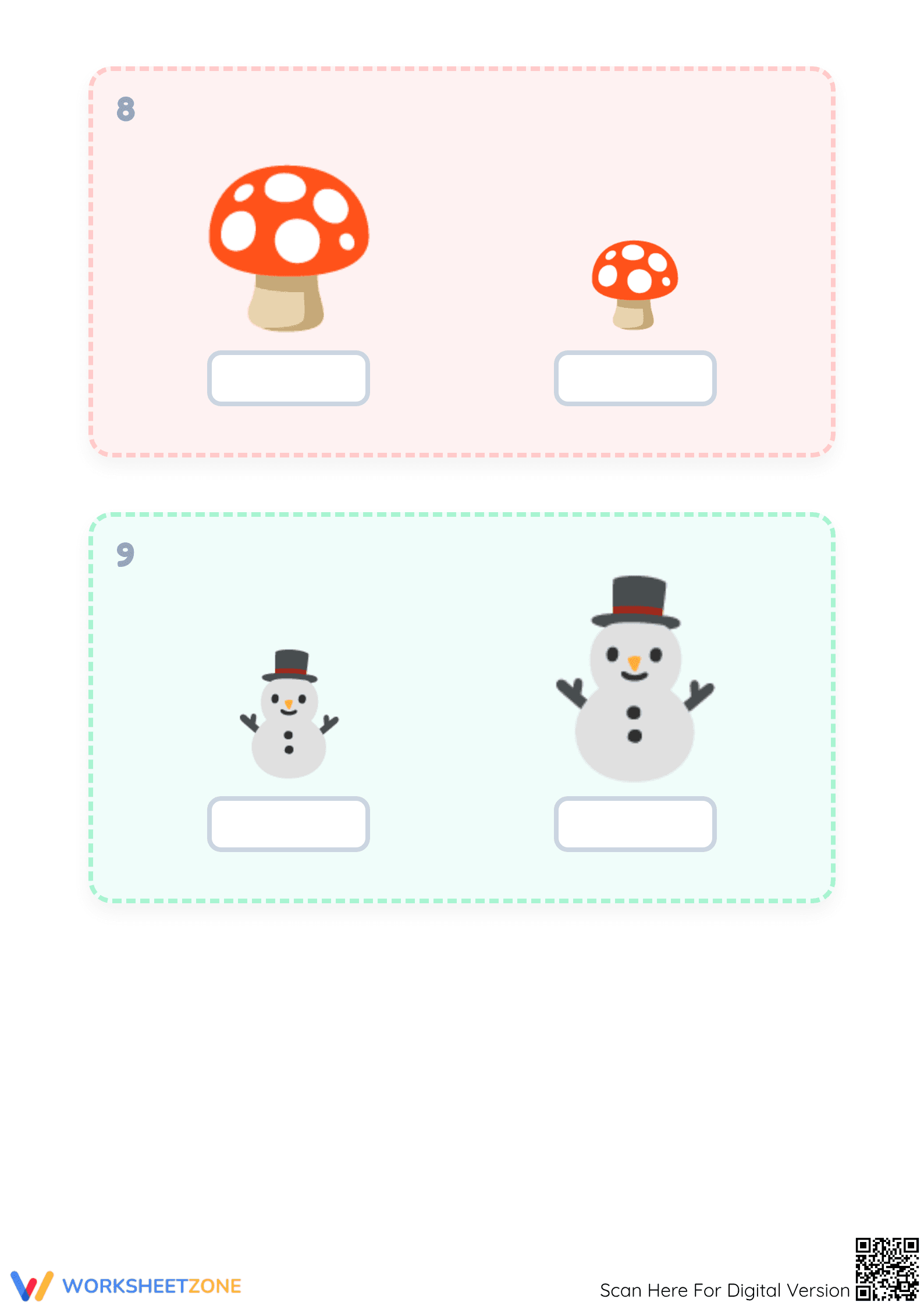
This 5-page PDF contains 9 specific comparison sets. Students are presented with two side-by-side images and must write the correct descriptor in the provided boxes. The clear, uncluttered layout features recognizable animals like giraffes and penguins, plus nature items like sunflowers and trees. A complete answer key is provided to ensure immediate feedback and support student self-correction.
Teachers can implement this resource in under 2 minutes to provide meaningful practice. Step 1: Print the 5-page set for each student (30 seconds). Step 2: Distribute to students for independent comparison work (15 minutes). Step 3: Review as a class or using the provided answer key (5 minutes). This streamlined workflow makes it a perfect choice for morning work, sub plans, or math centers during a measurement unit.
This resource is strictly aligned to CCSS.MATH.CONTENT.K.MD.A.2, which requires students to directly compare two objects with a measurable attribute in common and describe the difference. By specifically focusing on height, this resource provides targeted practice for early measurement concepts and reinforces the comparative language needed for success. Both standard codes can be copied directly into lesson plans, IEP goals, or district curriculum mapping tools.
Use this as a formative assessment after a hands-on lesson comparing physical objects in the classroom. Observe if students can correctly identify the base line of the images to determine height accurately. It also serves as an excellent reinforcement activity during center rotations, taking approximately 20 minutes for a typical Kindergarten student to complete with accuracy. The visual cues help bridge the gap between concrete and abstract math concepts.
This worksheet is designed for Kindergarten and Grade 1 students developing early numeracy and measurement vocabulary. It is especially ideal for English Language Learners (ELL) due to the heavy visual support and repetitive vocabulary. Pair this with a physical height chart or a "tall vs. short" anchor chart to provide a comprehensive instructional experience for all learners in the classroom.
Standardized measurement practice is a cornerstone of early mathematical development, as highlighted in the RAND AIRS 2024 report on foundational numeracy. This worksheet addresses CCSS.MATH.CONTENT.K.MD.A.2 by providing scaffolded visual comparisons that transition students from intuitive height perception to formal vocabulary use. Research by Fisher & Frey (2014) emphasizes the importance of visual cues in reinforcing academic language for young learners, a principle applied here through the use of high-contrast, recognizable imagery. By requiring students to write "Taller" or "Shorter" next to 18 specific instances, the resource ensures cognitive engagement with the attribute of height. This focused approach reduces cognitive load while building the specific comparative skills necessary for later work with non-standard and standard units of measurement. The inclusion of an answer key further supports self-regulated learning environments in the early childhood classroom, allowing for immediate reinforcement of concepts.


