These kindergarten comparing size printable worksheets give teachers a focused set of visual comparison tasks that address one of early math's most foundational skills — identifying and describing how objects differ in physical attributes like height, length, and overall size. Each worksheet targets a specific comparison category, so teachers can assign them in a deliberate sequence rather than covering every concept at once.
The Specific Skills Each Worksheet Targets
The set moves through four comparison categories that reflect how kindergartners actually process size, starting with the most holistic judgments and moving toward more precise linear attributes before asking students to sequence multiple objects.
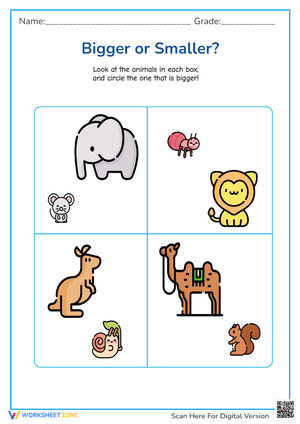
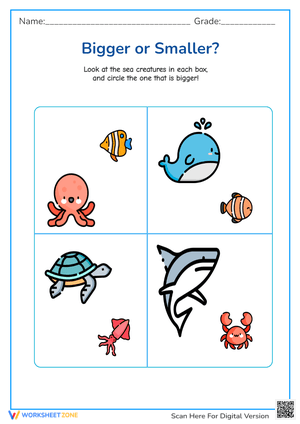
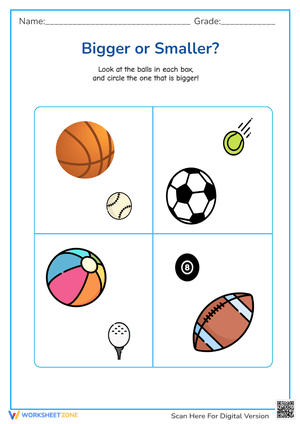
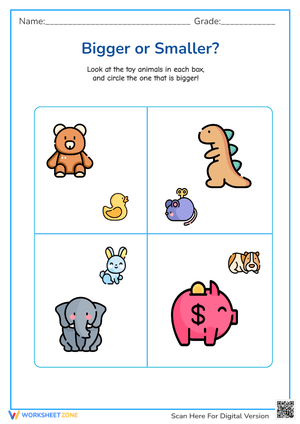
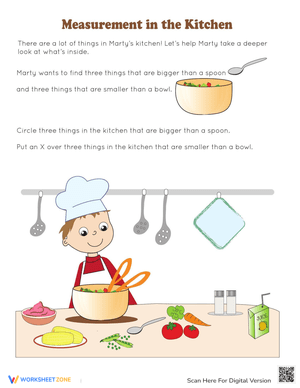
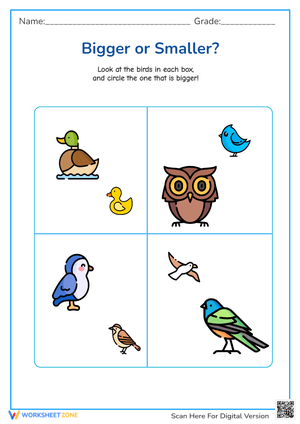
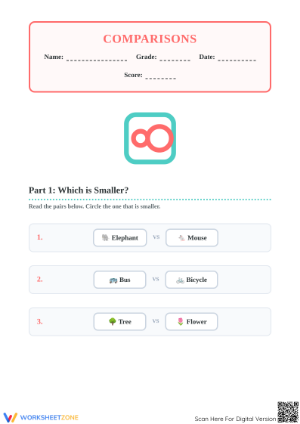
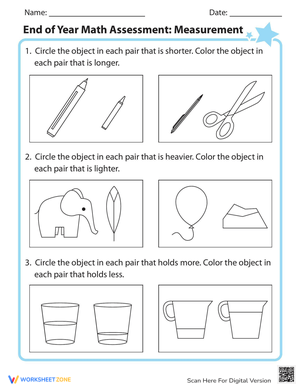
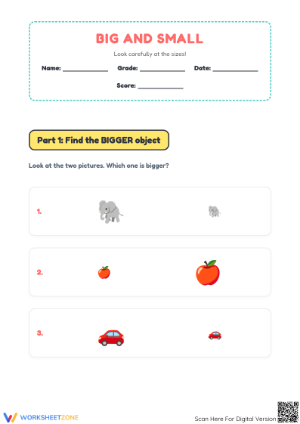
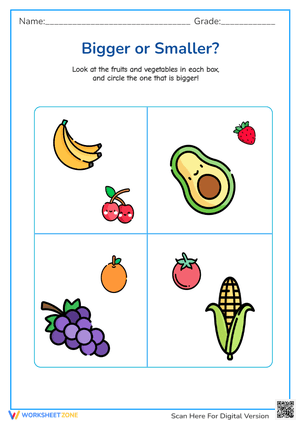
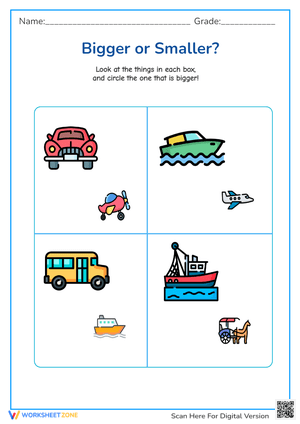
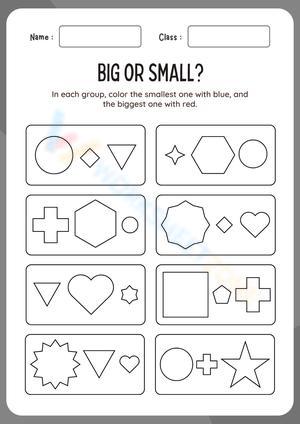
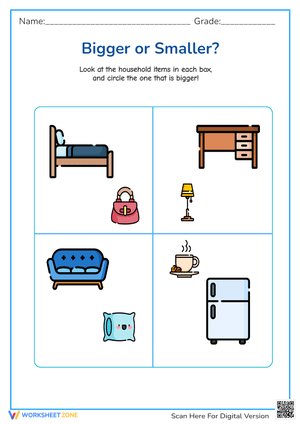
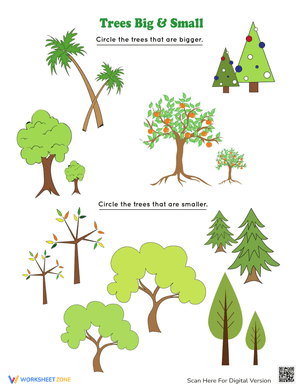
- Big and small: Students circle the larger item or color the smaller one in a pair. Illustrations use familiar objects — shoes, backpacks, apples — so children are not decoding unfamiliar images while also reasoning about relative size.
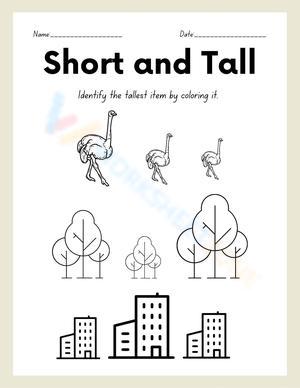
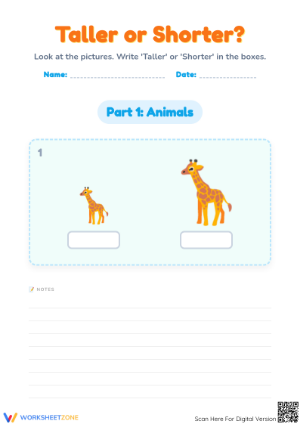
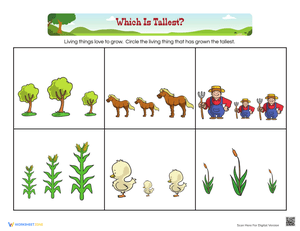
- Tall and short: Each worksheet in this category shows objects standing on a shared baseline. Without that baseline, students tend to compare the tops of objects rather than total height, reaching the wrong answer through a strategy that looks completely reasonable to them.
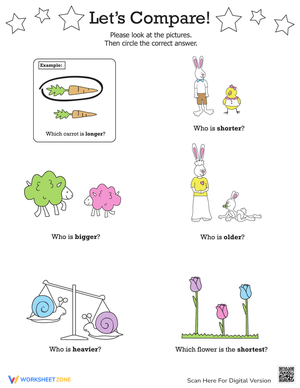
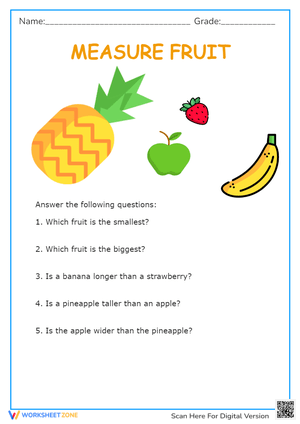
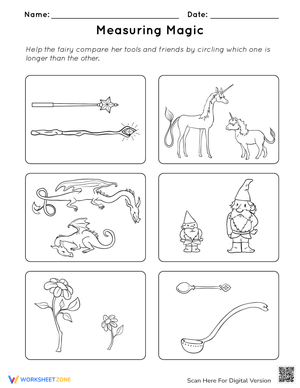
- Long and short: Objects are left-aligned so students can see where one ends relative to the other. Pencils, ribbons, and caterpillars are recurring anchor items because their elongated shapes make the comparison visually clean.
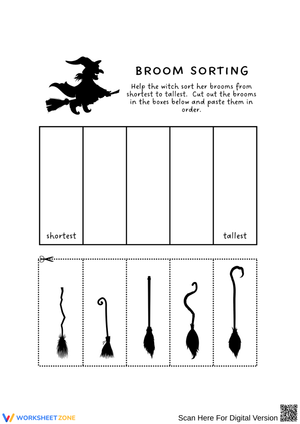
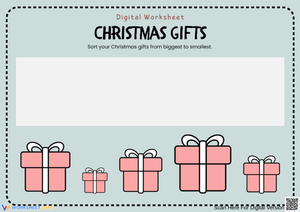
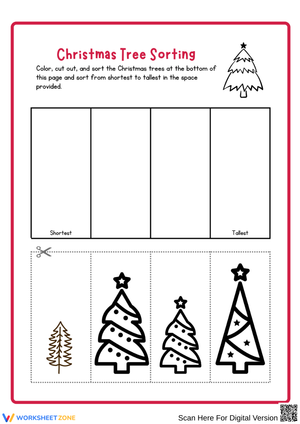
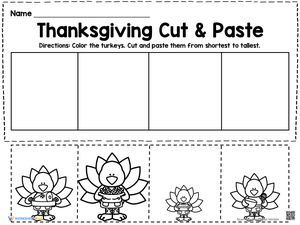
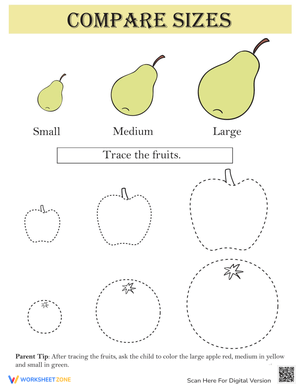
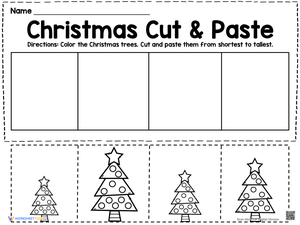
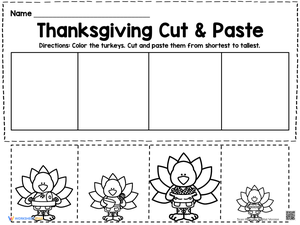
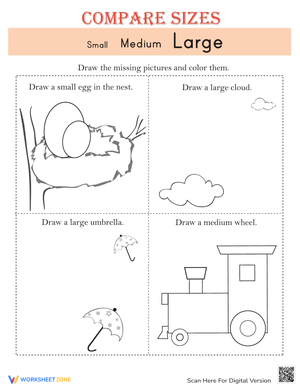
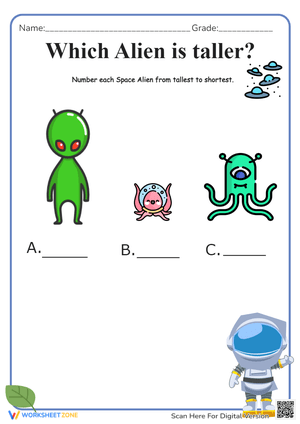
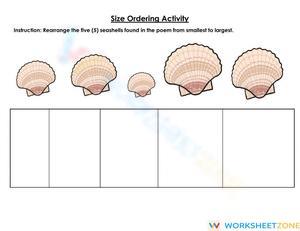
- Ordering by size: Students arrange three or more objects from shortest to tallest or smallest to largest, writing numbers in boxes or drawing a sequence. This appears last in the set because it requires holding multiple comparisons in working memory at the same time.
Common Misconceptions to Watch For and Correct
The most persistent error in height comparison happens when students learn that "taller means higher" — which is usually true — and then overapply it to tasks where one object is simply drawn higher on the page. A student who correctly identifies the taller building in a well-designed task will turn around and mark the upper-left flower as "taller" when two flowers are staggered vertically without a shared ground line. Watch for students who consistently pick the topmost object regardless of where it starts. These worksheets address this by anchoring all height and length comparisons to a consistent baseline.
The second common error is conflating overall size with a specific attribute. A wide, squat illustrated bear looks "big" to a kindergartner, who may not mark the taller, thinner giraffe as the taller object. This is not a reading failure — it reflects how young children construct size as a holistic impression before they can isolate individual attributes. When this pattern shows up repeatedly in student work, the student needs more conversation about which specific attribute is being compared, not more repetitions of the same worksheet.
Standard Alignment
This set of kindergarten comparing size printable worksheets addresses CCSS.MATH.CONTENT.K.MD.A.1 and CCSS.MATH.CONTENT.K.MD.A.2, both within the Measurement and Data domain. K.MD.A.1 asks students to describe measurable attributes of objects — length, weight, height — while K.MD.A.2 focuses on direct comparison: examining two objects with a common attribute and identifying which has more or less of it. In instructional terms, most of the two-object comparison worksheets deliver exactly what K.MD.A.2 requires. The ordering tasks extend students toward applying that same reasoning across three or more objects, which many curriculum maps treat as enrichment within this standard's scope rather than a separate target.
How to Work These Worksheets Into Your Lesson Plans
These work best as the structured practice layer in a lesson that begins with physical objects. Before students pick up a pencil, spend a few minutes at the carpet comparing real things — two student pencils, two books from the shelf, two block towers of different heights. The transition from concrete objects to illustrated tasks is a bigger cognitive step than it appears, and students who skip the physical stage often look at a worksheet and struggle to decide what they are even supposed to notice. Running the hands-on comparison first gives them a frame of reference the printed images can build on.
During morning meeting on days you introduce a new comparison type, hold up two classroom objects, ask students to name the attribute being compared, then send them to their seats with the matching worksheet. The kindergarten comparing size printable worksheets in this set are short enough to serve as a ten-minute center task or the independent practice segment of a 30-minute math block. Teachers using a workshop rotation often keep these at the measurement center alongside comparison objects — two crayons of different lengths, a short and a tall cube tower — so students can physically verify their answers before moving on.
Differentiating These Worksheets Across Ability Levels
For students still developing fine-motor control, the marking tasks are deliberately simple — circling, coloring, or drawing an arrow rather than writing. If pencil grip is an ongoing challenge, place the worksheet in a dry-erase sleeve so the student can point to the answer while you record it, or let them mark with a bingo dauber. That modification keeps the comparison thinking intact without turning the activity into a fine-motor obstacle.
Students who move quickly through two-object comparisons can start the ordering worksheets earlier than the rest of the class, and you can extend those tasks further by asking them to sequence four items instead of three, writing 1 through 4 to rank them. At the other end, students who are not yet reliably distinguishing between two sizes need more time with physical objects before printed tasks will reinforce anything useful. A kindergarten comparing size printable worksheets works well as a reinforcement and formative check tool, but it cannot replace the hands-on stage for students still building the underlying concept.
Frequently Asked Questions
Do students need to read to complete these worksheets?
No. The tasks rely on visual discrimination — students observe illustrated objects and mark what they see. Some worksheets include simple words like "circle" or "color," but a teacher or aide can read those aloud during the introduction. The activities function as non-reader-dependent practice, which is why they work well at centers and travel easily in homework folders.
In what order should these comparison types be taught?
Start with big and small, since overall size is the most intuitive comparison for young children. Move next to tall and short, then long and short — both involve linear attributes that require understanding a shared starting point. Ordering tasks come last. Some teachers cover big/small and tall/short in the same week; others give each comparison type its own instructional day before assigning the matching worksheet.
How can these be used at a math center without teacher supervision?
Place each worksheet in a dry-erase pocket with a marker for repeated use, or cut the set into individual task cards. Pair the cards with small classroom objects students can physically compare — two crayons, two towers of linking cubes — so the center asks students to make a real comparison and then match it to the illustrated task. That pairing does more for retention than the printed task alone, and it gives students a self-checking mechanism that keeps the center running independently.













 Interactive Worksheet Maker
 Quiz Maker
 Word Search Maker
 Crossword Puzzle Maker
 Word Scramble Generator
 Sentence Scramble Generator
 Handwriting Worksheet Generator
 Name Tracing Generator
 Fill In The Blank Generator