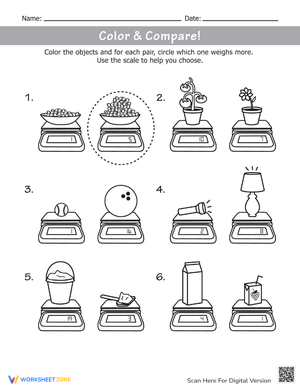
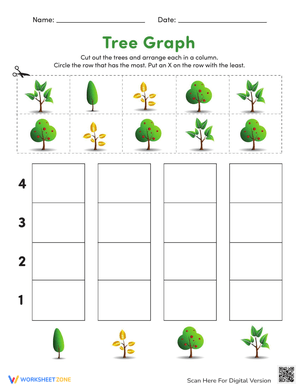
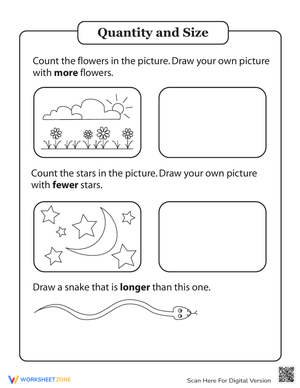
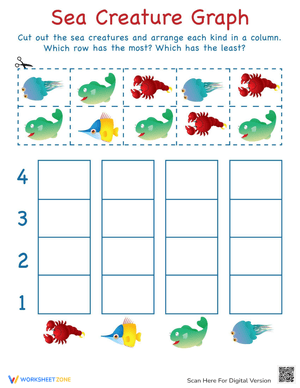
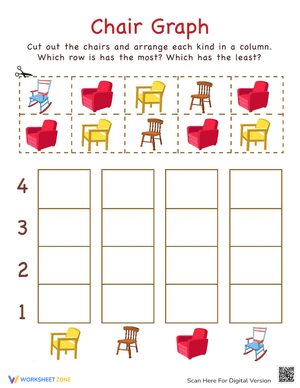
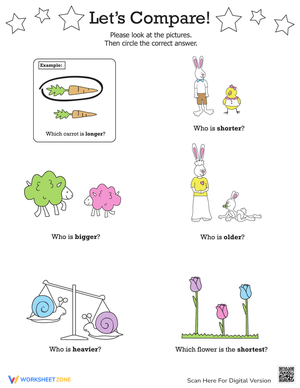
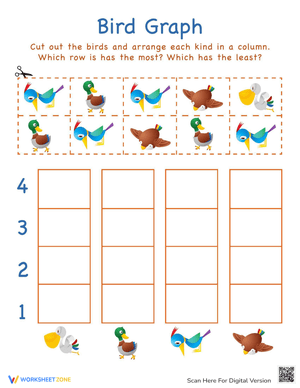
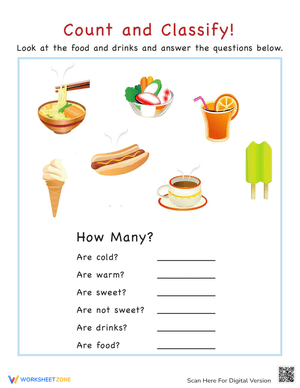
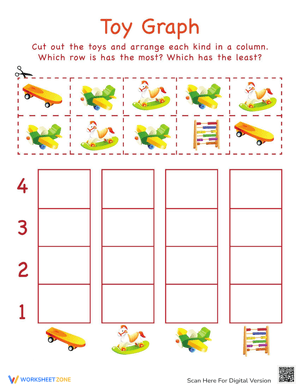
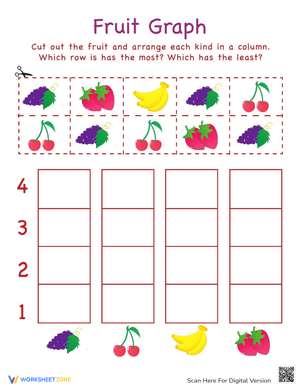
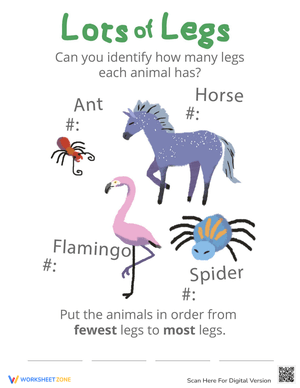
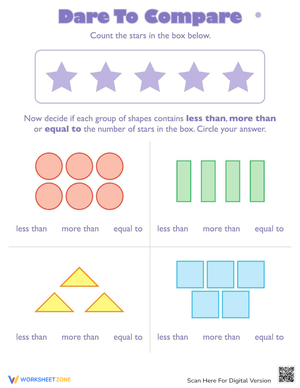
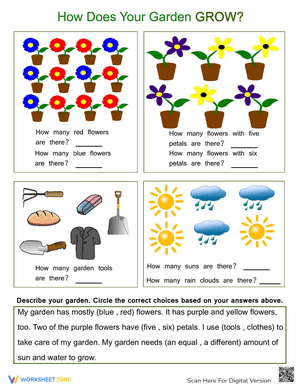
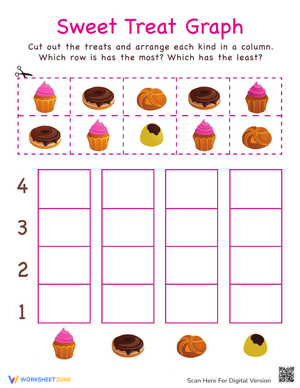
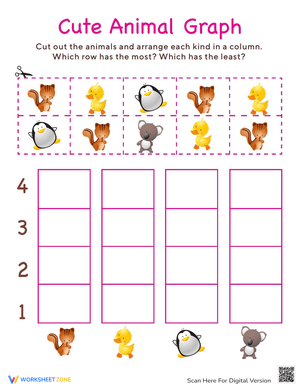
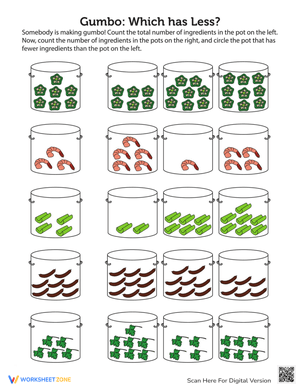
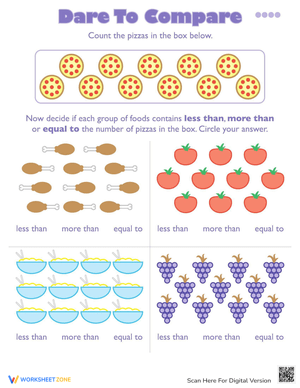
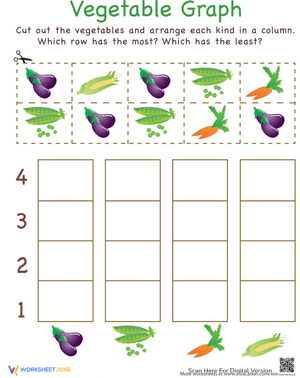
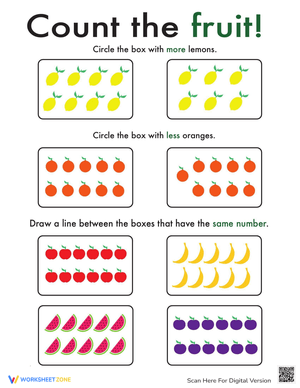
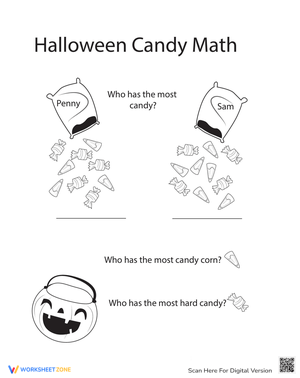
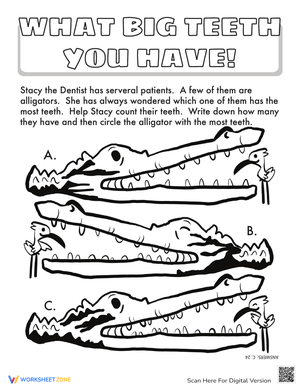
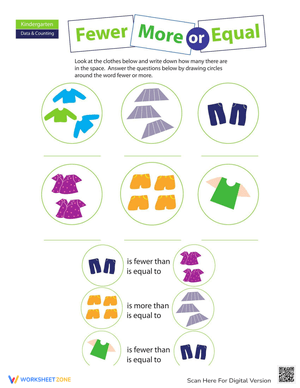
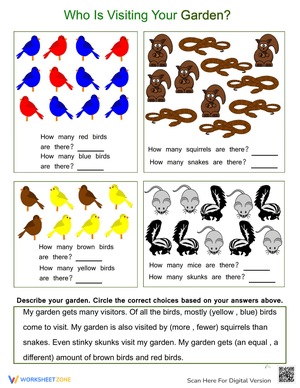
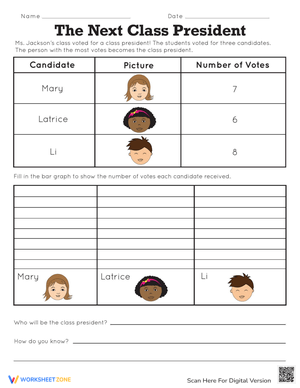
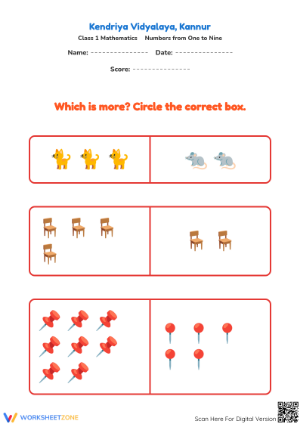
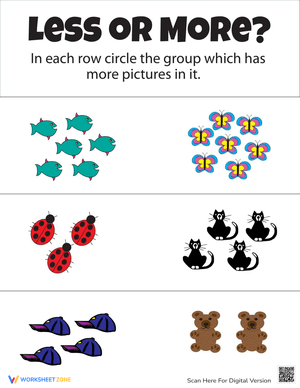
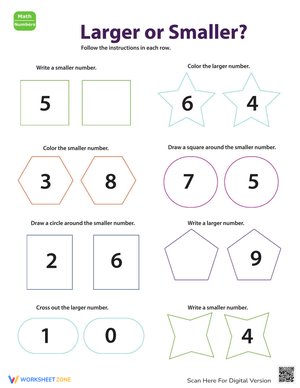
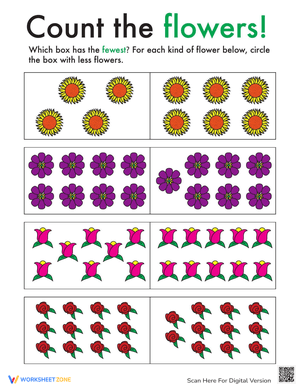
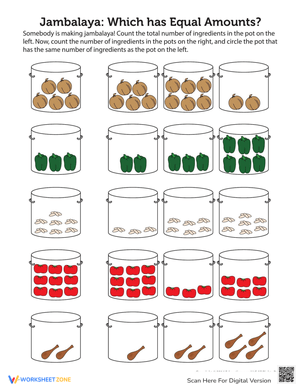
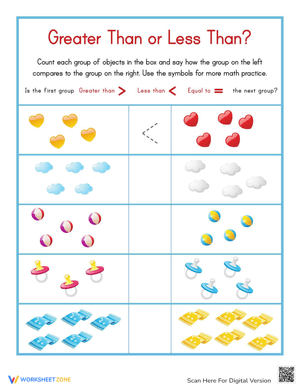
These kindergarten comparing amount printable worksheets give teachers a reliable set of practice resources for one of the most foundational skills in early math — deciding which group has more, which has fewer, or whether two sets are equal. Each worksheet uses pictures, ten frames, or tally marks to keep the comparison visible and concrete, which matches how kindergarteners actually build number sense before numerals carry much meaning for them.
What Students Practice in Each Worksheet
The kindergarten comparing amount printable worksheets in this set give students practice across several connected skills that all feed the same early math understanding. It is worth naming them specifically because teachers often treat comparing amounts as a single task when it actually involves several steps that students can get stuck on separately.
- One-to-one counting: Students touch or point to each object as they count, building accurate quantity before making any comparison decision.
- Quantity vocabulary: The words more, fewer, less, same, and equal appear consistently across the set so students internalize them through repetition, not just a single exposure.
- Visual quantity recognition: Ten-frame comparisons help students see that a full row of five is more than three scattered objects — the arrangement does some of the cognitive work so attention can stay on the comparison itself.
- Early justification: Some worksheets ask students to mark or explain why one group has more, which shifts the task from simple identification to a short explanation of their count.
That last skill matters more than it might seem. When a child can say "This group has more because I counted six and that one only has four," they are not just comparing — they are connecting counting to cardinality in a way that prepares them for number order, subtraction reasoning, and grouping work later in the year.
Where Students Stumble with Comparing Amounts
The most consistent mistake is not a counting error at all. Many kindergarteners circle the group with the larger picture rather than the larger quantity. A worksheet showing three large dogs compared to five small ladybugs reliably produces this error. Students who have not yet understood that quantity is about number and not visual size will choose the dogs every time. Catching this in a small-group setting is straightforward — ask students to count aloud before they circle anything, and watch whether their answer changes once the actual numbers are in front of them.
A second pattern is trickier to spot: students who count accurately in isolation sometimes continue from the first set's total when beginning the second. A child who counts seven on the left and then begins the right group at "eight" is using solid counting behavior in the wrong context. One direct correction usually works — "Every time we start a new group, we always go back to one" — and a few practice sessions with that reminder tend to close the gap.
Vocabulary also causes inconsistency in ways that affect later instruction. Most kindergarteners use more correctly in conversation but treat fewer and equal as interchangeable because those words feel unfamiliar. A small anchor chart with the four key terms posted during worksheet time gives students something to reach for instead of guessing.
How to Work These Worksheets Into Your Math Block
The strongest entry point is concrete before paper. Give students two small sets of counters — four red and seven blue, for instance — and ask them to count each group and say which has more. Once they can do that with physical objects, the worksheet shows the same comparison in picture form. That transfer from hands-on to printed image is less obvious to five-year-olds than teachers expect, so making the connection explicit ("See how these pictures show the same thing we just did with cubes?") helps students understand what the worksheet is asking before they pick up a crayon.
Within the math block itself, these resources fit into several natural slots. Morning warm-up works well for one quick comparison task before the main lesson. Small-group time is where teachers get the most useful information — listening to a student count aloud and then explain their comparison reveals whether the difficulty lies in counting accuracy, vocabulary, or the comparison concept itself. For centers, pair each worksheet with a set of linking cubes: students build both groups, compare the towers height-to-height, and then record their answer. That physical check catches errors caused by careless counting before they make it onto the paper.
The kindergarten comparing amount printable worksheets in this set also work as end-of-lesson exit checks. A single comparison task — one group on the left, one on the right, circle the group with more — takes about two minutes to complete and gives a clear read on who understood the day's instruction and who needs another look the following morning.
Standard Alignment
These worksheets address CCSS.MATH.CONTENT.K.CC.C.6, which asks students to identify whether the number of objects in one group is greater than, less than, or equal to the number in another group. This standard sits within the Counting and Cardinality domain — the instructional centerpiece of kindergarten math in the first half of the year. Because the standard requires students to have already grasped that a counted number represents a total quantity, comparison work belongs in the weeks after initial counting instruction is established, not at the very start of the year. Placing these worksheets too early, before one-to-one correspondence is solid, puts students in a position where the comparison step has no counting foundation to rest on.
Adapting the Set for a Range of Learners
Not every kindergartener arrives at compare-quantity work from the same starting point. Some students enter with strong number sense from home or pre-K; others are still working on reliable counting to five. Both groups need the same core skill — comparing quantities — but they need different amounts of support to access it.
For students who need more support, use worksheets with sets of two to five objects and allow them to place physical counters directly on top of each image before counting. The act of touching a real object is still doing cognitive work that the picture alone cannot replicate for some children at this stage. For students working at a solid grade level, ten-frame comparisons are a natural next step because the structured arrangement helps them see quantity without counting every individual cell. For students ready to push ahead, ask them to draw additional objects in the smaller group until both sets are equal — that small extension introduces early balancing thinking without leaving the compare-quantity context behind.
These kindergarten comparing amount printable worksheets also lend themselves to language support adjustments. For students still acquiring English, sentence frames posted near the work — "This group has ___. That group has ___. ___ is more." — give them the structure to practice vocabulary without the added burden of generating the sentence form from scratch.
Frequently Asked Questions
What number ranges appear in these worksheets?
Most worksheets in the set keep quantities between one and ten, with earlier worksheets staying in the one-to-five range. Keeping the numbers small lets students focus on accurate counting and the comparison decision rather than getting stuck on quantity sizes before the skill is solid.
Can these worksheets be used for homework?
Picture-based comparison tasks travel well as homework because families can support the activity without needing a math background. A parent can sit with a child, count together aloud, and say the comparison sentence. That said, ten-frame worksheets should be introduced and practiced in class first so families have context for the format when they see it at home.
How do I know when students are ready to move past visual comparisons?
The clearest signal is when a student can count both groups, state the comparison using accurate vocabulary, and explain their answer — consistently across several sessions, not just on a good day. When that happens reliably in small-group settings two or three times in a row, students are ready to work with numerals in comparison tasks rather than leaning on picture sets.
Do these worksheets work for intervention students?
They do, especially worksheets with small sets and uncluttered layouts. Intervention use works best when a teacher sits with the student, listens to them count aloud, and pinpoints exactly where the process breaks down. Is it counting? Is it the vocabulary? Is it the comparison step itself? Each of those is a different instructional need, and watching a student work through a worksheet one-on-one gives far more targeted information than a completed worksheet reviewed later on its own.













 Interactive Worksheet Maker
 Quiz Maker
 Word Search Maker
 Crossword Puzzle Maker
 Word Scramble Generator
 Sentence Scramble Generator
 Handwriting Worksheet Generator
 Name Tracing Generator
 Fill In The Blank Generator