




























Views
Downloads

Essential Heavy and Light Comparison Worksheet | Grades K-2

Paste this activity's link or code into your existing LMS (Google Classroom, Canvas, Teams, Schoology, Moodle, etc.).
Students can open and work on the activity right away, with no student login required.
You'll still be able to track student progress and results from your teacher account.
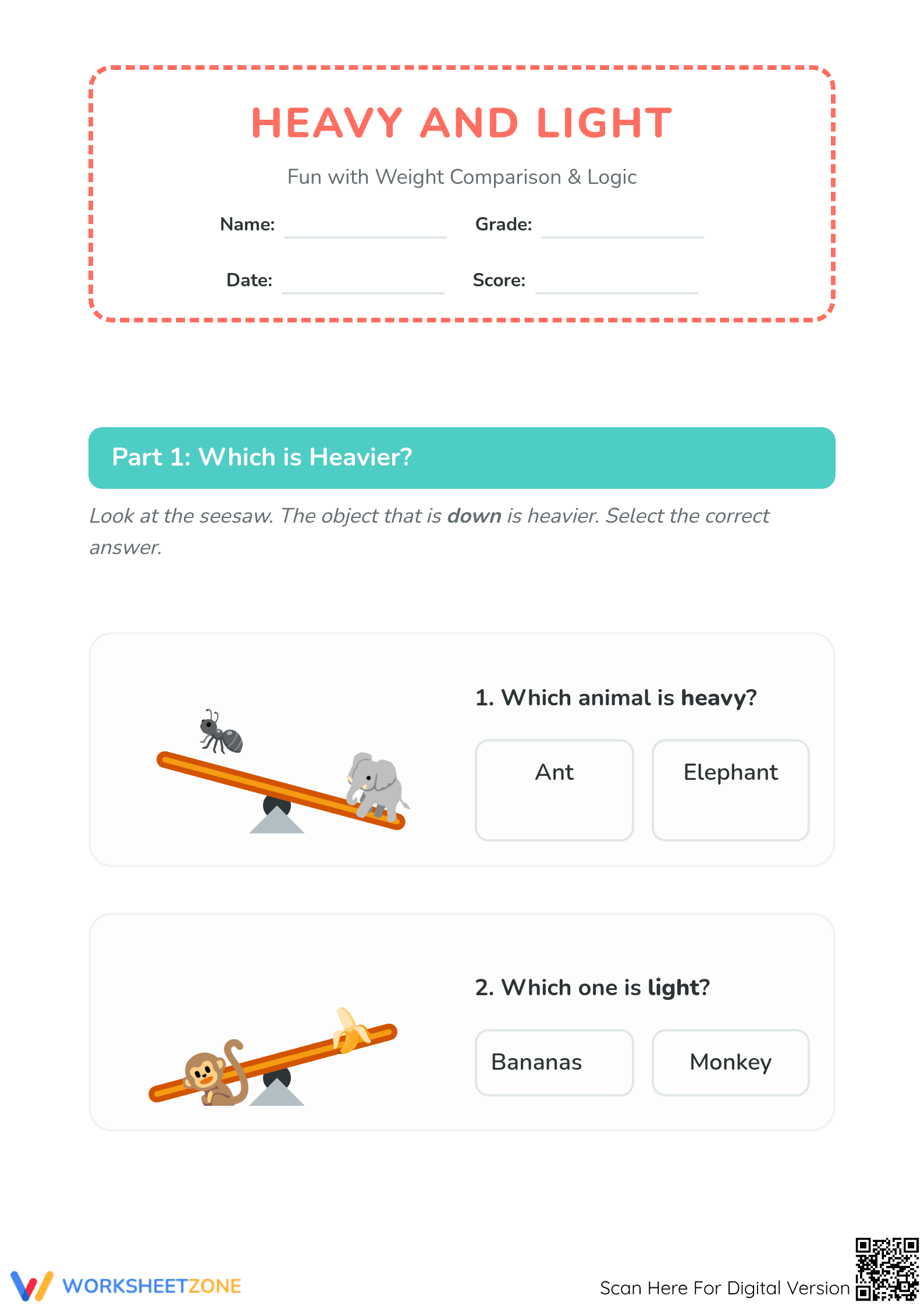
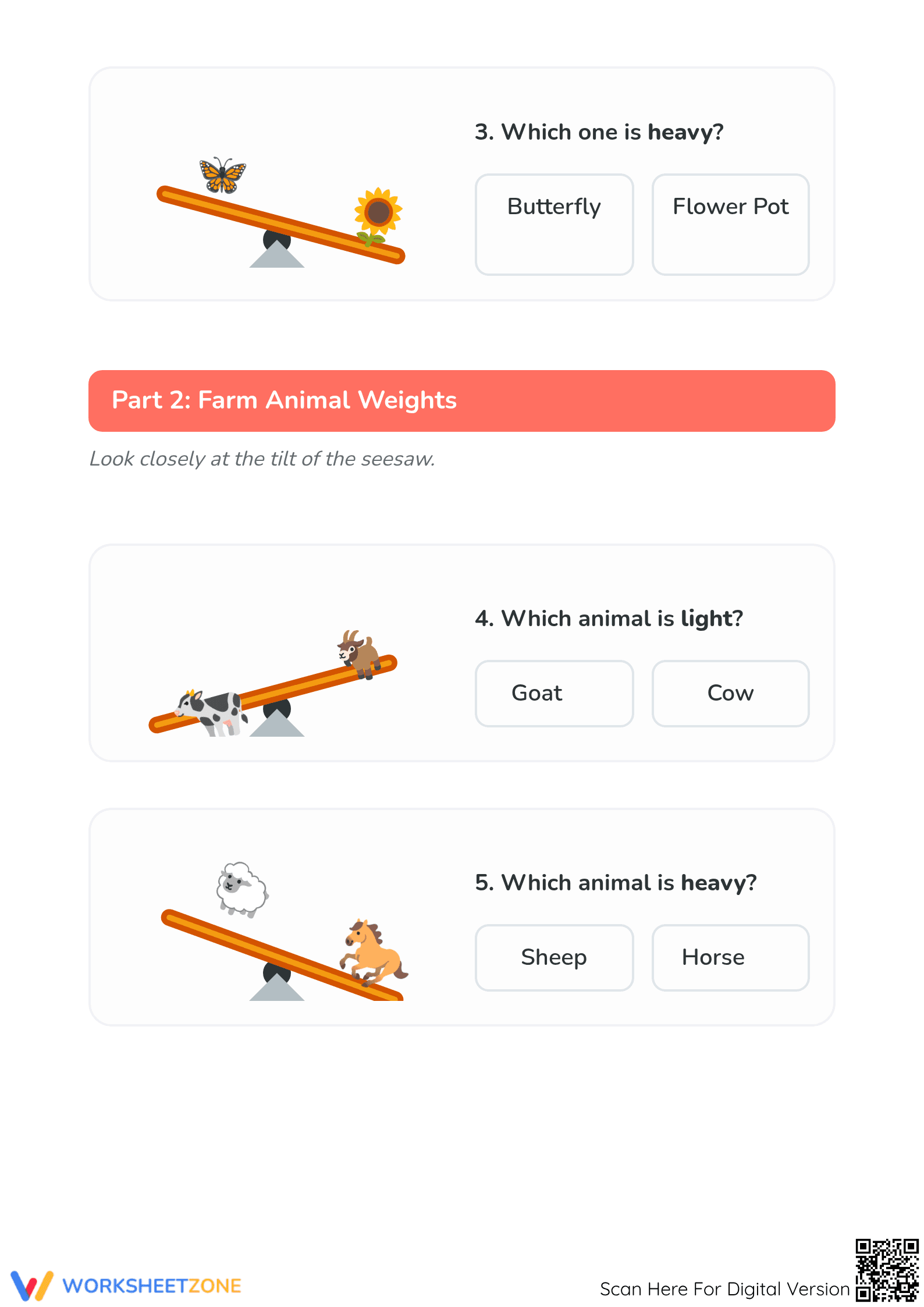
This comprehensive four-page math worksheet helps early learners master the concept of weight comparison through engaging visual logic and real-world application. Students explore the differences between heavy and light objects using intuitive seesaw diagrams, farm animal comparisons, and everyday items. By the end of these activities, children will confidently identify and describe measurable attributes of weight.
At a Glance
- Grade: K–2 · Subject: Math
- Standard:
K.MD.A.2— Directly compare two objects with a measurable attribute in common to describe differences.- Skill Focus: Weight Comparison (Heavy vs. Light)
- Format: 4 pages · 14 tasks · Answer key included · PDF
- Best For: Introduction to measurement and attribute comparison
- Time: 15–20 minutes
What's Inside
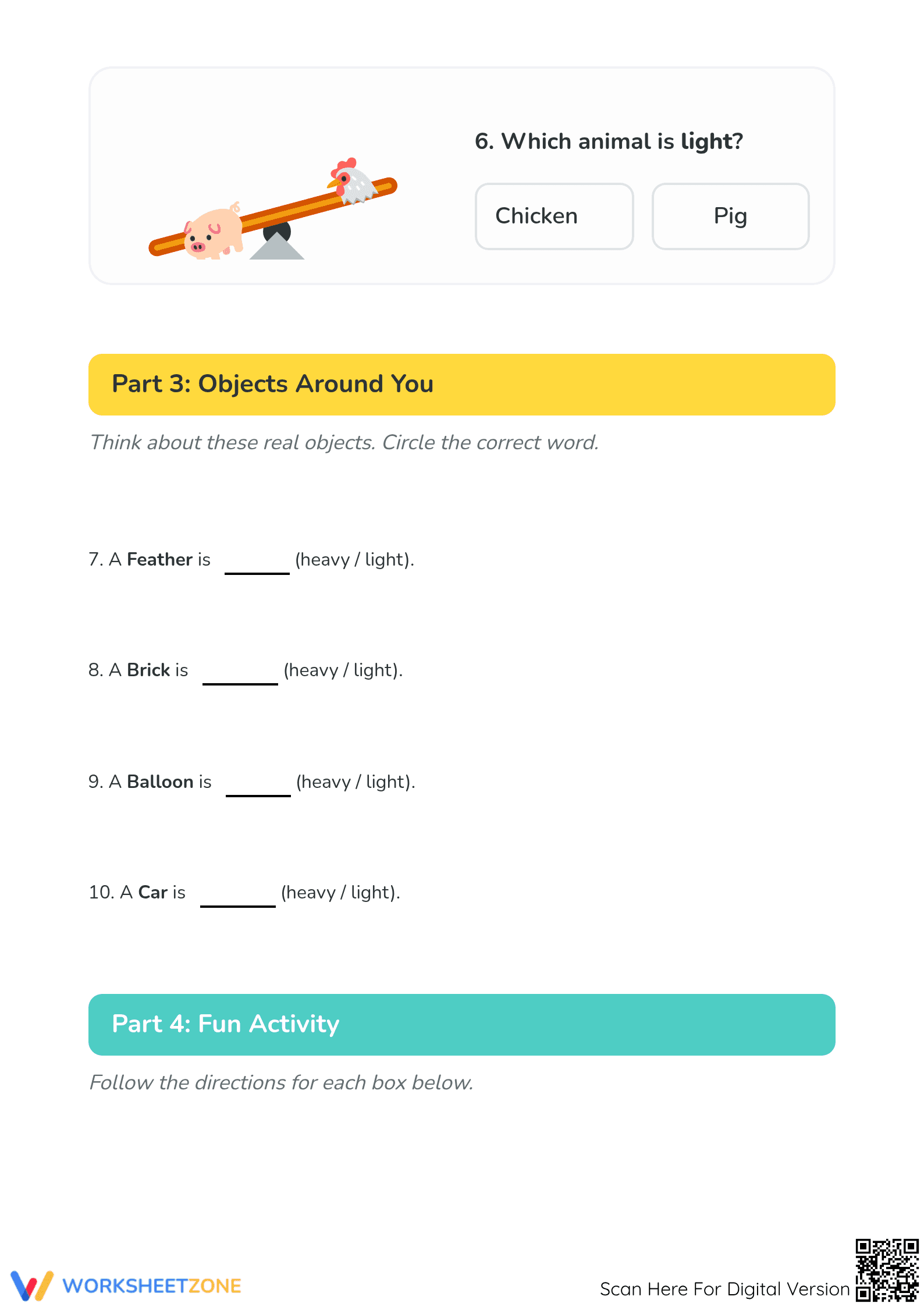
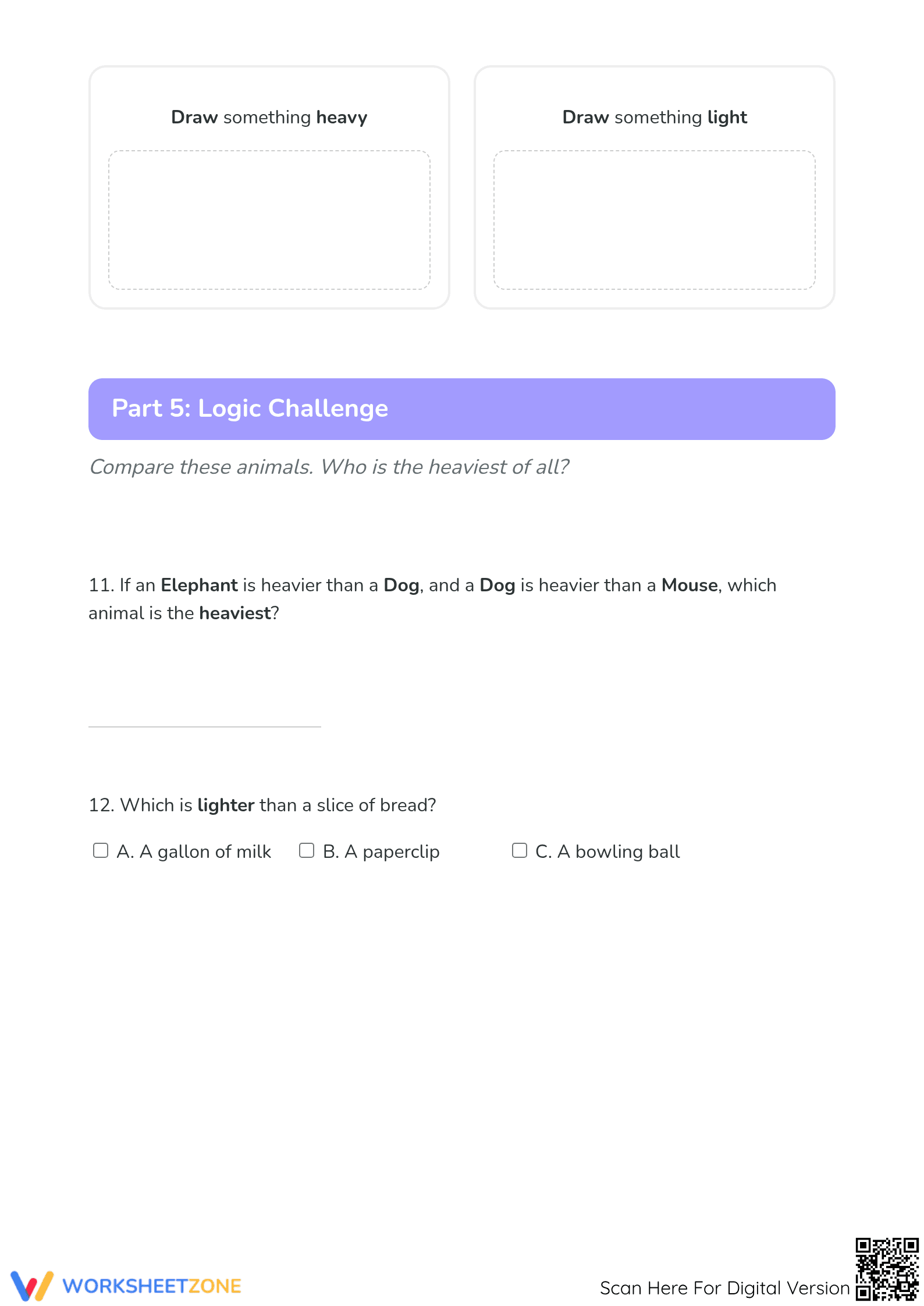
This resource features 14 tasks. Part 1 and 2 utilize seesaw illustrations to teach visual physics, while Part 3 focuses on identifying the weight of common objects like feathers and bricks. A creative drawing activity in Part 4 allows students to demonstrate understanding, followed by a multi-step logic challenge in Part 5 involving animal weight rankings and multiple-choice comparisons.
Zero-Prep Workflow
- Print (30 seconds): Simply select the desired pages and hit print.
- Distribute (1 minute): Hand out the worksheets with pencils and optional crayons for the drawing section.
- Review (1 minute): Use the included answer key to quickly verify student progress.
Total preparation time is under two minutes, making it ideal for substitute plans or morning work.
Standards Alignment
The primary focus is K.MD.A.2, which requires students to directly compare two objects with a measurable attribute in common and describe the difference. This worksheet provides multiple opportunities to practice this skill using both concrete visuals and abstract logic. This standard code can be copied directly into lesson plans, IEP goals, or district curriculum mapping tools.
How to Use It
Use this as a formative assessment to gauge student understanding of relative weight. During direct instruction, project the seesaw images to discuss why the heavier object moves down. Observation tip: watch for students who can explain that the "down" side represents more weight, indicating they have grasped the physical representation of the concept before moving to abstract problems.
Who It's For
This resource is designed for Preschool through Grade 2 students, with scaffolds for English Language Learners through visual cues. It is highly effective for students with IEP goals related to functional math or basic physics. Pair this with a hands-on balance scale activity using classroom manipulatives for a complete multi-sensory learning experience.
The Heavy and Light worksheet is meticulously designed to support foundational measurement skills as outlined in the Common Core State Standards. According to the RAND AIRS 2024 report on early childhood mathematics, early exposure to comparative language and visual representations of mass significantly improves a student's transition to formal units of measurement in later grades. By utilizing the K.MD.A.2 standard, this resource ensures that students are not merely identifying objects but are actively engaging in the process of comparing measurable attributes—a core cognitive milestone. Fisher & Frey (2014) emphasize that gradual release through visual scaffolding, such as the seesaw diagrams used here, allows learners to build mental models of physical properties before tackling complex word problems. This 14-task set provides the necessary volume of practice to move students from guided observation to independent logical reasoning regarding the physical world around them.


