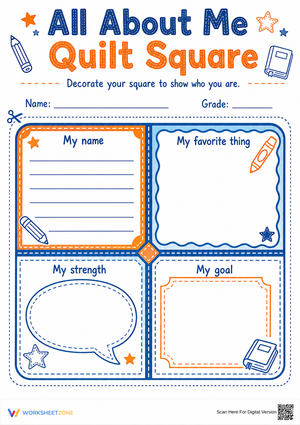
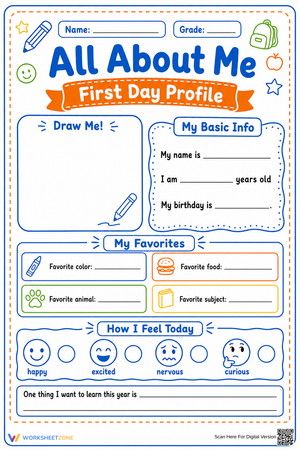
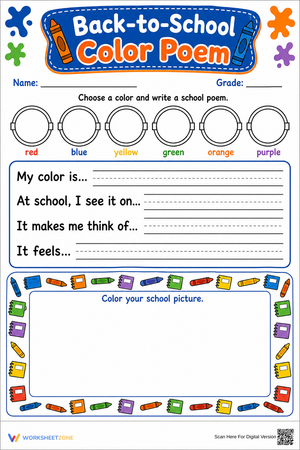
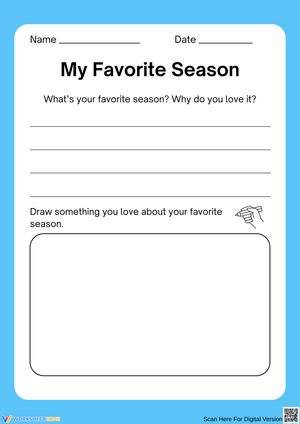
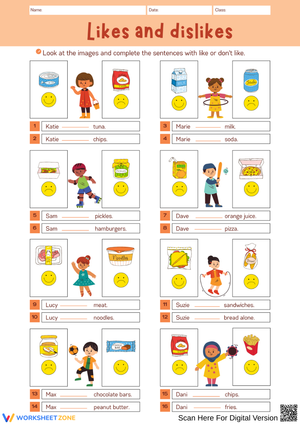
These kindergarten writing printable worksheets resources follow early writing development across the full year — from the first weeks when students are still working out pencil grip through the mid-year push toward simple sentences and the end-of-year personal response work most teachers want in portfolios. Each worksheet targets one specific skill and keeps the layout uncluttered, because five-year-olds lose the task fast when the instructions layer on top of each other.
What's Inside the Set
These kindergarten writing printable worksheets cover seven distinct skill areas. Teachers mix them across the week based on what current instruction requires rather than working through them in sequence. A name-writing worksheet on Monday doesn't lead into alphabet formation on Tuesday the way a textbook unit would — each stands alone and plugs into wherever the week's instruction has landed.
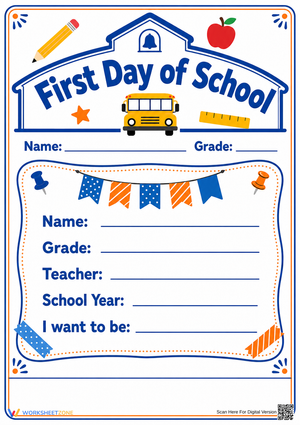
- Name writing: Dotted-line models transition to copy lines and then to blank writing space, supporting the skill from the first day of school through late spring.
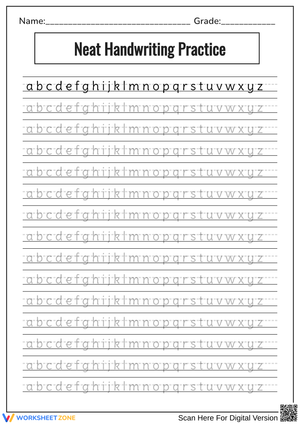
- Alphabet formation: Each worksheet pairs a directional starting dot and movement arrows with guided lines — giving students a consistent entry point for each letter rather than asking them to reconstruct the shape from memory.
- Sight word writing: Read-trace-write cycles for high-frequency words, moving students from visual recognition toward written production.
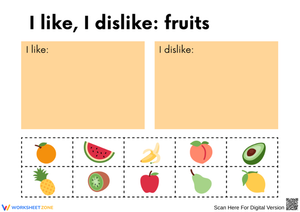
- Picture labeling: Simple illustrations with writing lines beneath each item. Students write a beginning sound, a full label, or both, depending on where they are in phonics development.
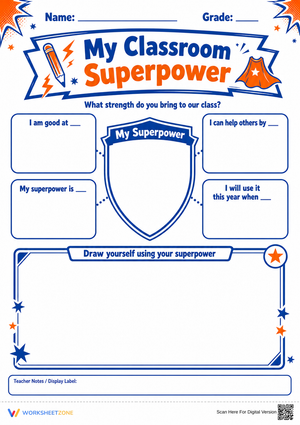
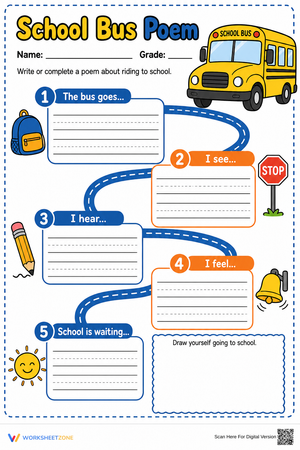
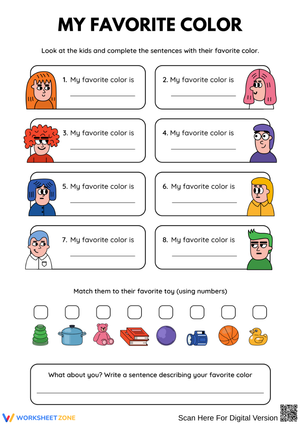
- Sentence starters: Frames like I see ___ or My family likes ___ supply the syntax; students supply the content. Reducing the structural decision frees students to focus on word-level choices.
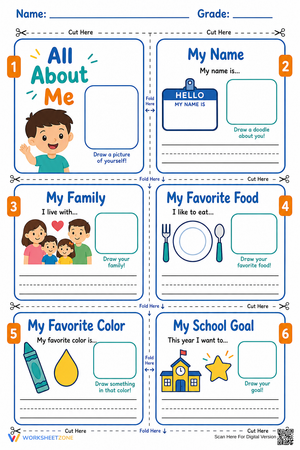
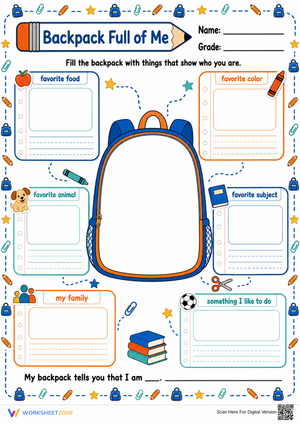
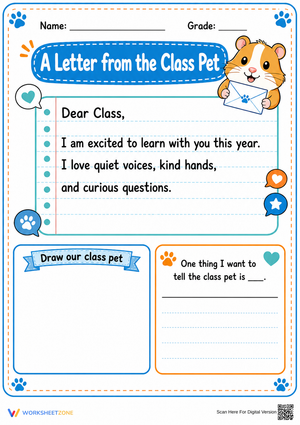
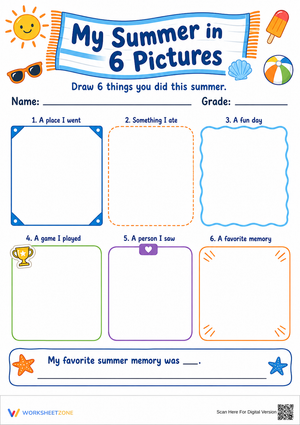
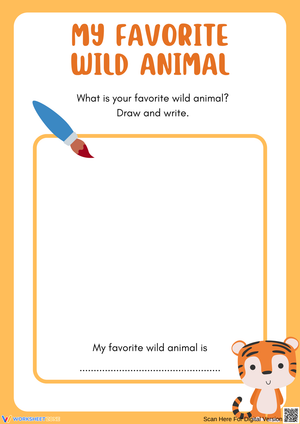
- Draw-and-write: A picture box sits above the writing lines. For many kindergartners, drawing is genuine early composition — not decoration — and translating a drawing into words is the actual writing move the worksheet targets.
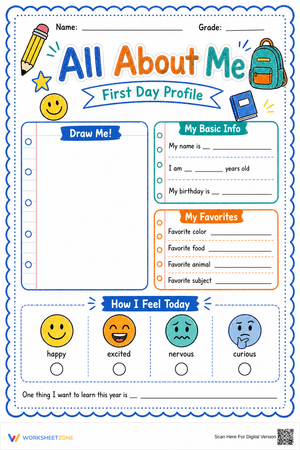
- Journal response worksheets: Seasonal and thematic prompts with a picture box and three to five writing lines, tying the writing task to what the class is already reading and talking about.
The Writing Errors That Show Up in Almost Every Kindergarten Class
Several error patterns are consistent enough across kindergarten classrooms that they're worth anticipating before the year starts rather than scrambling to address mid-October.
Vowel omission is the most common. Once students start applying the alphabetic principle, they record the strong consonant sounds and drop the vowel entirely — "KT" for cat, "FSH" for fish, "BD" for bird. This is not carelessness; it reflects where students are in phonemic awareness development. Vowels are perceptually less salient than consonants to young ears, and students don't yet know a vowel has to be there. The picture labeling worksheets surface this immediately — a set of labeled pictures tells you exactly which sounds each student is and isn't mapping, faster than any verbal check-in does.
Word spacing is another consistent gap. A student may write every letter in "I like dogs" correctly and still produce "Ilikedogs" as one continuous chain. The sentence starter worksheets address this implicitly — there's a visible break built into the frame between the starter and the blank, so students see the spacing modeled before they have to produce it independently.
Letter reversals — especially b and d — are developmentally expected through kindergarten and well into first grade. A student who writes "dob" for dog knows the letter name, knows the sound, and knows what word they're writing. What hasn't locked in is orientation relative to the direction of print. Alphabet formation worksheets that include a consistent starting dot and directional arrow reduce reversals because the student approaches each letter from the same physical position every time rather than reconstructing it from memory.
One honest limitation: these worksheets surface error patterns clearly, but closing a deep reversal habit or persistent vowel omission in a specific student requires one-on-one conferencing and targeted phonics instruction. No worksheet does that work on its own.
Fitting These Worksheets Into Your Teaching Week
These kindergarten writing printable worksheets resources land best when each type has a predictable place in the week. Kindergartners who know the format before sitting down spend their energy on the writing task itself rather than on decoding what the directions are asking.
Morning work is the natural home for name writing, alphabet formation, and simple labeling — tasks students can start independently as the morning meeting closes out and the day settles in. Literacy center rotations hold the draw-and-write prompts and sentence starters, where students have an uninterrupted window to think and write. Small-group time is where labeling and sight word worksheets do the most targeted work — you're close enough to watch which sounds each student records and to ask a quick "what comes next?" before they move on.
After a read-aloud, a journal response worksheet with a picture box and a single sentence starter gives the whole class an immediate follow-up without requiring a new format. The blank-page hesitation that stops so many kindergartners cold disappears when a line of text and a drawing space are already waiting. A quick look through a pile of completed worksheets also tells you more about where students are than a thumbs-up poll does — vowel omission, reversal patterns, and spacing habits are visible in under five minutes.
Standard Alignment
The set connects to Kindergarten writing and language standards across three clusters. CCSS.ELA-LITERACY.W.K.1, W.K.2, and W.K.3 require that students use drawing, dictating, and writing to compose opinion, informative, and narrative pieces — exactly the progression the draw-and-write, sentence starter, and journal response worksheets support. CCSS.ELA-LITERACY.L.K.1a addresses printing upper- and lowercase letters, which the alphabet formation worksheets target directly. The labeling and sight word writing worksheets connect to L.K.2c and L.K.2d, which ask students to write letters for most consonant and short-vowel sounds and to spell simple words phonetically.
In practical terms, this alignment means any worksheet in the set maps to a specific standard — which matters during a classroom observation, a writing conference with an instructional coach, or when building a student portfolio that needs to show standards-based practice without a lot of retroactive documentation.
Adjusting the Set for Writers at Different Starting Points
A typical kindergarten class holds students across four or five distinct writing stages in the same room. The student already writing phonetic sentences and the student still figuring out which letters belong to which sounds are often at the same table.
For students who are not yet connecting sounds to letters, the picture labeling worksheets work with oral rehearsal before writing. An aide or teacher names the picture item slowly while the student stretches and repeats the sounds, then the student writes whatever letter-sound connection they can access. One consonant on a line is the start of real phonics work — not a failed attempt at labeling.
Students who are writing beginning sounds but not yet full words benefit from sentence starters paired with a small word bank. Providing conventional spelling for the key content words removes the burden of letter-order generation while still asking students to make a compositional choice. They finish the frame as writers, not as guessers.
Students already producing simple sentences can take the draw-and-write and journal worksheets further — adding two or more sentences, attending to spacing, experimenting with phonetic spelling for unfamiliar words. The writing lines on those worksheets don't cap how much a student writes. Kindergarten writing printable worksheets resources like these work in mixed-ability classrooms because the task — respond to the picture, complete the frame, label what you see — stays consistent while the written output naturally varies by student.
Frequently Asked Questions
Are these worksheets appropriate for the very beginning of kindergarten?
The name writing and alphabet formation worksheets work from day one because both include dotted-line models and wide writing lines. The draw-and-write and journal response worksheets assume some letter-sound knowledge and a few weeks of writing stamina, so they fit better starting in October once students have moved past random letter strings toward intentional letter selection.
How long does a typical worksheet take to complete?
Most students finish in five to ten minutes during a center rotation or morning work block. Draw-and-write and journal worksheets can run fifteen minutes or more when a student is adding careful detail to the drawing before writing. Those are better placed in a dedicated writing block rather than a quick transition slot.
Do these worksheets work as take-home practice?
Name writing, alphabet formation, and sight word worksheets travel home well — the tasks are clear enough that families can support them without extra instructions. Sentence starter worksheets work better after students have practiced the format in class. Without that prior experience, families tend to complete the writing for the child, which removes the practice entirely. A short note home explaining what "stretch the sounds and write what you hear" means turns those take-home worksheets into real practice rather than a guided coloring task.
Can these worksheets support English Language Learners?
Yes, particularly the picture labeling and sentence starter worksheets, which reduce the language barrier between the prompt and the writing task. For students very new to English, oral rehearsal before writing — naming the picture, saying the sentence aloud with support — gives them the language to encode before asking them to put it down. The draw-and-write worksheets are especially accessible because the drawing communicates meaning even when the written words are still partial or limited.












 Interactive Worksheet Maker
 Quiz Maker
 Word Search Maker
 Crossword Puzzle Maker
 Word Scramble Generator
 Sentence Scramble Generator
 Handwriting Worksheet Generator
 Name Tracing Generator
 Fill In The Blank Generator