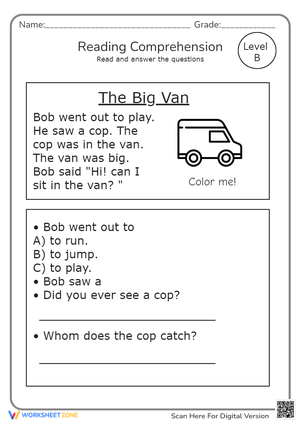
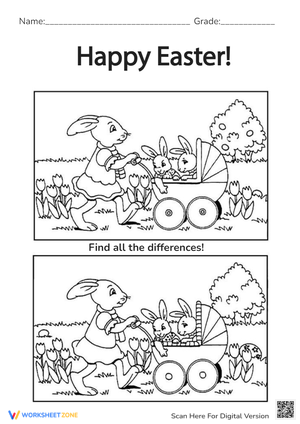
These kindergarten reading printable worksheets target the five skill areas that define the kindergarten literacy year — phonemic awareness, letter-sound correspondence, CVC blending, high-frequency word recognition, and short-passage comprehension — in standalone, downloadable resources teachers can drop into guided reading rotations, morning warm-ups, or small-group intervention blocks the same day they print them. Every worksheet asks students to do something visible and accountable: underline, cut and sort, trace, match, or circle — not "engage with early literacy."
What's Inside the Set
Each worksheet focuses on a single skill so students aren't splitting attention between a reading task and an unfamiliar activity format. The skills covered across the set include:
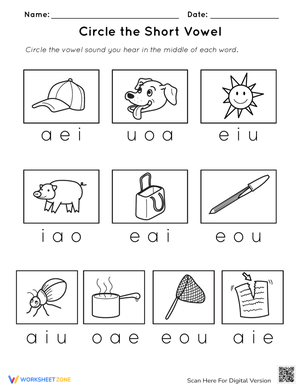
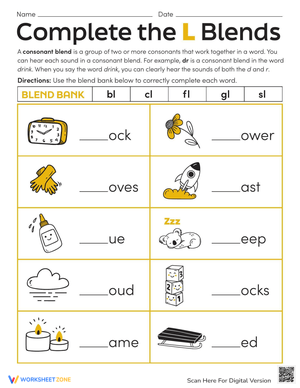
- Initial and final consonant identification — students say a picture name aloud, isolate the target sound, and write or circle the correct letter
- CVC blending — worksheets walk through the blend in sequence: identify each phoneme, then push sounds together to name the word
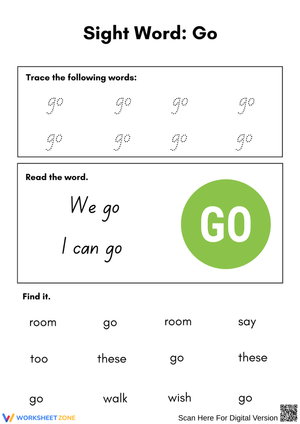
- Sight word recognition and writing — trace, write from memory, and locate the word inside a short sentence
- Print awareness — activities that reinforce left-to-right directionality, word boundaries, and the distinction between a letter and a word
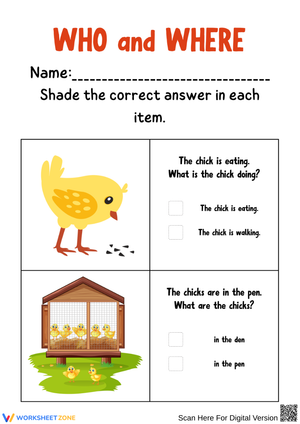
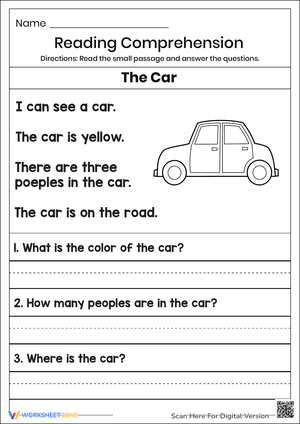
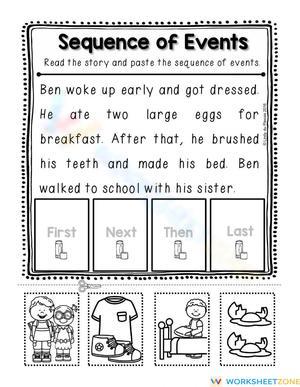
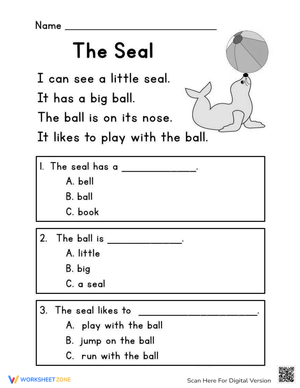
- Short decodable passage comprehension — two- to four-sentence texts followed by one or two literal recall questions, supported by matching illustrations
The decodable passages draw almost entirely from Dolch Pre-Primer and Primer word lists and short-vowel CVC patterns, so a student who has been taught those elements reads a text that actually matches what they know. That alignment matters: when a passage outruns a student's decoding ability, comprehension work collapses into picture-based guessing rather than real meaning-making.
Phonics and Phonemic Awareness — Keeping the Distinction Clear
Most kindergarten reading printable worksheets that address letter-sound work treat phonemic awareness and phonics as interchangeable, which creates confusion in classroom instruction. Phonemic awareness is entirely auditory — it happens before print enters the room. Phonics maps those heard sounds onto written letters. Several worksheets in this set bridge the two deliberately: a student looks at a picture of a ship, says the word aloud, taps three phonemes on their fingers, and then writes the letter for the beginning sound. That sequence — hear it, feel it, write it — builds both skills in a single short task without overloading working memory.
Frequent Student Errors Worth Watching For
The error that shows up most consistently in student work is the gap between auditory blending and print blending. A student can push /m/ /æ/ /p/ into map when you say the sounds aloud, but the moment they look at the printed letters, they switch to letter names — "em, ay, pee" — and lose the phonemic connection entirely. The CVC worksheets interrupt that habit by having students tap phonemes before looking at the letters, then decode the print immediately after, keeping the auditory and visual pathways linked rather than treating them as separate tasks.
Sight word errors cluster around visually similar pairs: was/saw, no/on, and of/for are the reversals kindergartners produce most reliably. Worksheets that ask students to locate a target word inside a sentence — rather than just tracing it in isolation — surface these reversals quickly. That's diagnostic information worth having: a student who traces was correctly but reads saw in context hasn't built the whole-word visual pattern yet and needs different practice than the student who can't trace it accurately either.
How to Build These Worksheets Into Your Literacy Block
The most consistent use teachers find for these resources is the center rotation. While one group works directly with the teacher on guided reading, two or three other groups work at stations — a phonics sort here, sight word practice there. Printing each worksheet and slipping it into a clear plastic sheet protector lets students use dry-erase markers, wipe, and repeat: one printed set runs through an entire week before it needs to be replaced. That matters in classrooms with tight supply budgets and students who benefit from repeated exposure to the same content before moving on.
For the Friday review block, pull a phonics or sight word worksheet from earlier in the week and use it as a five-minute check before dismissal. Students who complete the work independently at the end of the week — after similar practice on Monday and Wednesday — have demonstrated consolidation. Students who still need the example at the top as a reference probably need the same skill targeted again the following week. That quick end-of-week read informs Monday's small-group groupings without requiring a separate assessment tool.
Kindergarten reading printable worksheets also work well as morning warm-ups after morning meeting — a short, self-paced task that settles students while attendance and lunch count happen. A sight word tracing activity or a picture-to-initial-sound matching worksheet adds meaningful repetition during what would otherwise be transition downtime.
Standard Alignment
These worksheets address the Reading Foundational Skills strand of the Common Core State Standards at the kindergarten level. Print awareness activities align with RF.K.1, covering the understanding that print carries meaning, words are separated by spaces, and text moves left to right and top to bottom on the page. Phonemic awareness worksheets address RF.K.2, which calls for students to isolate and produce initial, medial, and final phonemes in three-phoneme words. Phonics and sight word work maps to RF.K.3, covering letter-sound correspondence for individual consonants and short vowels alongside recognition of common high-frequency words. States using TEKS or other non-CCSS frameworks will find close parallels in their own foundational literacy standards — the skill sequence is consistent even when the coding differs.
Adjusting the Set for a Range of Learners
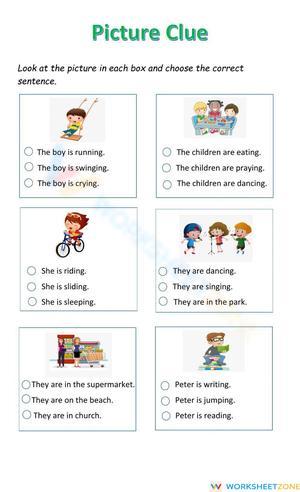
Students who arrive already reading short decodable texts don't need the letter-identification worksheets. Point them toward the comprehension passages and ask them to write their own sentence response rather than selecting an answer from a picture bank. On the other end, a student who hasn't yet learned all consonant sounds isn't ready for CVC blending — use the initial-sound worksheets with picture support as the entry point, and pair the written task with magnetic letters so the student can build the word physically before writing it.
For students with fine motor challenges, tracing-heavy worksheets generate frustration without producing useful literacy practice. In those cases, let the student use letter stamps or magnetic tiles for the word-building steps and reserve writing for just the final answer. The reading skill is still being practiced; the fine motor demand doesn't block the work that actually matters here.
Frequently Asked Questions
How do I help a student who can segment sounds orally but stalls when decoding in print?
This disconnect is one of the most common patterns in the first half of kindergarten. The student can tap /k/ /æ/ /t/ on their fingers but freezes when they see the letters. Start with auditory blending only — no print at all — until the student pushes sounds together fluently. Then introduce kindergarten reading printable worksheets that feature a blending arrow drawn beneath each word, a left-to-right visual cue that prompts the student to run their voice along the word rather than stopping at each letter. The goal is continuous phoneme production, not isolated sound-by-sound pausing.
Which sight words should come first in the teaching sequence?
Begin with the words that appear in nearly every line of beginner texts: the, a, is, I, it, in, and to. Once students recognize these automatically, they can read short decodable sentences without stalling on every word. Introduce no more than two or three new words per week — more than that, and students stop building true visual memory and start guessing from initial letters or context. The sight word worksheets in this set introduce words in small clusters for exactly that reason.
Can these worksheets be sent home for practice?
They work well for home practice, but only after the format has been introduced in class. Sending home a worksheet type the student has never encountered creates confusion and, often, anxious parent messages the next morning. A reliable rule: if the student completed a similar worksheet at a center station earlier that week, the same format is appropriate for home. It also gives families a clear window into the current skill focus, which tends to reduce the "what should we be doing at home?" questions that come up at conferences.












 Interactive Worksheet Maker
 Quiz Maker
 Word Search Maker
 Crossword Puzzle Maker
 Word Scramble Generator
 Sentence Scramble Generator
 Handwriting Worksheet Generator
 Name Tracing Generator
 Fill In The Blank Generator