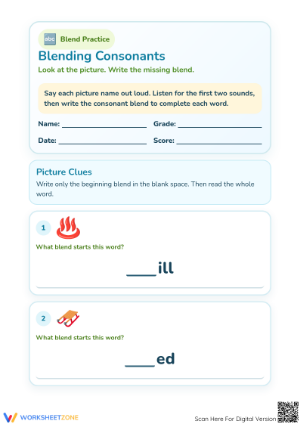
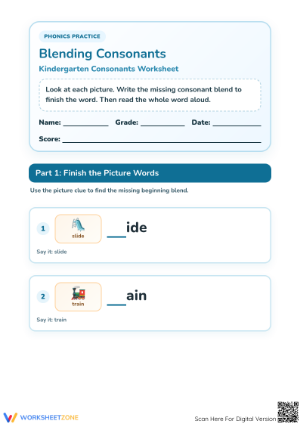
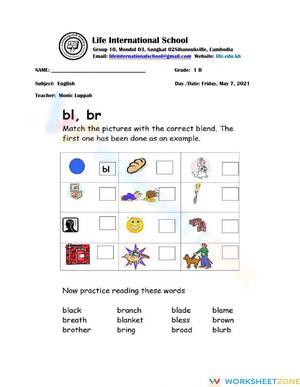
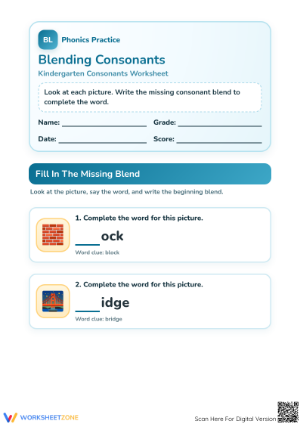
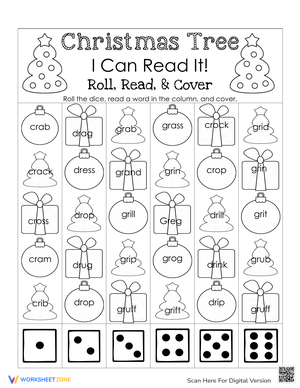
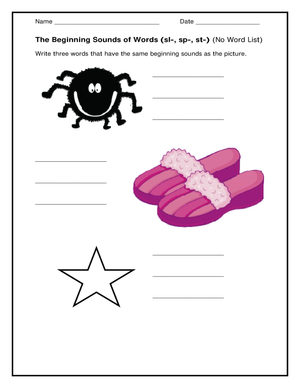
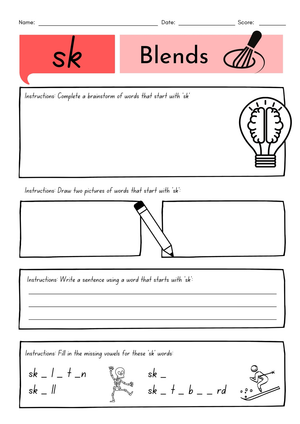
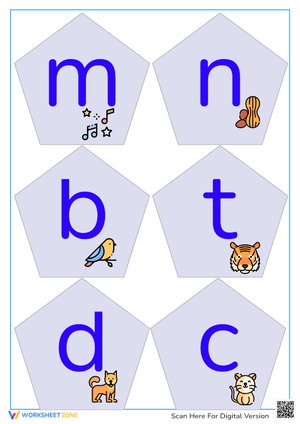
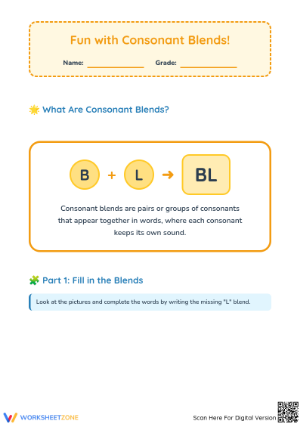
Kindergarten consonants worksheets resources give teachers a ready stock of focused, printable letter-sound practice that slots into daily phonics routines without adding preparation time. This set works through the twenty-one consonants one letter at a time, connecting letter names and letter formation to beginning sound recognition through short, one-skill tasks kindergartners can complete with minimal redirection.
What Each Worksheet Targets
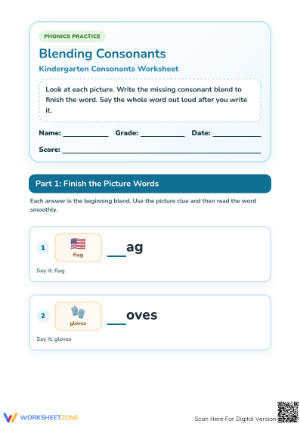
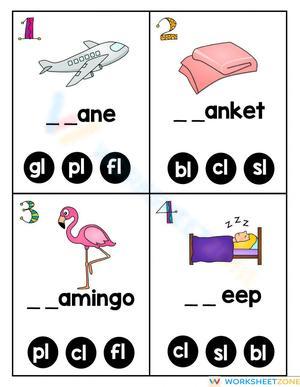
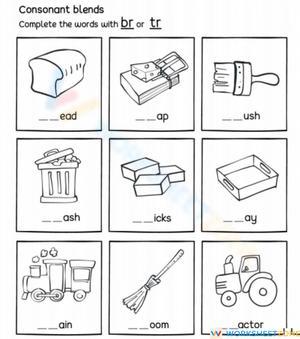
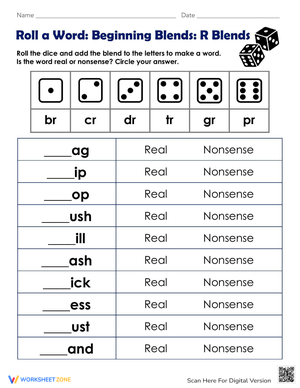
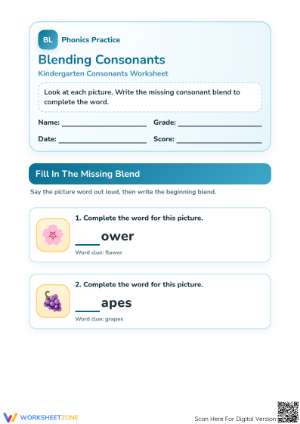
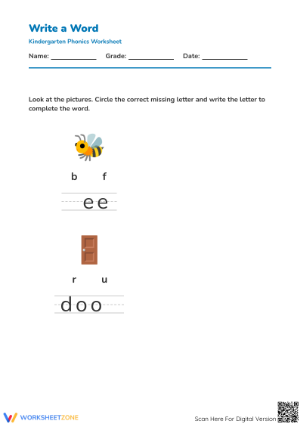
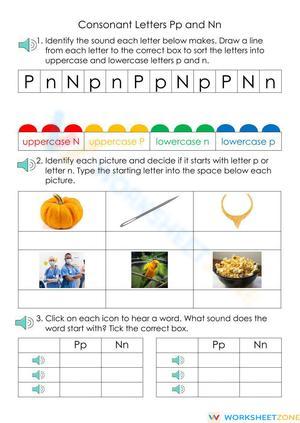
Each worksheet in the set stays on a single consonant and a single task type. Students trace uppercase and lowercase letter forms while saying the sound aloud, circle pictures whose names begin with the target consonant, match a letter to picture clues, or sort images by first sound across two or three categories. That progression — from motor formation work to auditory-visual matching to independent sorting — moves students through recognition and into discrimination without stacking too many new variables at once.
Worksheet types across the set include:
- Letter tracing: Students write the consonant several times in guided boxes, reinforcing the letter's visual form alongside its sound.
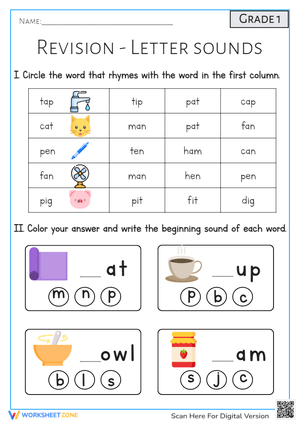
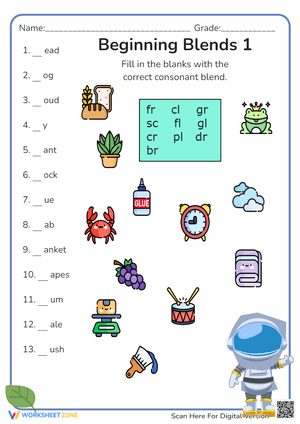
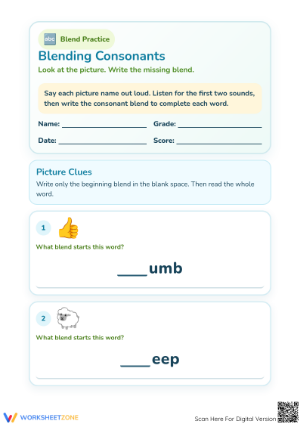
- Beginning sound circles: Students examine three to five pictures, say each name, and circle only the ones that begin with the target consonant.
- Picture-to-letter match: Students draw a line from a picture to the consonant it begins with.
- First-sound sort: Students cut out small picture cards and glue them under the correct letter — a tactile step that extends well into centers.
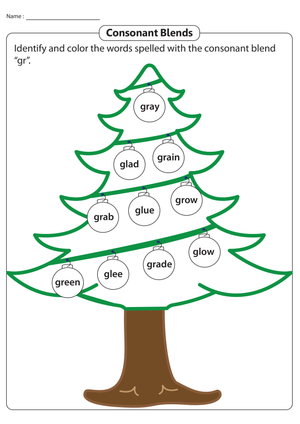
- Coloring by sound: Students color only the images whose names begin with the consonant, leaving others blank.
Picture sets across the set use familiar, concrete vocabulary — dog, sun, map, net, van — not obscure objects that introduce a guessing problem on top of a phonics task. Clean fonts and open spacing reduce tracking errors for students still developing letter awareness.
Mistakes Students Make That Teachers Need to Anticipate
The most consistent source of inaccuracy in beginning consonant work is not phonics at all — it is picture naming. A worksheet shows a bunny, and a child writes "r" because they call it a rabbit. A van becomes a car; a couch becomes a sofa. These are vocabulary-matching errors, not consonant errors, but they corrupt the data teachers rely on to judge whether a sound has been learned. A 30-second whole-class picture preview before independent work — pointing to each image and naming it together — removes most of that noise and gives teachers cleaner information about what students actually know.
The other predictable error is the b/d reversal. This is primarily a visual confusion problem, not a phonemic one. Kindergartners often know the sounds /b/ and /d/ distinctly when they hear them in words but write and identify the letters interchangeably when working on paper. Keeping b and d on separate worksheets until each is stable on its own is more productive than drilling the contrast before either one is secure. The same caution applies to /c/ and /k/: students who have not internalized /c/ yet will flounder on a worksheet that asks them to compare the two, while students who know /c/ solidly can handle the contrast within a few exposures.
Building These Worksheets Into Your Weekly Phonics Block
A repeatable five-day sequence makes this set most useful. Monday belongs to direct instruction: introduce the consonant through mouth modeling, picture cards, and oral sound practice before any paper appears. Tuesday is a natural fit for the tracing and letter-identification worksheet. Wednesday, students work through a beginning-sound match worksheet in centers while you pull a small group for observation or reteaching. Thursday is a reteach day — the sorting or coloring worksheet works well here for students who needed more repetitions, while students who are solid can begin comparing a newly learned consonant to an earlier one. Friday's worksheet goes home as review or stays in class as a quick formative check.
Center routines run more smoothly when the task on the worksheet mirrors what students have already said aloud. If the class spent Monday and Tuesday saying "sun, /s/, /s/, /s/" together, a Wednesday picture-sort worksheet where sun is one of the images feels like confirmation rather than guesswork. When routines stay predictable, teacher attention shifts toward students who need the most direct support — not toward re-explaining directions.
Teachers who need kindergarten consonants worksheets resources for substitute days or intervention pull-outs find that the one-consonant-per-worksheet format travels well. A substitute can follow a posted note without understanding the broader phonics sequence, and an interventionist can pick up exactly where the last session left off.
Adjusting the Set for a Range of Learners
Students who arrive in kindergarten already recognizing most consonant letters need a different kind of challenge than students still learning letter names. For students who need more support, use worksheets with three picture choices rather than six, and keep images concrete and familiar — dog, sun, net, not instrument, vehicle, or foliage. For students ready for more, remove the picture support mid-year: ask them to write two or three words that begin with the target consonant on a blank line below the letter rather than selecting from given options.
English learners benefit from oral rehearsal before the worksheet begins. Pointing to each picture, naming it clearly, and having students repeat — "van, van, van starts with /v/" — takes about a minute and removes the vocabulary barrier so the phonics task can do its actual job. Students who are still building English vocabulary should not have to figure out picture labels and letter sounds simultaneously on the same worksheet.
For students with b/d or p/q confusions, note those pairs on individual tracking sheets and give each letter its own focused review cycle before asking students to work across both. Placing the two letters side by side too early tends to reinforce the confusion rather than resolve it.
Standard Alignment
These worksheets address two foundational Common Core ELA standards: RF.K.1d, which asks students to recognize and name all upper- and lowercase letters, and RF.K.3a, which requires students to demonstrate one-to-one letter-sound correspondences for common consonants. In classroom terms, RF.K.1d is the naming work — students identify the letter visually and reproduce its form. RF.K.3a is the phonics work — students connect that letter to its most common sound and apply the match to picture examples. Both standards build the decoding base that CVC reading in first grade depends on. Students who leave kindergarten shaky on consonant letter-sound correspondences typically struggle with word-attack skills well into second grade, making early mastery worth the repetition time.
Frequently Asked Questions
When in the school year should consonant worksheet practice begin?
Most kindergarten phonics programs introduce consonants in the first few weeks, starting with high-frequency beginning sounds like /m/, /s/, /t/, and /b/. Worksheet practice works best after students have had at least one full lesson of oral and tactile exposure to the target consonant — not as a first introduction. Using a worksheet before students have heard and said the sound multiple times turns the task into decoding guesswork rather than meaningful practice.
What should I do if students don't recognize the pictures on the worksheet?
Preview every image together before students begin — this is not a workaround, it is the correct procedure. Say each picture name aloud as a class, point to it, and move on. Students who know the target sound will confirm it quickly; students who were unsure now have the vocabulary to attempt the task accurately. Skipping this step and then scoring the worksheet as a phonics assessment produces misleading data about what students actually know.
Can these worksheets be used with students who are learning English?
Yes, and kindergarten consonants worksheets resources with strong picture support work especially well for English learners when paired with oral rehearsal before independent work. The key adjustment is to name every picture with the class first and to use a repeated sentence frame: "Mouse starts with /m/. Mouse, /m/." The phonics content transfers across languages — the challenge is vocabulary, not letter-sound logic, and a brief preview handles most of that.
How do I know when a student is ready to move to the next consonant?
A practical benchmark: the student can name the consonant letter, produce its sound without a picture prompt, and correctly identify at least four out of five pictures that begin with that sound on a fresh worksheet without teacher support. If a student still needs the picture preview to get through the task accurately, more practice with the current consonant is worth the time. Students who know kindergarten consonants worksheets material solidly — not just passably — transition to CVC decoding with noticeably less effort and fewer reversions to guessing.












 Interactive Worksheet Maker
 Quiz Maker
 Word Search Maker
 Crossword Puzzle Maker
 Word Scramble Generator
 Sentence Scramble Generator
 Handwriting Worksheet Generator
 Name Tracing Generator
 Fill In The Blank Generator