


























Views
Downloads

Essential Consonant Letters Pp and Nn Worksheet | Grade K
Paste this activity's link or code into your existing LMS (Google Classroom, Canvas, Teams, Schoology, Moodle, etc.).
Students can open and work on the activity right away, with no student login required.
You'll still be able to track student progress and results from your teacher account.
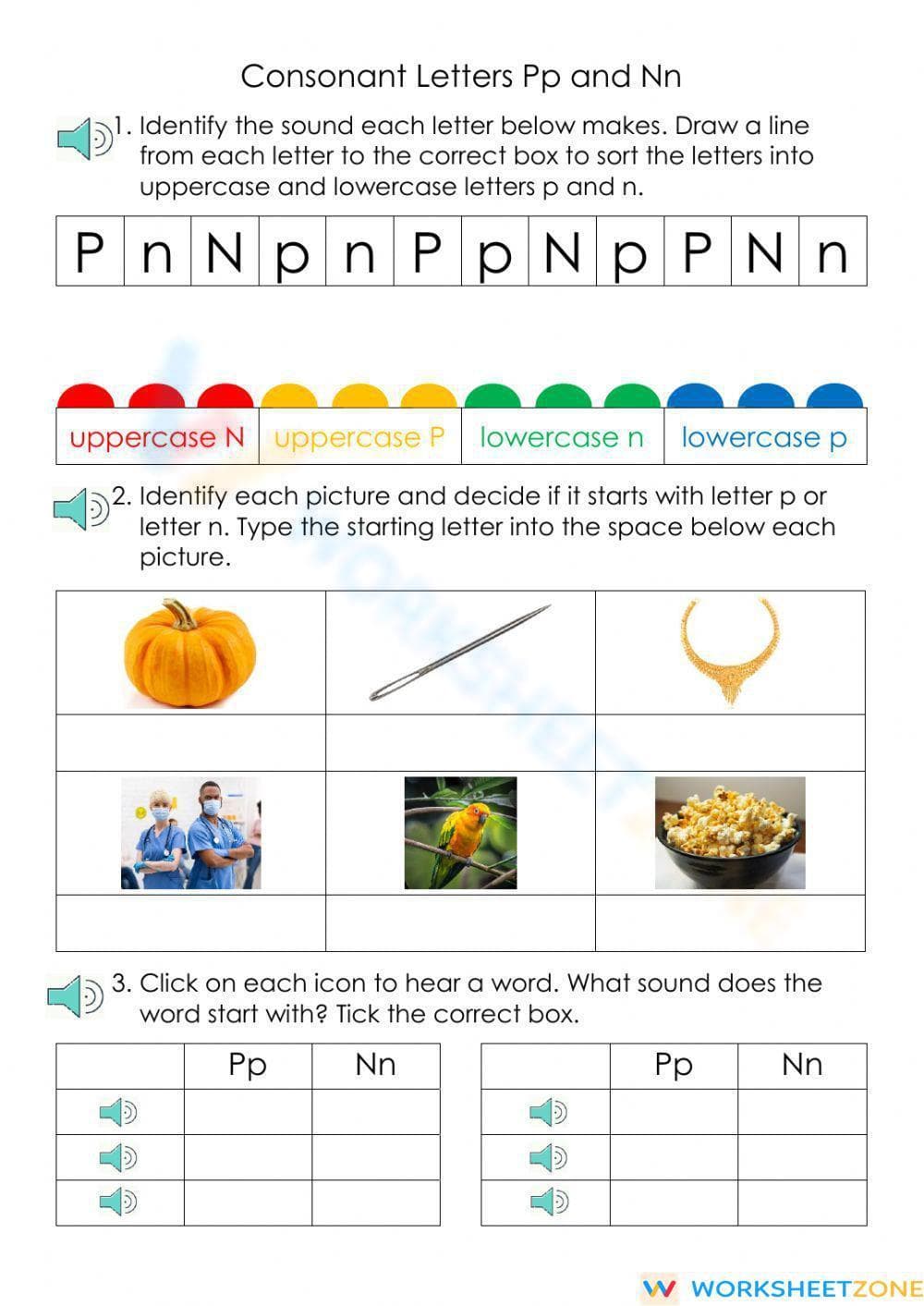
This Kindergarten phonics worksheet provides essential practice in identifying, sorting, and pronouncing the consonant letters Pp and Nn. Students master letter recognition by distinguishing between uppercase and lowercase forms while reinforcing initial sound awareness through visual and auditory tasks. This resource ensures students build a foundation for early reading success and phonemic proficiency.
At a Glance
- Grade: Kindergarten · Subject: English Language Arts
- Standard:
CCSS.ELA-LITERACY.RF.K.1.D— Recognize and name all upper- and lowercase letters of the alphabet- Skill Focus: Phonics and Letter Recognition (P and N)
- Format: 1 page · 24 tasks · Answer key included · PDF
- Best For: Kindergarten phonics centers and morning work
- Time: 15–20 minutes
What's Inside: The worksheet features three distinct sections designed to engage young learners. Section one focuses on letter sorting, requiring students to categorize 12 instances of uppercase and lowercase P and N. Section two presents six vivid illustrations—including a pumpkin, needle, and nurse—to build initial sound associations. The final section is an interactive listening task where students tick boxes to identify the starting sounds of spoken words.
Implementing this worksheet is a simple three-step process. First, print the single-page PDF, taking less than thirty seconds. Second, distribute copies to students for immediate engagement with no extra materials needed. Third, review the tasks using the included answer key for quick assessment. Total teacher preparation time is under two minutes, making this an ideal choice for sub plans or phonics reinforcement.
Standards Alignment: This resource is directly aligned with CCSS.ELA-LITERACY.RF.K.1.D, which requires students to "Recognize and name all upper- and lowercase letters of the alphabet." It also supports CCSS.ELA-LITERACY.RF.K.3.A by helping children "Demonstrate basic knowledge of one-to-one letter-sound correspondences." Both standard codes can be copied directly into lesson plans, IEP goals, or district curriculum mapping tools.
How to Use It: This worksheet is best utilized during small-group phonics instruction or as an independent morning work activity after the letters P and N have been introduced. For a formative assessment tip, observe students during the sorting task to see if they can identify the letters without hesitation. The expected completion time is 15 to 20 minutes, depending on the student's familiarity with the letter sounds.
Who It's For: This activity is specifically designed for Preschool and Kindergarten students who are beginning their journey with the alphabet. It is also suitable for English Language Learners (ELLs) who need targeted practice with consonant sounds. This worksheet pairs naturally with a letter-sound anchor chart or a read-aloud story focusing on words that start with P and N.
Early literacy development relies on the mastery of letter-sound correspondence and distinguishing between upper and lowercase forms. This worksheet addresses these milestones by providing practice for CCSS.ELA-LITERACY.RF.K.1.D, focusing on consonants Pp and Nn. Research by Fisher & Frey (2014) highlights the importance of gradual release in phonics, moving from identification to independent sorting. By engaging in 24 tasks, students reinforce the phonemic awareness necessary for decoding. Educational data from NAEP indicates that students with strong letter recognition in Kindergarten are more likely to achieve reading proficiency by third grade. This resource offers a focused, classroom-ready intervention that supports standard-aligned curricula while minimizing teacher administrative burden. The inclusion of visual cues and listening components ensures diverse learning styles are supported within an efficient instructional tool.


