


























Views
Downloads

Consonant Blends Worksheet | Grade 1 Essential Phonics
Paste this activity's link or code into your existing LMS (Google Classroom, Canvas, Teams, Schoology, Moodle, etc.).
Students can open and work on the activity right away, with no student login required.
You'll still be able to track student progress and results from your teacher account.
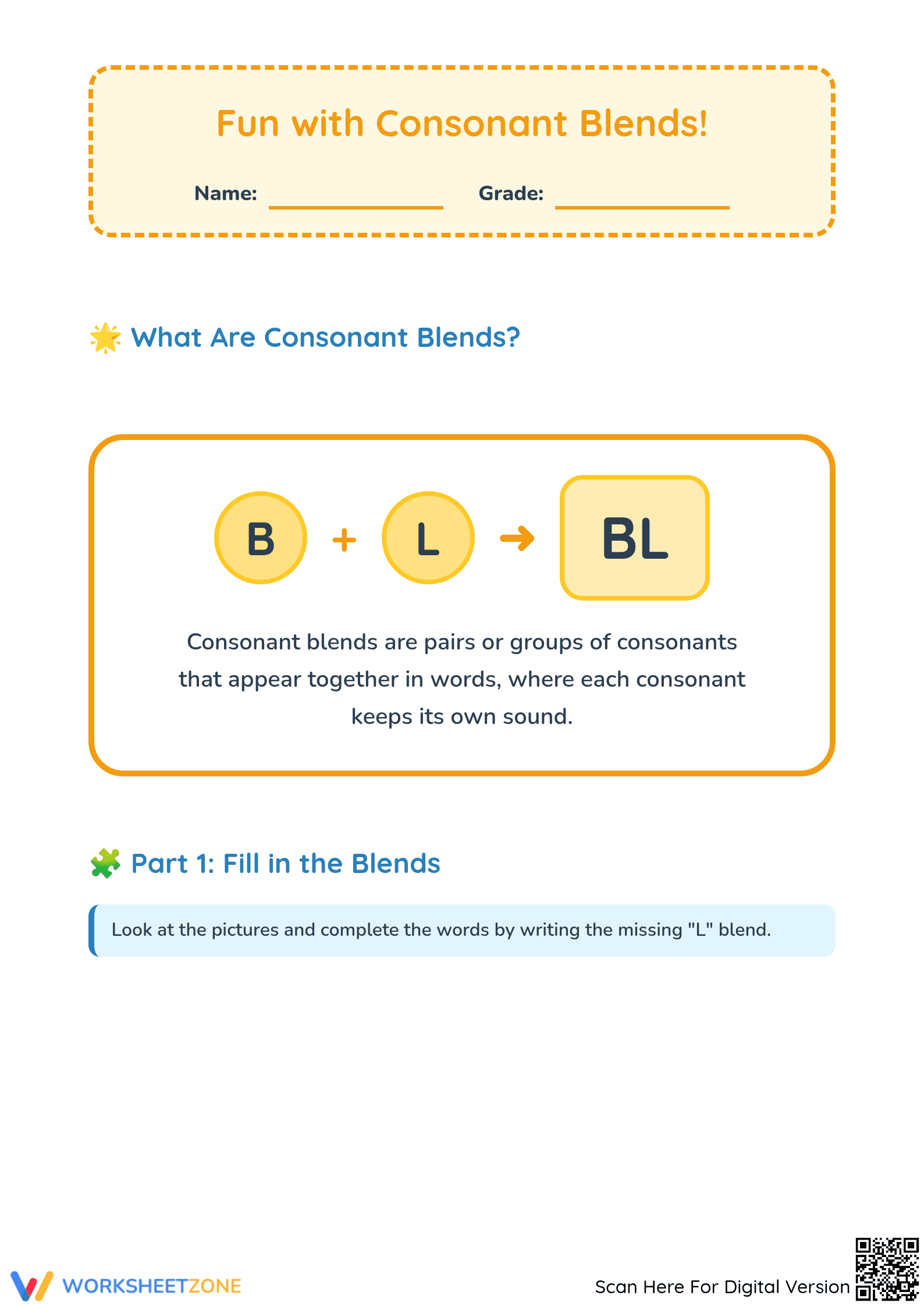
This Grade 1 consonant blends worksheet helps early readers identify and produce initial blends through visual cues and word construction. Students move from recognizing "L" blends to identifying various consonant clusters in common words. By connecting phonemes to graphemes, learners build the foundational decoding skills necessary for reading fluency and spelling accuracy.
At a Glance
- Grade: 1 · Subject: ELA Phonics
- Standard:
CCSS.ELA-LITERACY.RF.1.2.B— Orally produce single-syllable words by blending sounds, including consonant blends- Skill Focus: Initial Consonant Blends (L, R, S)
- Format: 3 pages · 20 problems · Answer key included · PDF
- Best For: Independent phonics practice or morning work
- Time: 15–20 minutes
What's Inside
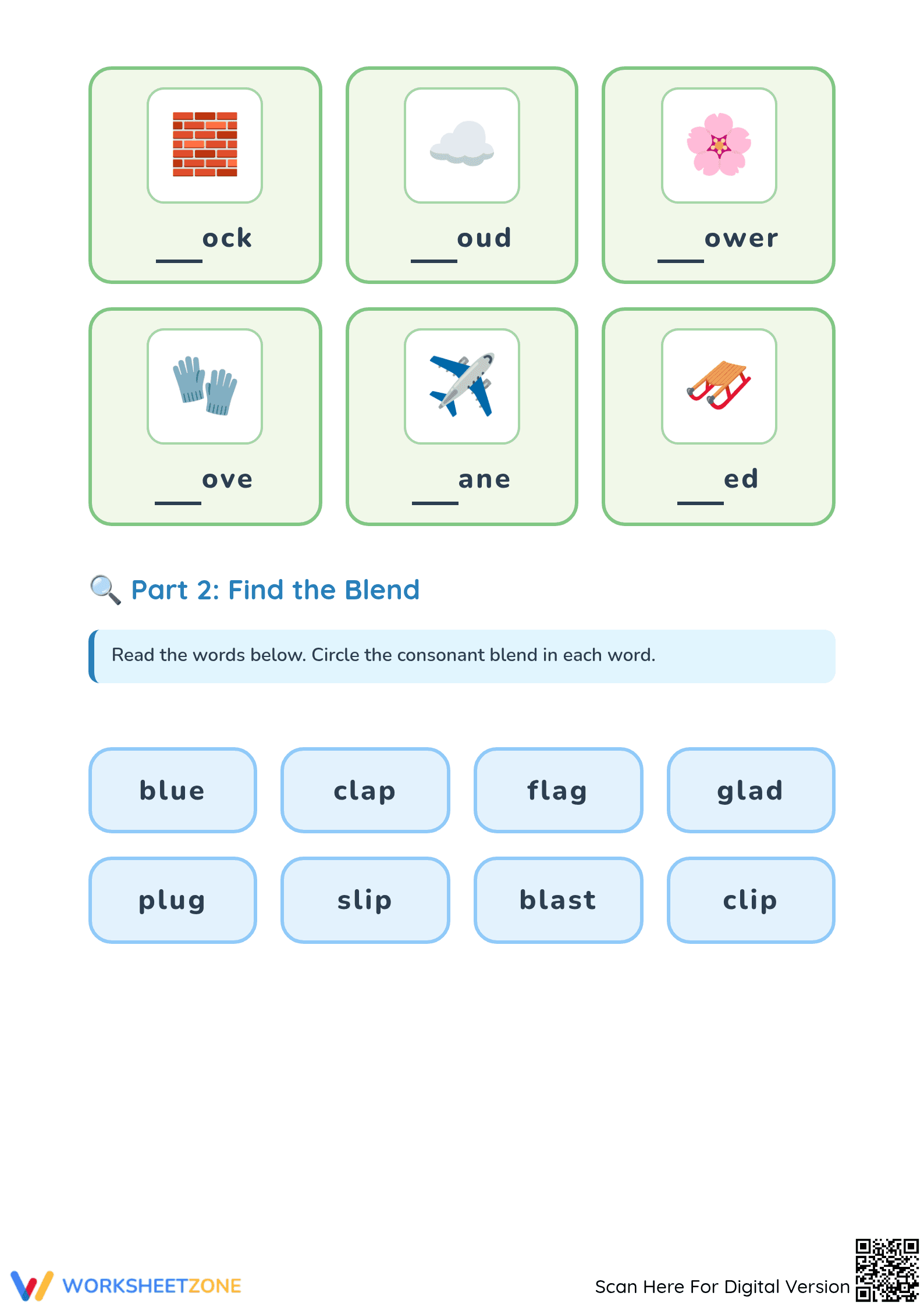
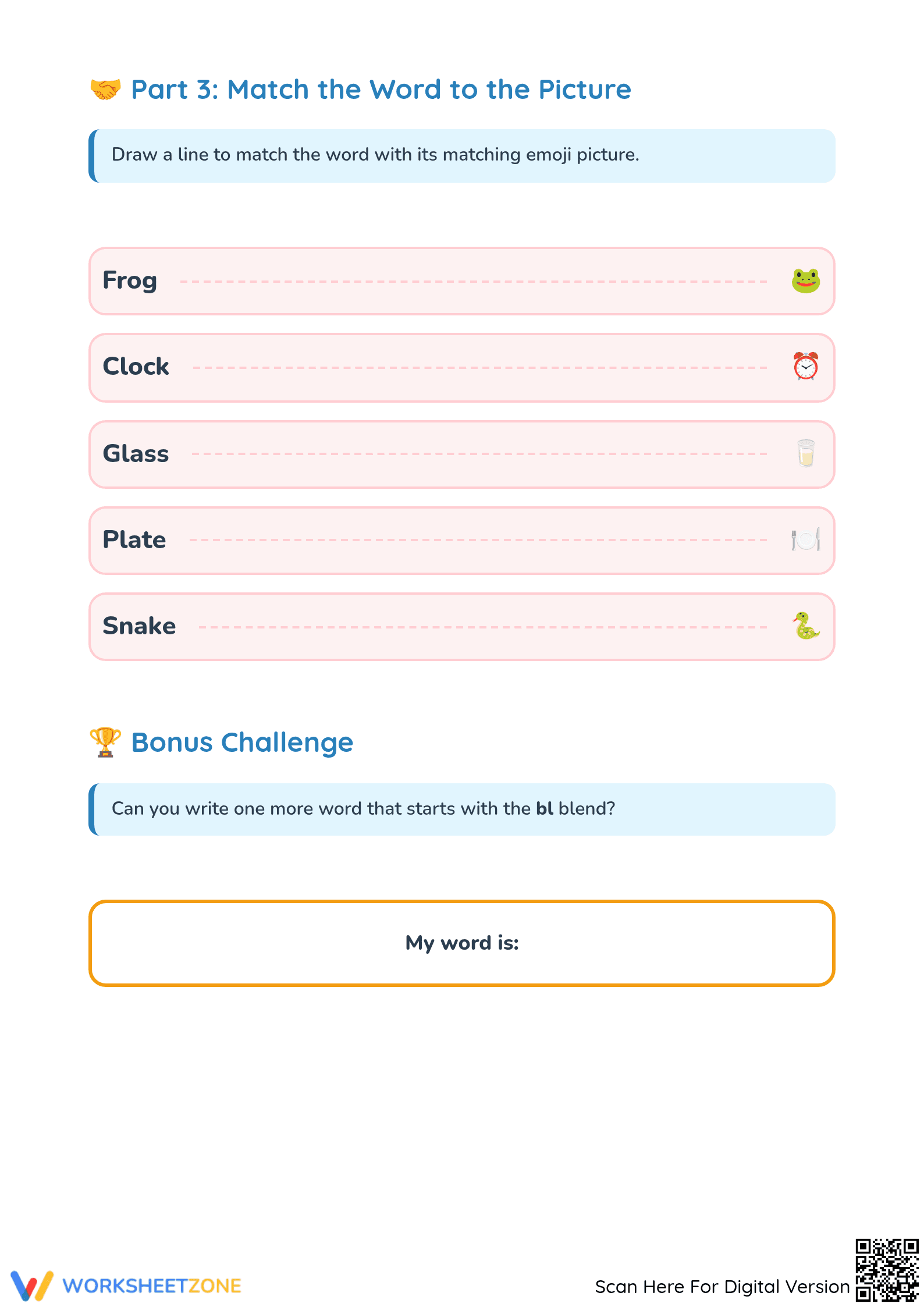
This 3-page PDF includes a clear visual definition of blends, 6 picture-supported fill-in-the-blank problems, 8 word-recognition tasks, and 5 matching exercises. It also features a bonus writing challenge to encourage creative application. A full answer key is provided for quick grading or student self-correction.
Zero-Prep Workflow
- Print: Select the three-page set and print for your class (30 seconds).
- Distribute: Hand out to students for independent or small-group work (1 minute).
- Review: Use the provided answer key or project the key for a whole-class check (1 minute).
Total teacher preparation time is under 2 minutes, making it an ideal resource for sub plans or literacy centers.
Standards Alignment
This resource is aligned with `CCSS.ELA-LITERACY.RF.1.2.B`, which requires students to orally produce single-syllable words by blending sounds, including consonant blends. It also supports RF.1.3.A by focusing on spelling-sound correspondences for common consonant digraphs and blends. Both standard codes can be copied directly into lesson plans, IEP goals, or district curriculum mapping tools.
How to Use It
Use this worksheet during the "You Do" phase of a gradual release lesson on phonics. It works best after students have practiced blending sounds orally with the teacher. For formative assessment, observe if students can identify the specific "L" blend in the first section without needing to sound out the entire word first. Completion typically takes 15 to 20 minutes.
Who It's For
This resource is designed for Grade 1 students and advanced Kindergarteners. It provides excellent support for English Language Learners (ELLs) through the use of clear emoji-style icons that provide context for the vocabulary. Pair this with a consonant blend anchor chart or a short decodable passage for a complete literacy block.
According to the RAND AIRS 2024 report on early literacy, explicit instruction in phonemic awareness and phonics—specifically the blending of individual sounds into recognizable words—is a critical predictor of long-term reading success. This worksheet targets CCSS.ELA-LITERACY.RF.1.2.B by providing structured practice with initial consonant blends, a key milestone in the transition from simple CVC patterns to more complex syllable structures. Research from Fisher & Frey (2014) emphasizes that visual scaffolding, such as the picture-word matching found in this resource, helps solidify the connection between auditory phonemes and written graphemes. By engaging in 20 distinct tasks across three pages, students receive the repetitive exposure necessary for orthographic mapping. This systematic approach ensures that learners move beyond rote memorization toward a functional understanding of how consonants interact within syllables, ultimately improving both decoding speed and spelling proficiency in early elementary grades.


