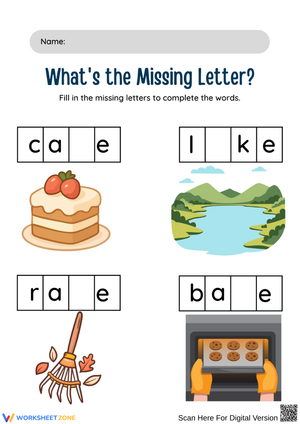
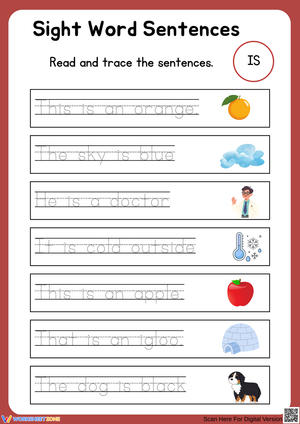
These spelling pdf worksheets for kindergarten give teachers a direct line from phonics instruction into early word work — each worksheet targets a single skill, stays short enough to fit a five-year-old's working stamina, and moves through the natural sequence that early literacy instruction points to: letter-sound knowledge first, then initial phonemes, then final phonemes, then full CVC words, with high-frequency word practice woven throughout. The format prints cleanly and is simple enough to hand off in a center, a small-group session, or a take-home folder without additional explanation.
The Specific Skills Targeted
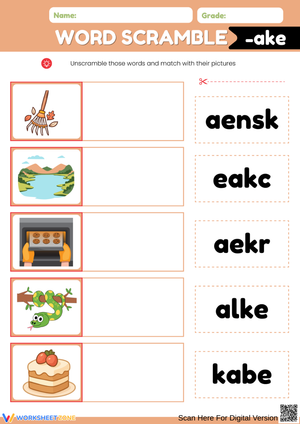
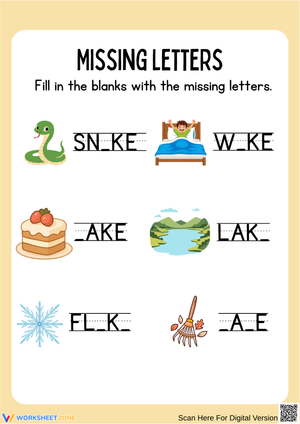
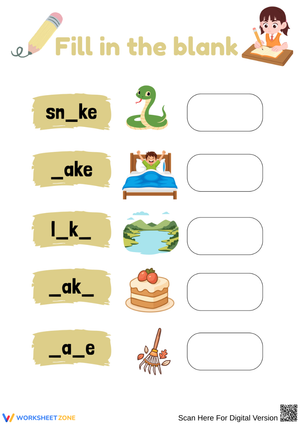
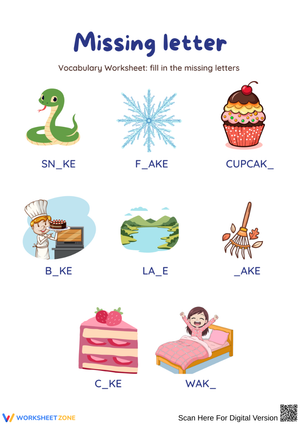
Letter-sound connection is the engine of early spelling, and these worksheets build it from the ground up. Students begin by forming letters while saying the associated sound aloud — that pairing of motor output and phonological attention is what separates meaningful letter work from copying practice. As students grow more confident with individual letters, the worksheets shift toward phoneme isolation: a child sees a picture of a fan, says the word, and marks or writes the first sound. Later worksheets ask the same process of the final sound, which most students find considerably harder than the beginning.
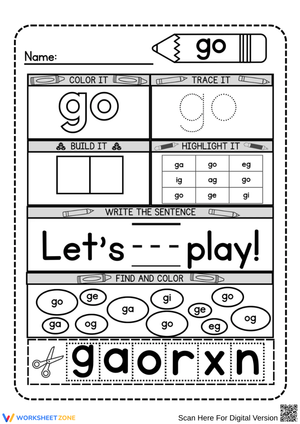
- Alphabet and letter formation — tracing and writing uppercase and lowercase forms, always paired with the corresponding sound
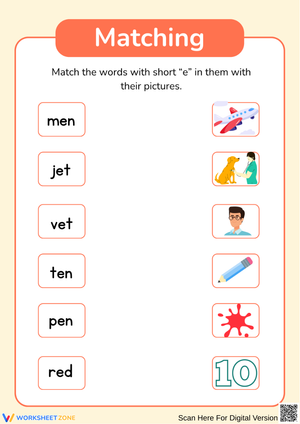
- Beginning sounds — picture-cued phoneme isolation at the start of a spoken word
- Ending sounds — the same picture-based format, shifted to the final phoneme
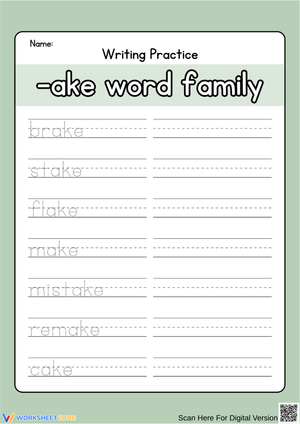
- CVC words — students stretch words like hop, lid, or bun and write each phoneme in sequence across three separate blanks
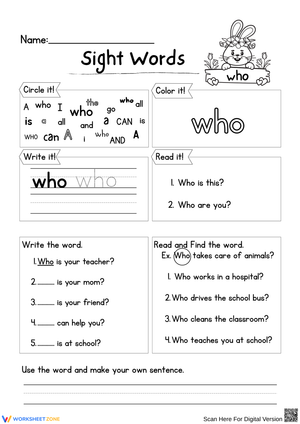
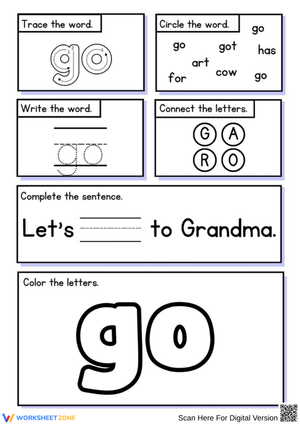
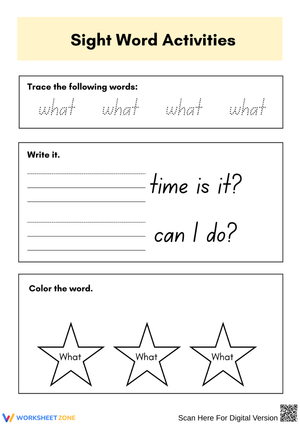
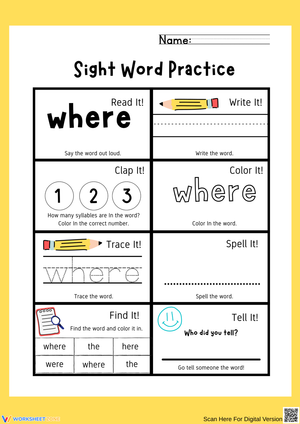
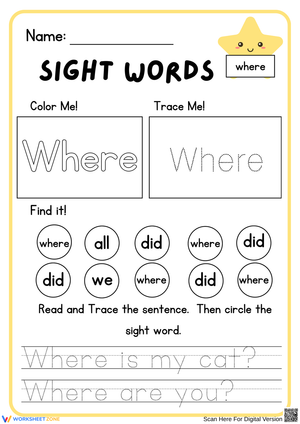
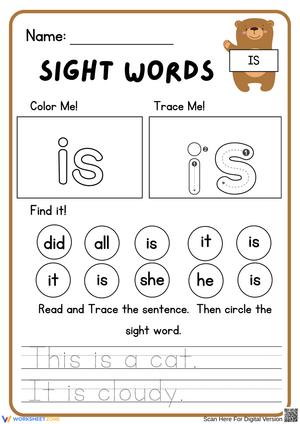
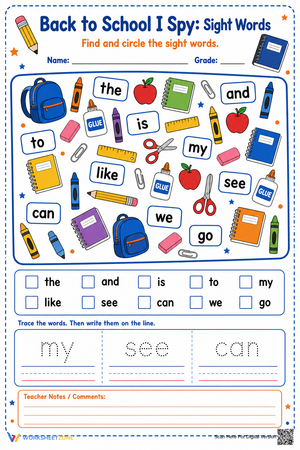
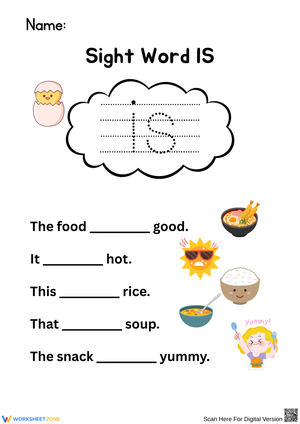
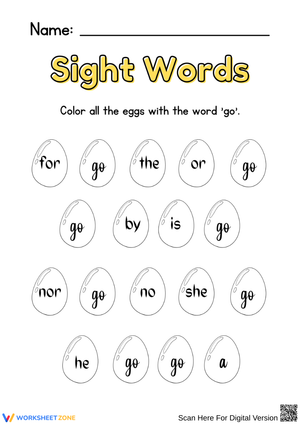
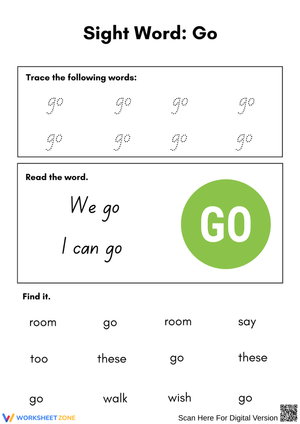
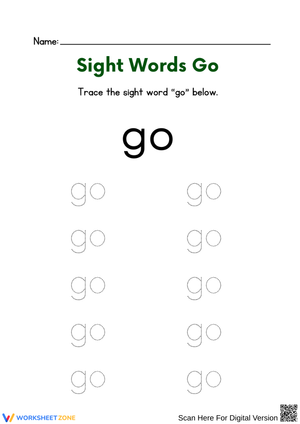
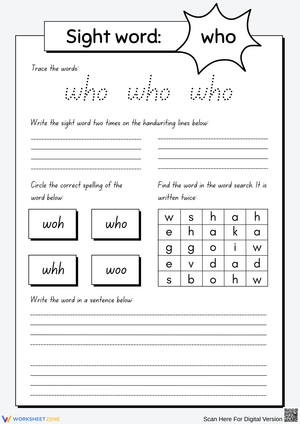
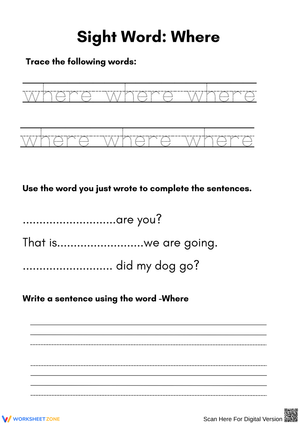
- High-frequency sight words — tracing and independent writing of one or two target words per worksheet, kept deliberately small so students attend to letter order rather than approximating from memory
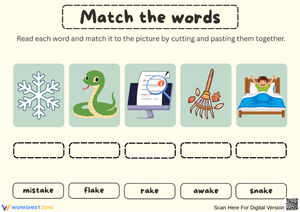
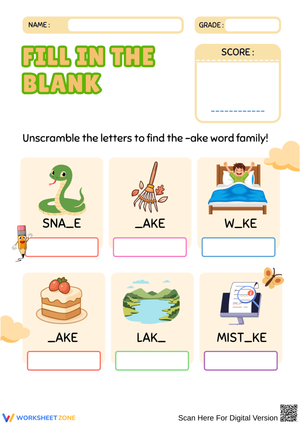
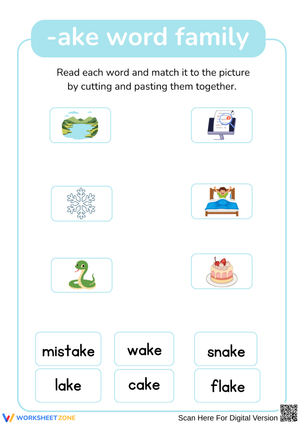
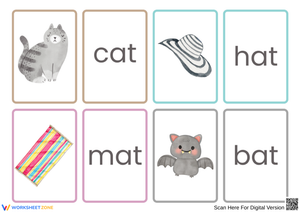
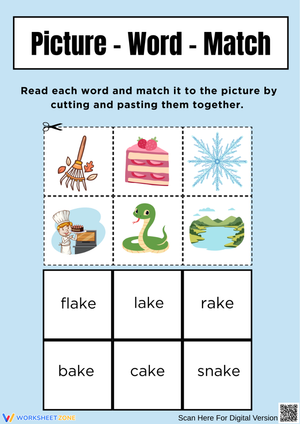
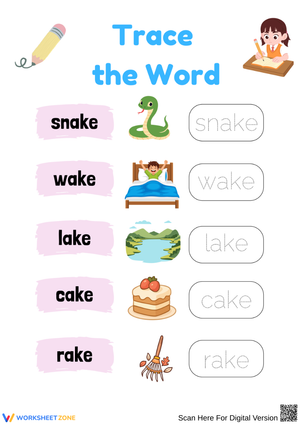
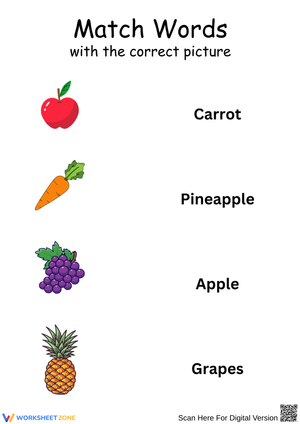
Picture cues appear throughout the set because young children use images to confirm meaning before they can decode text. Without a visual anchor, some students write sounds for a different word than the intended one — a minor ambiguity in an oral task becomes a measurement problem on paper.
Frequent Spelling Errors Worth Watching For
The medial vowel is almost always the last phoneme kindergarteners hear. When a student writes KT for "cat," that is developmentally predictable phonological work, not carelessness — the initial and final consonants carry the loudest acoustic information, while the short vowel in the middle stays quieter until students have accumulated enough segmenting practice to tune in to it. This is precisely why spelling pdf worksheets for kindergarten that structure CVC tasks as three separate blanks — one per phoneme — reveal the gap faster than any oral check: a missing middle blank tells you exactly where instruction needs to go next.
A second pattern worth tracking: students with strong phonological awareness but shaky letter formation sometimes write the right letter in the wrong orientation. Reversals of b/d and p/q are common in fall and can persist well into spring. On a worksheet asking a student to write bed, a reversal tells you something different from a missing phoneme. Separating those two error types is what makes targeted reteaching possible, and a written record of student work gives teachers that information in a way that a verbal response during group time does not.
Fitting These Worksheets Into Your Literacy Block
The most effective use of these worksheets is as a recording step inside hands-on practice, not as the whole lesson. Students build a CVC word with magnetic letters, say each sound while touching each tile, and then move to the worksheet to write what they just constructed. That sequence keeps the spelling work active and lowers frustration for beginning writers who still need movement and talk before pencil work.
- Morning work: A beginning-sounds or letter worksheet is a calm, predictable way to open the day, especially when the format matches what students practiced the day before. The familiar structure reduces transition friction and gives students something purposeful to start without waiting for whole-group instruction to begin.
- Literacy centers: Pair a worksheet with picture cards or a sound-sorting task at the same center. Practicing the same skill in two formats supports retention better than either format alone.
- Small-group pulls: Choose the worksheet that targets the exact phoneme position or word type the group is missing. Students stuck on ending sounds get a different worksheet than students ready to segment full three-phoneme words.
- Exit check: At the end of a phonics lesson, collecting one completed worksheet tells you in about four minutes which students applied the skill independently and which need reteaching the next morning.
- Take-home folders: Short, picture-supported worksheets travel well because a family member can understand the task without a teacher present to walk through the directions.
Standard Alignment
These worksheets connect directly to CCSS.ELA-Literacy.RF.K.3 (phonics and word recognition, including letter-sound correspondences and CVC word patterns) and CCSS.ELA-Literacy.L.K.2d (spelling simple words phonetically, drawing on letter-sound knowledge). In classroom terms, RF.K.3 drives explicit phonics instruction from the opening weeks of school through May; these worksheets sit in the structured practice phase of that arc — after a sound or pattern has been introduced in direct instruction and before teachers assess for mastery. L.K.2d is the writing-side complement, showing up in writing workshop, shared writing, and any moment a student attempts an independent word on paper.
Adjusting the Worksheets for a Range of Learners
A single Kindergarten class regularly spans students who are still matching letters to sounds and students who are already reading short decodable books. These worksheets hold up across that range because the core task — connecting a phoneme to its written form — stays constant while the level of independence shifts. A student working on letter identification can use the same beginning-sounds worksheet as a more advanced peer: one student circles the correct letter from three printed options while the other writes the letter from memory, with no choices provided.
Students who need more support do well when the worksheet is paired with an alphabet strip or a small set of letter cards they can reference during the task. That reference tool removes the letter-retrieval demand and lets students focus their attention on the phonological work. For students ready to go further, add a second step: after completing a CVC word, they write a second word that shares the same vowel sound. Spelling pdf worksheets for kindergarten work across this range because none of the core tasks require abstract reasoning — the challenge is always concrete, sound-based, and adjustable by changing how much print support students can access during the task.
Frequently Asked Questions
What should students be able to do before starting CVC spelling worksheets?
Students need two things in place before CVC spelling makes sense: consistent letter-sound knowledge for the consonants they will use, and the ability to isolate individual phonemes in a spoken word. A student who cannot yet identify the beginning sound in "map" is not ready to write three phonemes in order. Beginning- and ending-sound worksheets serve as the checkpoint before full word work begins, and they give teachers clear evidence about when to move forward.
How many items per worksheet is appropriate at this level?
Three to five items is a reasonable ceiling for most of the year. More than that leads to fatigue rather than learning, especially in fall when pencil grip and letter formation are still developing alongside phonological work. A smaller item count also means teachers can give specific, item-level feedback rather than just marking a total score — and in Kindergarten, that specificity is where the instructional value lives.
Is invented spelling acceptable on these worksheets?
It is not only acceptable — it is expected and informative. Phonetic approximations like SN for "sun" show that a student is isolating phonemes and connecting them to letters, which is the core skill being built. Spelling pdf worksheets for kindergarten are not assessments of conventional spelling; they are records of how students are processing sound-print relationships at a given point in the year. Conventional forms develop gradually through repeated reading, interactive writing, and continued phonics instruction — phonetic attempts on a worksheet tell you the instruction is working, even when the forms are not yet standard.
Can these worksheets be used for students significantly ahead of the rest of the class?
For students who have moved past CVC words into blends and digraphs, the set works well as a fluency check or quick warm-up rather than primary instruction. Their spelling work will need to extend into more complex patterns, but these worksheets remain useful for confirming that foundational CVC skills are solid and automatic before advancing into harder word types — a step that is easy to skip when a student appears to be thriving.












 Interactive Worksheet Maker
 Quiz Maker
 Word Search Maker
 Crossword Puzzle Maker
 Word Scramble Generator
 Sentence Scramble Generator
 Handwriting Worksheet Generator
 Name Tracing Generator
 Fill In The Blank Generator