These kindergarten literary elements pdf worksheets give early childhood teachers a picture-driven route into story structure — a set of concepts that are genuinely abstract for five-year-olds who are still listening to books rather than reading them independently. Each worksheet centers on one of three foundational elements: characters, setting, or the sequence of major events. The activities rely on drawing, coloring, circling, and cutting-and-pasting rather than written response, which keeps the cognitive demand on comprehension rather than transcription.
The Three Story Elements These Worksheets Target
The kindergarten literary elements pdf worksheets in this set focus on three entry points: character, setting, and the sequence of major events. That scope is deliberate — staying narrow at this age matters more than it might seem. Introducing conflict, climax, or theme to a five-year-old creates confusion rather than understanding, and the push to cover more ground often sacrifices the clarity these foundational concepts need.
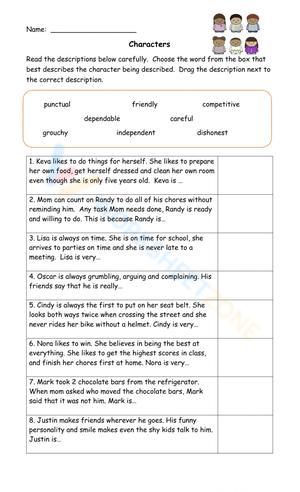
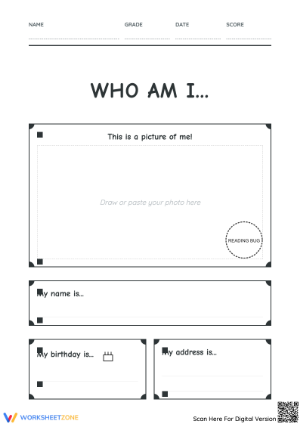
Character worksheets ask students to identify the main character from a small set of pictures, circle every animal or person who appears in a story, or draw their favorite character in a provided frame. Character tends to be the easiest entry point because children already use "who" language naturally when retelling stories — "and then the bear goes to his house" — so connecting that habit to a formal label is a short step. Distinguishing the main character from secondary ones, however, is harder than it looks and worth revisiting across multiple worksheets.
Setting worksheets move into slightly harder territory. Students match characters to their environments, color the background that fits the story, or sort pictures into "inside" and "outside" columns. Many five-year-olds treat setting as background rather than an element worth naming on its own, so each worksheet that asks them to identify it explicitly works against that habit.
Sequencing worksheets address the beginning, middle, and end of a story. The cut-and-paste format — three sections, three images, scissors and glue — is effective because the physical act of ordering the cards before pasting forces students to commit to a sequence before anything is permanent. Students who sort correctly reveal narrative understanding that drawing alone would not surface.
Mistakes Students Make That These Worksheets Help You Catch
The most consistent error we see on setting worksheets: students circle or draw the most visually striking part of the picture rather than the location itself. After a read-aloud of The Snowy Day, a child often draws Peter's red snowsuit — memorable, dominant on the page — instead of the snow-covered street where the story takes place. That tells you the student was engaged but hasn't yet learned to filter for the specific element being asked about. A brief clarification before the worksheet goes out — "today we're looking for the PLACE, not the person" — catches this before students commit the error in marker.
With sequencing, the typical breakdown is treating every moment as equally important. After a longer picture book, students want to represent five or six scenes rather than the three the worksheet calls for. Pre-teaching what "beginning, middle, and end" actually means in practice — just three moments: the starting situation, the main event, and how it resolves — reduces that confusion before it compounds.
Building These Worksheets Into Your Weekly Literacy Plans
The most reliable structure is a tight sequence: interactive read-aloud, brief class discussion, then worksheet. Naming the target element before the read-aloud begins — "as I read today, notice where this story is taking place" — shifts students from passive listening to active searching. The worksheet that follows records what they already noticed rather than presenting a new task from scratch. That reframe, from "figure this out" to "show me what you found," reduces the paralysis that some students experience when an activity feels unfamiliar.
A small-group center that works well: a sorting mat divided into two columns, one marked with a face icon for characters and one with a house icon for settings. Students receive a set of picture cards from a familiar story and sort them before gluing anything down. The physical movement generates peer talk, and you can circulate and listen to that conversation as quick, informal formative assessment without interrupting the center. This is where kindergarten literary elements pdf worksheets earn their place in the week — the finished worksheet becomes a record of a thinking process, not just a product to collect.
For pacing, story element activities work best in the 10 to 12 minutes immediately following a read-aloud. Cut-and-paste worksheets take a bit longer — build in a few extra minutes — but watch the room. Once scissors become a distraction rather than a tool, the productive work has already wrapped up.
Adjusting the Work for a Range of Learners
The picture-heavy format handles a wide range of readiness without much structural adjustment. A student beginning to read simple words can add phonetic labels to their drawing — something like "br" for bear or a reasonable attempt at "frst" for forest. A student still developing pencil grip can circle or point rather than draw. Both are accessing the same literary concept through different motor demands.
For students with strong oral comprehension but limited fine motor control, pre-cutting the sequencing cards before distributing the worksheet removes a barrier without changing the cognitive task. Ordering three events chronologically is the skill being assessed — cutting never was. That one adjustment also lets you isolate clearly whether a student understands narrative sequence or is simply struggling with scissors. English language learners benefit from the same picture-based format for a different reason: the activity reduces language demand without reducing conceptual demand. A student who doesn't yet have the English word "setting" can still match a picture of a classroom to a story that takes place at school — and that match is genuine comprehension.
Students who finish early and work accurately can draw a scene that doesn't appear in the story but could happen in the same setting — a small, open-ended extension that stays within the same literary concept and doesn't require the teacher to prepare separate materials ahead of time.
Standard Alignment
These worksheets address CCSS.ELA-LITERACY.RL.K.3, which asks kindergarteners to identify characters, settings, and major events in a story. In most classrooms, RL.K.3 is introduced during the first literacy unit after students have had enough shared read-aloud experience to hold a basic story vocabulary — typically weeks three through six of the school year — and then returned to throughout the year as text complexity increases. The activities also connect to CCSS.ELA-LITERACY.RL.K.7, the standard addressing how illustrations and text work together, since students draw on picture-based cues to identify character and setting across the entire set.
Frequently Asked Questions
Can these worksheets be used with any picture book, or do they work best with specific titles?
The set pairs well with any picture book that has clear characters, a distinct setting, and a three-beat plot. Traditional fairy tales and books where the illustrations carry as much of the story as the words — especially titles a class has heard more than once — are the strongest matches. Avoid books with multiple interwoven plotlines or ambiguous settings when first introducing these elements; save those for after students are more confident with the concepts.
What does a well-completed character worksheet look like at this age?
Expect roughly drawn figures, phonetic name attempts, or circled images — not detailed portraits. The accuracy of the drawing is not the evidence you're looking for. What matters is whether the student selected the correct character, or at least one they can justify verbally. Oral explanation often reveals comprehension that the marks on paper don't show. Ask each student to tell you about their drawing before recording it as a formative check.
Where do these worksheets fit in a classroom that already uses literacy centers?
Each worksheet works as a center task following whole-group read-aloud time. Leave the picture book at the center table so students can flip back through the illustrations for reference. Pair students when possible — one narrates what they remember, the other records by drawing. Keeping the book cover visible helps students stay anchored to the story rather than staring blankly at a task they've already half-forgotten between the rug and the table.
When in the year are kindergarteners ready to use these independently?
Most students handle teacher-guided whole-group completion by October, after six to eight weeks of daily read-alouds with structured discussion. Small-group or independent use typically becomes realistic by January, once the vocabulary of "character," "setting," "beginning," "middle," and "end" is genuinely internalized rather than just repeated when prompted. If students are still reciting definitions without applying them to an unfamiliar story, they need more oral discussion time before the kindergarten literary elements pdf worksheets move into independent center rotation.












 Interactive Worksheet Maker
 Quiz Maker
 Word Search Maker
 Crossword Puzzle Maker
 Word Scramble Generator
 Sentence Scramble Generator
 Handwriting Worksheet Generator
 Name Tracing Generator
 Fill In The Blank Generator