




























Views
Downloads

Essential Literal vs Non-Literal Language Activity | 9-12

Paste this activity's link or code into your existing LMS (Google Classroom, Canvas, Teams, Schoology, Moodle, etc.).
Students can open and work on the activity right away, with no student login required.
You'll still be able to track student progress and results from your teacher account.
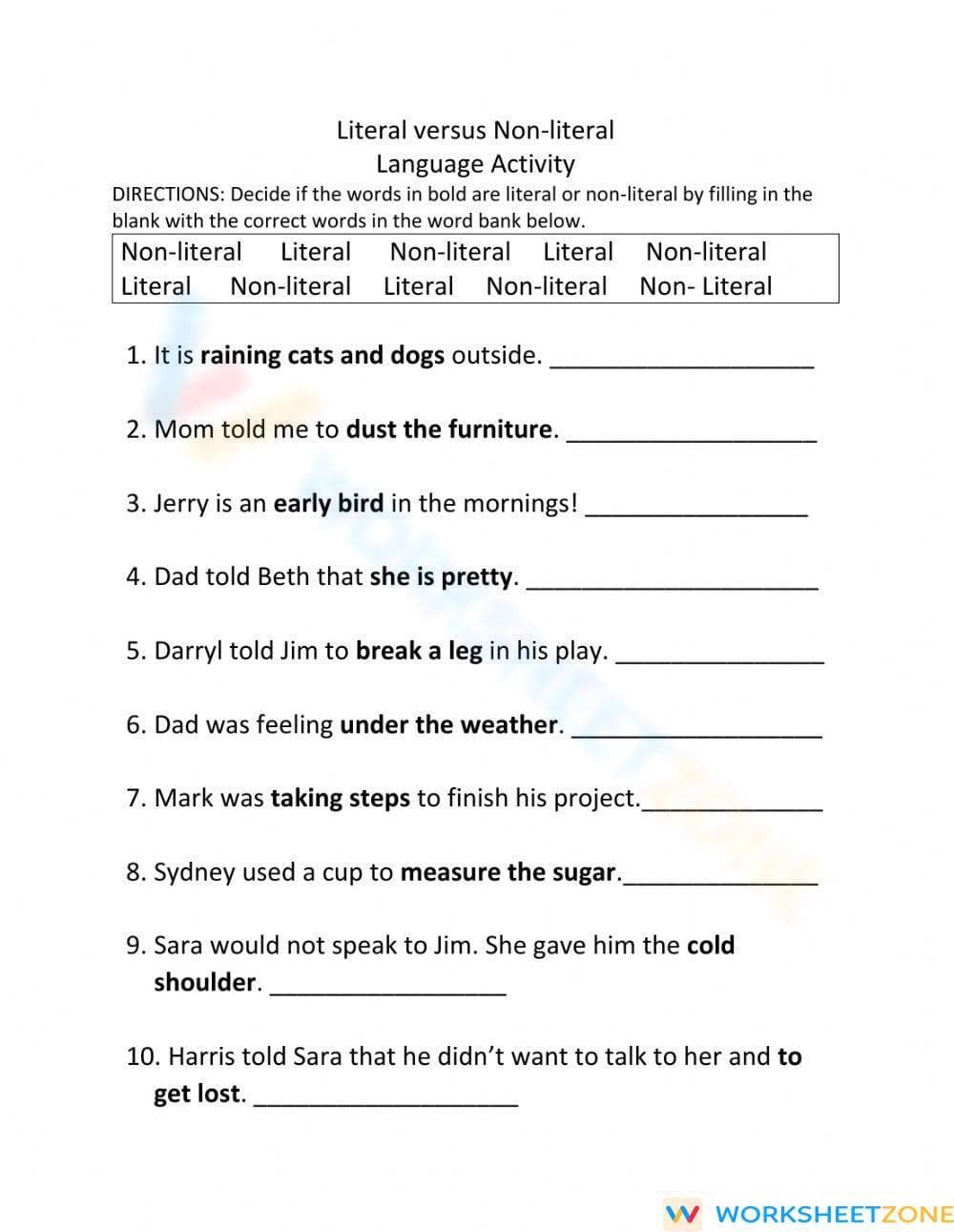
This Literal versus Non-literal Language Activity helps high school students master the nuances of figurative language through practical application. By analyzing ten distinct sentences, learners differentiate between direct literal meanings and common idiomatic expressions. This exercise ensures students can identify figures of speech in context, a critical skill for advanced reading comprehension.
At a Glance
- Grade: 9-12 · Subject: English Language Arts
- Standard:
CCSS.ELA-LITERACY.L.9-10.5— Interpret figures of speech and analyze their role in the text- Skill Focus: Literal vs. Non-Literal Language
- Format: 1 page · 10 problems · Answer key included · PDF
- Best For: Bell-ringers or quick formative assessment
- Time: 10–15 minutes
What's Inside
The worksheet contains ten targeted practice sentences with bolded phrases. Students use a word bank to classify each example as literal or non-literal. The clean layout includes dedicated response lines and a worked example to guide students. This structured format reduces cognitive load while focusing on linguistic analysis and word relationships.
Zero-Prep Workflow
- Print (30 seconds): Print the single-page PDF; no complex collation or double-sided settings are required for this activity.
- Distribute (1 minute): Hand out the sheets at the start of the period as a low-stakes bell-ringer activity.
- Review (1 minute): Use the included answer key to quickly conduct a whole-class check for immediate feedback.
Standards Alignment
Aligned with CCSS.ELA-LITERACY.L.9-10.5, this activity requires students to interpret figures of speech in context. By distinguishing literal actions from idiomatic expressions, learners develop the sophisticated awareness needed for literary analysis. This standard code can be copied directly into lesson plans, IEP goals, or district curriculum mapping tools.
How to Use It
Implement this worksheet during the independent practice phase of a figurative language lesson. It serves as an effective formative assessment after teaching idioms and metaphors. For collaboration, have students explain the intended meaning behind expressions like "under the weather." Most students complete the 10-problem set within 10 to 15 minutes.
Who It's For
Designed for grades 9-12, this resource supports students preparing for standardized tests measuring vocabulary in context. It is especially beneficial for English Language Learners (ELLs) mastering English idioms. Pair this with a figurative language anchor chart or a short story analysis for a cohesive and comprehensive ELA instructional block.
According to the Fisher & Frey (2014) framework for gradual release of responsibility, structured independent practice is essential for moving students toward linguistic mastery. This worksheet facilitates that transition by isolating the specific skill of identifying figures of speech within the CCSS.ELA-LITERACY.L.9-10.5 domain. Research by the RAND AIRS 2024 report emphasizes that frequent, low-stakes practice with idiomatic expressions significantly improves reading comprehension scores for secondary students. By engaging with ten varied examples, learners build the cognitive schema necessary to decode complex texts where literal and figurative meanings often intersect. The NAEP frameworks further support the integration of vocabulary analysis within broader reading tasks, noting that the ability to distinguish between literal and non-literal language is a strong predictor of academic success in the humanities. This self-contained module serves as a reliable evidence-based intervention for students who need targeted support in word relationships and nuances.


