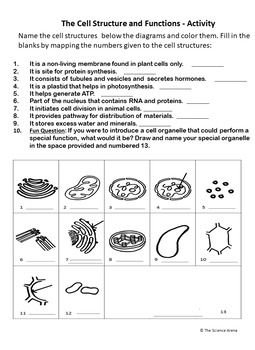
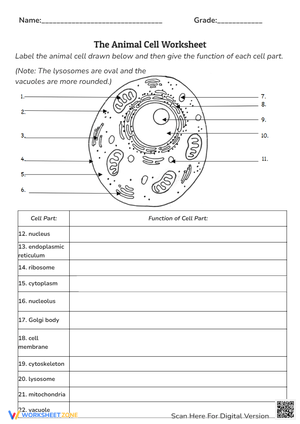
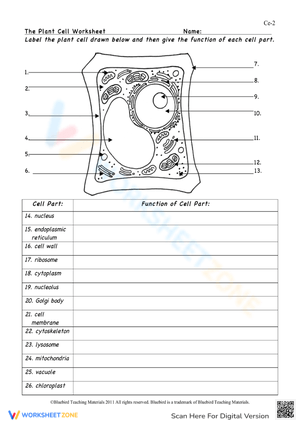
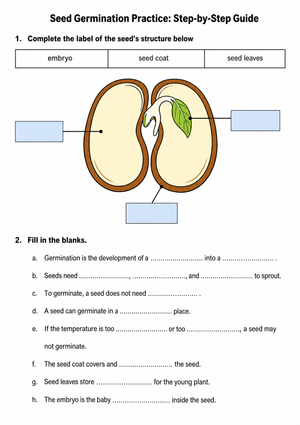
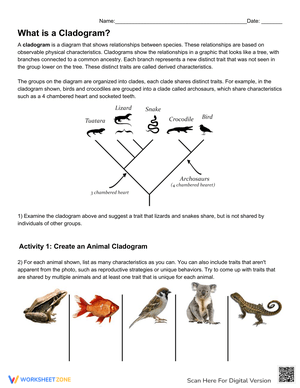
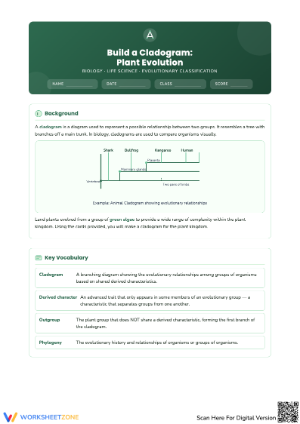
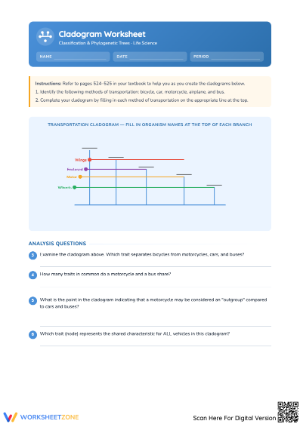
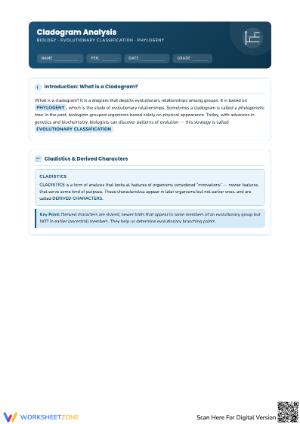
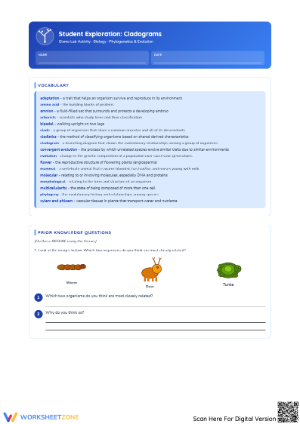
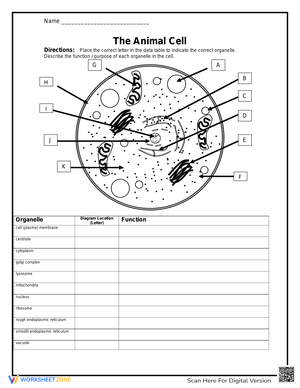
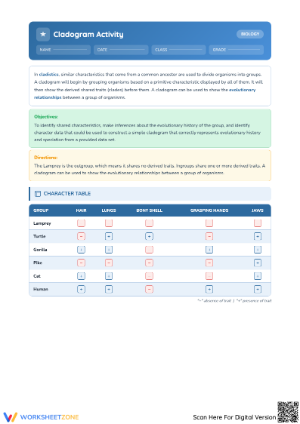
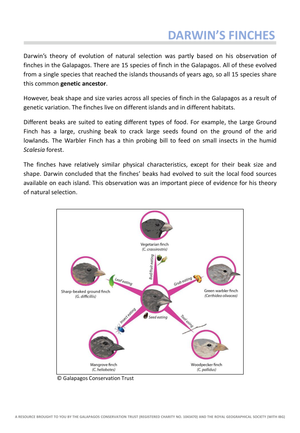
These 8th grade living and non living things printable worksheets give teachers a ready-made resource for pushing classification past the picture-sort stage. Where elementary versions typically ask students to circle animals and cross out rocks, these worksheets require students to name the life processes behind each choice — the kind of reasoning that shows up in life science assessments and ecosystem units alike.
The Specific Skills Targeted in the Set
By eighth grade, students should know that all living things are made of cells — unicellular or multicellular — and that organisms use energy, grow, respond to stimuli, and reproduce. Knowing that list and applying it are different things. These worksheets ask students to do both: sort examples, then write evidence-based justifications rather than rely on instinct or surface features.
- Classify examples as living or nonliving by citing specific life processes, not visible activity or motion.
- Explain how the cell is central to the definition of life and why it distinguishes an organism from an abiotic factor.
- Use core vocabulary with precision: organism, unicellular, multicellular, biotic, abiotic.
- Work through genuinely borderline cases — dormant seeds, dead wood, fire, fungi, and viruses — by checking each against the full set of life traits rather than one cue.
- Connect classification to ecosystem context by identifying which items in a shared habitat are biotic and which are abiotic.
That last skill matters more than it might seem. Students who can sort a cactus from a rock in isolation often struggle when the same task is embedded in a pond or forest habitat. Practicing classification inside an ecosystem context during this unit means less re-teaching when food webs and environmental change appear later in the year.
Classification Errors Worth Catching Before the Unit Moves On
Motion is the default cue for eighth graders who have not yet internalized the cell-based definition of life. Present a class with fire as an answer choice, and a meaningful portion will mark it living — it moves, it consumes fuel, it grows. A worksheet that places fire alongside a bacterium and a dormant seed puts that misunderstanding in writing, where teachers can address it directly in discussion rather than discovering it weeks later on a quiz.
Dead or dormant organisms produce a subtler error. Students frequently write "nonliving" next to shed snake skin, a dry seed packet, or a fallen leaf — reasoning that if nothing visible is happening, the object must not be alive. The dormant seed is the clearest case to unpack. It is made of cells, carries genetic material, and will resume metabolic activity given water and warmth. Students who mark it nonliving are treating visible activity as a proxy for life rather than looking at structure and biological potential. This pattern shows up consistently in written justifications, which is exactly why the two-column evidence format — one column for the object, one for the reasoning — gives teachers better formative data than a checkbox sort alone.
The 8th grade living and non living things printable worksheets address the virus problem carefully. Because viruses lack cells and cannot reproduce without a host, they sit outside the standard definition — but students often call them living because they interact with biological systems in ways that feel active. Including a virus item for class discussion rather than as a scoreable sort entry keeps the ambiguity working for instruction instead of against it.
Where These Worksheets Fit Into a Life Science Unit
The most productive structure is not a one-time assignment but a short cycle: introduce the traits of life, practice mid-week, then revisit with different examples by Friday. A three-item bell ringer at the start of the week takes under eight minutes — one clearly living example, one clearly nonliving, one borderline — with a one-sentence evidence requirement for each. That sets up the conversation. A fuller worksheet on Wednesday gives you written justifications to scan before Thursday's lesson. A two-item exit ticket on Friday with a mushroom and a flame shows whether reasoning held or whether students drifted back to motion as their primary test by the end of the week.
- Station rotation: Run the classification worksheet at one station, a short ecosystem text at another, and a partner verbal-defense round at a third. Collect the paper worksheet as the written record.
- Intervention: Have students complete the sort independently, flag their two least confident answers, then revise only those items after a brief teacher conference. This keeps reteaching targeted rather than re-teaching the entire lesson.
- Sub plans: Choose a worksheet from the set with a built-in word bank and clear written directions — the format holds without teacher facilitation.
- Exit ticket: Ask students to write what they would tell a classmate who marked fire as living, then write a second sentence explaining why a dormant seed is not nonliving.
Because these resources are printable, they work in classrooms with inconsistent device access. The same worksheet goes into an interactive notebook, travels home, or sits in a sub folder without any technology dependency — a real advantage in middle school, where device availability varies period to period.
Bridging Classification to Biotic and Abiotic Factors
The living-and-nonliving distinction maps directly onto ecosystem vocabulary: living things are the biotic components of a system, while water, rocks, soil, sunlight, and air are abiotic. Students who build this connection during the classification lesson — rather than weeks later in an ecology unit — stop treating the two concepts as separate topics. Nonliving does not mean unimportant: abiotic factors determine where organisms survive, what resources are available, and how populations shift across seasons and disturbances.
The 8th grade living and non living things printable worksheets that include ecosystem-embedded items are the ones teachers reach for again at the start of the ecology unit, not just during the introductory classification lesson. A prompt like "explain how rocks, water, and light in this stream habitat affect the fish that live there" holds both categories in mind at the same time — exactly the kind of integrated reasoning that appears on end-of-unit tests and state science assessments.
Standard Alignment
NGSS MS-LS1-1 asks middle school students to use evidence to support the claim that living things are made of cells. The performance expectation shifts the task away from simple identification: students should explain not just that something is alive but why, using cell-based reasoning and named life processes. In classroom terms, MS-LS1-1 lands near the start of a life science sequence and anchors every unit that follows, from cell biology and body systems through ecosystems and heredity. When students argue from cell evidence during a classification task, they build the conceptual foundation that makes later units faster to teach and easier for students to connect. Each worksheet in this set addresses that expectation directly by requiring written justification alongside the sort.
Matching the Cognitive Demand to Each Student's Level
For students who find the written component difficult, reduce the item count to eight and add a traits-of-life checklist to the worksheet. Students tick each trait against each item before writing, which separates the task of recalling the traits from the task of applying them in a sentence. That intermediate step makes it easier to pinpoint exactly where reasoning breaks down — confusion about the traits themselves, or difficulty translating thinking into writing.
On-level students work well with twelve to fifteen items, full-sentence justifications, and two or three borderline cases included without explicit cues. For students ready to go further, add a written argument prompt: should a virus be classified as living or nonliving? Students must take a position and cite specific traits of life as evidence. That single extension item shifts the task from classification into scientific argumentation — the kind of writing that appears in high school biology and in state assessments that require evidence-based scientific explanations. Using the same base worksheet for all three groups makes the 8th grade living and non living things printable worksheets practical for mixed-ability classes, since the core task stays consistent while the depth requirement scales.
Frequently Asked Questions
What separates a living from a nonliving thing at the 8th grade level?
Students at this level need a multi-trait answer: cells, energy use, growth, response to stimuli, and reproduction. Motion alone is not sufficient. A worksheet with a written evidence column holds students to a fuller answer than a simple circle-and-cross sort does, and it surfaces students who are still applying the one-trait test before they reach a summative assessment.
Should viruses appear as living or nonliving on a gradeable worksheet item?
Most eighth grade teachers treat the virus as a discussion anchor rather than a scoreable item, because the scientific community itself treats it as a borderline case. Viruses lack cells and cannot reproduce without a host, but they interact with living systems in ways that look biological. Using the virus to sharpen the definition — rather than to produce a right-or-wrong answer — keeps the instructional focus where it belongs: on understanding the traits of life, not on memorizing a classification list.
How do these worksheets connect classification to ecosystem vocabulary?
Several worksheets in the set use the terms biotic and abiotic alongside living and nonliving, applying both pairs to the same examples. A rock is both nonliving and abiotic. A bacterium is both living and biotic. Building that conceptual link during the classification lesson means teachers do not need to re-establish it when the ecology unit begins — students arrive already knowing that both vocabulary sets describe the same underlying distinction.
How many items should a classification worksheet include at this grade level?
A twelve-item set with three or four intentionally borderline examples tends to be the most instructionally useful. It is short enough to pair with written justifications — which take longer than checkboxes — but long enough to expose whether a student's reasoning is stable or limited to familiar cases. If every item is obvious, the worksheet produces almost no formative data. The borderline cases are where the learning shows up in student work.












 Interactive Worksheet Maker
 Quiz Maker
 Word Search Maker
 Crossword Puzzle Maker
 Word Scramble Generator
 Sentence Scramble Generator
 Handwriting Worksheet Generator
 Name Tracing Generator
 Fill In The Blank Generator