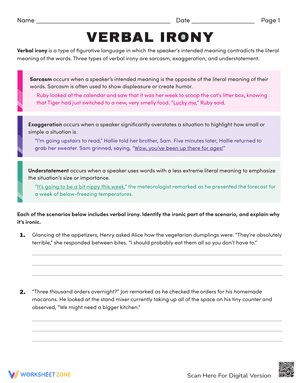
These 7th grade literary devices pdf worksheets give students structured practice moving from simple identification to genuine textual analysis — the kind of work that actually sticks when students encounter figurative language in novels, poems, and argumentative texts. The set targets a focused group of high-utility terms and pairs each one with real examples, short passage excerpts, and writing tasks that ask students to explain how a device works, not just name it.
The Skills These Worksheets Build
Each worksheet works within a curated group of devices that appear frequently in grade-level reading: metaphor, simile, personification, hyperbole, imagery, allusion, onomatopoeia, idiom, and repetition. Clustering related devices across the set matters instructionally. A worksheet pairing simile and metaphor lets students compare how each creates comparison differently, while a worksheet on imagery and onomatopoeia builds toward a discussion of sensory effect. Keeping two or three devices per worksheet maintains enough focus for students to think analytically rather than just match terms to definitions.
The task formats across the set vary deliberately:
- Term-to-example matching — best for first exposure or quick review before a lesson builds further
- Sentence-level identification — students read short examples and label the device used
- Short passage analysis — students underline the device, then answer a question about tone, mood, or author's purpose
- Compare-and-sort tasks — students distinguish between closely related devices such as simile versus metaphor, or imagery versus personification
- Original writing prompts — students write two or three sentences using a target device, giving them practice producing the language themselves
- Spiral review — mixed-practice tasks that revisit previously taught devices before an assessment
Passage-based tasks carry the most instructional weight at this grade level. Seventh graders are expected to analyze how authors shape meaning and tone — not just recognize figurative language in isolation — so moving from sentence-level work to short excerpt analysis is where the deeper thinking lives.
Mistakes Students Make That These Worksheets Help You Catch
The most persistent confusion at 7th grade is between simile and metaphor, and it rarely comes from students not knowing the definitions. Students who can recite "a simile uses like or as" will still mark "Her voice is music" as a simile because the sentence sounds poetic — they are pattern-matching to their sense of what figurative language feels like rather than examining the grammatical structure of the comparison. Worksheets that ask students to identify the comparison word specifically, or note its absence, surface this error cleanly.
Idiom is another reliable trouble spot. Students who read "it was raining cats and dogs" literally — especially English language learners — often categorize it as imagery or hyperbole because they are trying to fit it into a device category they already know. A brief class discussion about literal versus intended meaning before students begin the worksheet reduces that confusion significantly, even just two minutes before independent work starts.
Allusion trips up students who lack the background knowledge the allusion assumes. A student who does not know the story of Achilles will not read "his Achilles heel" as figurative and will mark it as an unknown vocabulary word rather than a device. Worksheets that include a short gloss alongside the allusion let students focus on the analytical task instead of stalling on unfamiliar content.
How to Work These Worksheets Into Your Weekly ELA Block
The most efficient approach is a five-day device rotation: hold one literary device constant for the week and change the task format each day. Students identify examples on Monday, explain effect on Tuesday, compare the target device against a related one on Wednesday, rewrite plain sentences to include it on Thursday, and complete a short passage analysis on Friday. The skill deepens without the week feeling like a drill, and by Thursday's writing task, the class has a clean formative signal — students who have truly internalized the device write original examples immediately, while those still guessing produce sentences that technically use like or as without creating an actual comparison.
For bell ringers, one task from any worksheet in the set takes about five minutes and fits the time between attendance and the first transition. For a station rotation, each worksheet works as a self-contained stop. For sub plans, the passage-analysis worksheets hold up without teacher facilitation as long as students already know the target terms. For intervention, identification tasks with a word bank let students practice without the language load blocking them from the concept. These 7th grade literary devices pdf worksheets also function as a practical bridge between direct instruction and whatever novel, poem, or article students are reading that week — the device studied in isolation on Monday is usually findable in the class text by Thursday, and that transfer moment is worth pausing on.
Making These Worksheets Work Across a Range of Readiness Levels
Differentiation here works best by adjusting the support structure, not the learning target. Students who need more access work with a word bank, sentence stems, or a reference card listing each device with one clear example; students working at or above grade level answer without those aids and take on the additional challenge of explaining why an author chose a particular device. Both groups work the same worksheet on the same concept.
For students who consistently confuse similar devices, a side-by-side comparison chart before the worksheet does more than any correction after. Put one simile next to one metaphor, point to the comparison word in the simile, note its absence in the metaphor, and let students annotate the two examples before they work independently. That five-minute setup prevents most of the errors that would otherwise show up across the rest of the unit.
For enrichment, the writing prompts extend in two directions: students can write an original example and then explain the effect it creates on the reader, or they can pull a sentence from the class novel, identify the device the author used, and imitate the construction with a different subject. That kind of task keeps literary devices connected to author craft rather than isolated vocabulary study. 7th grade literary devices pdf worksheets used this way move into writing instruction territory as much as reading comprehension.
Standard Alignment
These worksheets address CCSS.ELA-LITERACY.RL.7.4, which asks seventh graders to determine the meaning of figurative and connotative language and analyze its impact on meaning and tone within a text. The identification tasks map to the recognition component of that standard; the passage-analysis tasks address the impact component, which is where most students need the most support. CCSS.ELA-LITERACY.L.7.5 also applies, covering figurative language, word relationships, and nuance in word meaning. In most 7th grade ELA courses, both standards appear prominently in the first quarter when teachers introduce author's craft alongside the opening class novel, and again during poetry and argument units later in the year. Placing these worksheets at those two instructional windows gives students repeated exposure in context rather than one isolated practice block that is quickly forgotten.
Frequently Asked Questions
Which literary devices should 7th graders know before a standardized assessment?
Most state assessments at this grade level expect students to identify and explain the effect of metaphor, simile, personification, hyperbole, imagery, and allusion within a reading passage. Idiom, onomatopoeia, and repetition appear less frequently on formal assessments but show up often in class texts, so they are worth teaching during the year. The more consistent gap on assessments is effect — students can name the device but cannot explain what it does to tone or meaning. The passage-analysis tasks in these worksheets address that gap directly.
How many devices should I target in each worksheet?
Two or three devices per worksheet gives students enough focus for real analysis. A worksheet covering six or seven devices at once spreads attention too thin and tends to produce answers that look like guessing rather than understanding. When a broad review is needed before a unit test, the spiral-review format that revisits all previously taught devices works better than compressing everything into a single new-concept worksheet.
Do these worksheets work for students reading below grade level?
The identification and sort tasks work well for below-grade-level readers because the reading load is manageable and the task is concrete. The passage-analysis tasks may need a short vocabulary preview — specifically the terms tone, mood, and figurative — before students work through them independently. A brief whole-class think-aloud on the first item also reduces friction for students who freeze when they see an unfamiliar passage format. Using 7th grade literary devices pdf worksheets this way calls for a few extra minutes of setup, but that preparation makes the task accessible to most of the class.
Can these worksheets be paired with a class novel or current reading text?
That pairing is often the most effective use. After practicing a device with the worksheet, ask students to find one example of it in that night's reading chapter. The transfer from controlled practice to authentic text is where the skill becomes durable — and students who can locate a metaphor in a passage they were already assigned to read have demonstrated something much closer to real literary analysis than circling answers on a definition-match task.















 Interactive Worksheet Maker
 Quiz Maker
 Word Search Maker
 Crossword Puzzle Maker
 Word Scramble Generator
 Sentence Scramble Generator
 Handwriting Worksheet Generator
 Name Tracing Generator
 Fill In The Blank Generator