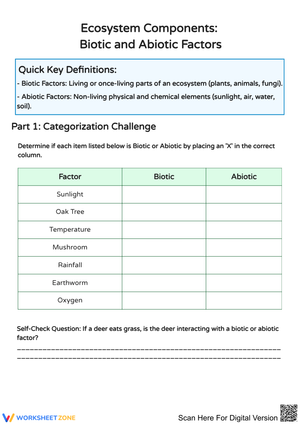
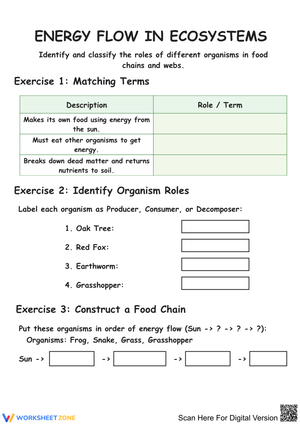
6th grade ecosystem printable worksheets give middle school science teachers a direct route to repeated, focused practice on the concepts that trip students up most: distinguishing biotic from abiotic factors, tracing energy through feeding relationships, and connecting organisms to the habitats that support them. This set covers those core ideas without the setup overhead that comes with lab activities or digital platforms — print, distribute, and the task is clear.
Concepts Covered Across the Set
These 6th grade ecosystem printable worksheets target one or two specific skills per task so students aren't processing too many ideas at once. The content follows the typical 6th grade life science sequence:
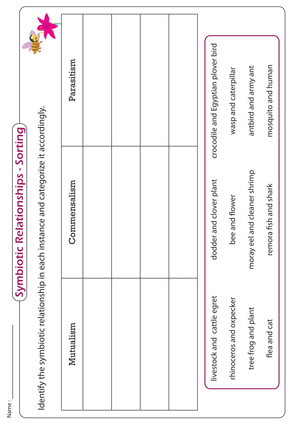
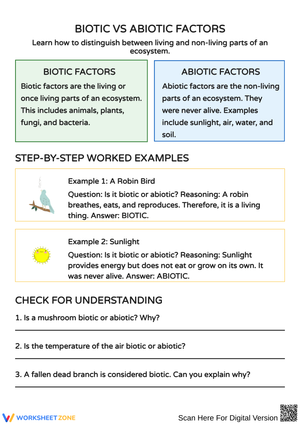
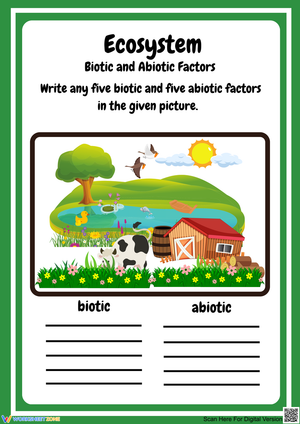
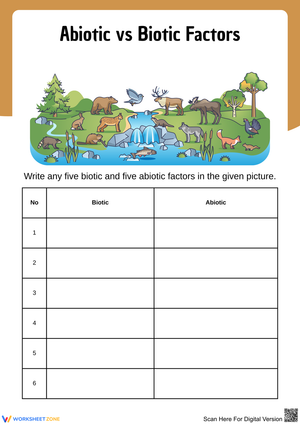
- Biotic and abiotic factors: labeling and sorting the living and nonliving components of a described or illustrated environment.
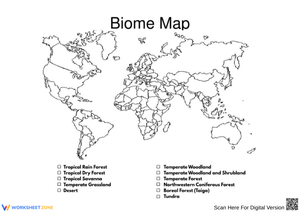
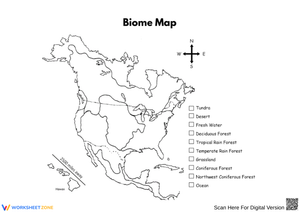
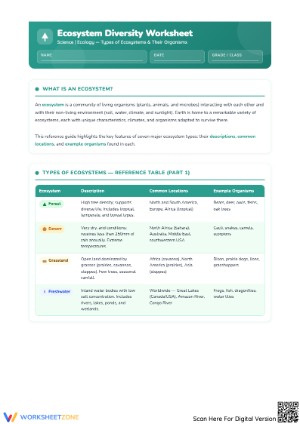
- Habitats: short passages and comparison charts examining how organism needs match specific environments — pond versus desert, forest versus open ocean.
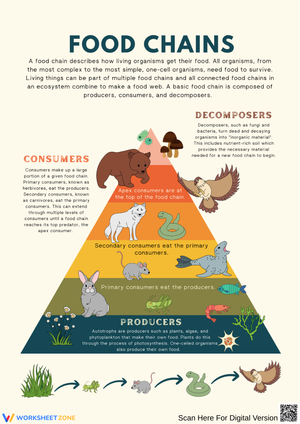
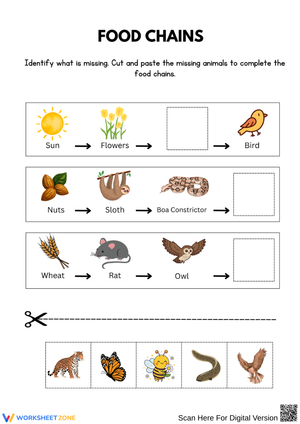
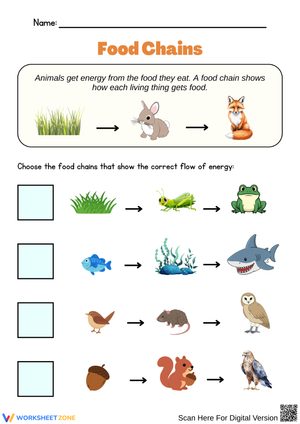
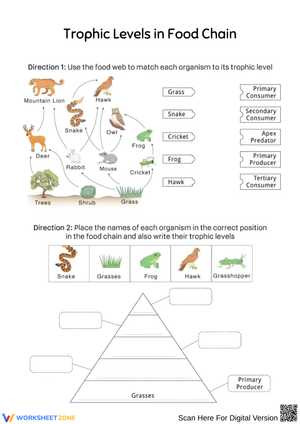
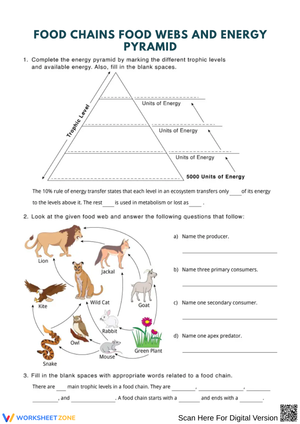
- Food chains: arranging organisms in sequence, identifying producers, primary consumers, secondary consumers, and decomposers, then explaining energy direction.
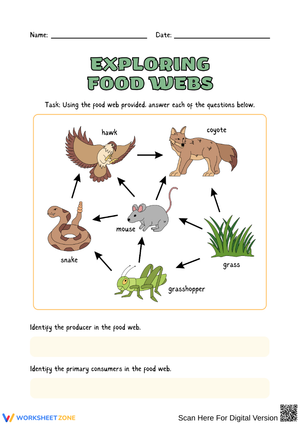
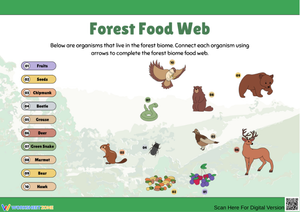
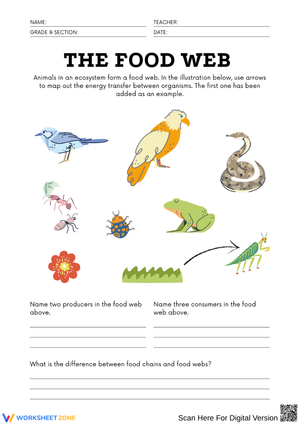
- Food webs: interpreting multi-species diagrams, tracing multiple feeding paths, and answering questions about what happens when one organism's population shifts.
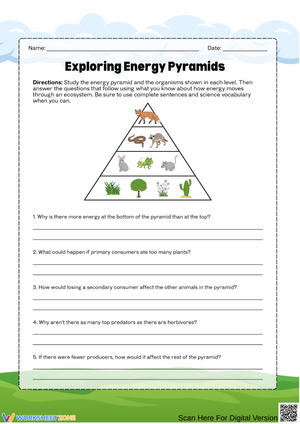
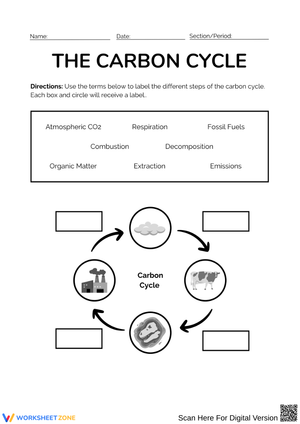
- Energy flow: explaining the sun-to-producer-to-consumer pathway through labeling, sentence completion, and short written response.
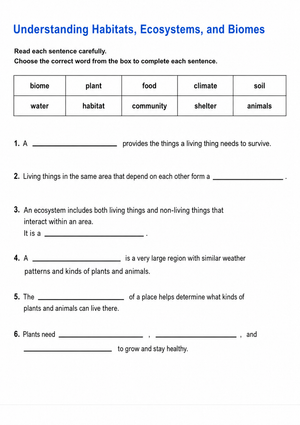
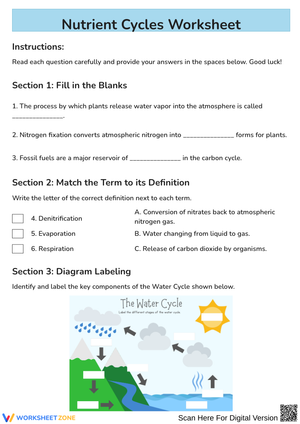
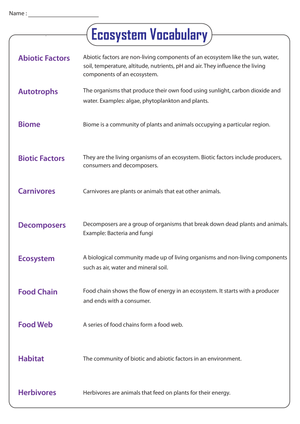
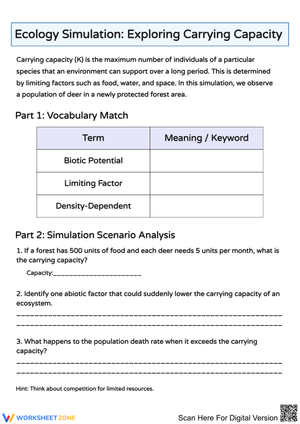
- Vocabulary in context: matching, cloze sentences, and definition tasks for terms like organism, community, niche, producer, and decomposer.
The reading load across each worksheet stays manageable for sixth graders, but the questions push past recall — students sort, predict, explain, and annotate rather than just copy definitions.
Where Student Thinking Goes Wrong in Ecosystem Units
Ecosystem vocabulary looks straightforward until you read actual student work. The most persistent error involves food chain arrows: students draw them pointing FROM the rabbit TO the grass — in the direction of "who eats whom" — rather than in the direction of energy transfer, which reverses that. A worksheet that asks students to explain what an arrow represents, not just draw one, surfaces this confusion before it gets reinforced through repetition.
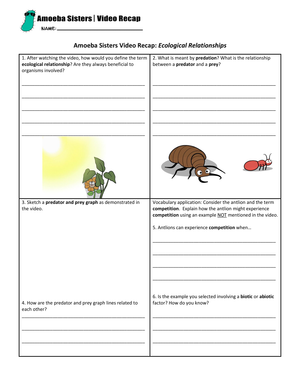
A second predictable problem: students treat decomposers as background detail rather than an active part of the system. On cause-and-effect questions, they'll predict what happens if the top predator disappears but leave decomposers entirely out of their reasoning. Worksheets that ask specifically about the decomposer's role — "what would happen to this ecosystem if fungi and bacteria were removed?" — force students to think about the full cycle, not just the linear chain they memorized.
Biotic/abiotic sorting also produces consistent errors at this level. Soil generates the most classroom debate. Students who've been told "biotic means living" often mark soil as biotic because it "has things growing in it." An exercise that draws a clear distinction between contains living things and is itself a living thing addresses that directly and gives students precise language to use going forward.
Building These Worksheets Into Your Lesson Plans
Using 6th grade ecosystem printable worksheets effectively means matching each one to the narrowest possible instructional moment rather than reaching for a worksheet when you need to fill time. A biotic/abiotic sorting task works well as a five-minute warm-up right after introducing those terms — not a week later when the distinction has blurred. A food web worksheet fits the 15-minute independent practice block that follows a mini-lesson on feeding relationships; that same worksheet can return as a partner review task two days later to give students a second retrieval pass before a quiz.
- Bell ringers: vocabulary matching or a single labeling task — something students can start without whole-class setup.
- Post-mini-lesson practice: labeling or sorting tasks while the concept is still fresh from direct instruction.
- Sub plans: reading-comprehension worksheets with short-answer questions and directions clear enough that no setup is needed.
- Centers rotation: one station for a reading passage, one for diagram labeling, one for sorting — each running about 10 minutes.
- Exit tickets: a cause-and-effect question pulled from a worksheet — "predict what happens to the fish population if algae disappears from the pond."
One small addition that raises the value of any completed worksheet: after students finish, ask them to read one answer aloud to a partner and use the word because in the explanation. That 90 seconds of talk turns a silent paper task into a window on whether students actually understand the reasoning or just matched the correct word.
Adjusting the Worksheets for Different Student Levels
Students who are still building science vocabulary do well when a worksheet includes a word bank and a visual — a labeled illustration of a pond ecosystem, for example, gives them a concrete reference instead of requiring them to retrieve terms from memory while also processing the question. For those students, the labeling and sorting worksheets are the right starting point, not the short-answer and cause-and-effect ones.
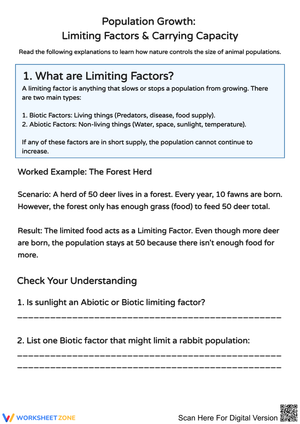
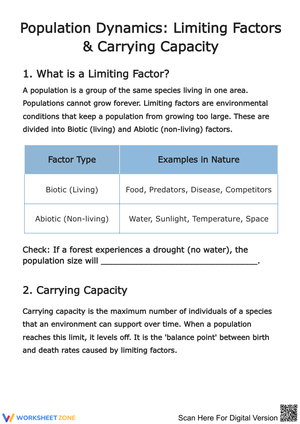
Students who move through the core tasks quickly can extend their thinking with population-change and cause-and-effect questions. Asking them to write a follow-up prediction — "if drought reduced the plant population by half, what would happen next in the food web, and in what order?" — pushes the reasoning without requiring a different resource. That kind of extension is easy to add verbally or write on the board while the rest of the class finishes the worksheet.
For students receiving reading support, the science task stays intact when a teacher or aide reads the passage aloud while students annotate — underlining organism names, circling energy sources, marking arrows in the diagram. Lowering the reading barrier that way keeps everyone working on the same science concept.
Standard Alignment
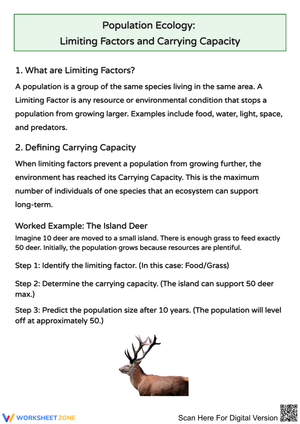
These worksheets align with NGSS MS-LS2-3 and MS-LS2-4, which ask students to construct explanations for why organism populations fluctuate in ecosystems and to build arguments about the effects of resource availability. The food web and cause-and-effect worksheets address those performance expectations directly by having students trace feeding relationships and predict how a change in one population moves through the rest. The biotic/abiotic and energy flow worksheets support disciplinary core ideas in LS2.A (Interdependent Relationships in Ecosystems) and LS2.B (Cycles of Matter and Energy Transfer). Teachers working with state-adapted NGSS frameworks will find equivalent life science standards at the 6th-grade band in most state documents, and these worksheets map cleanly to those as well.
Frequently Asked Questions
Are these worksheets appropriate for students who are still developing reading fluency?
Most of the labeling, sorting, and diagram-based worksheets require very little independent reading, so they work well as the entry point for students who need reading support. Teachers typically assign those first and move to the passage-based worksheets once students have built vocabulary through the other tasks.
Can these worksheets be used as homework, or are they better suited for in-class work?
Vocabulary, sorting, and labeling worksheets make strong homework because each one is self-contained and doesn't depend on classroom materials or a partner. The cause-and-effect and food web interpretation worksheets are better suited to in-class use, where a teacher can step in if a student's reasoning goes off track.
Do individual worksheets work on their own, or do they need to be used as a complete set?
The 6th grade ecosystem printable worksheets in this set are standalone resources — each one works independently. You don't need to assign them in sequence or as a group. Most teachers pull individual worksheets to match whatever concept they're covering that week rather than running the entire set in order.
Do the worksheets include answer keys?
Yes. Each worksheet comes with a matching answer key, which makes checking quick whether you're reviewing work yourself or having students self-check during class.












 Interactive Worksheet Maker
 Quiz Maker
 Word Search Maker
 Crossword Puzzle Maker
 Word Scramble Generator
 Sentence Scramble Generator
 Handwriting Worksheet Generator
 Name Tracing Generator
 Fill In The Blank Generator