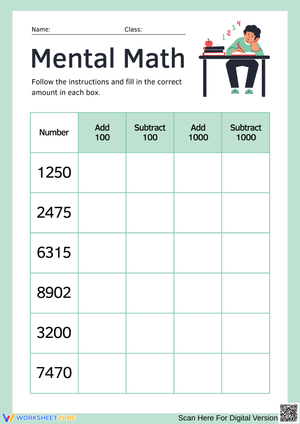
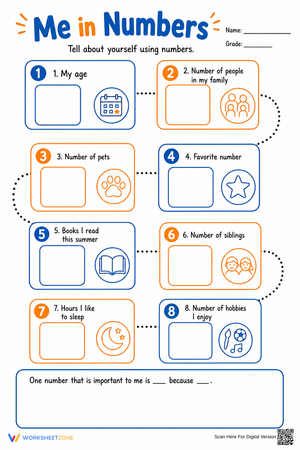
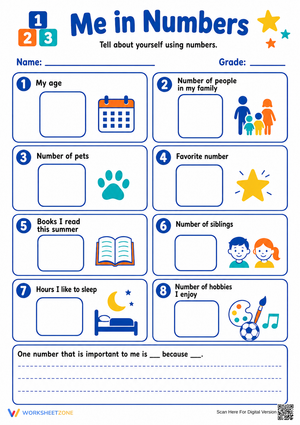
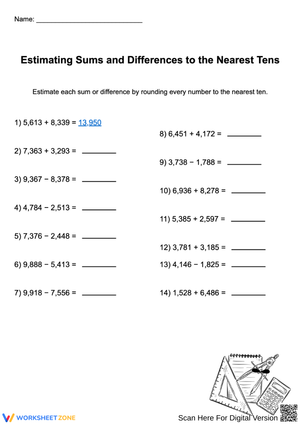
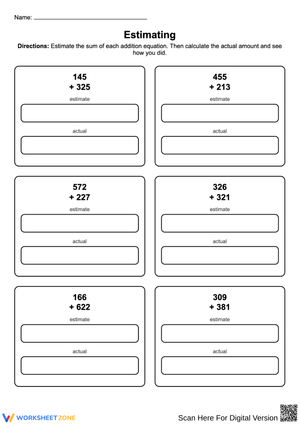
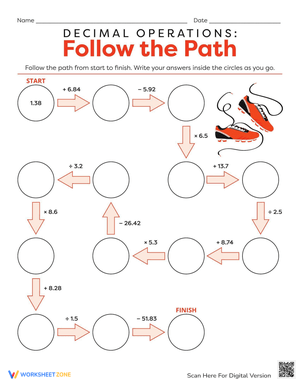
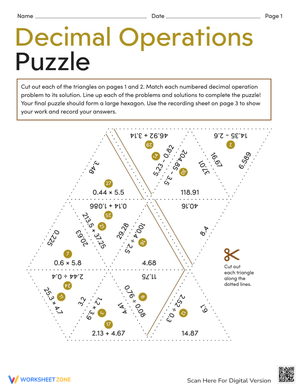
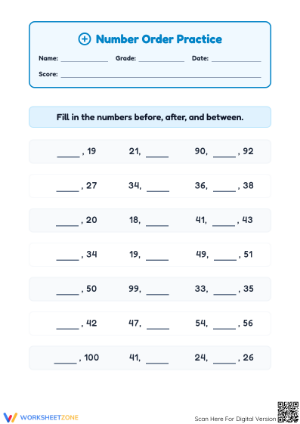
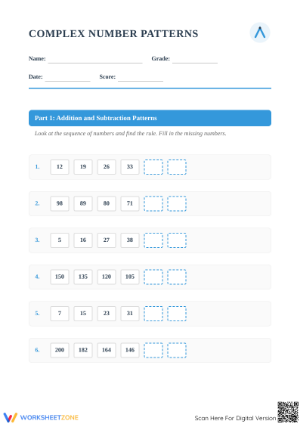
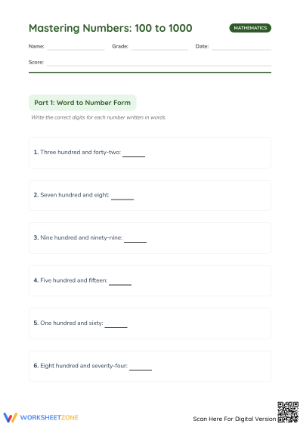
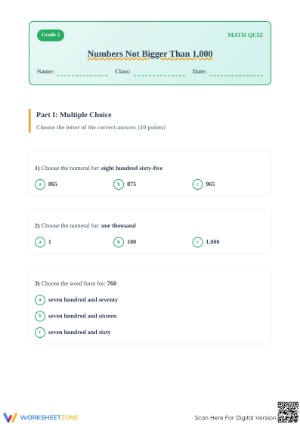
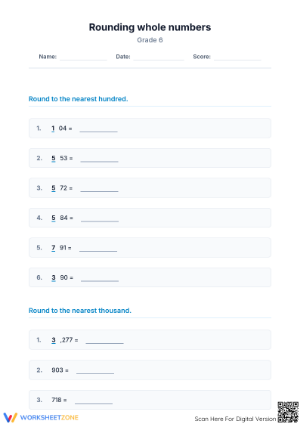
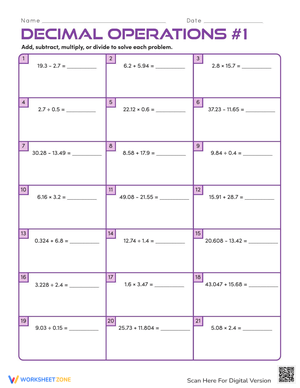
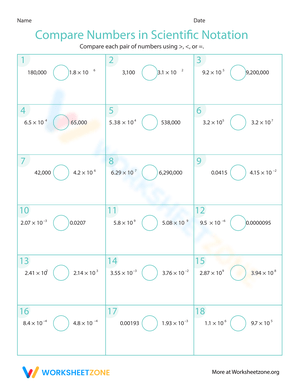
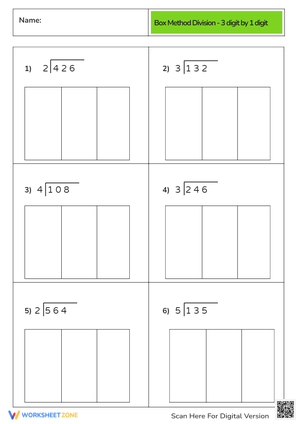
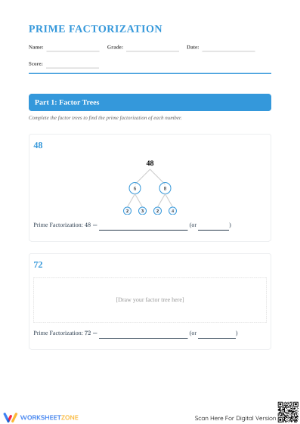
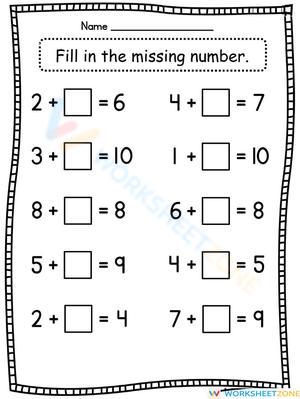
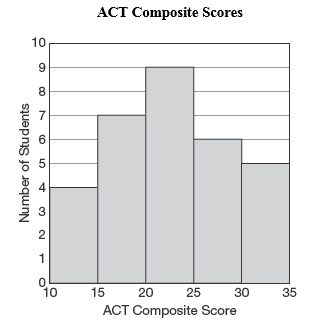
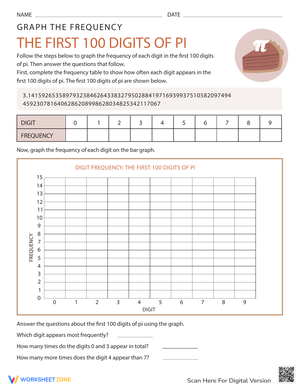
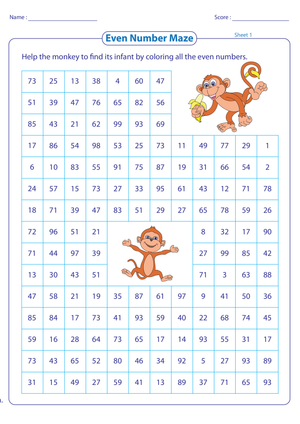
These numbers worksheets for 5th grade zero in on the place value and decimal reasoning skills that actually drive upper elementary math — not a broad sweep of number topics, but the specific concepts that teachers return to in lessons, intervention blocks, and review. Each worksheet holds one tight objective, so teachers can pull the right practice for the right moment without repurposing content that half-fits the goal.
The Specific Skills Each Worksheet Targets
Grade 5 is when the place value system formally stretches into decimals, and the shift matters more than it looks on the surface. Students who understood whole-number place value in third and fourth grade now have to apply that same structural thinking to tenths and hundredths — and many do not transfer that understanding automatically. These worksheets address that directly.
- Decimal place value: reading and writing values through the hundredths place, naming the value of a specific digit, and explaining how position changes worth
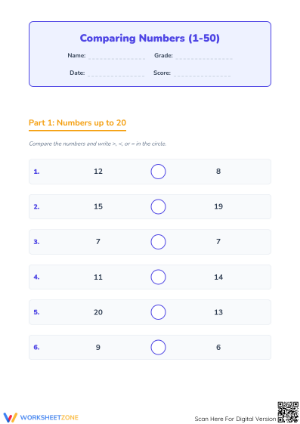
- Comparing and ordering: deciding which of two or more decimals is greater, ordering a set of numbers from least to greatest, and justifying comparisons using place value language
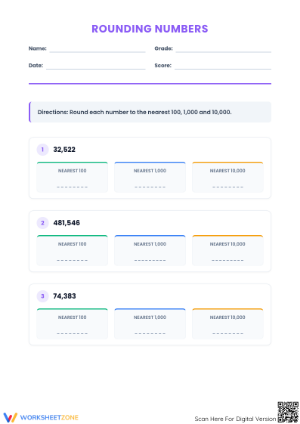
- Rounding: rounding whole numbers and decimals to a specified place — not just identifying the answer but locating the benchmark digits that drive the decision
- Expanded form: writing numbers as a sum of their parts (e.g., 4 + 0.3 + 0.07) and reading expanded notation back into standard form
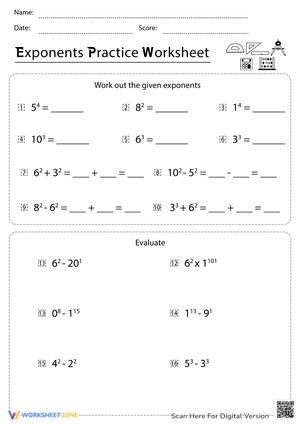
- Powers of 10: tracing how a digit shifts left or right when multiplied or divided by 10, 100, or 1,000, and what that shift means for the digit's value
Each of these skills connects to the others. A student who struggles to order decimals is often showing a gap in place value understanding rather than a separate problem with ordering itself. Keeping the worksheets sorted by subskill makes it easier to identify which root problem actually needs attention.
Student Errors Worth Watching For and Addressing
The most common decimal comparison mistake in grade 5 is reading decimal digits as if they were whole numbers. A student who knows that 30 is greater than 4 will write 0.30 as greater than 0.4 for exactly the same reason — the "30" feels bigger. That misconception does not surface from a multiple-choice item; it shows up when students annotate comparison statements or mark digits on a place value chart. A worksheet that asks students to explain or label a comparison gives teachers a clear window into whether the student understands position or is just pattern-matching digits.
Rounding produces a different but equally predictable error pattern. Students often round correctly when the decision digit is a 4 or a 6 but freeze when it's a 5, or they round the wrong digit entirely because they misidentified which place the problem specified. A focused worksheet on rounding to one named decimal place — rather than a mixed sheet where the target place shifts from item to item — lets teachers see exactly where the uncertainty lives rather than averaging across item types.
Expanded form mistakes tend to involve zero as a placeholder. Students write 4.07 as 4 + 0.7 because they skip past the zero in the tenths place, treating it as if it carries no information. The worksheets that reveal this gap most clearly are the ones that feature numbers with interior zeros — asking students to build expanded form from 6.04 or 3.08 rather than from numbers where every digit is nonzero.
Fitting These Worksheets Into Your Week
The most practical entry point is the first eight to ten minutes of the math block. A single focused decimal place value worksheet used as a warm-up takes almost no launch time — students sit down and start, and the teacher has a minute to circulate and note who is making the comparison error before instruction begins. That real-time information shapes the lesson before it's even fully underway.
For small-group intervention, these worksheets work best when the teacher selects one narrow skill and listens more than corrects. During a rounding session, asking "which digit tells you which way to round?" reveals far more than checking whether the answer is right. The paper gives students something to point at while explaining, and those explanations tell a teacher exactly what the next reteach session needs to cover.
Other natural fits across a grade 5 week:
- Monday warm-up: one short decimal comparison worksheet to restart number reasoning after the weekend
- Centers: a place value or expanded form worksheet as a written station while the teacher pulls a small group
- Homework: targeted practice the night after introducing a new concept, narrow enough that families can follow along
- Exit tickets: two or three selected items from a numbers worksheets for 5th grade set, chosen to check the day's specific objective
- Sub plans: skills-aligned review that students complete independently without requiring explanation from someone unfamiliar with the current unit
Standard Alignment
These worksheets align directly to the Common Core State Standards for Mathematics at grade 5, specifically CCSS.MATH.CONTENT.5.NBT.A.1 through 5.NBT.A.4. Those standards address the place value system and decimals, requiring students to understand value relationships across adjacent places, read and write decimals to thousandths, compare decimals using inequality symbols, and round to any place. In classroom planning terms, the NBT.A cluster belongs at the front of most grade 5 math sequences — it is the conceptual base that decimal computation depends on when multiplication and division with decimals arrive later in the year. Teachers preparing for state assessments will find this cluster appears consistently in grade 5 test blueprints, which makes it a high-return area for focused review practice.
Adjusting These Worksheets for a Range of Learners
For students working below grade level, the most useful adjustment is reducing problem density and narrowing the skill scope. Rather than assigning a full worksheet on comparing and ordering decimals, pull the comparison section only — fewer items, more space to annotate, and a clear label above the task. That lower-density format reduces the cognitive load of tracking multiple question types at once and lets the student show what they actually know about comparison before ordering is layered on. Students who freeze when they see a long worksheet of shifting formats often make the same errors on a focused task but are more willing to begin.
For students who are ready to move faster, the strongest extension is asking them to justify in writing. A student who can order a list of five decimals correctly is not necessarily finished — the same worksheet becomes more demanding when the student must explain why each number sits where it does, using place value vocabulary like "tenths place" and "the digit's position." Teachers working with advanced students can also pull a numbers worksheets for 5th grade task and ask students to generate their own comparison items, which surfaces whether they understand the structure well enough to construct examples rather than just solve them.
Frequently Asked Questions
Which number skills from these worksheets appear most often on grade 5 state assessments?
Place value, decimal comparison, rounding, and expanded form appear regularly across grade 5 standardized assessments, including those built on Common Core-aligned frameworks. Comparison items on assessments often require students to justify their answer or identify the decimal that fits a stated condition — not simply mark which is greater — so worksheet practice that includes explanation or annotation is closer to actual test format than pure fill-in work.
How many worksheets should I assign before moving to the next skill?
That depends on what students show, not on a fixed count. For a skill like decimal place value, one or two focused worksheets used with close teacher observation usually reveals whether students are ready to extend or need a reteach before moving forward. Spaced retrieval matters here: one worksheet during the unit and a short review worksheet a week later tends to produce more durable understanding than four worksheets back to back during the same instructional block.
Do these work well for students receiving intervention support in number sense?
The focused single-skill format makes these worksheets especially useful in intervention settings, because the teacher can narrow the task to one concept — say, reading decimals through hundredths — and spend the session probing understanding rather than covering ground. The numbers worksheets for 5th grade set includes enough variation across subskills that teachers can select exactly what a student's data shows is missing, rather than assigning a broad review sheet that mixes skills the student already controls with ones they do not.
Can these be used in classrooms following a non-Common Core state framework?
Most state math frameworks at grade 5 address decimal place value, comparison, and rounding even when they use different standard codes. The skills in this set align with the grade 5 number sense expectations that appear across the majority of state standards documents. Teachers in non-CCSS states should verify the specific codes in their state's framework, but the content focus reflects what grade 5 number instruction looks like in nearly every state context.














 Interactive Worksheet Maker
 Quiz Maker
 Word Search Maker
 Crossword Puzzle Maker
 Word Scramble Generator
 Sentence Scramble Generator
 Handwriting Worksheet Generator
 Name Tracing Generator
 Fill In The Blank Generator




 BACK TOSCHOOL