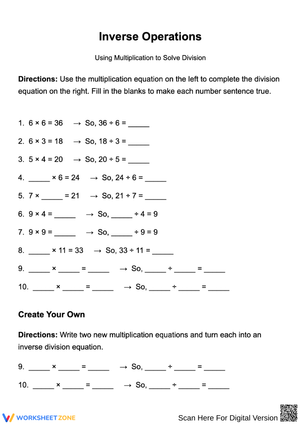
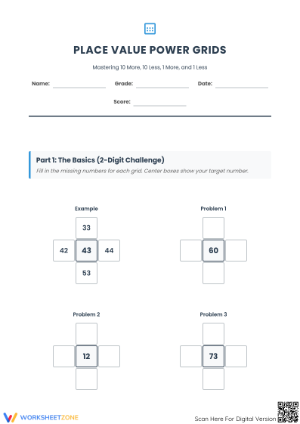
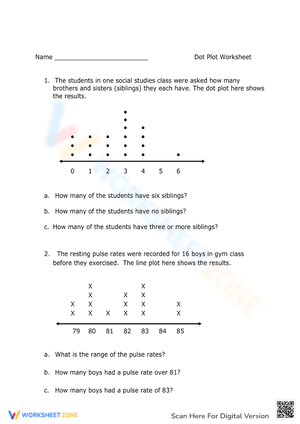
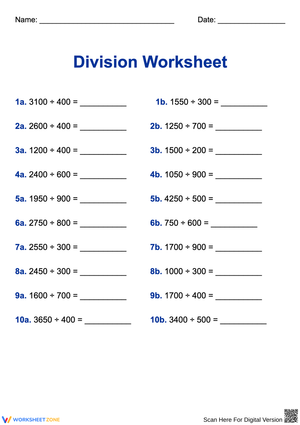
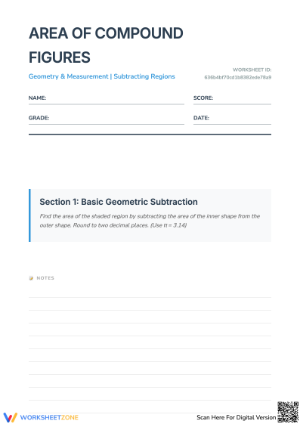
Teachers reaching for others math printable worksheets for 5th grade usually have a specific problem to solve: a gap between units, a student who needs more practice on decimal operations before the next assessment, or a week where three different groups need three different review tasks. This Worksheetzone collection addresses that reality with standalone worksheets built from the major Grade 5 skill domains — fraction computation, decimal place value, volume, measurement, and graphing — each available separately so teachers can match the resource to the actual need.
What the Set Covers
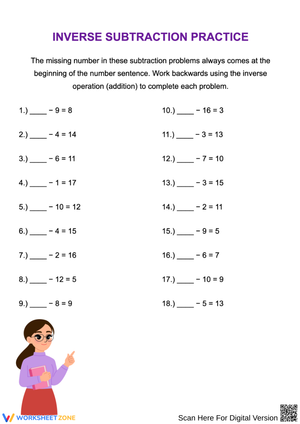
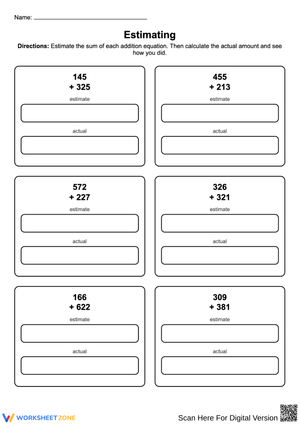
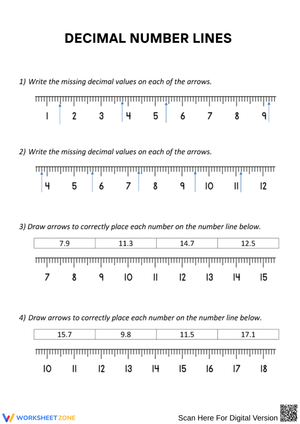
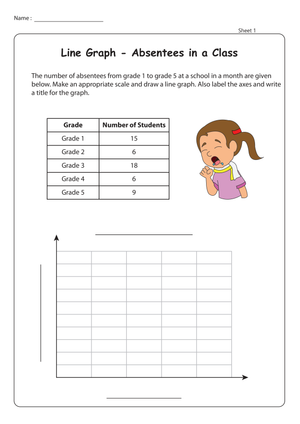
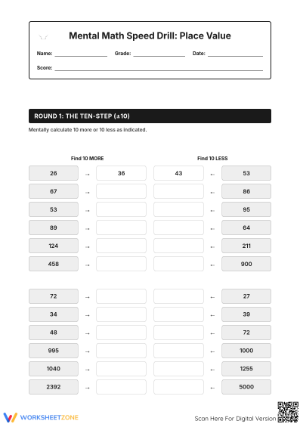
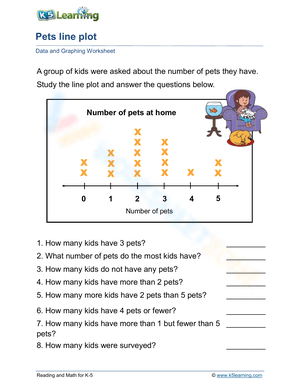
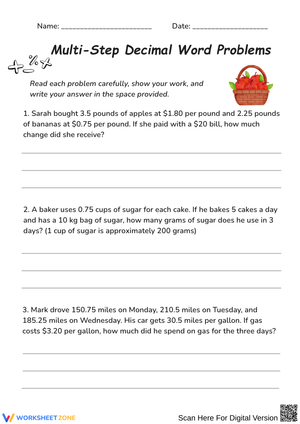
Grade 5 math doesn't stay in one domain for long, and neither does this collection. Each worksheet draws from skills students revisit throughout the year: comparing and ordering decimals, adding and subtracting fractions with unlike denominators, multiplying fractions by whole numbers, interpreting line plots and measurement data, finding volume of rectangular prisms, and plotting and interpreting coordinate pairs. Those topics appear on the same benchmark assessments and unit tests, so practicing them together mirrors the actual demands students face.
The cross-domain setup also makes this set useful outside of core instruction. An interventionist running a small group can sort through others math printable worksheets for 5th grade and pull the one that targets a specific reasoning gap — decimal comparison, fraction subtraction, or coordinate graphing — without building a new resource from scratch. A classroom teacher planning a Friday spiral review can do the same in under two minutes.
Error Patterns That Mixed-Domain Practice Makes Visible
One of the clearest advantages of mixed review is what it reveals that single-skill practice hides. A student who correctly answers 18 out of 20 fraction subtraction problems in isolation may stumble the moment fraction computation appears beside a decimal subtraction item. The switching cost is real: students sometimes carry the wrong procedure across number types, treating the denominator as a separate whole number right after working with decimal subtraction. This produces errors like rewriting 3/4 − 1/3 as 2/1 — a mistake that almost never surfaces on a single-skill worksheet but shows up regularly on mixed review.
Decimal place value produces its own interference errors. Students who correctly line up decimals when the task is clearly labeled will sometimes misread 0.6 and 0.60 as different values when those numbers appear alongside whole-number comparisons in the same worksheet. Mixed practice surfaces those mismatches early enough to address them before they compound on a unit test.
Building These Worksheets Into Your Lesson-Planning Week
The most reliable use pattern for this kind of set is weekly spiral review: one worksheet during the last eight minutes of a Friday lesson, or as a Monday warm-up after morning meeting settles. Keep the goal narrow — revisit two or three Grade 5 skills students have already been taught, use the results to flag anything that needs reteaching, and move on. These worksheets don't require setup beyond printing, which is what makes that routine sustainable for the full school year.
- Morning warm-up: Select a worksheet with three to five mixed items. Students complete it before the lesson begins, and you read the room before instruction starts.
- Early finisher task: Mixed practice keeps students on grade-level content without requiring a separate extension assignment.
- Substitute folder: Clear directions and familiar formats mean students can complete a worksheet without additional management support.
- Intervention folder: Keep six to eight worksheets organized by skill emphasis so a specialist can pull the right one immediately after an exit ticket points to a gap.
Printable format matters for practical reasons that often get overlooked. Fifth graders doing fraction computation or volume reasoning need room to write out steps, set up expressions, or sketch a figure. Paper gives them that space without requiring device access or login time. Others math printable worksheets for 5th grade are also easy to adapt on the fly — a teacher can circle specific items, add a worked example at the top before copying, or cut a worksheet into strips for a center task — without losing any of the original content.
Standard Alignment
The Grade 5 Common Core State Standards name three instructional priorities for the year: developing fluency with fraction addition and subtraction, extending decimal and place-value reasoning to multi-digit operations, and building conceptual understanding of volume (CCSS.MATH.CONTENT.5.NF, 5.NBT, 5.MD). A mixed worksheet set that draws consistently from all three domains aligns with the way the standards frame fifth grade — as a year of consolidation and connection rather than isolated skill acquisition. Teachers using these worksheets for spiral review are reinforcing exactly what the standards position as central to Grade 5 readiness.
Measurement, data, and coordinate graphing standards (5.MD and 5.G) appear in the set as well. These are sometimes treated as secondary content during instruction, but they show up consistently alongside the major fraction and decimal domains on state assessments. Keeping them in mixed review reduces the chance that students are caught off guard when those skills appear in unfamiliar combinations at testing time.
Adjusting the Set for Students at Different Readiness Levels
Students who need more support benefit from worksheets that limit the number of domain switches in a single sitting. Choosing a worksheet that emphasizes two skill areas instead of four, or writing one worked example at the top before copying, reduces cognitive load without dropping the grade-level expectation. For students who struggle specifically with the switching itself — a real tendency in some fifth graders — a brief verbal preview of the worksheet's structure ("this one has three fraction items and two graphing items") is often enough to reduce the hesitation that leads to careless errors.
Students working above grade-level expectations can use the same worksheets differently. Asking them to write a sentence explaining why they chose a particular strategy, or to identify which two items are most closely related and explain the connection, turns a practice task into a reasoning exercise without requiring a separate resource. One honest limitation: students who strongly resist switching between domains may need an explicit conversation about why mixed practice is worth the discomfort before they engage productively with the format.
Frequently Asked Questions
What skill areas appear across these worksheets?
The set draws from the major Grade 5 math domains: decimal place value and operations, fraction computation and comparison, volume, measurement and data interpretation, and coordinate graphing. The specific combination varies across each worksheet, so teachers can select the one that best fits what students have recently been taught.
How much time does each worksheet typically take?
Most mixed-review worksheets at this level take between eight and fifteen minutes for students working independently. That range makes them practical for warm-ups, the final segment of a lesson, or the front of a homework assignment. Teachers can also assign individual sections of a worksheet rather than the full set of items when time is tight.
Can these be used effectively in intervention settings?
Yes. Others math printable worksheets for 5th grade fit intervention contexts well when teachers select resources that match a student's specific gap and limit the number of domain switches per session. Grade-level content stays intact; what changes is how many skill shifts the student is asked to manage at once.
Do these worksheets align to Common Core standards?
Yes. The set aligns with CCSS Grade 5 expectations in number and operations — base ten and fractions — as well as measurement, data, and geometry. They reinforce the reasoning patterns and skill combinations that appear across Grade 5 state assessments without functioning as dedicated test-prep materials.














 Interactive Worksheet Maker
 Quiz Maker
 Word Search Maker
 Crossword Puzzle Maker
 Word Scramble Generator
 Sentence Scramble Generator
 Handwriting Worksheet Generator
 Name Tracing Generator
 Fill In The Blank Generator




 BACK TOSCHOOL