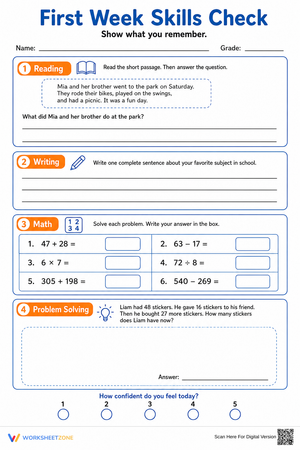
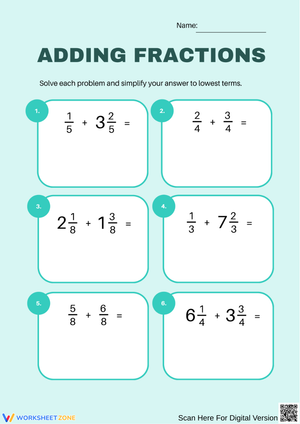
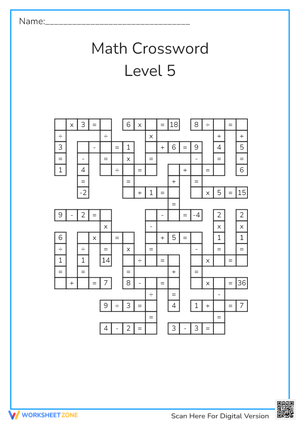
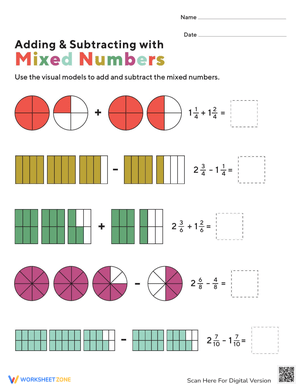
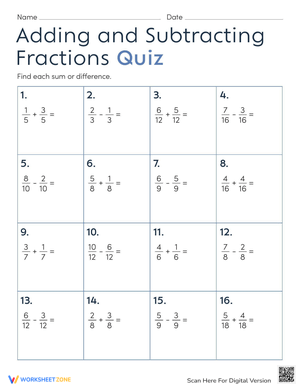
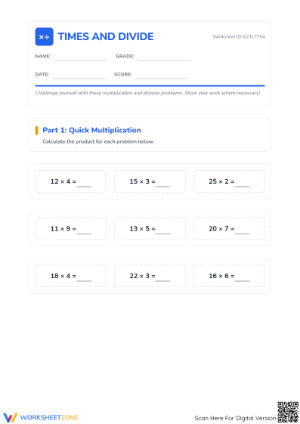
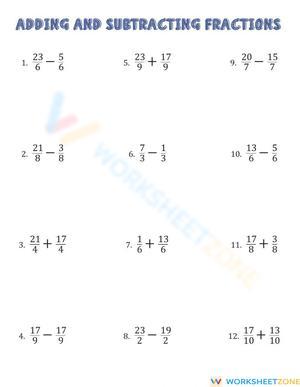
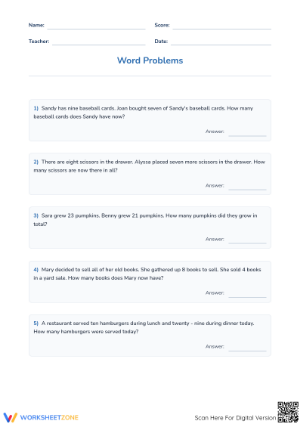
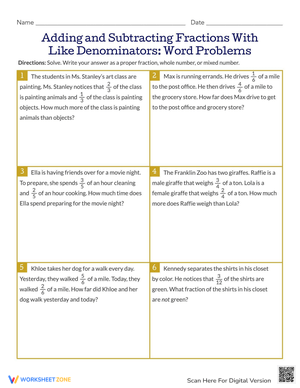
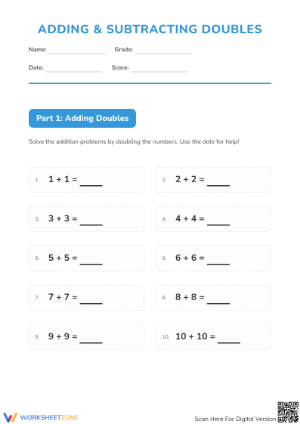
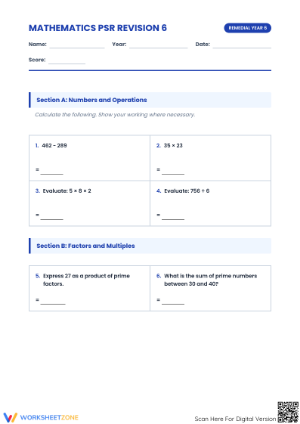
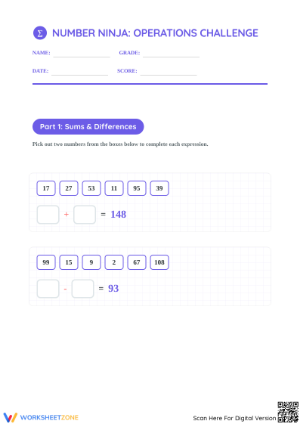
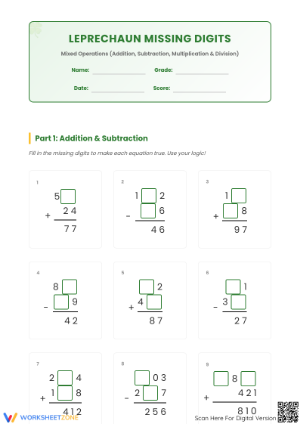
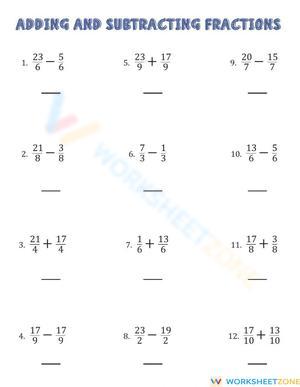
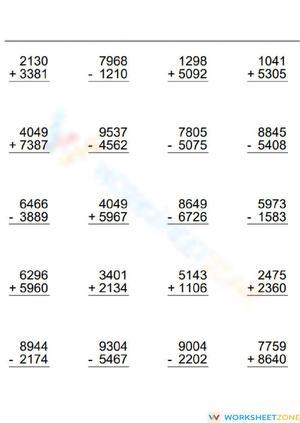
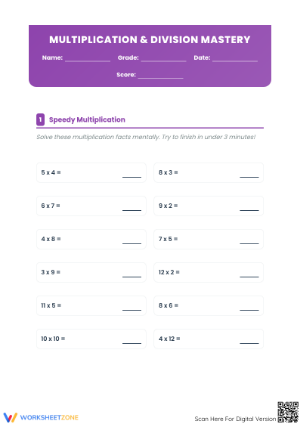
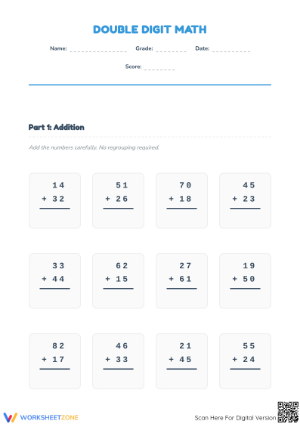
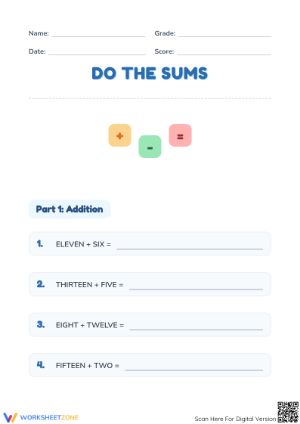
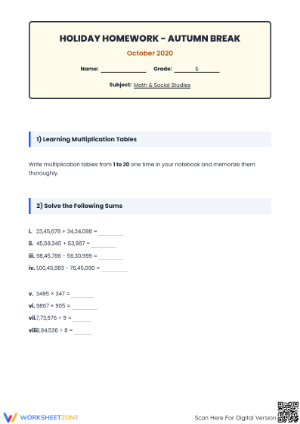
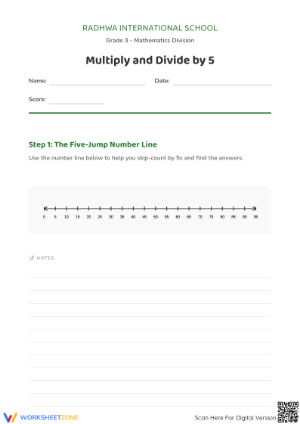
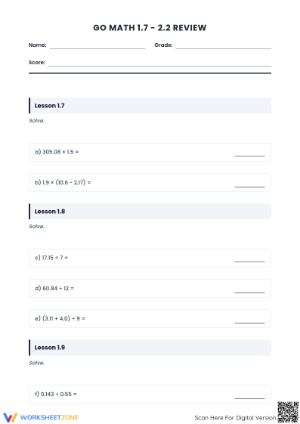
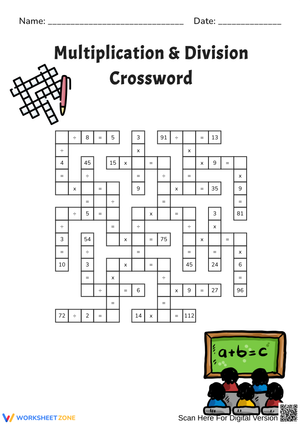
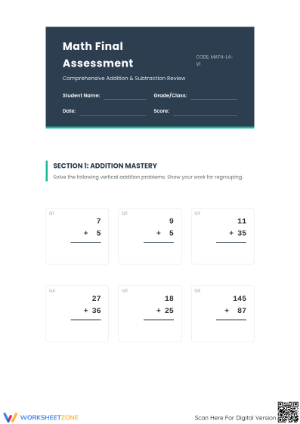
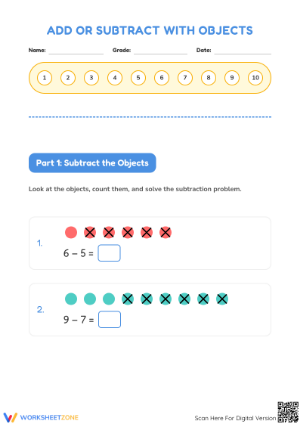
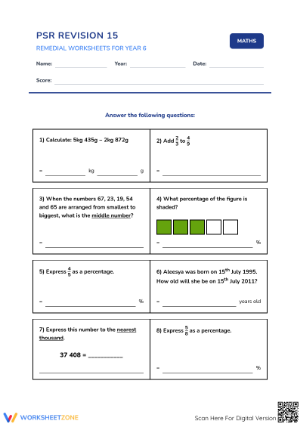
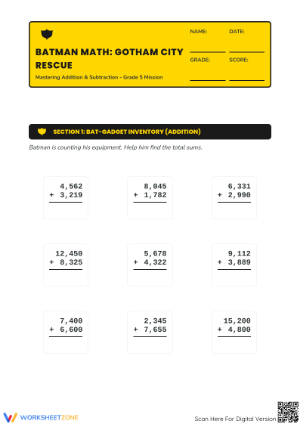
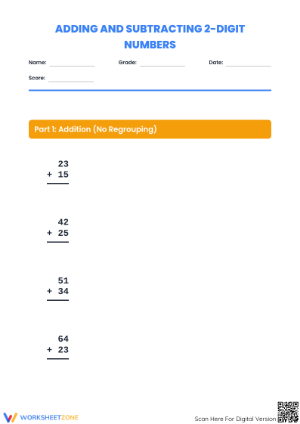
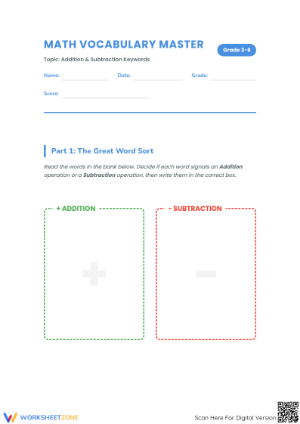
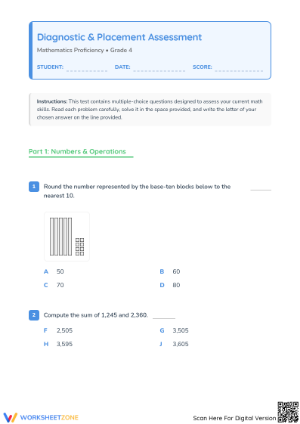
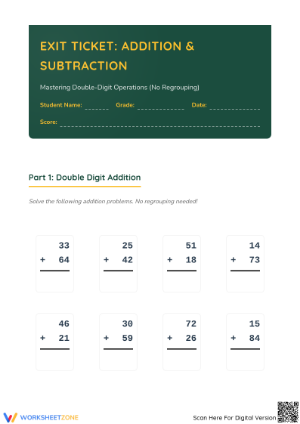
These mixed operation printable worksheets for 5th grade address the specific transition point where students stop practicing each operation in isolation and start applying them together — alongside expressions with grouping symbols, decimal computation, and multi-step problems on the same worksheet. The set gives teachers a reusable bank of practice material that works for warm-ups, intervention groups, center rotations, and pre-assessment checks without any prep beyond printing.
What the Set Covers
Fifth grade is the year the curriculum formally introduces numerical expressions with parentheses, brackets, and braces, and that shift changes what mixed practice needs to look like. A worksheet that mixes addition and multiplication without any grouping symbols still has instructional value, but it leaves out the reasoning layer that Grade 5 actually requires. The worksheets here include:
- Whole-number computation: multi-digit addition, subtraction, multiplication, and division items that check fluency without requiring students to manage new concepts at the same time.
- Order-of-operations expressions: problems with parentheses and brackets where students must identify which operation to carry out first before solving.
- Decimal operations: addition, subtraction, multiplication, and division to the hundredths, reflecting Grade 5 place-value expectations.
- Multi-step combinations: problem structures that require students to apply more than one operation, often with an intermediate result that feeds into the next step.
- Annotation-friendly layouts: enough white space for students to mark grouping symbols, underline operation choices, or write out intermediate steps in the margin.
The range across each worksheet matters because it mirrors the kind of decision-making students face on unit assessments — not "which operation is this worksheet about?" but "which operation does this specific problem require?"
Errors Students Make That These Worksheets Surface
The most consistent error in Grade 5 mixed-operation work is not forgetting how to multiply or divide. It is applying the correct procedure at the wrong moment in a sequence. A student who accurately solves 5 + 3 × 2 on a step-by-step multiplication worksheet will often write 16 when the same expression appears in the middle of a mixed set — because under increased cognitive load, left-to-right processing takes over. These worksheets surface that error quickly because it shows up in the work, not just in the answer.
A second pattern involves decimal alignment. Students who handle 4.7 × 3 without trouble in a decimals unit will misplace the decimal point when that same type of item appears alongside whole-number division on the same worksheet. The context shift disrupts the alignment habits they built in a more controlled practice environment. Seeing exactly where the decimal goes wrong on paper — rather than receiving an "incorrect" flag from a digital tool — gives teachers the specific information they need to address it.
A third error is expression misreading: students who interpret 24 ÷ (2 + 4) as 24 ÷ 2 + 4, arriving at 16 rather than 4. This is not usually a computation error — it is a reading error that looks like a math error. Mixed-operation practice that includes a consistent number of grouping-symbol expressions makes this confusion visible early, before it calcifies into habit.
Building These Worksheets Into Your Lesson Planning
The most practical use is the Monday warm-up. Assign four to six problems drawn from different operation types — one whole-number expression, one decimal item, one multi-step problem — and use the five minutes students spend working as a window into what carried over from the previous week. It is faster than a quiz and gives more diagnostic information than a verbal check-in.
For small-group intervention, pull only the items that isolate the specific confusion. If a student is struggling with order of operations but solid on decimal computation, there is no reason to assign the full worksheet. Selecting two or three targeted expressions gives the student focused practice without wasting time on things they already know.
These worksheets also hold up well as partner error-analysis tasks. After students complete a worksheet independently, pairs revisit one missed problem each and explain where the operation sequence broke down. That kind of structured reflection — done in the last eight minutes before dismissal or during a Friday review block — does more for retention than assigning a second worksheet covering the same ground. These mixed operation printable worksheets for 5th grade lend themselves to that reuse because the annotation space makes student thinking visible enough to discuss.
Standard Alignment
The worksheets align most directly to CCSS.MATH.CONTENT.5.OA.A.1 and 5.OA.A.2, which together require students to use grouping symbols to write and evaluate numerical expressions and to interpret expressions without evaluating them — for example, recognizing that 3 × (18,932 + 921) is three times as large as 18,932 + 921 without calculating the result. In classroom terms, that second standard is often underemphasized because it does not produce a numeric answer, but it directly predicts how well students manage algebraic expressions in Grade 6. Using these worksheets as a pre-assessment before the expressions unit gives teachers a clear reading of which students are at risk before formal instruction begins.
Decimal computation items connect to 5.NBT.B.7, which extends the four operations to decimal operands through the hundredths place. Placing decimal problems alongside expression work on the same worksheet — rather than in a separate unit review — reflects how these standards interact in practice: a student who cannot maintain place-value accuracy under mixed-problem conditions is not yet fully fluent with decimal computation, even if isolated decimal worksheets suggest otherwise.
Adjusting These Worksheets for Students at Different Levels
Below-level students benefit most from a narrowed problem selection and a concrete starting rule. Highlight the grouping symbols before the student begins and instruct them to circle and solve everything inside parentheses or brackets first, then work from left to right within the remaining expression. Starting each session with two whole-number items before introducing a decimal problem reduces the number of new demands landing at once.
On-level students should work through each worksheet in full, but add one small accountability step: before solving any expression with grouping symbols, they write down which operation they will carry out first. That takes less than ten seconds per problem, prevents the left-to-right rush, and makes the student's reasoning visible without requiring a separate written explanation.
For students who are ready to go further, keep the same worksheet but change the task on three or four selected problems. Ask them to write an equivalent expression that produces the same result using different grouping, or to identify which of two expressions is greater without calculating — the kind of reasoning 5.OA.A.2 describes. This keeps advanced students working from the same resource without creating an entirely separate assignment.
Frequently Asked Questions
Do these worksheets include order-of-operations problems, or just basic computation?
Both. Each worksheet includes straightforward computation items and expressions with grouping symbols that require students to identify the correct operation order before solving. That combination is what separates Grade 5 mixed review from a simple computation drill — students practice not just executing operations but deciding how to sequence them.
What operations and concepts appear across the set?
Each worksheet covers whole-number addition, subtraction, multiplication, and division; order-of-operations expressions with parentheses and brackets; decimal operations to the hundredths; and multi-step problem structures. The distribution across each worksheet varies so students cannot predict which operation type comes next — which is exactly the point of mixed practice. The interleaving of problem types forces retrieval of multiple procedures rather than letting students rely on context to guess which operation applies.
Can these worksheets work as formative assessment?
Yes, and that is one of the strongest arguments for keeping a bank of mixed operation printable worksheets for 5th grade on hand. Because each worksheet spans multiple skills, a teacher can scan completed work and identify in under two minutes whether errors cluster around decimal computation, order-of-operations reading, or basic arithmetic accuracy. That clustering points directly to where intervention needs to happen. An answer key accompanies each worksheet to make that review fast enough to act on before the next lesson.
How do these worksheets hold up for both intervention groups and students who need more challenge?
The same worksheet supports both. For intervention, shorten the assignment and pre-mark the grouping symbols. For students who need a greater challenge, keep the full problem set and add the task of writing an equivalent expression or comparing two expressions without computing. The format holds across both uses because mixed operation printable worksheets for 5th grade give every student the same problem foundation while leaving room for the teacher to shift the cognitive demand up or down depending on the group.














 Interactive Worksheet Maker
 Quiz Maker
 Word Search Maker
 Crossword Puzzle Maker
 Word Scramble Generator
 Sentence Scramble Generator
 Handwriting Worksheet Generator
 Name Tracing Generator
 Fill In The Blank Generator




 BACK TOSCHOOL