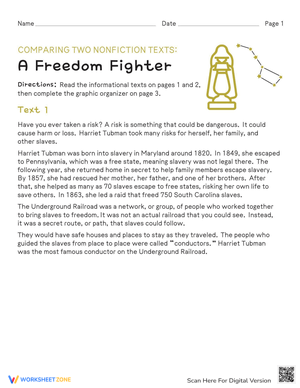
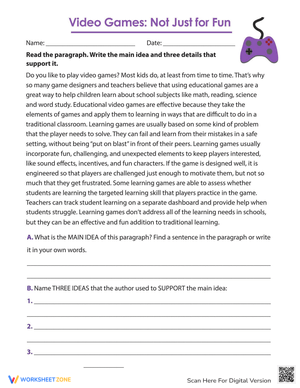
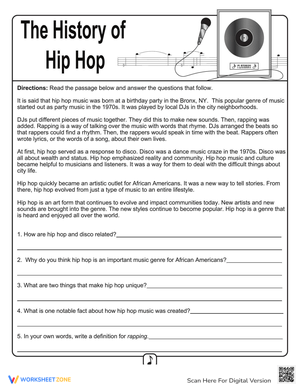
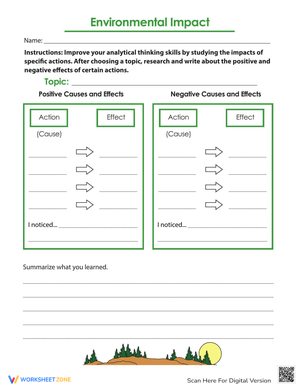
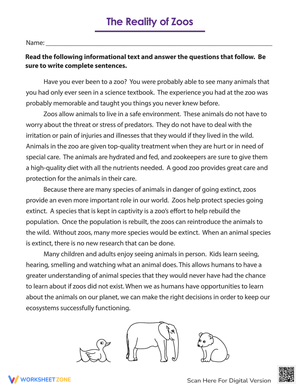
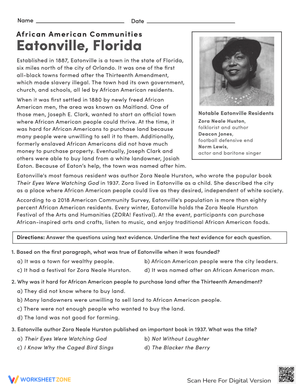
These 5th grade nonfiction pdf worksheets target the specific reading moves that fifth graders are expected to master — quoting accurately from a passage, separating main ideas from supporting details, reading text features like headings and diagrams as real informational tools, and writing responses that go back to the text rather than relying on prior knowledge or guesswork. The set covers informational reading across science, biography, history, and current events, which makes it practical to drop into a unit already in progress instead of treating nonfiction reading as a separate subject.
The Reading Moves Each Worksheet Practices
Fifth grade is the year many students first face passages that require more than careful reading — they require structural thinking. A strong worksheet at this level asks students to notice whether a passage is organized by cause and effect, problem and solution, or compare and contrast, and then explain how that structure shapes the information. That's a different cognitive task than answering general comprehension questions, and it's one where students need focused, repeated practice before it becomes automatic.
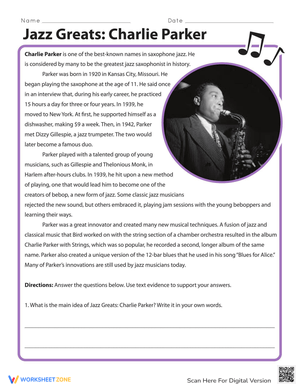
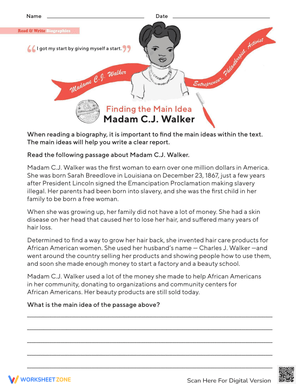
- Main idea and key details — students identify what the passage is mostly about and sort the details that support it from the ones that simply add color or context
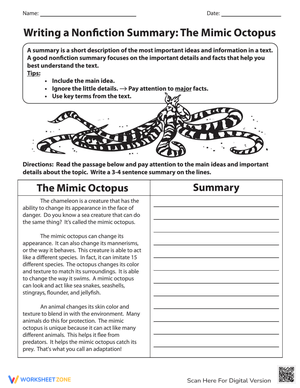
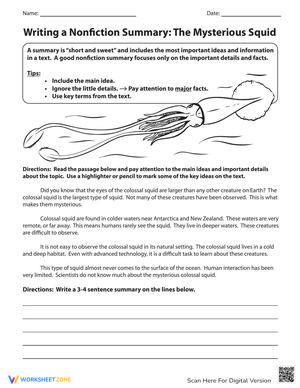
- Accurate summarizing — students write a summary in their own words, limited to main ideas only, without drifting into commentary or retelling every detail in order
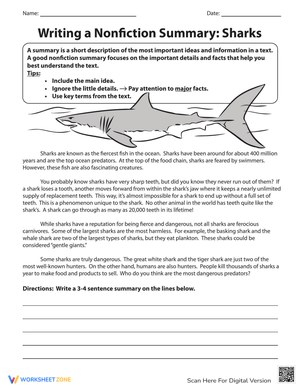
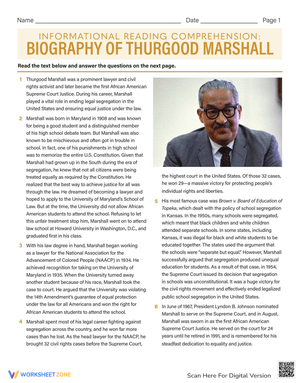
- Text features — students use headings, captions, sidebars, bold terms, and diagrams as entry points into the content, then explain what each feature contributes to understanding
- Text structure — students identify the organizational pattern and connect it to the author's purpose for writing
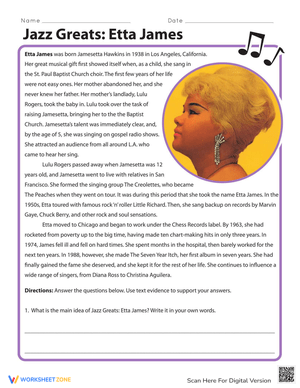
- Text evidence — students locate and quote specific lines that support an answer rather than paraphrasing loosely from memory
A technique that works well in many fifth-grade classrooms is to pair a passage with two question sets: a shorter version for fluency-building independent practice and a deeper version for discussion or small-group intervention. Keeping the topic constant while varying question complexity reduces the time lost to re-explaining background knowledge each time a small group convenes.
Student Errors Worth Anticipating Before You Assign the Passage
The most common summarizing error at this level isn't misidentifying the main idea — it's writing a summary that lists every detail in the order it appeared in the passage. Students treat the text like a sequence to follow rather than a body of information to filter. A summary that begins "First the author says... Then the author says..." is a retelling, not a synthesis, and it shows up regularly in fifth-grade work even after direct instruction on the difference.
Text structure causes its own confusion. Students often conflate text structure — the organizational logic of the writing — with text features — the visual and typographic elements used in a text. A student who correctly identifies the headings in a passage will sometimes write "cause and effect" under text features and "headings" under text structure. These are genuinely different concepts that require separate practice and direct correction, not just a reminder to re-read the definitions.
Evidence responses reveal a third pattern: students who write accurate general statements about the passage but don't quote or cite the specific lines that prove the point. The answer isn't wrong exactly — it just doesn't demonstrate what the standard requires, which is returning to the text and locating support. When reviewing those responses, pointing to the exact word or phrase the student could have used is more effective than a general note to "add evidence."
Fitting These Worksheets Into Your Planning Without Losing Class Time
5th grade nonfiction pdf worksheets work best when each one has a clear job in the lesson rather than a slot in a routine. A main idea worksheet can serve as a three-minute bell ringer that settles the class and surfaces background knowledge before a read-aloud. A text features worksheet fits naturally into a literacy center — students can work through it independently without requiring teacher direction every few minutes. A summarizing worksheet is a strong closer for a science reading block because students have just worked with the content, and the act of writing a summary consolidates what they understood.
For intervention, a layered approach keeps the task from feeling overwhelming while still reaching the full reading move. Start with a quick read and an oral gist statement: "Tell me in one sentence what this is mostly about." Then ask students to underline two details in the passage that support that statement. Finally, move to the written response on the worksheet. This sequence keeps cognitive load manageable while still building toward the independence the standard expects.
For substitute days, the printable format earns its keep. The passage and directions are self-contained on each worksheet, and a substitute can run a short review conversation at the end with the answer key in hand. That's a practical advantage over digital-only resources, which often require troubleshooting before the lesson even starts.
Standard Alignment
These worksheets connect most directly to the Common Core State Standards Reading Standards for Informational Text at grade 5. The core skills map to RI.5.1 (quoting accurately from a text and explaining what the text says explicitly and what is inferred), RI.5.2 (determining main ideas and summarizing), RI.5.5 (comparing and contrasting the overall structure of events, ideas, concepts, or information across texts), and RI.5.8 (explaining how an author uses reasons and evidence to support particular points). Teachers in states that have adapted rather than adopted Common Core will find close parallels in their own grade-level informational reading standards — text evidence, main idea, and text structure appear across virtually every state framework at this level.
In classroom terms, RI.5.2 is the standard that generates the most reteaching. The distinction between a main idea and a summary sounds simple, but students who can name a main idea often cannot write a clean summary that excludes minor details — and that gap shows up directly in the written response sections of each worksheet.
Using These Worksheets Across Your Range of Fifth-Grade Readers
The most direct adjustment for below-level readers is to reduce the number of text-dependent questions rather than simplify the questions themselves. A student working through a complex nonfiction passage can often handle the same question types as grade-level peers — they just need fewer of them in a single sitting so the reading load doesn't overwhelm the thinking. Selecting two strong questions from the set and asking students to annotate the passage before writing anything keeps the intellectual demand reasonable without lowering the standard.
For students reading above grade level, the most effective extension is not adding more questions — it's raising the expectation for the written response. Instead of "what is the main idea?", the follow-up becomes "explain how the author organized the passage to make that idea clear." The passage stays the same; the reasoning required goes deeper. This approach also saves planning time because no additional materials are needed.
Students who read fluently but struggle with written output benefit from a structured oral rehearsal before writing. A quick partner share — "Tell your partner the main idea, then name two details" — gives students a chance to form the thinking before transferring it to paper, which produces stronger written responses and fewer blank boxes on the worksheet.
Frequently Asked Questions
What topics do the nonfiction passages cover?
The passages span science, biography, history, and everyday informational topics. That range makes it practical to match a worksheet to a social studies unit or a science reading block without sacrificing the target reading skill. Students also engage more seriously with nonfiction when the topic feels connected to something real rather than chosen only for its reading level.
Are these worksheets appropriate for both whole-class instruction and small-group work?
Both settings work well. During whole-class instruction, teachers can project the passage, model annotation on the board, and then ask students to locate evidence on their own copy. In small groups, the same worksheet becomes a tool for guided practice — teachers can pause after each question and check responses before moving forward. The 5th grade nonfiction pdf worksheets in this set sequence questions from closer comprehension toward deeper reasoning, which creates a natural stopping point if the group runs short on time.
How do these worksheets help students prepare for state reading assessments?
Fifth-grade state assessments consistently include nonfiction passages with questions about main idea, text evidence, text structure, and summarizing — the same skills each worksheet targets. Format familiarity matters: students who have regularly annotated passages, located evidence, and written short text-based responses find the test format less disorienting. Using 5th grade nonfiction pdf worksheets as part of a steady reading routine throughout the year builds the habits that make assessment-day performance more reliable.
Can teachers pull individual worksheets without following a set sequence?
Each worksheet stands alone. Teachers can pull any worksheet from the set to address the skill most relevant to that week's lesson without following a predetermined order. This makes the collection practical for targeted intervention, last-minute substitute plans, or supplementing a unit that already has most of its materials in place.












 Interactive Worksheet Maker
 Quiz Maker
 Word Search Maker
 Crossword Puzzle Maker
 Word Scramble Generator
 Sentence Scramble Generator
 Handwriting Worksheet Generator
 Name Tracing Generator
 Fill In The Blank Generator