Parts of a plant printable worksheets for 4th grade give teachers a reliable way to move students from naming structures to explaining what those structures actually do — and why a plant cannot survive when any one of them fails. The set covers roots, stems, leaves, flowers, fruits, and seeds across multiple worksheet formats, so teachers have options for whole-class instruction, small-group review, and quick-check assessment without piecing together separate resources.
What Students Practice Across the Set
The core skill is structure-function reasoning: students learn not just that a stem exists, but that it does two distinct jobs — physical support and internal transport of water and nutrients. Each worksheet pushes beyond identification toward explanation, which is the cognitive move Grade 4 students are developmentally ready to make.
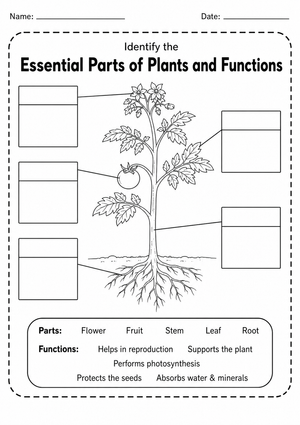
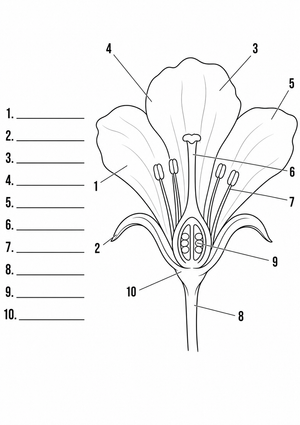
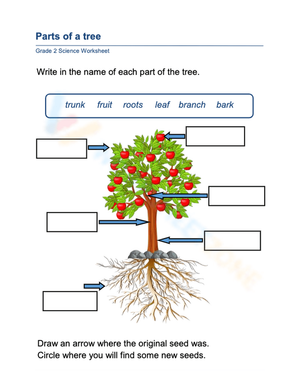
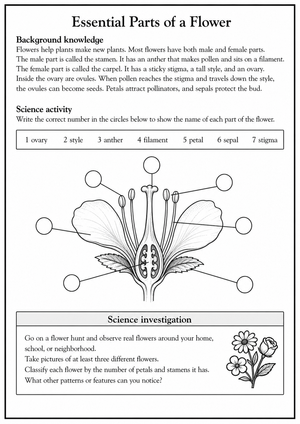
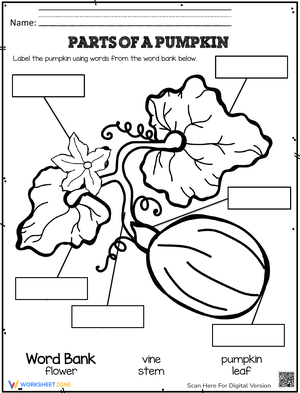
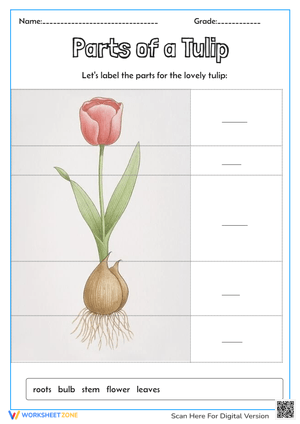
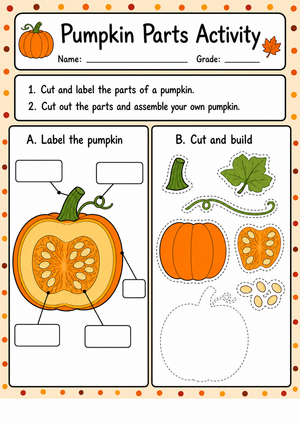
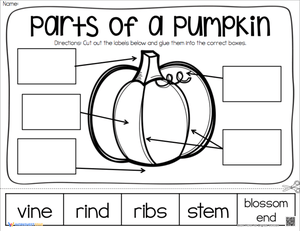
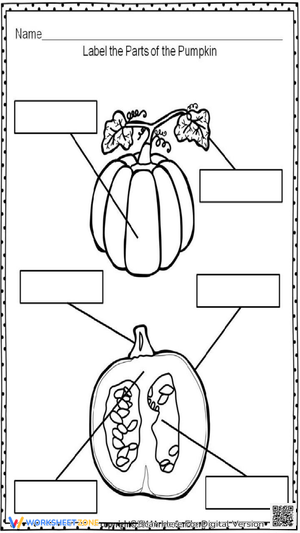
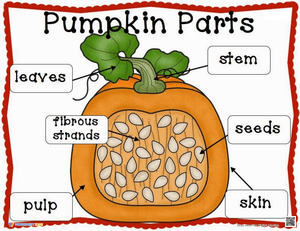
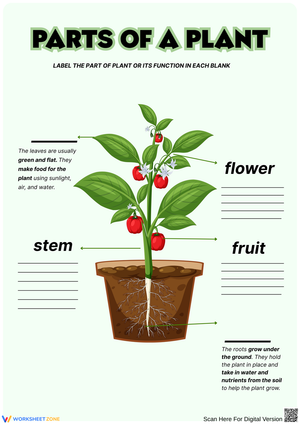
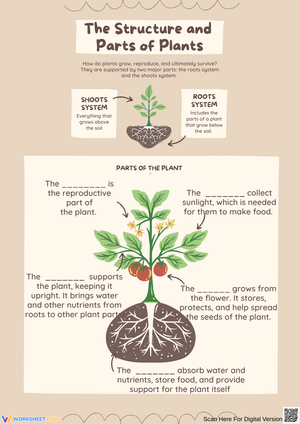
- Labeling plant diagrams from a supported model, then from a blank diagram once vocabulary is firm
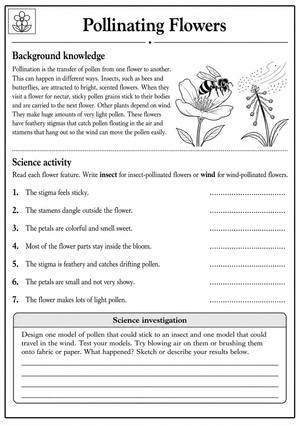
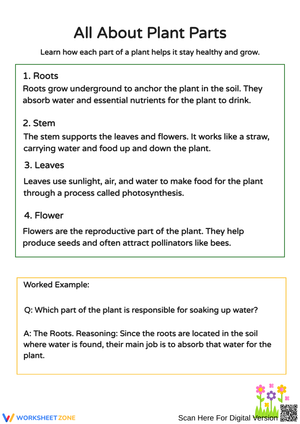
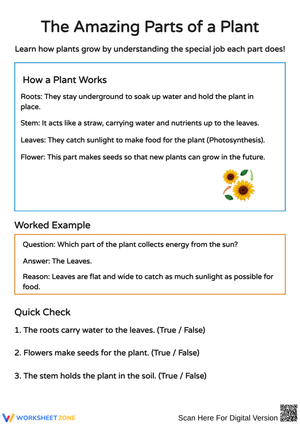
- Matching each structure to its function — roots to absorption, leaves to food production, flowers to reproduction, fruits to seed protection and dispersal
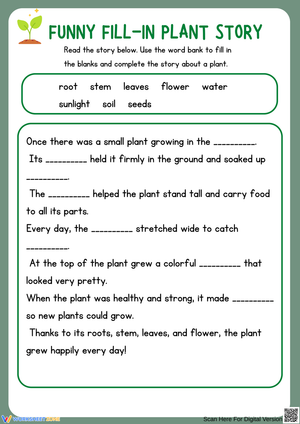
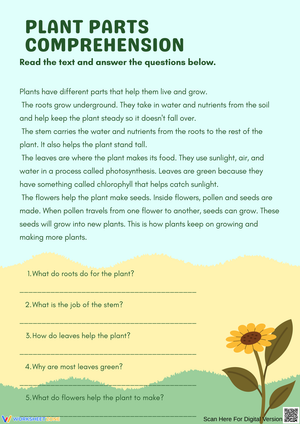
- Answering short constructed-response prompts such as Why would a plant struggle to survive with damaged roots?
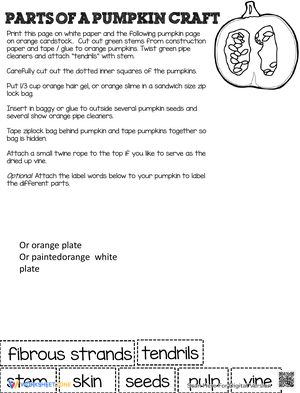
- Cut-and-paste sorting tasks that ask students to physically place labeled parts on a plant image
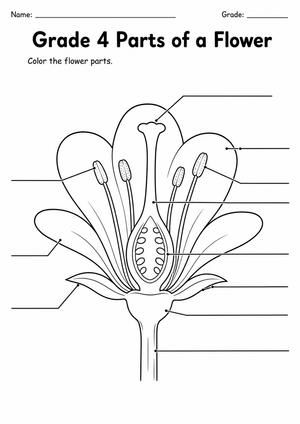
- Color-code activities where each major structure gets a distinct color, reinforcing a visual memory of the whole plant
The sequencing matters. The strongest lessons start with identification, move to matching, and end with short written explanation. Keeping the same plant image across those three steps reduces the cognitive load of decoding a new diagram each time, so students spend their thinking on the science instead of on orienting to a new visual.
Building These Worksheets Into Your Lesson Plans
A practical three-day sequence: Day 1, use a labeled diagram worksheet alongside a real plant on the table — celery with leaves still attached, a bean seedling, or a flowering grocery-store plant all work. Students compare the diagram to the actual plant and mark structures they can spot on both. Day 2, the matching and cut-and-paste worksheets carry most of the instruction. These move quickly — most students finish in 12 to 15 minutes — which leaves room for a whole-class discussion about function before the period ends. Day 3, a blank-diagram worksheet serves as the formative check. If students are accurate on the diagram but stumble on the short-answer prompt about why leaves matter, that gap tells you exactly where reteaching needs to go.
Parts of a plant printable worksheets for 4th grade also slot naturally into sub plans and science centers without extra explanation. The directions on each worksheet are written for student independence, so a substitute can run the activity without a detailed teacher note, and a center version pairs the worksheet with seed samples or a dissected flower for students who finish early.
Student Mistakes Worth Anticipating and Correcting
The most consistent error is conflating roots with feeding. Students who correctly label roots will often write "the roots feed the plant" — mixing up water absorption with food production. They have the causality backward: roots deliver water and minerals that the leaves then use to make food. The short-answer prompts in this set ask students to name both the input and the output of each structure, which surfaces this confusion before it hardens into the assessment.
A second predictable error involves fruit. Grade 4 students almost universally define fruit as something sweet and edible, so they resist calling a bean pod, a tomato, or an acorn a fruit. When each worksheet includes a function-based definition — a fruit is any structure that develops from a flower and contains seeds — students can self-correct on the page rather than carrying the grocery-store definition into the test. The matching worksheet uses that functional definition, not just the word.
Students who have mostly observed trees also tend to call the stem a "trunk" and resist applying the term to smaller plants. Pointing to a celery stalk or a bean plant stem during instruction helps, but so does a worksheet that shows multiple plant types — not just a single iconic sunflower — so students build a broader mental image of what a stem can look like.
Standard Alignment
These worksheets align to NGSS 4-LS1-1, which asks students to construct an argument that plants and animals have internal and external structures that function to support survival, growth, behavior, and reproduction. In classroom terms, that means Grade 4 students are expected to go beyond identification and explain why each structure exists. Labeling a diagram addresses part of that standard; the short constructed-response prompts in this set address the argumentative reasoning piece that NGSS places at Grade 4 and not earlier. Teachers in states using NGSS-aligned curricula will find these worksheets fit naturally into the life science unit that typically runs in the fall of fourth grade.
Adjusting the Set for a Range of Learners
For students who need more support, the labeled diagram worksheet serves as a reference they can keep visible while completing matching and cut-and-paste tasks. Word banks on identification worksheets reduce the cognitive demand of spelling and recall at the same time, freeing attention for the science reasoning. Partially completed sentence frames — The roots help the plant by ___ — give writers who freeze a starting point without removing the thinking.
Parts of a plant printable worksheets for 4th grade in the more challenging formats remove word banks entirely, use blank diagrams, and add constructed-response prompts that require two-step reasoning: students name the structure, state its function, and then explain what would happen to the plant if that structure were removed or damaged. That last question — "what would happen if" — requires students to think systemically, which stretches even confident fourth graders. For early finishers, an extension prompt like Compare how roots and leaves both contribute to the plant making food pushes relational thinking without requiring a separate worksheet entirely.
Frequently Asked Questions
Do these worksheets cover photosynthesis, or just plant structures?
The focus stays on structure and function — what each part is and what it does. Photosynthesis comes up when explaining leaf function, but the worksheets do not go into the chemical process. That depth belongs in later grades and in a dedicated unit. Teachers who want to extend into photosynthesis can use the leaf function discussion as a natural bridge.
What formats are included in the set?
The set includes label-the-diagram worksheets in both supported and blank versions, a function-matching worksheet, a cut-and-paste sorting activity, a short constructed-response review worksheet, and an exit-ticket style quick-check. That range covers warm-up practice, guided instruction, center work, and formative assessment without requiring teachers to track down additional materials.
Are these accessible for students still developing English language skills?
The diagram-based worksheets and cut-and-paste activities require minimal reading and work well for students building academic English. Word banks on identification worksheets reduce language demand while keeping the science thinking intact. Short-answer prompts benefit from sentence frames or a brief partner discussion before writing, but the visual tasks are accessible without modification.
Can these worksheets connect to a plant life cycle unit?
Parts of a plant printable worksheets for 4th grade in this set are built around structure and function, not life cycle sequence. That said, the seed and fruit worksheets connect directly to life cycle work — seeds becoming new plants is the natural next conversation. Teachers typically use this set first, then move into life cycle activities once students have the vocabulary for roots, seeds, and flowers secure.












 Interactive Worksheet Maker
 Quiz Maker
 Word Search Maker
 Crossword Puzzle Maker
 Word Scramble Generator
 Sentence Scramble Generator
 Handwriting Worksheet Generator
 Name Tracing Generator
 Fill In The Blank Generator