


























Views
Downloads

Printable Pumpkin Parts Worksheet (3 Levels) | Grade 4
Paste this activity's link or code into your existing LMS (Google Classroom, Canvas, Teams, Schoology, Moodle, etc.).
Students can open and work on the activity right away, with no student login required.
You'll still be able to track student progress and results from your teacher account.
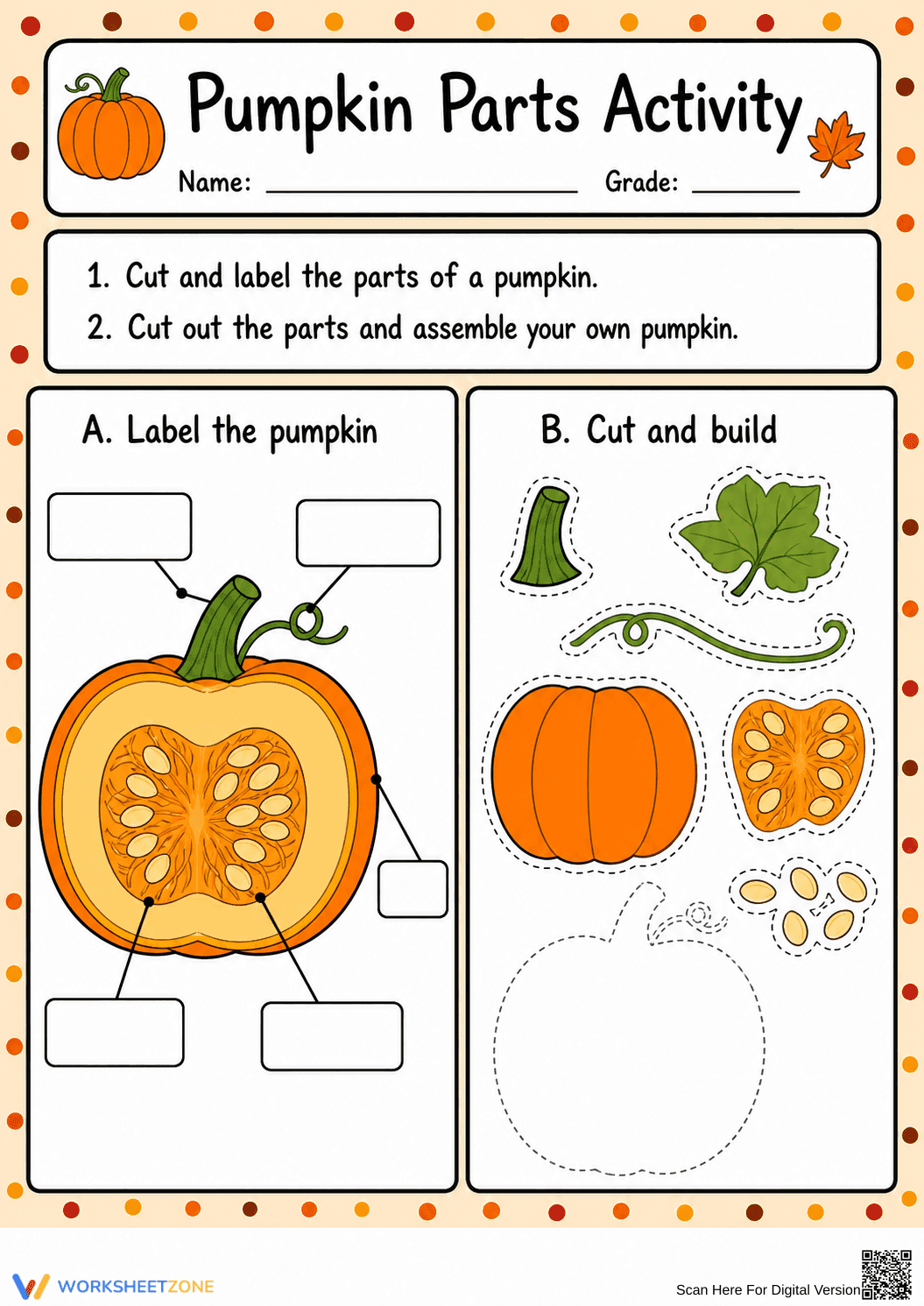
This Grade 4 science worksheet helps students identify and label the internal and external structures of a pumpkin. By cutting, pasting, and assembling a pumpkin model, learners develop a concrete understanding of plant anatomy and how specific parts function to support growth and survival.
At a Glance
- Grade: 4 · Subject: Science
- Standard:
4-LS1-1— Identify internal and external plant structures- Skill Focus: Plant Anatomy & Labeling
- Format: 8 pages · 7 problems · Answer key included · PDF
- Best For: Hands-on science centers
- Time: 20–30 minutes
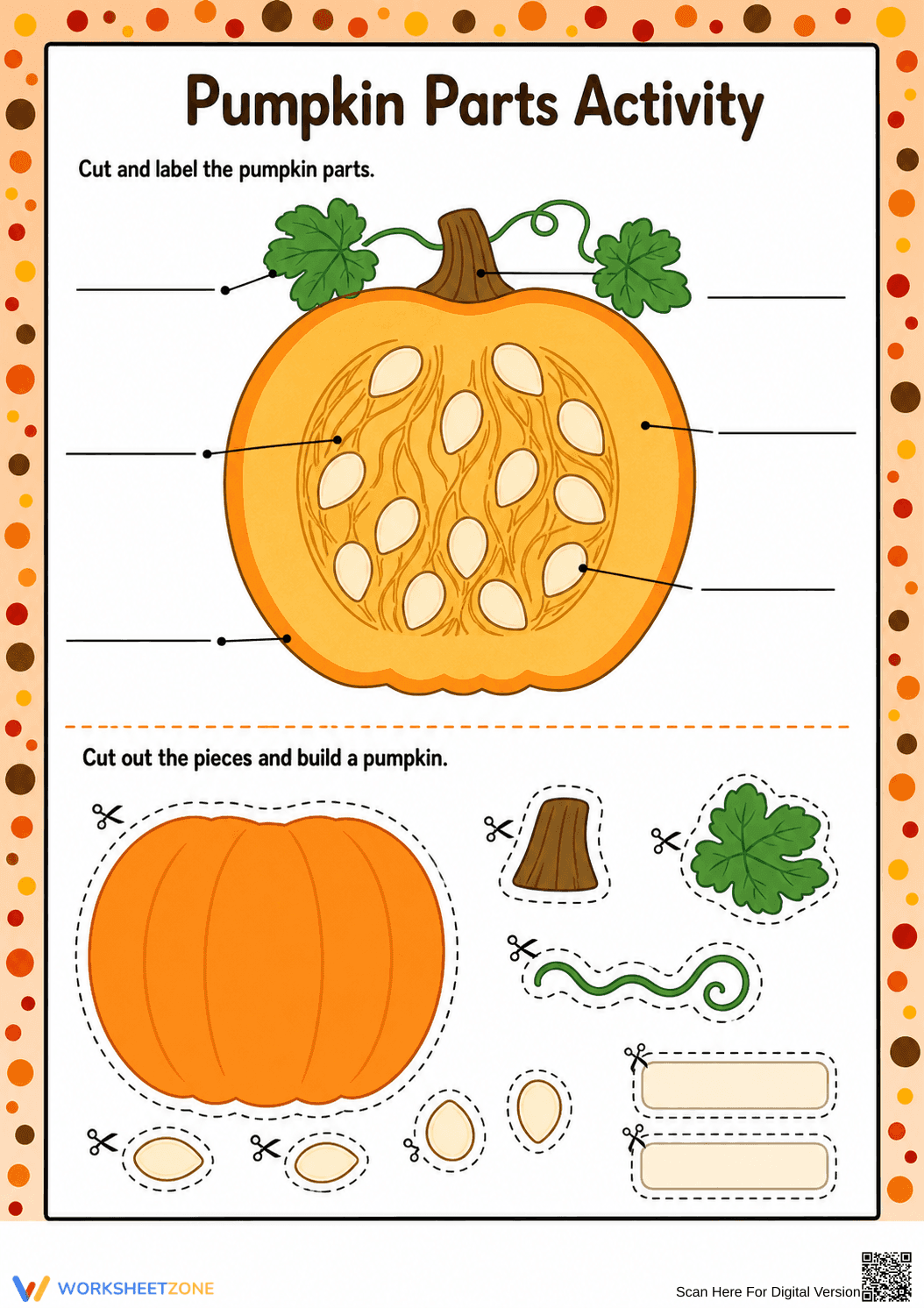
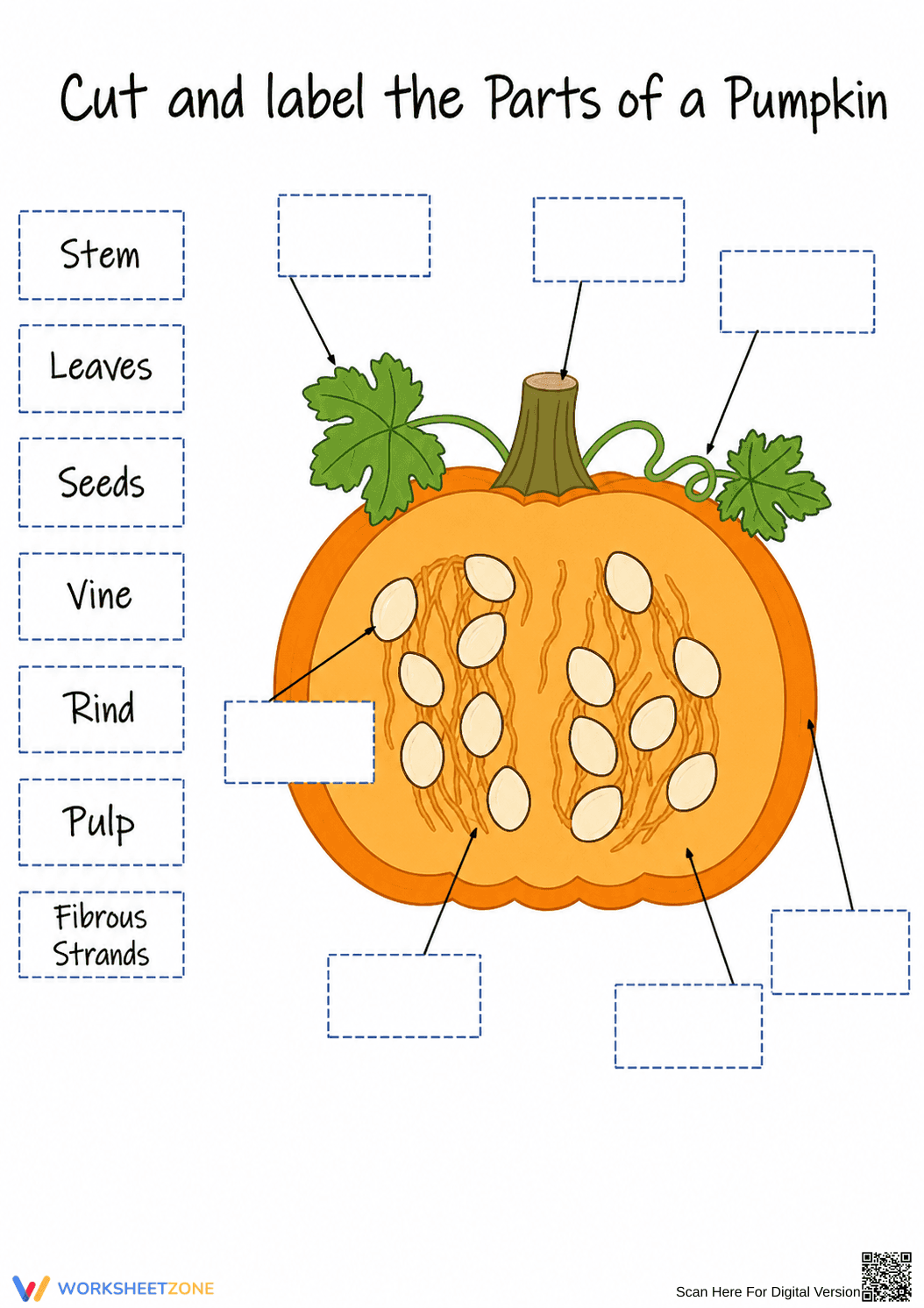
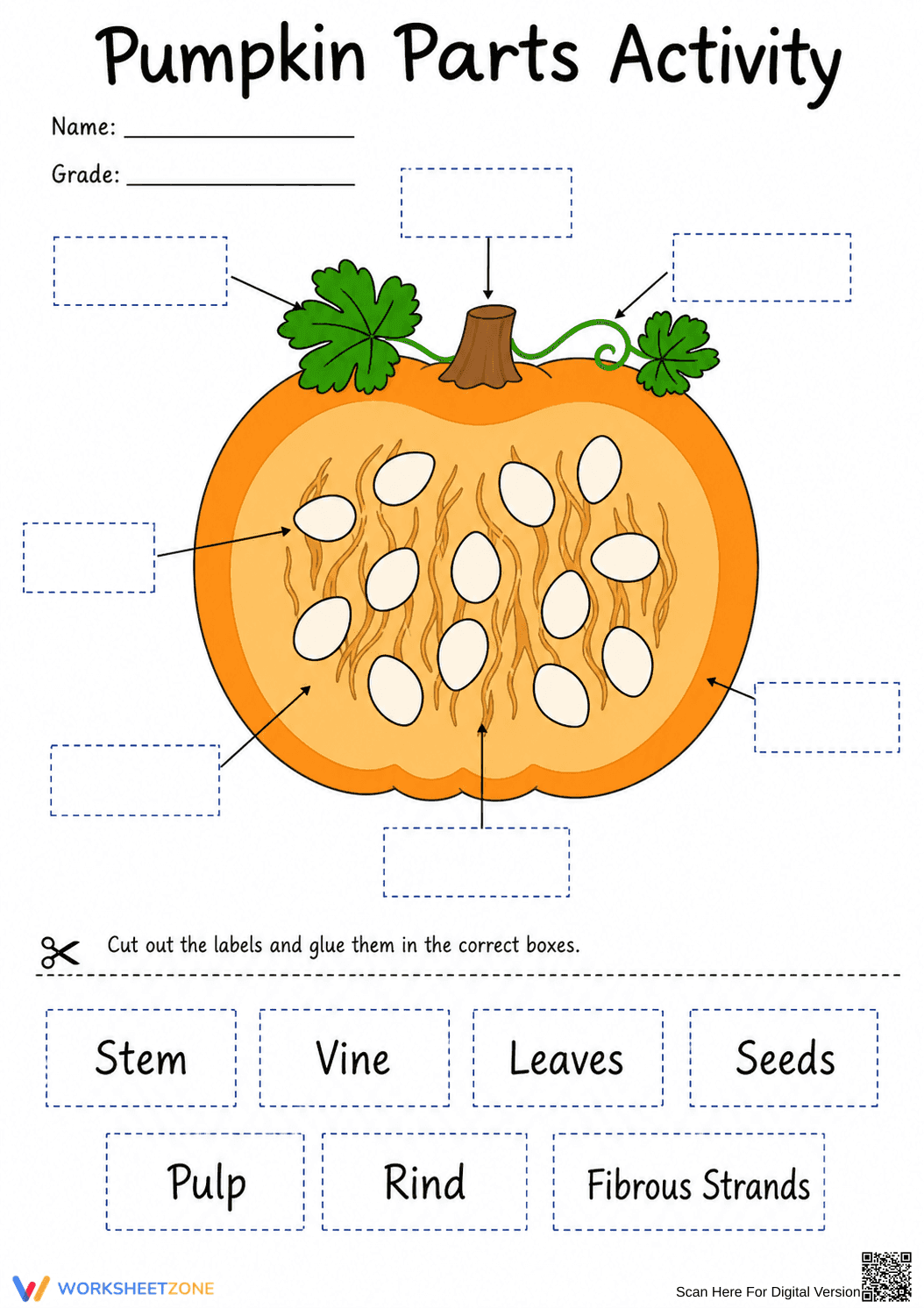
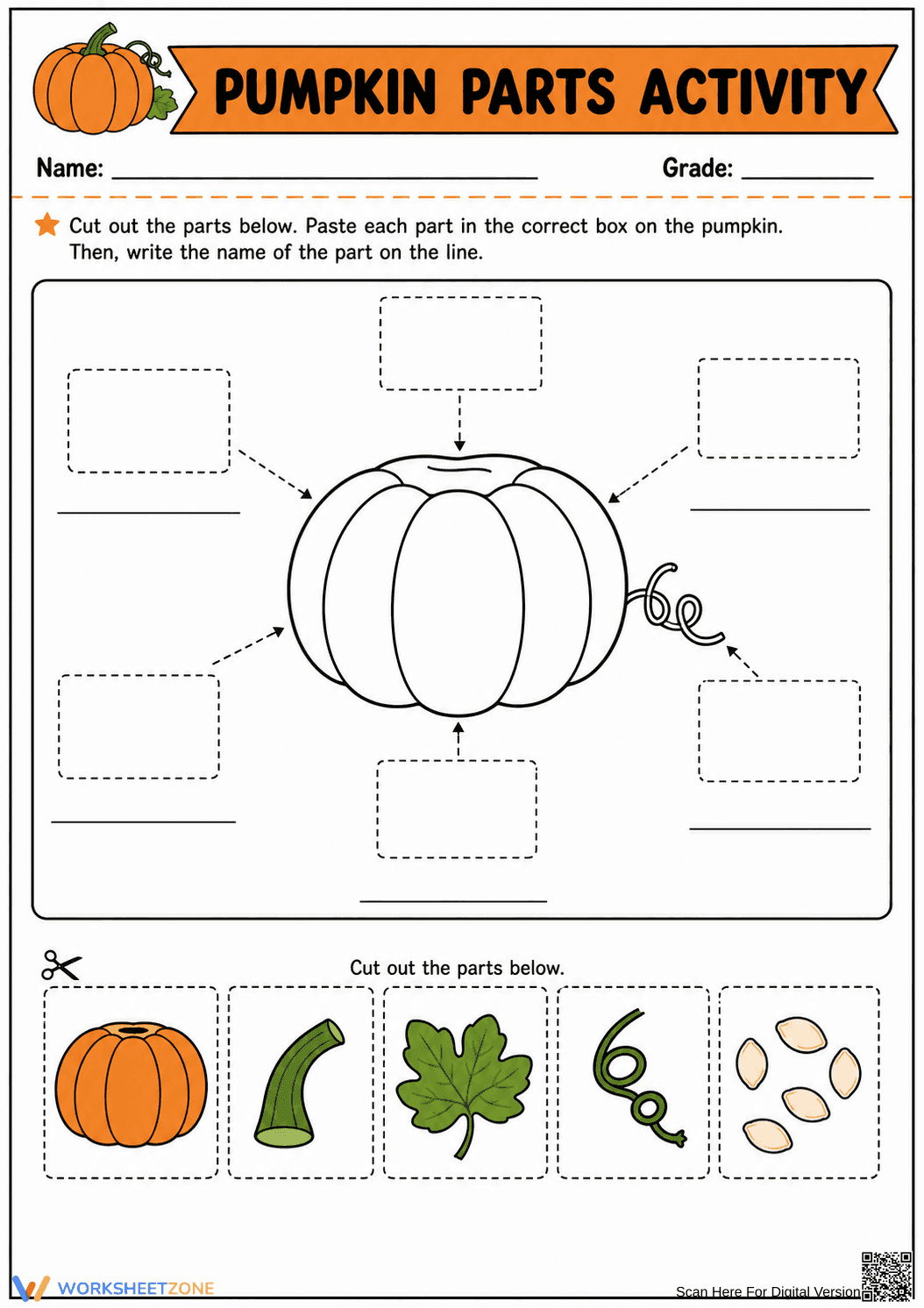
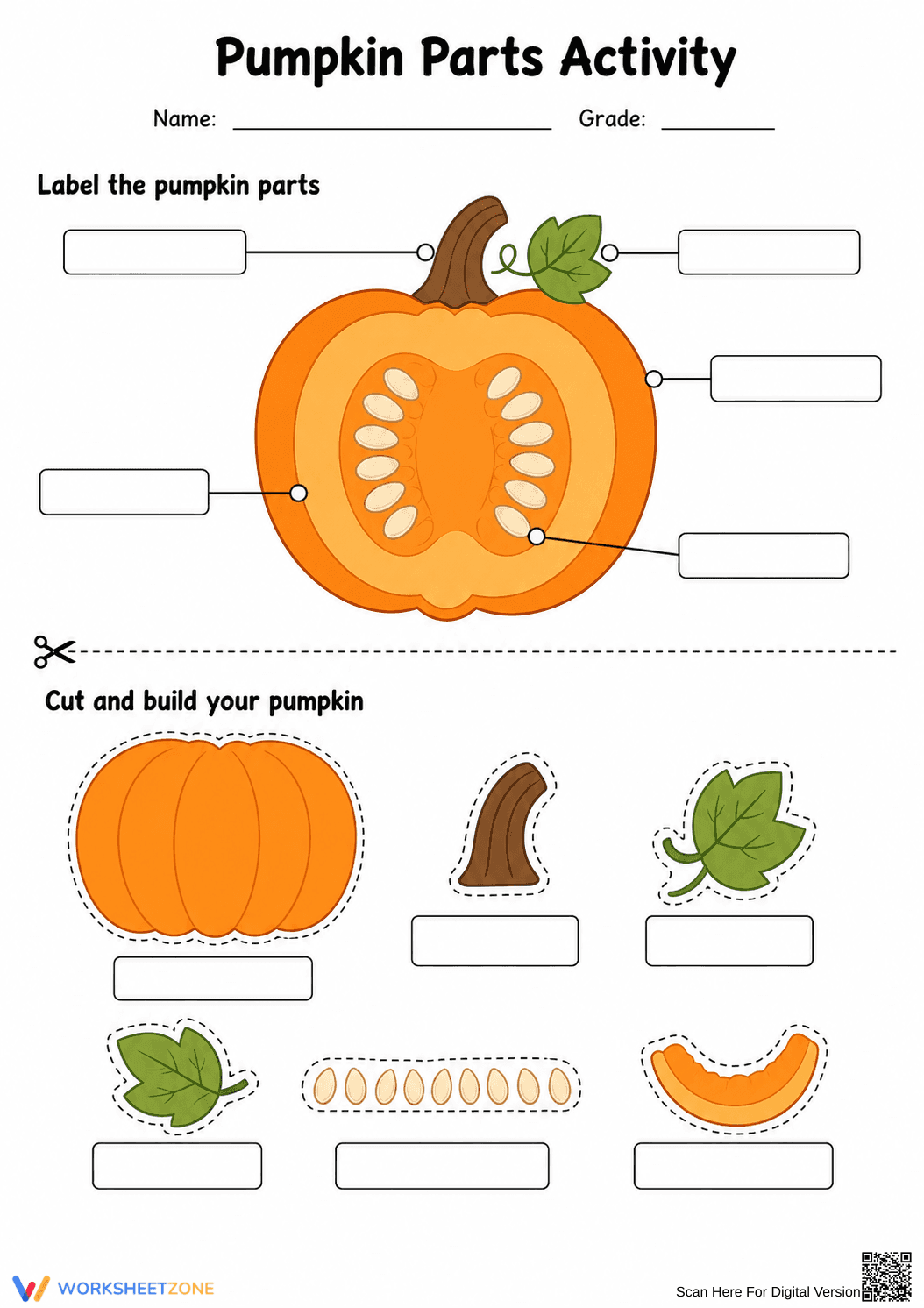
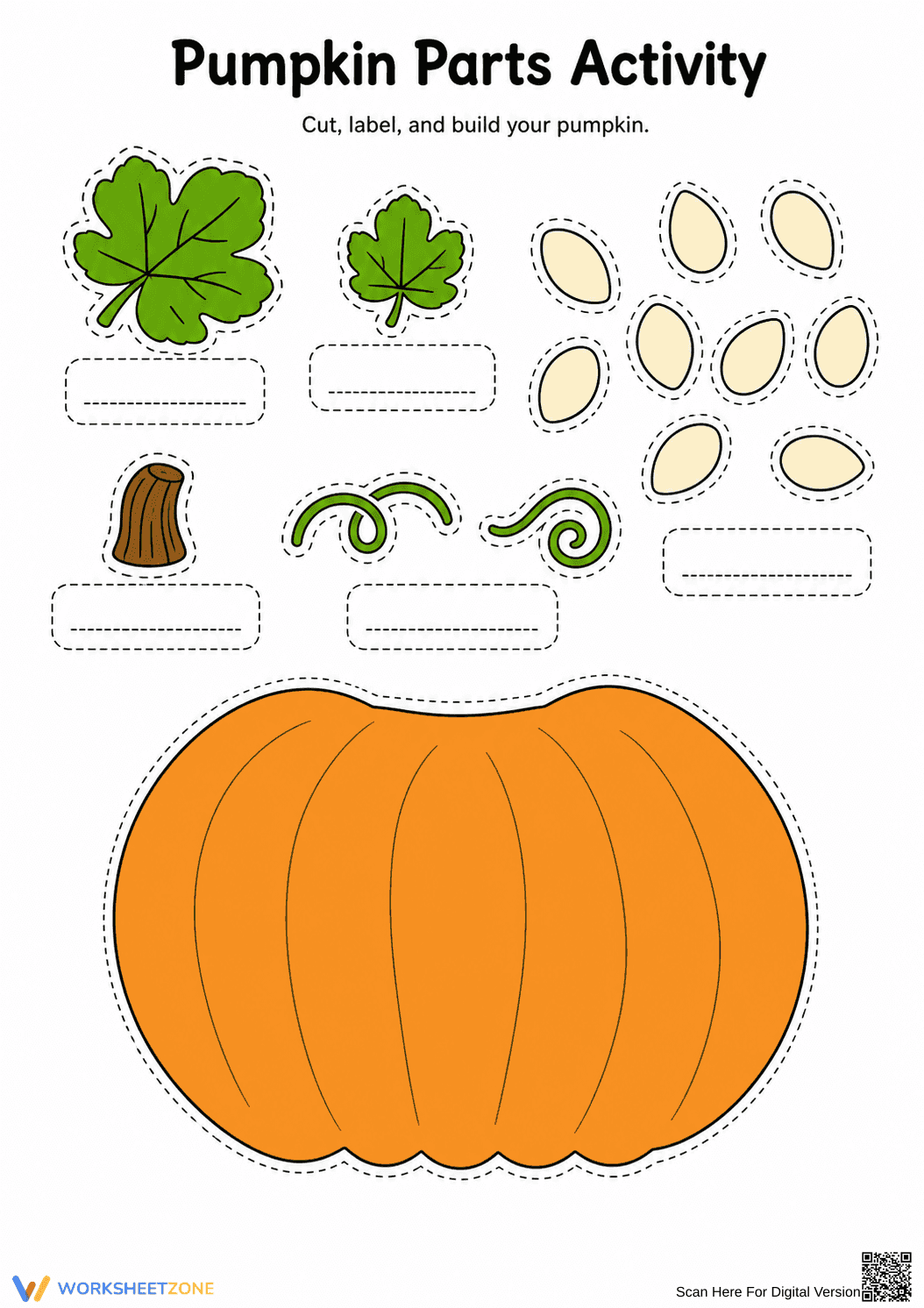
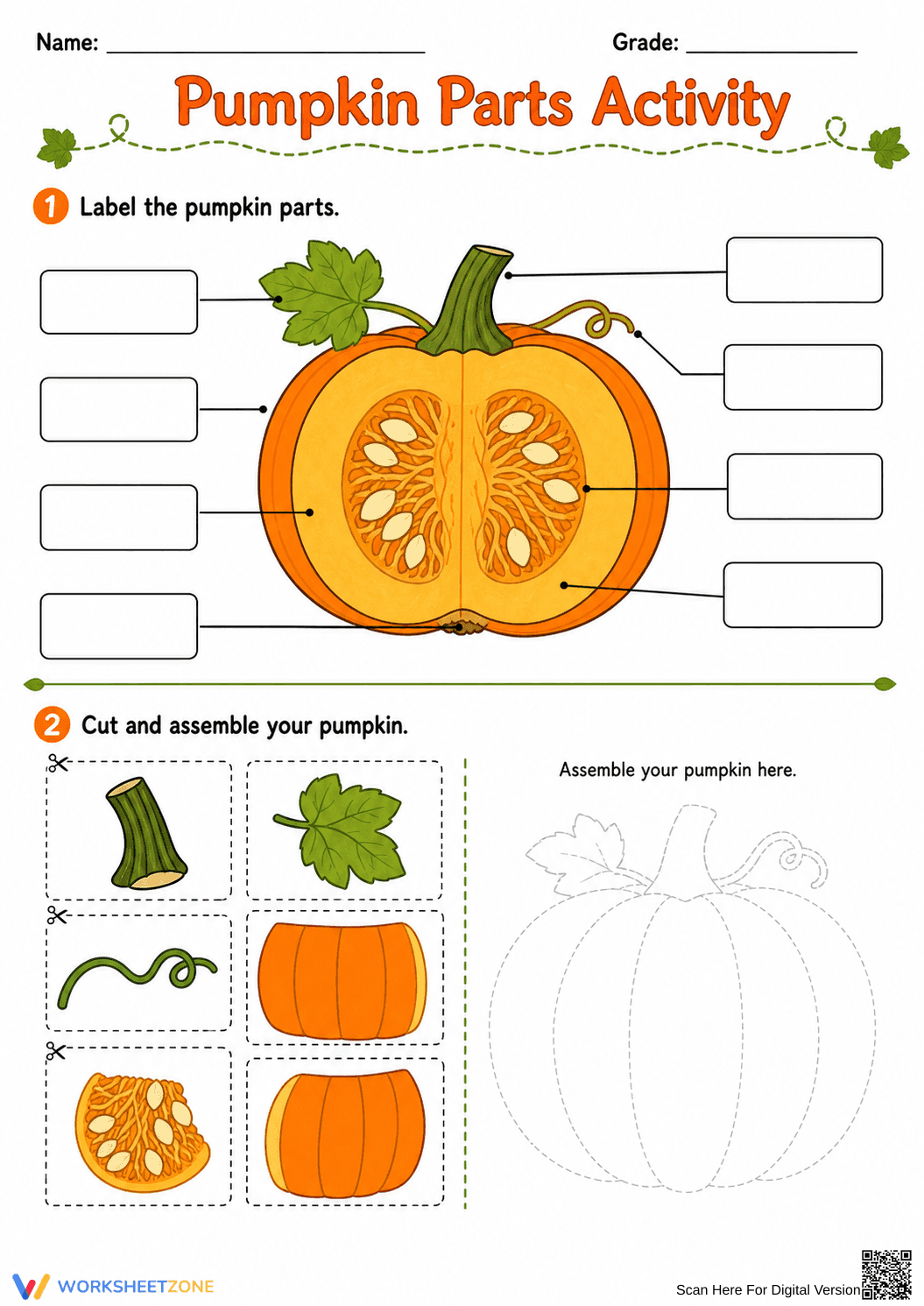
This comprehensive packet includes eight pages of interactive activities focused on pumpkin anatomy. Students will find diagram labeling tasks, cut-and-paste word banks, and a complete build-a-pumpkin craftivity. The resource features clear, bold outlines for easy cutting, distinct sections for the stem, leaves, seeds, vine, rind, and pulp, plus a full answer key to streamline teacher grading.
- Below grade: Features cut-and-paste word banks where students match pre-written labels to the correct pumpkin parts, reducing writing demands while building vocabulary.
- On grade: Requires students to independently write the names of the pumpkin parts in blank boxes using a provided word bank, reinforcing spelling and recall.
- Above grade: Challenges students to cut out individual pumpkin components and assemble a complete model from scratch, demanding higher-order spatial reasoning and anatomical understanding.
All three versions are included to ensure every learner can access the material.
Aligned to 4-LS1-1: Construct an argument that plants and animals have internal and external structures that function to support survival, growth, behavior, and reproduction. This activity specifically targets the identification of these external and internal plant structures. Both standard codes can be copied directly into lesson plans, IEP goals, or district curriculum mapping tools.
This resource works perfectly as a hands-on science center during a fall biology unit. Teachers can introduce the vocabulary during direct instruction, then assign the labeling and assembly tasks for independent practice. As a formative assessment tip, observe students as they assemble the physical model to ensure they correctly place internal parts (seeds, pulp) versus external parts (rind, vine). Expected completion time is 20 to 30 minutes.
Designed for Grade 4 science students, this activity includes built-in differentiation to support diverse learning needs, from fine-motor scaffolding to advanced spatial tasks. It pairs excellently with a non-fiction reading passage about the pumpkin life cycle or a classroom anchor chart detailing plant structures.
Integrating hands-on modeling with vocabulary acquisition significantly improves student retention of scientific concepts. According to a ScienceDirect TpT Analysis, interactive diagramming helps learners transition from abstract concepts to concrete understanding. By aligning with 4-LS1-1 to identify internal and external plant structures, this activity ensures students are not just memorizing terms, but actively engaging with the anatomical makeup of a plant. The physical act of cutting, sorting, and pasting the components reinforces spatial memory and cognitive mapping. This multimodal approach supports diverse learning styles, allowing students to physically manipulate the subject matter. When students construct their own models, they demonstrate a deeper comprehension of how individual parts contribute to the whole organism, laying a strong foundation for advanced biological studies.


