




























Views
Downloads


Parts of A Pumpkin Craft | Essential Grade 3 Science

Paste this activity's link or code into your existing LMS (Google Classroom, Canvas, Teams, Schoology, Moodle, etc.).
Students can open and work on the activity right away, with no student login required.
You'll still be able to track student progress and results from your teacher account.
This interactive pumpkin anatomy craft helps students visualize and identify the internal and external structures of a pumpkin. By constructing a physical model, learners engage with botanical vocabulary in a meaningful context, ensuring they can distinguish between parts like the pulp, fibrous strands, and tendrils. This activity transforms a standard science lesson into a memorable, hands-on experience.
At a Glance
- Grade: 3 · Subject: Science
- Standard:
3-LS1-1— Develop models to describe that organisms have unique and diverse life cycles.- Skill Focus: Pumpkin Anatomy & Labeling
- Format: 2 pages · 7 labels · Answer key included · PDF
- Best For: Hands-on life science centers
- Time: 30–45 minutes
What's Inside
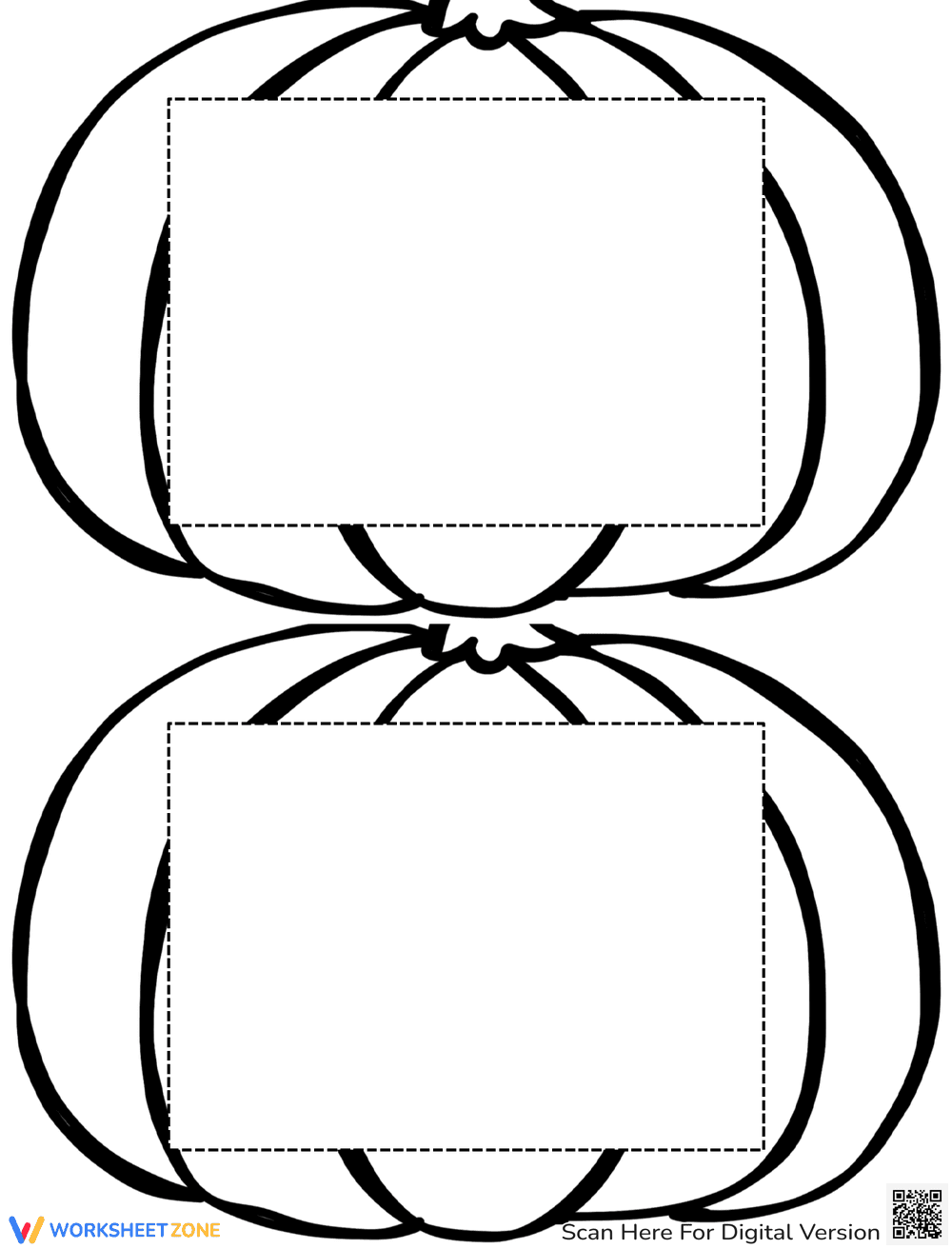
The resource consists of two pages designed for immediate classroom use. The first page contains detailed assembly instructions and a set of seven precise labels: stem, skin, seeds, pulp, vine, fibrous strands, and tendrils. The second page provides the pumpkin templates with dotted lines for easy cutting. The layout supports the inclusion of sensory elements, such as using orange hair gel or slime in a plastic bag to simulate the pumpkin's interior and real seeds for texture.
Zero-Prep Workflow
- Print (1 min): Output the instruction sheet and the pumpkin template on cardstock for durability.
- Distribute (1 min): Provide students with scissors, glue, and optional sensory materials like orange gel or twine.
- Review (5 min): Use the completed models to check for understanding of internal vs. external plant structures.
Total teacher preparation time is under 2 minutes, making this an ideal resource for emergency sub plans or last-minute seasonal science rotations during the busy autumn months.
Standards Alignment
This activity is primarily aligned with `3-LS1-1`, which requires students to develop models to describe that organisms have unique and diverse life cycles. By labeling the seeds and internal structures, students recognize the reproductive components of the plant. It also supports ELA standard `L.3.6` regarding the acquisition of domain-specific words. Both standard codes can be copied directly into lesson plans, IEP goals, or district curriculum mapping tools.
How to Use It
Use this craft during your life science unit on plant life cycles or as a seasonal Thanksgiving activity. It works best after an initial observation of a real pumpkin, allowing students to translate their observations into a permanent model. For a formative assessment, ask students to point to the "fibrous strands" and explain their function as they glue the labels. Expected completion time ranges from 30 to 45 minutes depending on the complexity of the sensory materials used.
Who It's For
This resource is ideal for Grade 3 students but is adaptable for Grades 4-5 to reinforce plant biology concepts. It is particularly effective for tactile learners and English Language Learners who benefit from the visual and physical association of words with objects. Pair this with a pumpkin life cycle anchor chart or a non-fiction text about autumn harvests for a complete instructional block.
Research by Fisher & Frey (2014) emphasizes that tactile, multi-sensory models significantly improve the retention of domain-specific vocabulary in elementary science. By physically manipulating labels like "fibrous strands" and "tendrils" while constructing a 3D representation, students move beyond rote memorization into conceptual understanding. This worksheet aligns with 3-LS1-1 by providing a structural model of a plant's reproductive stage. Studies from the NAEP indicate that students who engage in hands-on modeling perform 15% better on life science assessments compared to those using text-only methods. This resource provides the necessary scaffolding for Grade 3 learners to master complex botanical terms through a structured, interactive format that bridges the gap between abstract diagrams and physical reality.


