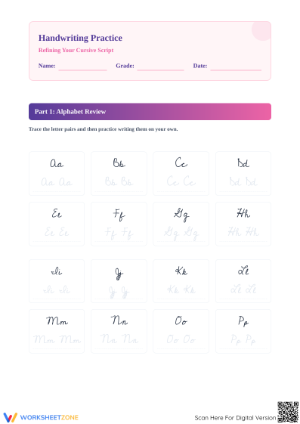
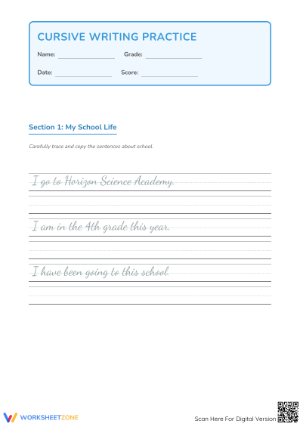
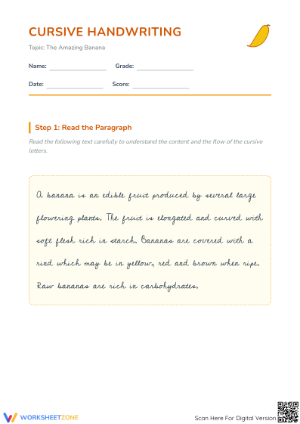
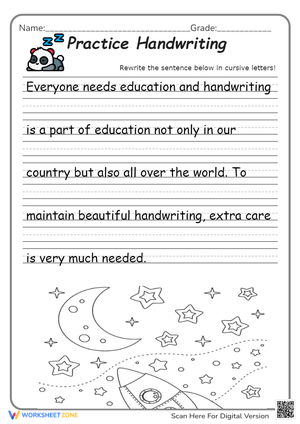
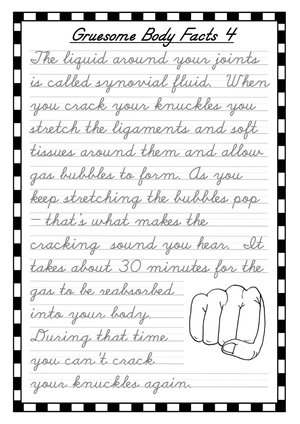
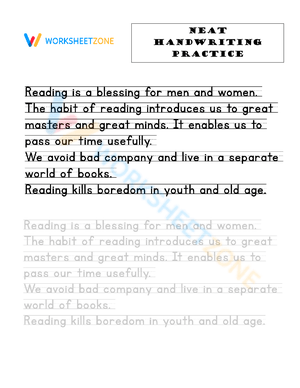
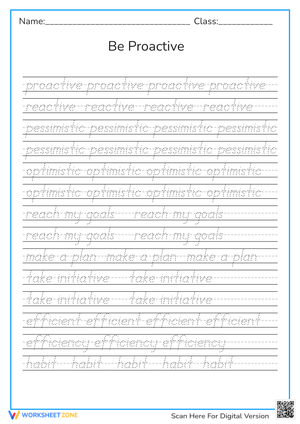
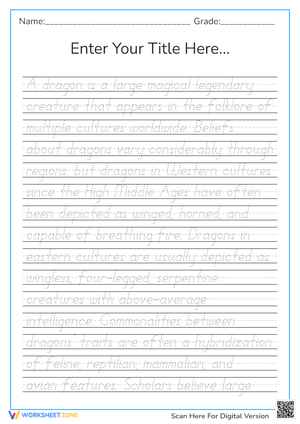
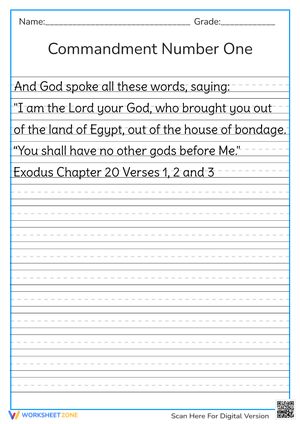
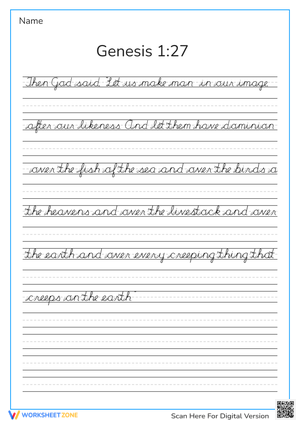
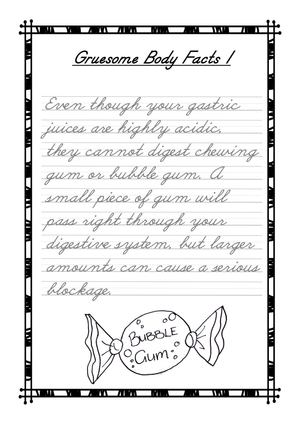
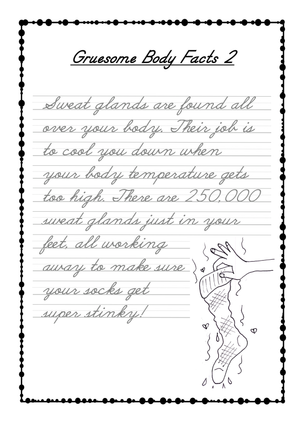
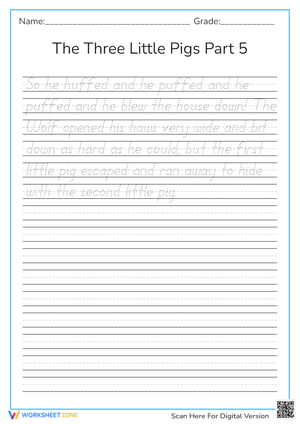
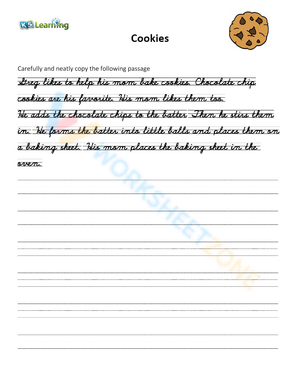
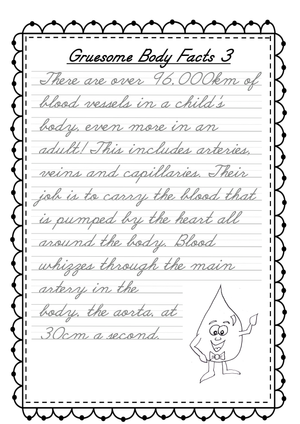
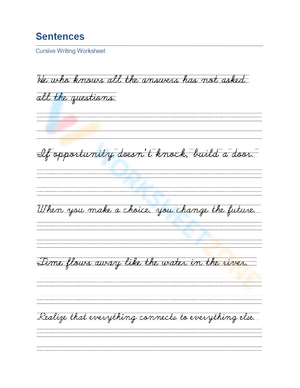
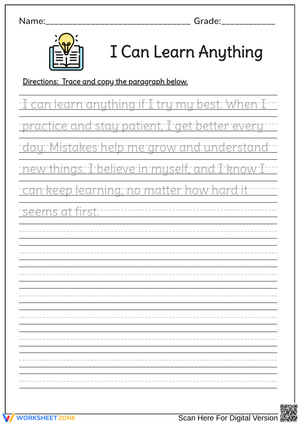
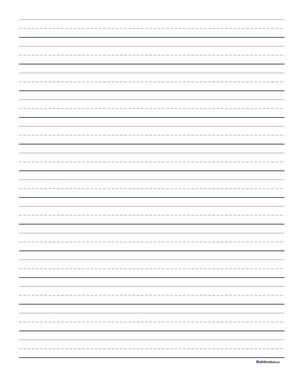
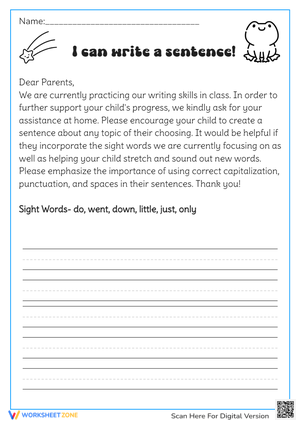
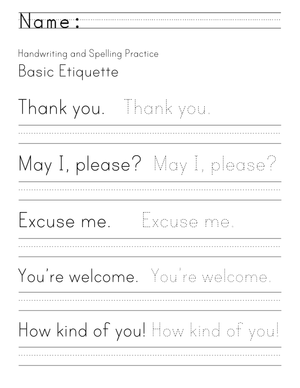
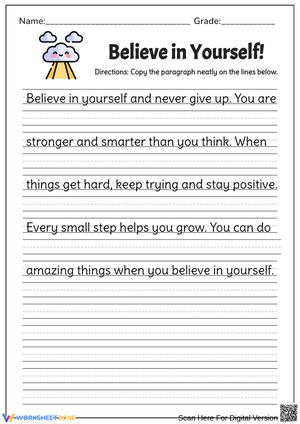
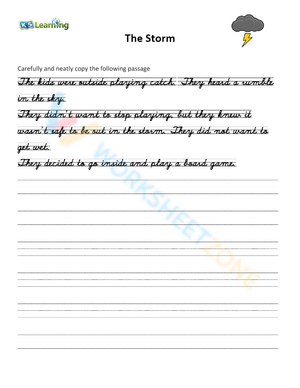
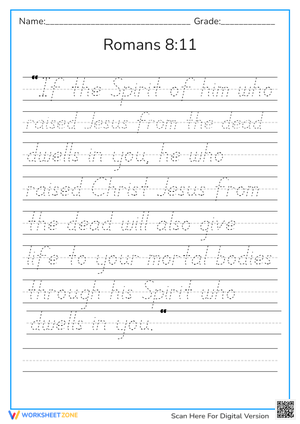
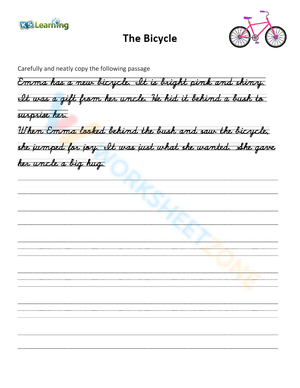
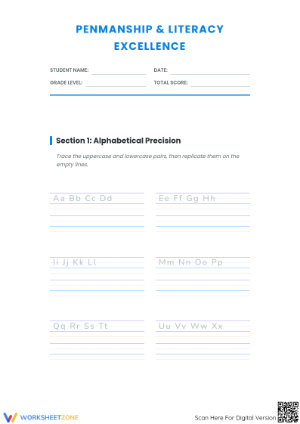
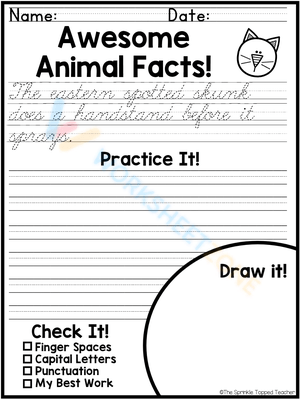
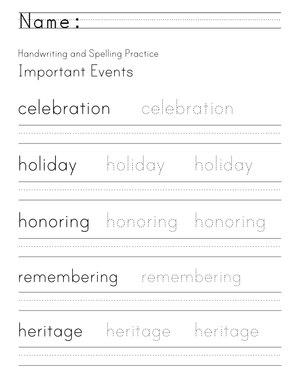
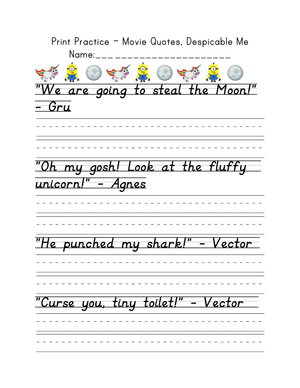
These improve handwriting pdf worksheets for 4th grade address the specific place where legibility collapses for most upper elementary students — not on a single letter but across a full sentence or paragraph, where size inconsistency, word crowding, and baseline drift accumulate line by line. Each worksheet targets one of the core habits that determines whether a student's written work can be read back and revised: consistent letter height, clear word spacing, margin alignment, and stamina across longer passages. Teachers get a ready-to-print set that fits into morning warm-ups, writing centers, small-group intervention, and sub plans without additional preparation.
The Handwriting Habits That Break Down in Grade 4
A well-designed set of improve handwriting pdf worksheets for 4th grade has to move past letter-formation drills because fourth graders already know how letters are made. The gap is between knowing and doing — between writing a neat word in isolation and maintaining that same quality across six sentences of a reading response or content-area summary. These worksheets target six habits that show up consistently as problems in actual student writing at this level:
- Letter size consistency: Upper-case and lower-case proportions stay stable across a full word and sentence, not just the opening letters.
- Word spacing: Visible, even gaps between words so written responses remain readable during revision and teacher review.
- Baseline alignment: Letters sit on the line rather than floating above or drifting below by the third or fourth line of a paragraph.
- Left margin awareness: Students start each new line at the margin instead of drifting inward as a paragraph continues.
- Punctuation and capitalization in context: Conventions are practiced inside real sentences, treating penmanship and writing mechanics as connected rather than separate.
- Stamina across longer passages: Short paragraph tasks ask students to maintain neatness past the first two lines — exactly where habits most commonly slip.
That last item carries the most practical weight. A student who produces one sentence neatly may write a six-sentence paragraph where letter sizes range from tiny to oversized and words merge at line endings. Stamina isn't a bonus — it's the actual writing condition students face on reading responses, exit tickets, and content-area assessments every week.
Common Handwriting Errors Teachers Should Anticipate and Correct
The most persistent errors at this level aren't careless. Students often inflate letter size at the end of a line because they're running out of space and unconsciously crowding. The word "enough" becomes "enoug h" with a capital-sized h wedged against the right margin. Students who write carefully on line one often stop self-monitoring by line three — and the legibility on line four of a paragraph is frequently worse than a first grader's rough draft.
Spacing errors tend to be positional rather than random. Students leave reasonable gaps between the first few words of a sentence, then close them entirely as the sentence grows longer. A sentence like "The main character felt lonely because no one listened" often appears in student work as "The main character felt lonelyb ecause no one listened" — the break falls inside a word rather than between them. These worksheets include sentence tasks long enough to surface that pattern so teachers can address it directly rather than waiting for it to appear on a graded assignment.
Baseline drift is most visible in responses written during independent work time, when no one is checking. Students who sit at a slight angle or hold their paper without securing it show a climbing baseline within four or five lines. That's usually a physical setup issue rather than a knowledge gap — and it's worth checking paper position and seating before adding more practice repetitions. A strong worksheet paired with a poor physical setup produces slow improvement at best.
Smart Ways to Work These Worksheets Into Your Week
Short and consistent beats long and occasional. Most fourth-grade teachers who use handwriting practice effectively run it for five to eight minutes, not as a standalone subject block. The question is where to drop those minutes without displacing other instruction.
Morning warm-up is the most reliable slot. One worksheet, one focus skill, completed before the day accelerates — that structure makes it easy to give fast, specific feedback. "Check your word spacing before you flip this over" takes ten seconds and trains students to self-monitor before the teacher sees the work. After two or three weeks of that routine, students start catching their own errors on actual assignments.
Writing center rotations are another practical option. Place a worksheet at one station alongside pencils and a laminated self-check card listing three questions: Did every word have a space after it? Did my letters stay the same height? Can someone else read every word? That card handles the feedback work without interrupting other groups.
One particularly effective move is to use a worksheet immediately before the writing task it mirrors. If the class is about to draft a reading response, a sentence-copying worksheet using academic language primes attention to legibility right before students begin. Transfer to the actual assignment is noticeably stronger when the warm-up matches the writing type that follows. If students are heading into content-area notes, a short informational paragraph makes a natural practice text. The improve handwriting pdf worksheets for 4th grade in this set include enough variety in sentence content to make that kind of topic-aligned pairing workable most weeks.
Adjusting Each Worksheet for the Full Range of Writers in Your Room
Grade 4 classrooms hold at least three distinct handwriting profiles. Some students write quickly and loosely — ideas are present but letters crowd each other across every line. Others write slowly and carefully, producing neat work on short tasks but fatiguing before the paragraph ends. A smaller group has fine-motor challenges that affect grip, pressure, and size control in ways that practice repetitions alone won't resolve.
For fast but messy writers, the goal is slowing down enough to monitor quality. Assign the full worksheet but ask them to underline the one sentence they're most satisfied with. That brief reflection step shifts attention from completion speed to quality without adding teacher prep time.
For students who fatigue early, trim the task rather than simplifying the worksheet. Assign the first half only and measure consistency across those lines. Improvement on fewer lines is genuine improvement, and it builds toward longer stamina over several weeks.
Students with fine-motor challenges benefit from setup adjustments alongside the practice itself — paper tilted slightly clockwise, a pencil grip aid if pressure is inconsistent, a firm surface under the worksheet. OT Toolbox and similar occupational therapy resources make the point that position and tool adjustments often do more than additional repetitions when the underlying issue is motor-based. If a student makes the same errors after several weeks of practice, check the physical conditions before adding more worksheets.
For students who resist handwriting practice because it feels too young, the sentence content matters considerably. A worksheet built around a topic sentence about a historical event or a science observation holds attention far better than copying "The cat sat on the mat." Age-respectful content reduces pushback and keeps the focus on writing habits rather than on what's being copied.
Frequently Asked Questions
Should these worksheets focus on print, cursive, or both?
That depends on what students are expected to produce in class. If daily assignments use manuscript, these worksheets strengthen manuscript legibility. If cursive is part of fourth-grade instruction, use cursive-format resources for that targeted review. Some classrooms run both in small amounts, which works as long as the practice format matches what students actually use for graded work — not a format reserved only for practice sheets.
How often should a teacher use these worksheets in a week?
Three to four short sessions per week outperform one longer session. Five minutes of focused practice with specific feedback on one skill — spacing, alignment, or size — produces more consistent improvement than a twenty-minute block once a week. The improve handwriting pdf worksheets for 4th grade in this set are formatted to support exactly that kind of short, targeted use without requiring lesson planning beyond choosing the focus skill for the day.
What if a student's handwriting doesn't improve despite regular practice?
Check the physical setup first: paper position, grip, seating height, and pencil pressure. A student writing with a tight, fatigued grip will not improve on letter size and spacing regardless of how many worksheets they complete. If setup adjustments don't help and the same errors remain consistent across weeks, a referral to an occupational therapist may be appropriate. These worksheets produce the most reliable results for students whose handwriting issues are habit- and attention-based rather than motor-based.
Can these worksheets be used in small-group intervention?
Yes — they work well in pull-out or small-group settings where a teacher can directly observe grip, posture, and line placement. In a group of three or four students, immediate and specific correction becomes practical in a way that whole-class instruction doesn't allow. The set also fits into individual intervention folders for students who need a few extra focused minutes each day without pulling them from other instruction for an extended block.












 Interactive Worksheet Maker
 Quiz Maker
 Word Search Maker
 Crossword Puzzle Maker
 Word Scramble Generator
 Sentence Scramble Generator
 Handwriting Worksheet Generator
 Name Tracing Generator
 Fill In The Blank Generator




 BACK TOSCHOOL