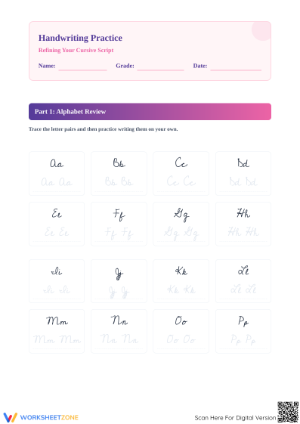
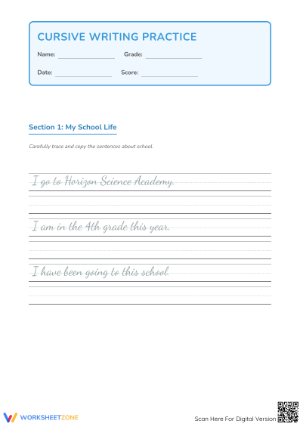
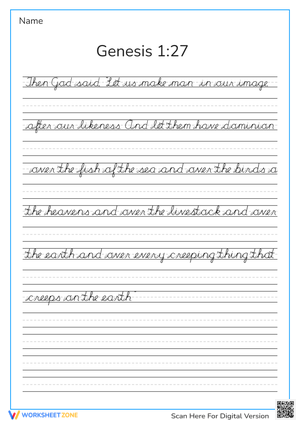
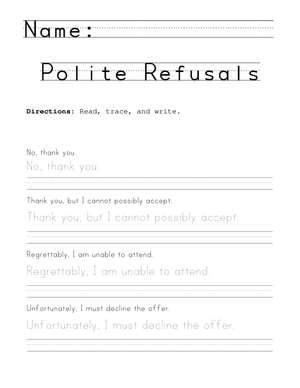
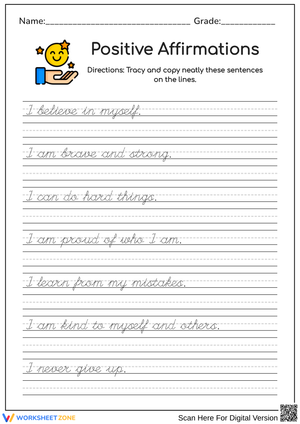
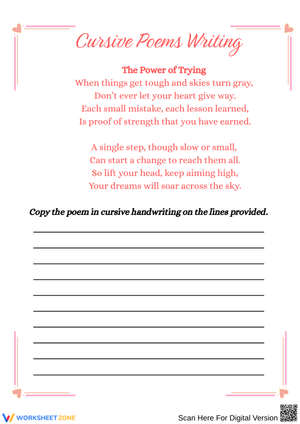
These daily handwriting worksheets for 4th grade address legibility, consistent letter sizing, and sentence-level writing control—skills that don't improve much from weekend to weekend but do respond to brief, repeated practice built into the school day. By Grade 4, most students have moved past the stage of needing alphabet drills; what they lack is the ability to maintain neat, correctly sized letters across a full sentence when they're also managing punctuation, spacing, and meaning at the same time.
What Each Worksheet Covers
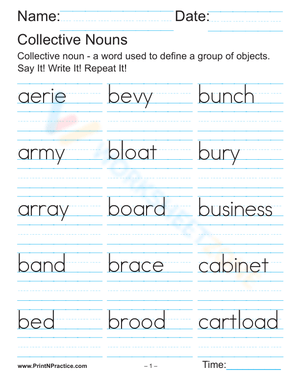
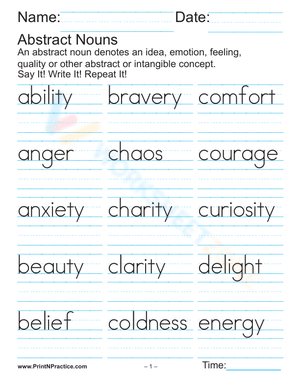
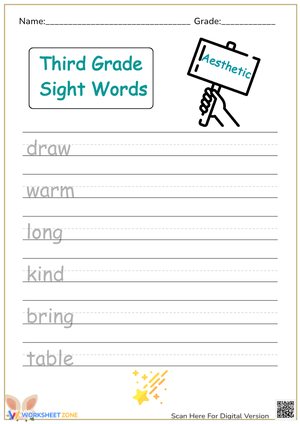
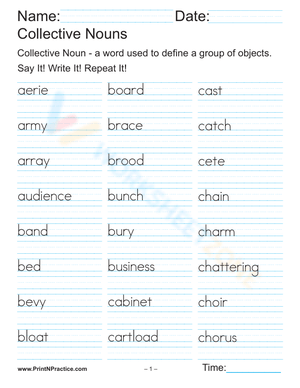
The set rotates through four task types: sentence copying, correction-and-rewrite, short passage copying, and vocabulary-in-context sentences. That rotation gives each worksheet a distinct instructional purpose while keeping the format familiar enough that students can work without much direction.
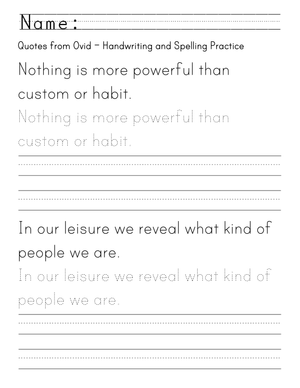
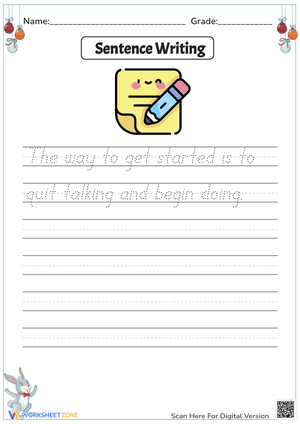
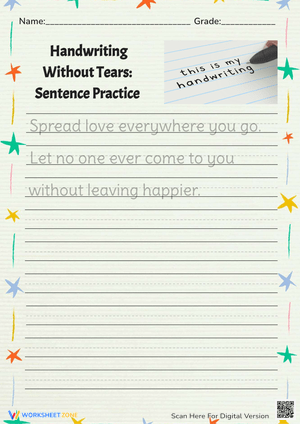
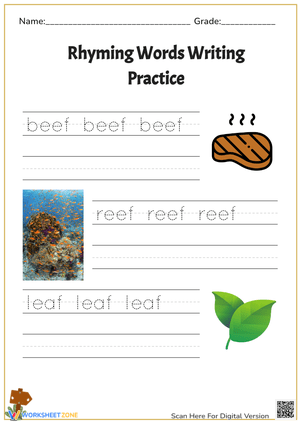
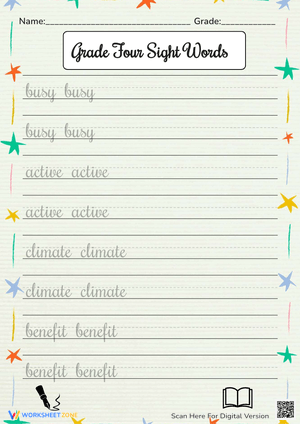
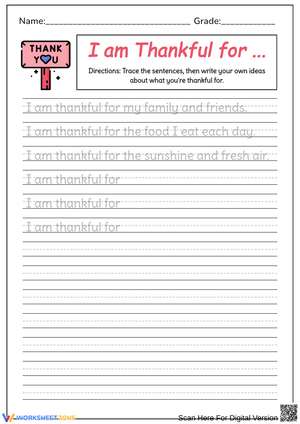
- Sentence copying: Students reproduce one or two model sentences with close attention to letter height, word spacing, and end punctuation placement.
- Correction and rewrite: Students identify a capitalization or punctuation error, then write the corrected sentence neatly on the lines below.
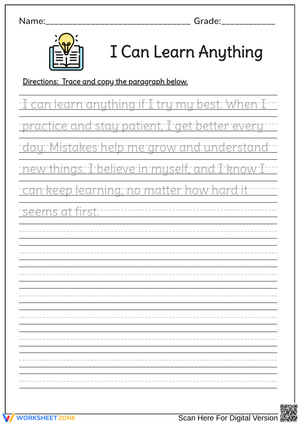
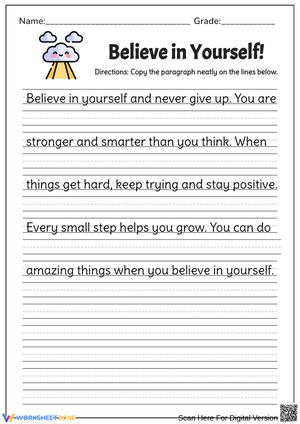
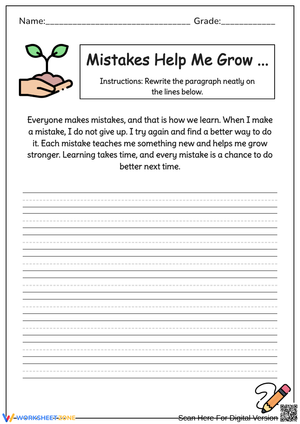
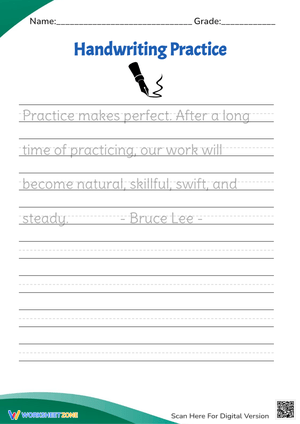
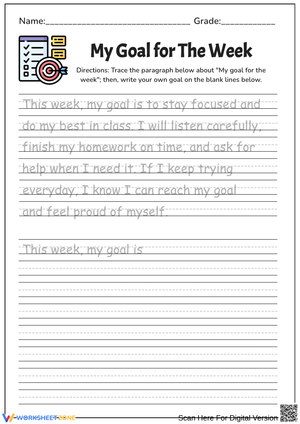
- Short passage copying: Two or three connected lines develop writing stamina—students practice staying neat across more than a single sentence, which is the real demand of paragraph-length writing.
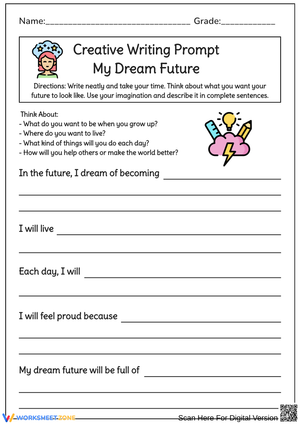
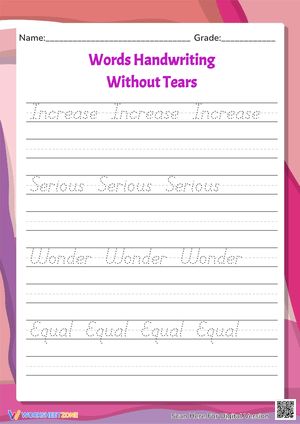
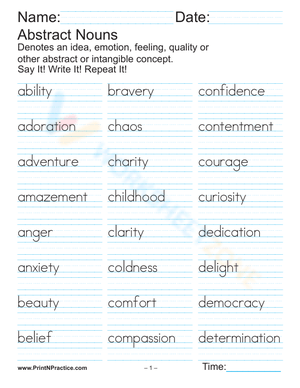
- Vocabulary sentences: Content words from current ELA, science, or social studies units appear in the task prompt, keeping handwriting time connected to subject-area language rather than running as a separate track.
- Self-check cues: A brief prompt at the bottom of each worksheet directs students to review their spacing, letter size, and capitals before turning the work in.
Layout matters as much as task design. Each worksheet gives students a clearly printed model, adequate line space, and an uncluttered page design. When the model is hard to read or the writing area is squeezed, students either rush or guess—neither builds the habit you're after.
Where Student Work Breaks Down
The most common breakdown is letter height consistency. Students who size their letters correctly in the first few words of a sentence tend to abandon that control by the end of the line—especially when the sentence contains a tricky word they have to think about. Ascending letters like l, h, and k drift to the same height as lowercase a or e, and descenders like g and p stop dropping below the baseline. That erosion shows up clearly on sentence-copying tasks because the model is right there for comparison.
Word spacing is the second place things collapse. Fourth graders who rush tend to compress the middle of a sentence—the first and last words look right, but everything in between runs together. The correction-and-rewrite tasks address this indirectly because students have to read the sentence carefully before rewriting it, which slows down the pencil-to-paper move just enough.
A third pattern worth watching: students handle sentence-initial capitals reliably but will lowercase a proper noun mid-sentence—a city name, a character name, a book title—when their attention is on letter formation rather than conventions. The correction tasks surface that lapse consistently, and once students know to watch for it, they start catching it in their own independent writing.
Working These Worksheets Into Your Weekly Lesson Plans
The daily handwriting worksheets for 4th grade fit best when the time and trigger are fixed. A floating practice—"whenever we have a few minutes"—tends to disappear by late September. The slots that hold are five to eight minutes of morning work before the first lesson, the transition after students return from specials, and a Friday best-copy task at the end of the literacy block.
A rotating day-by-day structure keeps planning minimal:
- Monday: Sentence copying—focus is consistent letter height and word spacing.
- Tuesday: Correction and rewrite—students fix one capitalization or punctuation error, then copy the corrected sentence neatly.
- Wednesday: Short passage copy—two or three lines, with the goal of maintaining neat alignment from the first word to the last.
- Thursday: Vocabulary sentences—students write subject-area words in neatly formed complete sentences.
- Friday: Best-copy task—one sentence from the week, written as carefully as possible and turned in as a brief formative check.
One small efficiency worth building in: use the same sentence on Monday for copying and on Tuesday in an edited version for the correction-and-rewrite task. Students who work through the sentence twice show noticeably more consistent spacing on the second attempt, and you have two samples to compare without creating any new material. The difference between a student's Monday copy and Tuesday rewrite tells you whether the problem is formation, attention, or rushing—three very different teaching responses.
Adjusting the Worksheets for a Range of Learners
The daily handwriting worksheets for 4th grade work across a wider range of ability levels than their format suggests, but they need deliberate adjustment to serve students at the edges of the group. For students still working on fine-motor control, assigning fewer lines from the same worksheet—one well-executed sentence rather than three rushed ones—shifts the focus from completion to quality. The self-check cue at the bottom becomes more meaningful when there's less volume competing for attention.
Students who finish quickly and write legibly without much effort respond well to a sentence expansion added at the end: after copying the model sentence, they write a follow-up sentence in the same neat hand. That keeps the practice from feeling like a chore to race through. For students with ongoing fine-motor concerns, reducing required output and allowing for a wider writing tool addresses the mechanical strain without changing the instructional target—and the worksheets create a documentation trail that supports conversations with parents or specialists when those concerns need follow-up.
Frequently Asked Questions
Should I use the print or cursive version of these worksheets?
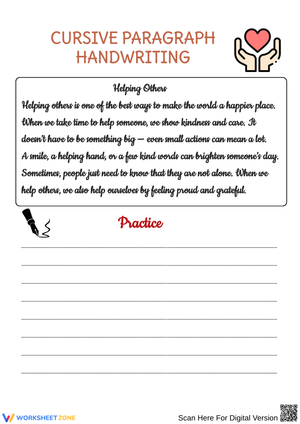
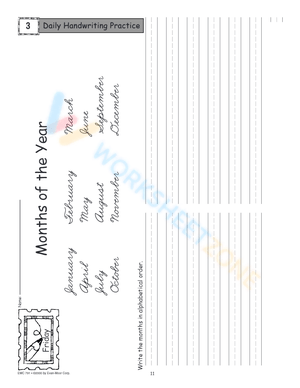
That depends on what your classroom currently expects. If students mostly print in their academic writing, print practice is the right choice. If cursive is part of current instruction, cursive or mixed-format options make more sense. Some teachers use both formats with the same sentence in the same week—students copy in print on one line and in cursive on the next, which turns the comparison into its own teaching point about connected versus unconnected letter strokes.
How much time should this take each day?
Five to ten minutes is the practical range. More than that turns the task into a writing lesson, which changes the purpose. Less than five minutes usually means students are copying without much attention to neatness. The goal is enough time to complete one task deliberately without the practice taking over the rest of the literacy block.
Can these worksheets go home as homework?
Yes. The tasks are self-contained and the directions are direct enough that a student can work independently without additional explanation. The limitation is that handwriting feedback has the most impact when a teacher examines the actual work—so pairing take-home practice with a brief in-class check is worth the extra minute.
How do these worksheets connect to grammar and language instruction?
The correction-and-rewrite tasks function as light grammar review: students encounter misused capitals, missing end punctuation, and occasional contraction errors, fix them, and copy the corrected sentence neatly. These daily handwriting worksheets for 4th grade aren't a substitute for direct grammar instruction, but they do keep conventions visible during the daily routine in a way that reinforces what students are learning in the language block.












 Interactive Worksheet Maker
 Quiz Maker
 Word Search Maker
 Crossword Puzzle Maker
 Word Scramble Generator
 Sentence Scramble Generator
 Handwriting Worksheet Generator
 Name Tracing Generator
 Fill In The Blank Generator




 BACK TOSCHOOL