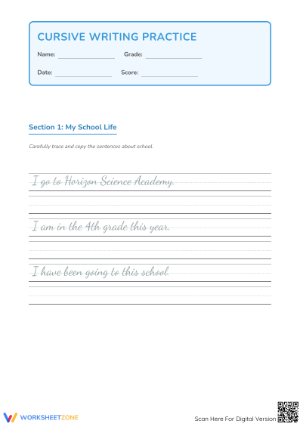
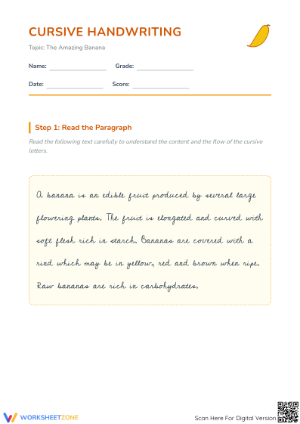
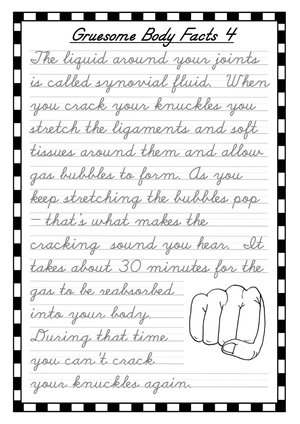
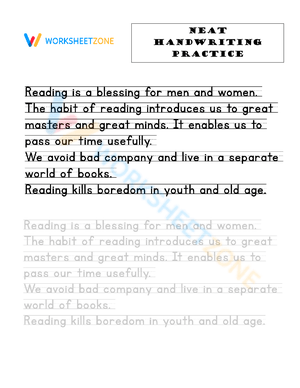
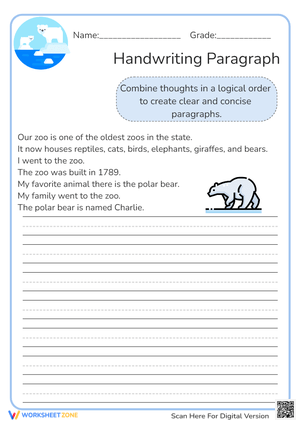
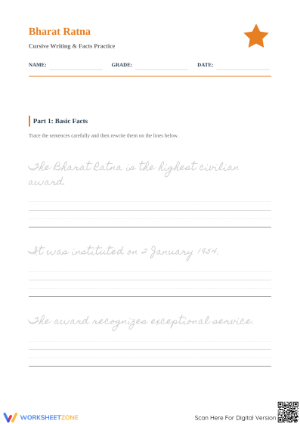
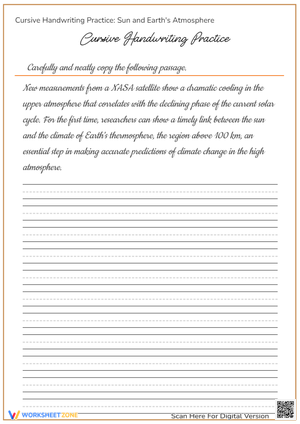
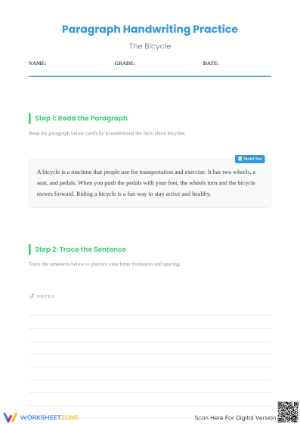
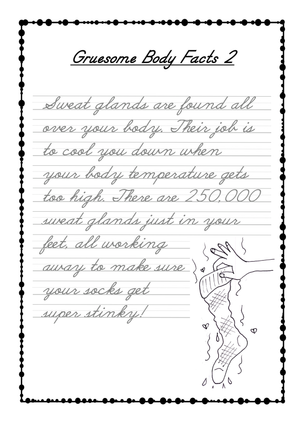
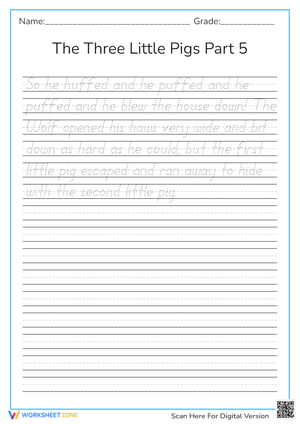
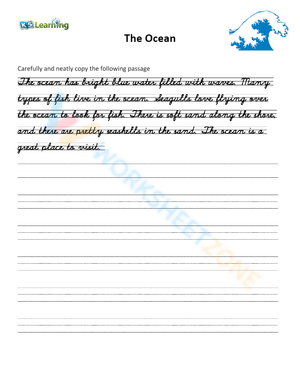
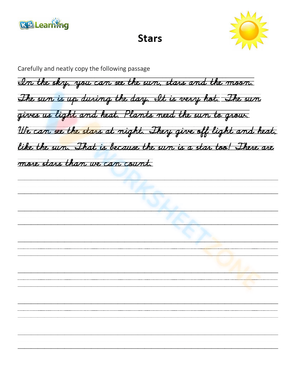
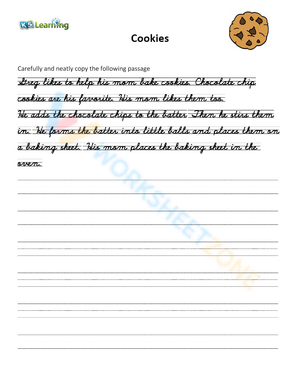
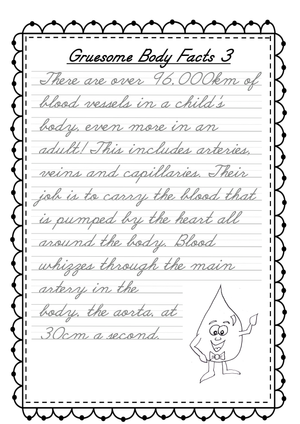
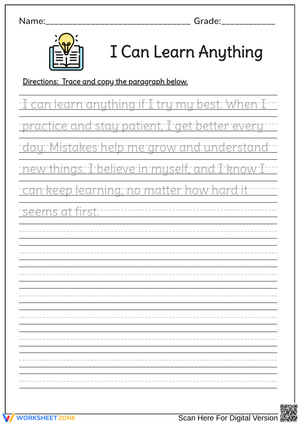
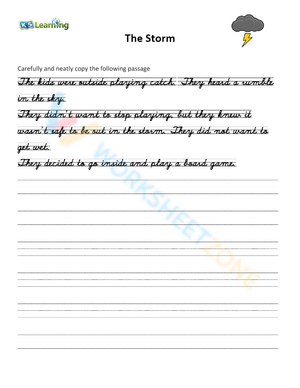
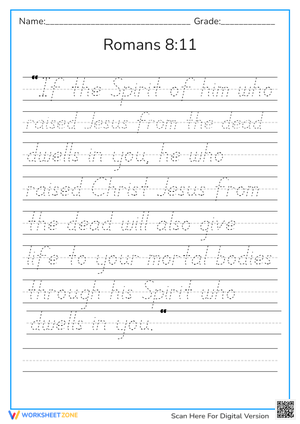
By 4th grade, students are past tracing single letters and copying short words. They need practice writing full paragraphs with consistent spacing, sizing, and letter formation while keeping up with the pace of daily writing assignments. Paragraph handwriting worksheets fill that gap, giving fourth graders structured, repeatable practice that mirrors what their handwriting actually needs to look like in a science notebook, a reading response, or a timed writing prompt.
Why Paragraph-Length Practice Matters at Grade 4
Single-word or single-line handwriting drills are useful early on, but by 4th grade they no longer reflect the real writing demands students face. A paragraph requires a student to sustain neat, legible letter formation across multiple sentences without fatigue causing their writing to drift or shrink. Worksheets built around full paragraphs let teachers see whether a student's handwriting holds up over time, not just in a single controlled line.
This kind of practice also builds writing stamina, the ability to keep producing legible, focused text for an extended stretch. Many 4th graders can write a tidy sentence but struggle to maintain that quality for six or seven sentences in a row. Paragraph worksheets make that struggle visible early, before it becomes a barrier during state writing assessments or longer content-area assignments.
Reinforcing Spelling and Composition Skills at the Same Time
One underrated benefit of paragraph handwriting worksheets is that they double as light composition and spelling practice. When students copy or compose a themed paragraph, they are also rehearsing correct spelling patterns, punctuation placement, and sentence boundaries. A 2020 study on handwriting practice found that consistent paragraph-level handwriting work was linked to gains in spelling accuracy, storytelling detail, and overall writing length, suggesting that the physical act of forming letters fluently frees up mental space for composition quality.
For teachers juggling limited literacy block minutes, this overlap matters. A well-designed handwriting worksheet is not just a penmanship task; it is a low-prep way to reinforce spelling patterns, capitalization rules, and paragraph structure without adding a separate lesson to the schedule.
Addressing Declining Fine Motor Skills With Short, Consistent Routines
Many 4th grade teachers have noticed that students are arriving with weaker pencil control than in past years. A January 2026 survey of 1,163 early educators found that 70 percent reported declining fine motor skills among the students they teach, a trend that shows up clearly in inconsistent letter sizing, poor spacing, and fatigue during longer writing tasks.
Paragraph handwriting worksheets respond to this trend well because they can be used in short, repeatable bursts rather than long isolated lessons. A ten-minute paragraph copy or completion task at the start of the writing block gives students the repetition their hands need without requiring a dedicated 30-minute penmanship period that most 4th grade schedules cannot afford.
Fitting Handwriting Practice Into a Packed 4th Grade Schedule
National survey data has long shown that a majority of elementary teachers spend one hour or less per week on direct handwriting instruction, and that number has likely only tightened as reading and math blocks expand. Paragraph handwriting worksheets are useful precisely because they do not require a standalone unit. They can be layered into morning work, a warm-up before independent writing time, or a quick formative check during a literacy center rotation.
Teachers can also rotate worksheet themes to match content-area units, so a paragraph about the water cycle or westward expansion does double duty as handwriting practice and background knowledge review, keeping the activity meaningful rather than a stand-alone drill.
Supporting Students Who Need Extra Review Before Paragraph-Level Writing
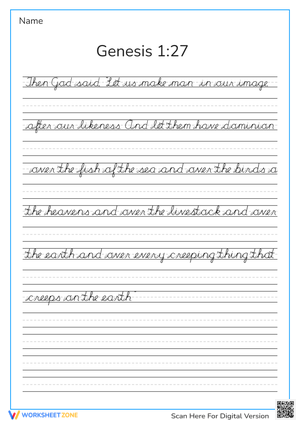
Most schools wind down formal cursive instruction by 4th grade, after introducing it in earlier elementary years, which means some students enter this grade with an incomplete transition between print and cursive, or with print habits that never fully solidified. Paragraph worksheets that let students choose or practice in their stronger style can bridge that gap without singling anyone out.
Renewed attention to cursive instruction has also picked up recently, with some educators pointing to potential reading and memory benefits. As one recent opinion piece on cursive instruction put it, students who practice connected letter formation may build stronger letter recognition patterns that support reading fluency, though researchers caution that evidence is still developing and school adoption varies widely across states and districts as of 2025 and 2026.
Frequently Asked Questions
1. How much time should 4th grade teachers dedicate to handwriting practice each week?
Short, frequent sessions work better than long occasional ones. Ten to fifteen minutes spread across two or three days a week is usually enough when paired with a focused paragraph worksheet, especially given how limited overall handwriting instruction time tends to be in upper elementary schedules.
2. Should 4th grade handwriting worksheets use print, cursive, or both?
Since most schools have finished formal cursive instruction by this grade, many teachers use print-based paragraph worksheets for daily practice while offering cursive versions for students who want continued review or whose class previously emphasized cursive fluency.
3. How can teachers tell if a student needs extra handwriting support?
Watch for patterns that persist across a full paragraph rather than a single line: shrinking letter size toward the end, uneven spacing between words, frequent letter reversals, or noticeably slower pace compared to peers. These signs, seen consistently across several worksheets, suggest a student may benefit from more frequent, shorter handwriting checks.
4. How do paragraph handwriting worksheets connect to broader literacy and writing goals?
Legible, fluent handwriting reduces the cognitive load a student spends on letter formation, leaving more attention for spelling, sentence structure, and content. Given how closely writing fluency tracks with reading outcomes at this age, paragraph handwriting practice is a practical, low-cost support for broader literacy goals rather than an isolated penmanship task.












 Interactive Worksheet Maker
 Quiz Maker
 Word Search Maker
 Crossword Puzzle Maker
 Word Scramble Generator
 Sentence Scramble Generator
 Handwriting Worksheet Generator
 Name Tracing Generator
 Fill In The Blank Generator




 BACK TOSCHOOL