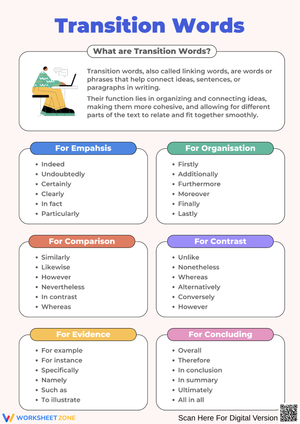
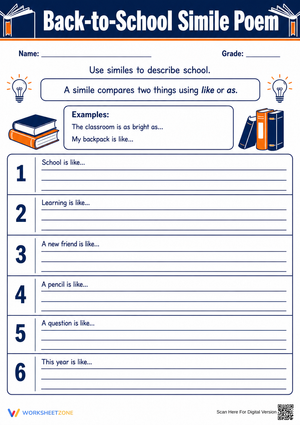
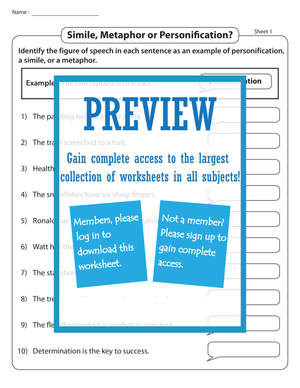
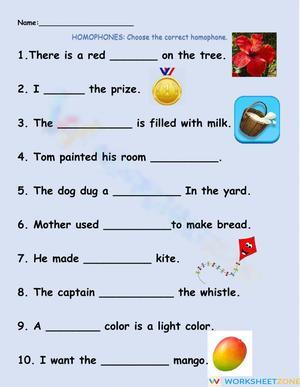
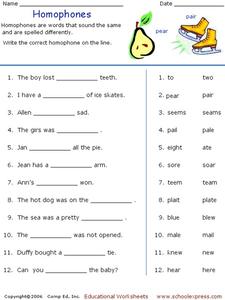
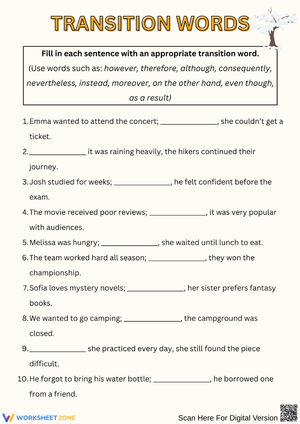
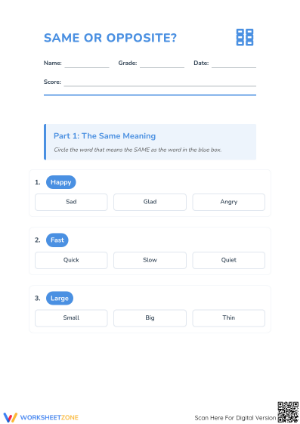
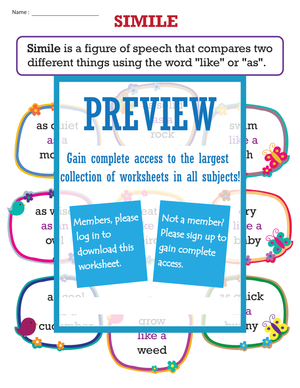
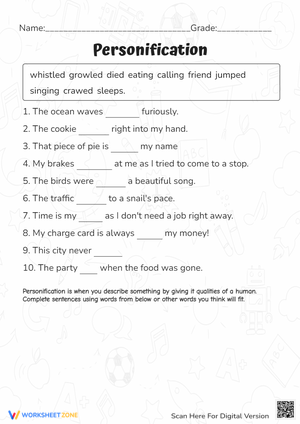
These 4th grade language pdf worksheets give teachers a direct path through the grammar and vocabulary standards that define most fourth-grade writing instruction. The set spans relative pronouns, progressive verb tenses, modal auxiliaries, conventional adjective ordering, prepositional phrases, and four categories of vocabulary work — all pulled from the L.4 language strand. Each worksheet focuses on one skill cluster, which makes them easy to sequence alongside a unit calendar or pull individually for targeted review.
The Specific Skills Each Worksheet Targets
Grammar instruction at this level divides into two major clusters. The first is pronoun and adverb reference: students choose between who, whose, whom, which, and that to introduce relative clauses, and use the relative adverbs where, when, and why to subordinate ideas within longer sentences. The second cluster addresses verb form — past, present, and future progressive tenses, alongside modal auxiliaries like can, may, must, should, and would to signal possibility, obligation, or condition.
Separate grammar worksheets address conventional adjective ordering and prepositional phrases. Adjective ordering asks students to recognize why "a small wooden box" sounds correct while "a wooden small box" does not — and then apply that internal sense to writing their own sentences. Prepositional phrase worksheets ask students to identify the preposition, name its object, and determine what the phrase modifies. That last step is the one that pays off in writing workshop: students who can answer those three questions can revise prepositional phrases in their own drafts, not just circle them on an exercise.
Vocabulary worksheets fall into four categories:
- Context clues — students read a short paragraph and mark the surrounding words that support their inference about an underlined term
- Greek and Latin roots — matching, word-sort, and word-building exercises built around roots including port, aud, dict, tele, and vis
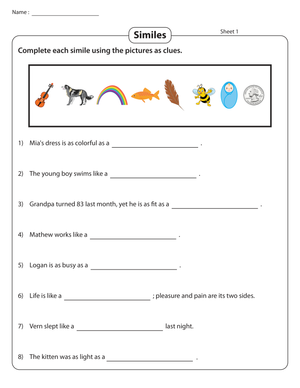
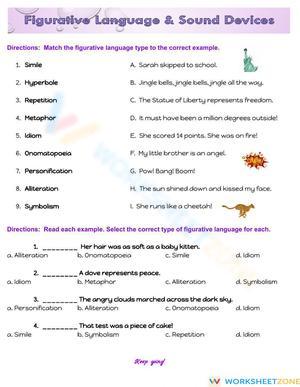
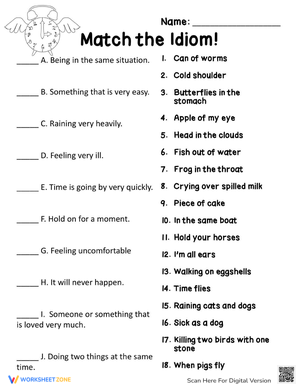
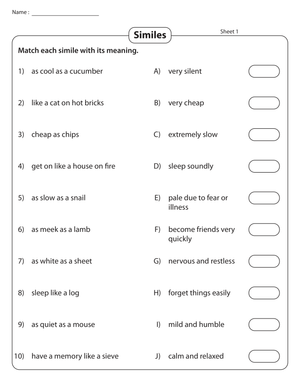
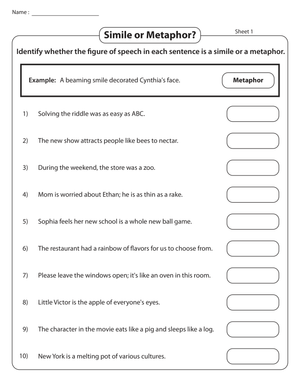
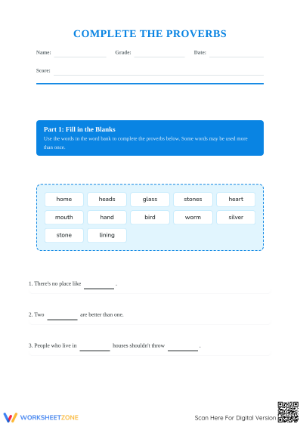
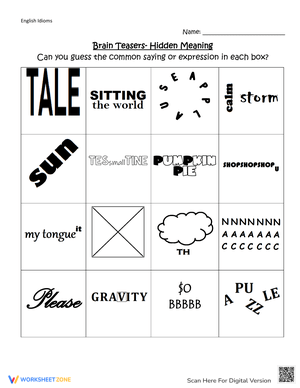
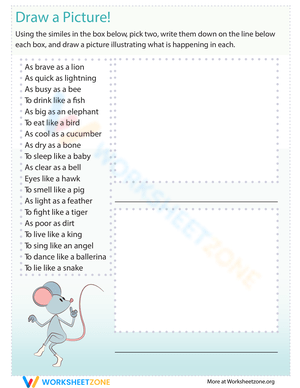
- Figurative language — identifying similes, metaphors, idioms, adages, and proverbs, then rewriting each figurative phrase in plain literal terms
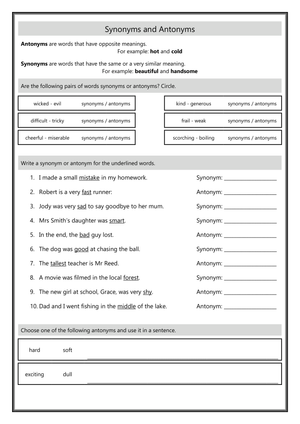
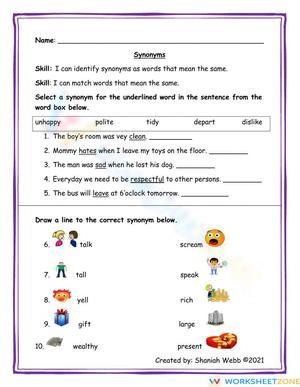
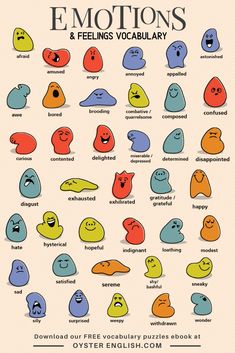
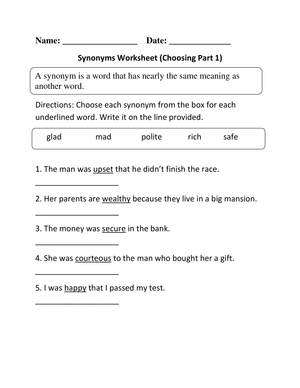
- Synonym nuance — choosing between closely related words like angry, furious, and irritated based on degree and context, rather than simply matching opposites
Student Errors to Anticipate Before You Assign These
The relative pronoun worksheets reliably surface one consistent error: students default to that for everything. "The teacher that explained the rule" is the form most fourth graders produce naturally, and they do not hear it as wrong until you place it next to "the teacher who explained the rule" and ask them to compare. Even after direct instruction, that standing in for who or which persists in student writing well into spring. These worksheets give repeated, targeted exposure to the distinction — which is what moves a rule from something students nodded at in October to something they actually apply in February.
Adjective ordering produces a different kind of confusion. Most students order adjectives correctly in speech without knowing they are doing it — but when a worksheet asks them to arrange scrambled adjectives into a sentence, they freeze because no conscious rule exists yet. The first time you assign adjective ordering, plan to read several examples aloud before students write anything down. The auditory signal does most of the teaching; the written practice locks in the pattern after students have heard it.
On the vocabulary side, idioms produce the most instructive errors. When students first encounter "bite the bullet" on a figurative language worksheet and are asked to explain it, roughly half of them describe something involving teeth. Those literal interpretations are not failures — they mark exactly the conceptual gap the worksheet closes. It is worth keeping a running class list of the literal explanations students generate; those become the anchor examples when you teach the distinction between figurative and literal meaning, and students remember them far longer than a definition.
Where These Worksheets Fit in Your Teaching Week
These 4th grade language pdf worksheets fit most naturally into three slots. The first is the opening ten to twelve minutes of the ELA block as a grammar warm-up — one worksheet projected on the board, the first three questions completed whole-class with explicit teacher think-aloud, then students finish independently. This sequence surfaces confusion before independent practice begins, when there is still time to redirect without stopping a lesson.
The second slot is word work centers. Vocabulary worksheets on roots and figurative language work well in pairs. Two students talking through why auditorium and audience share the root aud consolidate the concept more durably than a student filling in blanks in isolation. The discussion is the instruction; the written work is the record of it.
Friday review is the third slot — a mixed-skill worksheet pulling from the week's grammar and vocabulary instruction. This is retrieval practice, not new input. Students who struggled with progressive verb tenses on Tuesday often work through the same exercise type correctly by Friday after three or four more classroom encounters with the skill. That cumulative exposure is what shifts knowledge from short-term recall to reliable use in student writing.
Standard Alignment
The worksheets in this set address the following Common Core State Standards for English Language Arts, Grade 4:
- L.4.1 — Command of standard English grammar and usage: relative pronouns and adverbs, progressive verb tenses, modal auxiliaries, conventional adjective ordering, prepositional phrases
- L.4.2 — Conventions of standard English: capitalization and punctuation, including quotation marks for direct speech and quotations from text
- L.4.4 — Vocabulary acquisition through context clues and knowledge of Greek and Latin affixes and roots
- L.4.5 — Figurative language: similes, metaphors, idioms, adages, proverbs; nuanced synonym relationships
- L.4.6 — General academic and domain-specific vocabulary in grade-level reading and content areas
In most school calendars, L.4.1 grammar instruction runs from early fall through late winter, with vocabulary strands woven throughout the year. Figurative language worksheets align well with poetry units and narrative reading, while root-based worksheets pair naturally with science and social studies instruction that front-loads academic vocabulary before students encounter it in complex texts.
Adjusting the Set for Students at Different Learning Levels
These 4th grade language pdf worksheets have more range than the grade-level label implies. The core exercise types — sentence completion, sentence rewriting, word sorting — all have natural adjustment points that do not require separate materials.
For students who need more support on grammar work, try reading sentences aloud before they process them in print. Many students who struggle with the written form of a relative clause identify the correct pronoun instantly when they hear the sentence spoken. That auditory check tells you something important: the student understands the grammar rule; the barrier is processing the written sentence, not the concept itself. Knowing the difference changes how you support the student rather than just reteaching the same rule louder.
For students who move through the standard exercises quickly, vocabulary worksheets offer the most extension headroom. A student who finishes a root-matching exercise can generate three additional words sharing that root, write original sentences that make the root meaning transparent from context, or sort a longer word list by root family. None of that requires extra materials — it is a question you pose before they assume they are done.
Frequently Asked Questions
Do the worksheets include answer keys?
Yes. Each worksheet includes a corresponding key. For vocabulary items involving context clues or synonym nuance, the key includes a brief explanation of why one answer is stronger — which makes it useful as a teacher reference during whole-class review, not just for student self-checking during rotations.
Are these appropriate for homework?
The 4th grade language pdf worksheets in this set work well as homework once a skill has been introduced in class. The exception is the first exposure to adjective ordering or relative adverbs — both need guided classroom practice before going home. Assigning an unintroduced skill as homework produces frustration on both ends, not practice.
How does the set work for students reading significantly below grade level?
The context clue worksheets use short, self-contained paragraphs rather than extended grade-level passages, which reduces reading load while keeping the vocabulary skill intact. For students well below grade level in decoding, reading the paragraph aloud while the student follows along is a reasonable accommodation — the target skill is word-meaning inference, not independent reading fluency, and it is worth keeping that distinction clear when you report progress.
Can these be used to prepare students for standardized assessments?
The grammar and vocabulary skills in the L.4 strand appear directly on most state ELA assessments, and these worksheets give students repeated practice with the item types those tests use: sentence correction, fill-in-the-blank, and multiple-choice vocabulary questions. The strongest test-preparation approach is consistent practice spread across the year rather than a concentrated review session in the weeks before the test window opens.












 Interactive Worksheet Maker
 Quiz Maker
 Word Search Maker
 Crossword Puzzle Maker
 Word Scramble Generator
 Sentence Scramble Generator
 Handwriting Worksheet Generator
 Name Tracing Generator
 Fill In The Blank Generator




 BACK TOSCHOOL