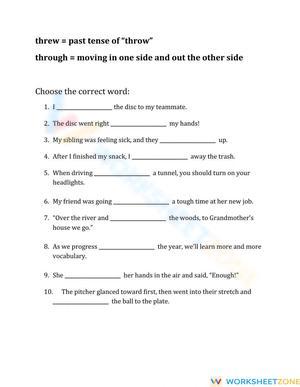
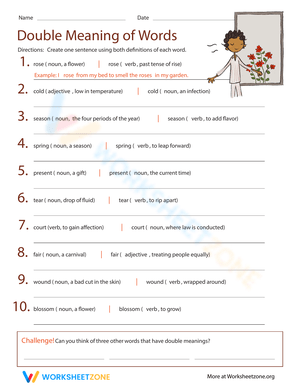
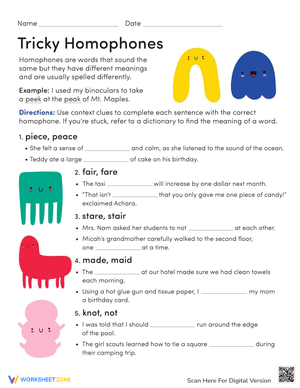
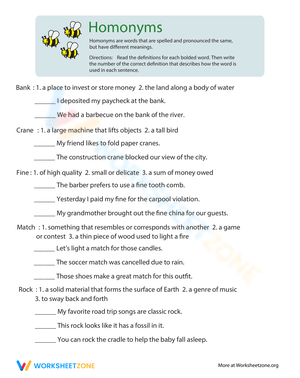
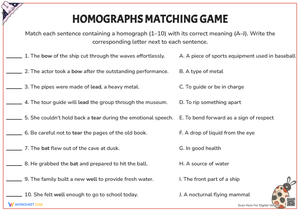
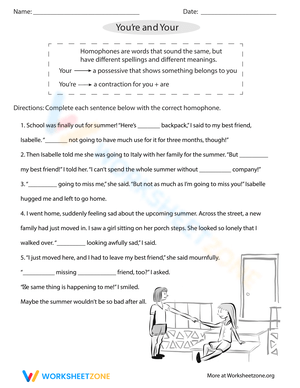
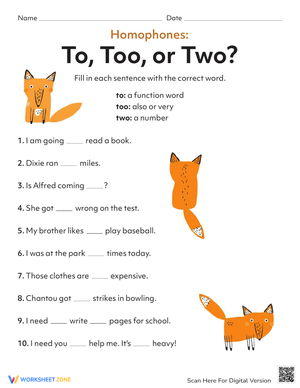
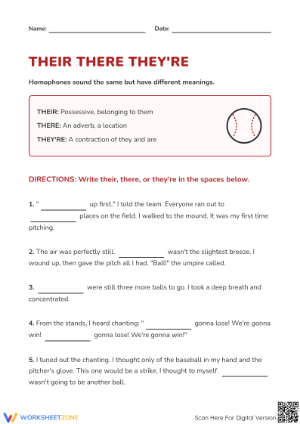
These 4th grade homophones and homographs printable worksheets give teachers focused, context-driven practice for one of the trickiest vocabulary distinctions in Grade 4 ELA. Students at this level can recite definitions months before they reliably choose the right spelling or meaning inside a sentence — and that gap between knowing the term and applying it is exactly what these worksheets address.
The Specific Skills Targeted
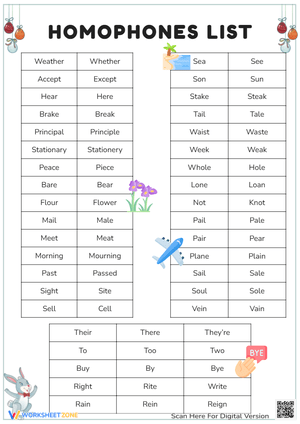
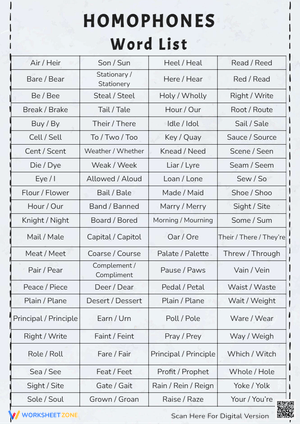
Homophones sound identical but carry different spellings and meanings: their vs. there, pair vs. pear, write vs. right. Homographs share a spelling but hold distinct meanings — and some shift pronunciation based on context: lead as a verb versus lead as a heavy metal, bow for a ribbon versus bow at the front of a ship. These are not abstract grammar categories. They show up in student writing errors every week, and they appear in Grade 4 reading passages with enough regularity that students who cannot distinguish them stumble on meaning comprehension, not just spelling.
Each worksheet in the set is built around sentence-level reasoning rather than list memorization. The task types include:
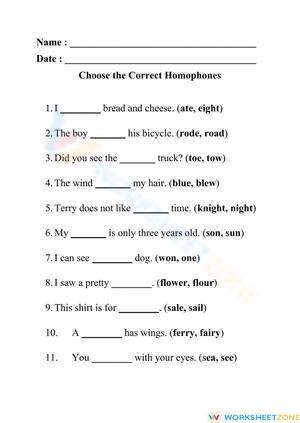
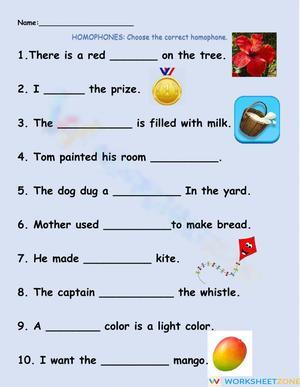
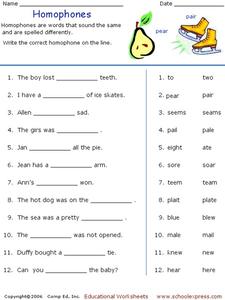
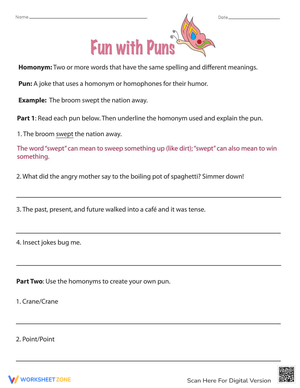
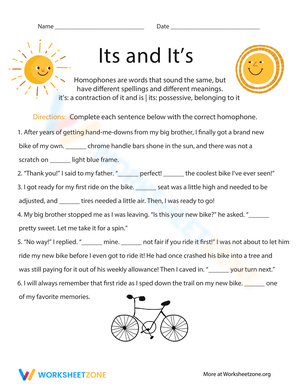
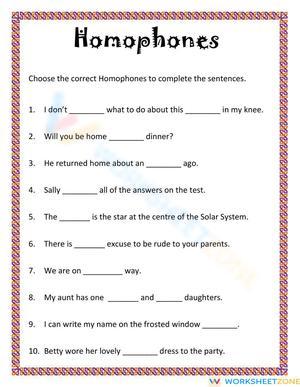
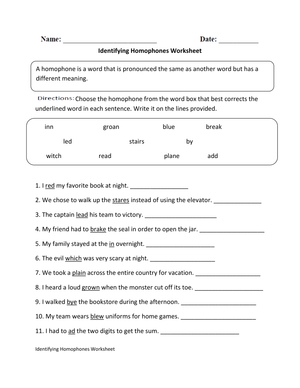
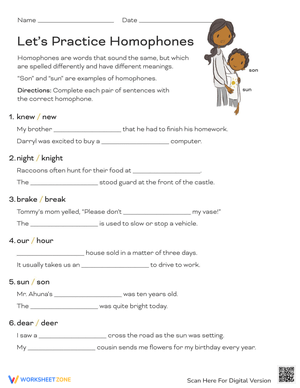
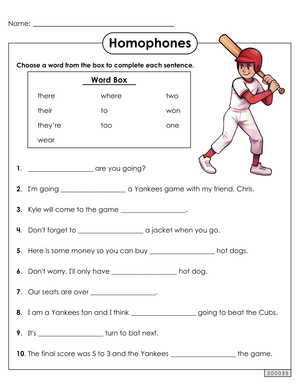
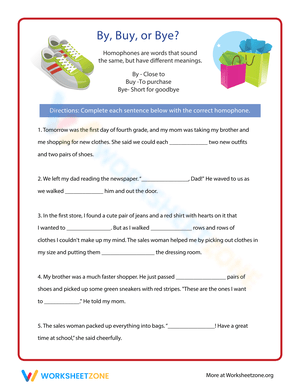
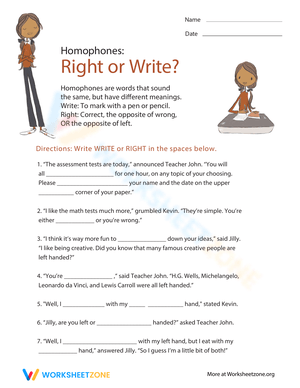
- Sentence fill-ins: Students select the correct homophone from a given pair — such as to/too/two or sea/see — based on surrounding context.
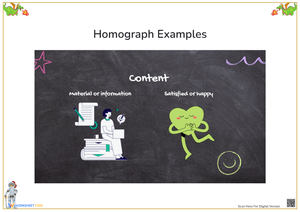
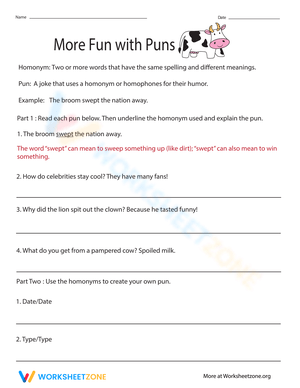
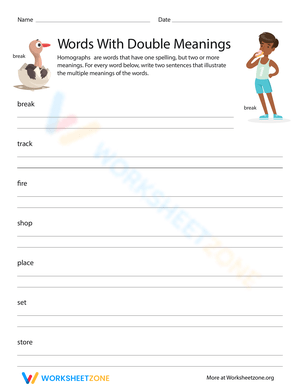
- Meaning-in-context questions: Students read two sentences containing the same homograph and explain how the meaning, or in some cases the pronunciation, changes between them.
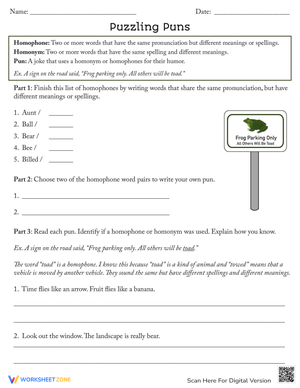
- Sorting tasks: Students classify word pairs as homophones or homographs, reinforcing the categorical difference while applying it to real examples.
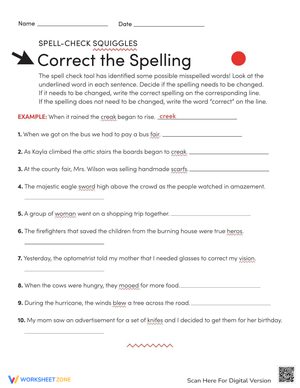
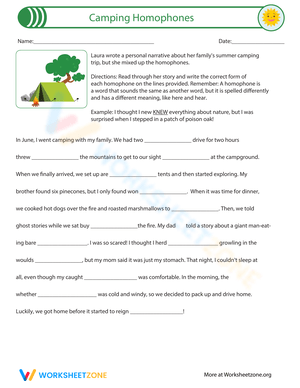
- Editing passages: Students locate and correct misused words inside connected text, which mirrors the actual revision work writers do.
- Mixed review: Each worksheet of this type combines both skills, giving teachers a practical check on whether students can keep the two categories straight when they appear together.
Mistakes Students Make That Teachers Need to Address
The most persistent error pattern is not students who have no idea which word fits — it is students who correctly explain the difference during class discussion and then write the wrong form in their next paragraph. The declarative knowledge is there; the automatic writing habit is not. That is why repeated sentence-level work matters more at this stage than reviewing definitions again. A student who has selected their vs. there correctly in eight different sentences across a week builds a different kind of memory than one who studied the definition once and moved on.
With homographs, the common stumble is assuming a word means the same thing everywhere it appears. Students read The teacher asked Maya to lead the group and The pipe contained traces of lead without registering that those are different words wearing the same spelling. Worksheet tasks that require students to write one sentence explaining why the other meaning does not fit — rather than simply circling the right answer — make that silent assumption visible and force active reasoning. That one extra step is the difference between answer hunting and genuine meaning work.
How to Build These Worksheets Into Your Weekly ELA Routine
A four-day sequence works well for introducing both skills without crowding the block. Day one: teach homophones with two or three direct modeling examples, then have students complete a sentence fill-in worksheet independently. Day two: introduce homographs by showing two sentences with bat — the animal and the piece of sports equipment — and follow with a sorting and context-question worksheet. Day three is a natural center day; assign a mixed review worksheet to students working independently while you pull a small group. Day four: use a short editing worksheet as a warm-up before writing workshop or as an exit ticket at the end of the lesson. That whole cycle fits inside a standard literacy week without pulling time from read-aloud or word study.
Outside that sequence, the fill-in worksheets function well as morning work — the format takes roughly five to eight minutes and requires no front-loading from the teacher. Editing worksheets double as short informal assessments; a quick scan of student responses shows whether errors cluster around homophones, homographs, or both, which tells you exactly where reteaching needs to go. The clean layout also makes the set useful for substitute folders, since directions are specific enough that students can begin without waiting for explanation.
Adapting the Set for Different Levels of Learners
These 4th grade homophones and homographs printable worksheets work across a wider ability range than the grade label suggests, as long as teachers make deliberate choices about which worksheet to assign. Students who are still building basic vocabulary do well starting with sentence fill-in worksheets that use high-frequency pairs like there/their and to/too. The sentence context alone provides enough structure for those students to complete the task without needing repeated prompting.
Students working above grade level are better served by the homograph context questions and editing passages, which require close reading across multiple sentences before a meaning decision is possible. A practical extension for any worksheet: ask students to write one original sentence pair demonstrating the contrast between two words. That task deepens understanding without requiring separate advanced materials. For students receiving intervention support, reading prompts aloud and reducing the number of items per worksheet are straightforward adjustments that keep the practice meaningful without overwhelming students who struggle with print volume.
Standard Alignment
These 4th grade homophones and homographs printable worksheets align directly to CCSS.ELA-LITERACY.L.4.4, which asks fourth graders to determine or clarify the meaning of unknown and multiple-meaning words and phrases using context clues as a primary strategy. The sentence-level format across these worksheets operationalizes that standard in a concrete way: students are not identifying vocabulary terms in isolation but making meaning decisions based on surrounding text. Teachers using the Common Core Language strand will find the worksheets fit the vocabulary and conventions block, supporting both word study and the kind of close reading that the reading standards also demand. For districts tracking standard-by-standard mastery, these worksheets generate clear evidence on L.4.4 without requiring additional documentation work from the teacher.
Frequently Asked Questions
What is the difference between homophones and homographs, and how should I explain it to fourth graders?
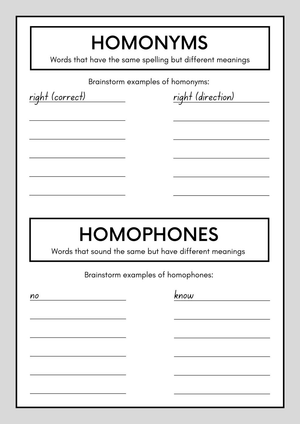
Homophones sound the same but are spelled differently — hear and here, for instance. Homographs are spelled the same but carry different meanings, and some also shift pronunciation: bow meaning a weapon versus bow meaning to bend forward. The clearest classroom explanation is usually through a pair of sentences: show students two uses of the same word — or two words that sound identical — and ask which meaning or spelling fits where. That concrete comparison lands faster than a definition.
Can I assign these worksheets in any order, or is there a recommended sequence?
For students encountering these terms for the first time, start with the skill-specific worksheets that address one concept at a time. If students already know the vocabulary but still confuse the words in writing, the editing and mixed review worksheets provide more diagnostic value. The set is flexible enough to work as introduction, reinforcement, or reteaching depending on where students are when you assign it.
Are these appropriate for intervention or when a student misses the original instruction?
The skill-specific worksheets work well for reteaching because they isolate one concept without assuming knowledge of the other. If a student missed the homograph lessons, assigning a context-question worksheet gets directly to the misconception without requiring a full unit review. The focused format keeps intervention time on the actual skill gap rather than logistics.
How do these worksheets fit into test prep for standardized language assessments?
The editing and mixed review formats closely resemble the item types students encounter on standardized language assessments, where vocabulary knowledge is tested in sentence context rather than through definition matching. Running these 4th grade homophones and homographs printable worksheets as short timed practice in the weeks before a benchmark gives teachers a realistic read on which students are still guessing versus reliably using context clues to make meaning decisions.












 Interactive Worksheet Maker
 Quiz Maker
 Word Search Maker
 Crossword Puzzle Maker
 Word Scramble Generator
 Sentence Scramble Generator
 Handwriting Worksheet Generator
 Name Tracing Generator
 Fill In The Blank Generator




 BACK TOSCHOOL